
A convent on Roman tiers
The building stands on the theatre itself — you climb through the city's layers.
Adert — CC BY-SA 4.0 · Schuppi — CC BY-SA 4.0 · Schuppi — CC BY-SA 4.0 · Schuppi — CC BY-SA 4.0
An archaeological museum in a fifteenth-century convent standing on the slope above Verona's Roman theatre, on the far bank of the Adige. The position is half the visit: the convent is built onto the theatre's own tiers, so you climb through the city's layers — Roman stone, then medieval cloisters — and come out on a terrace looking over the whole of Verona from across the river. That view is among the best in the city and far less crowded than the Torre dei Lamberti. The collection is Roman material from Verona and its surroundings: mosaics, sculpture, inscriptions, glass and bronze, most of it from excavations in the city itself. The ticket normally includes the Roman theatre below, a first-century BC auditorium still used for performances in summer. You should know that reaching it involves a climb: a long stair from river level to the convent, with a lift on some routes — ask at the entrance if stairs are a problem.
The building stands on the theatre itself — you climb through the city's layers.
A terrace looking over the whole city from the far bank.
A first-century BC auditorium that still stages performances in summer.
The San Girolamo convent, above the Roman theatre
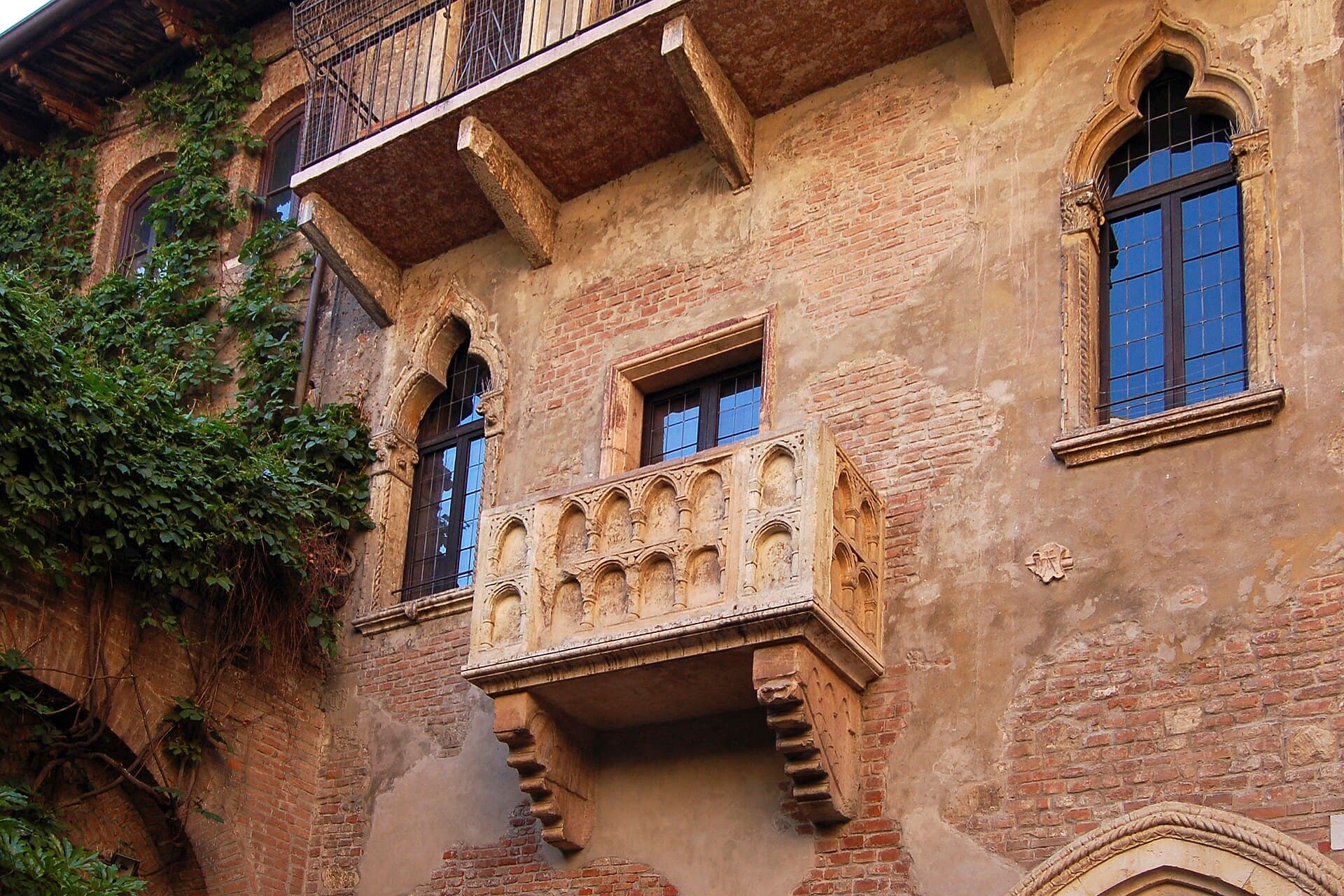 Juliet's HouseJuliet's House is Europe's most successful tourist legend — with every party a w4 minutes walk3.9
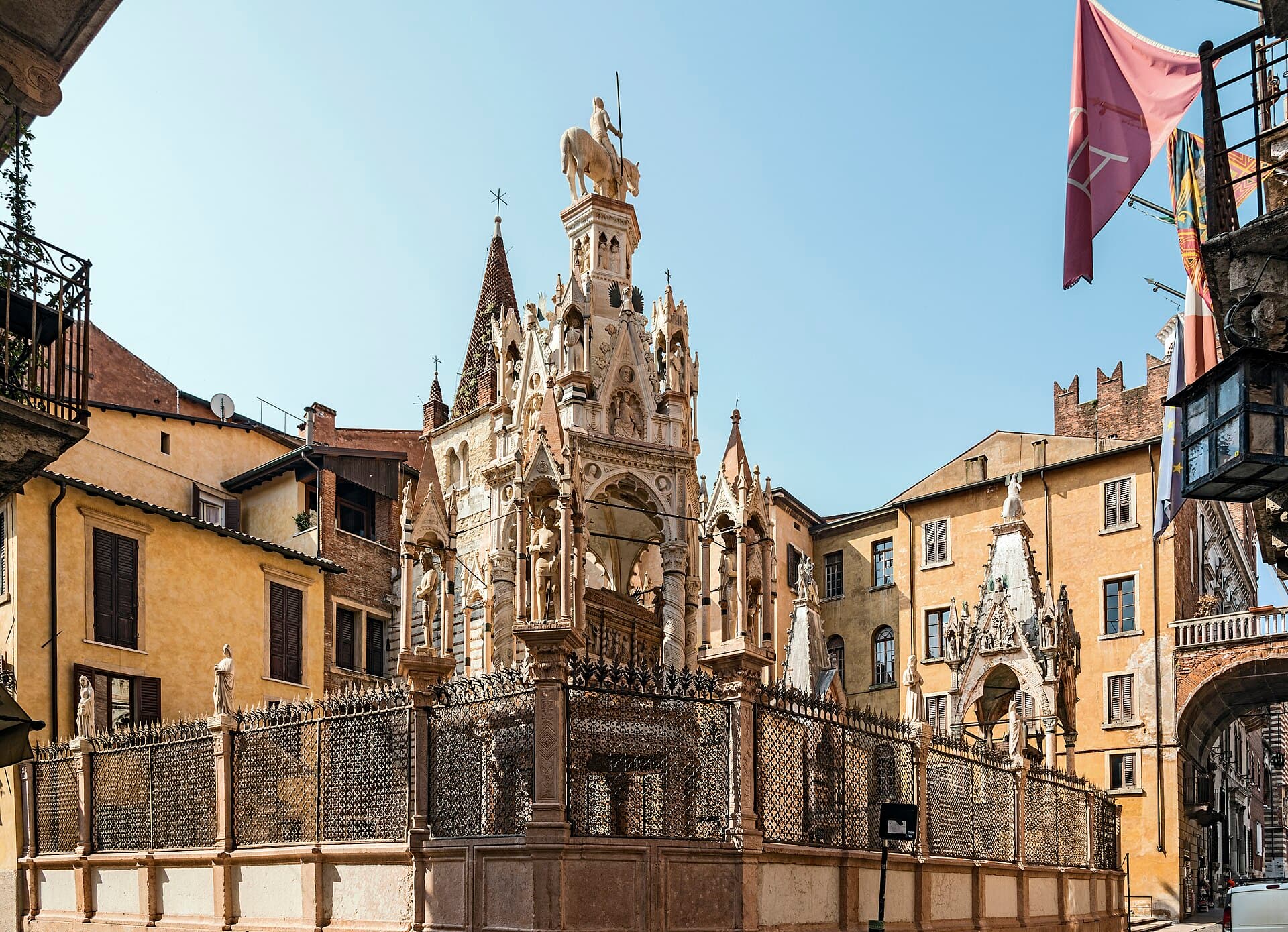 The Scaliger TombsIn a small fenced court behind Piazza dei Signori rise the Scaliger Tombs: the g4 minutes walk4.6
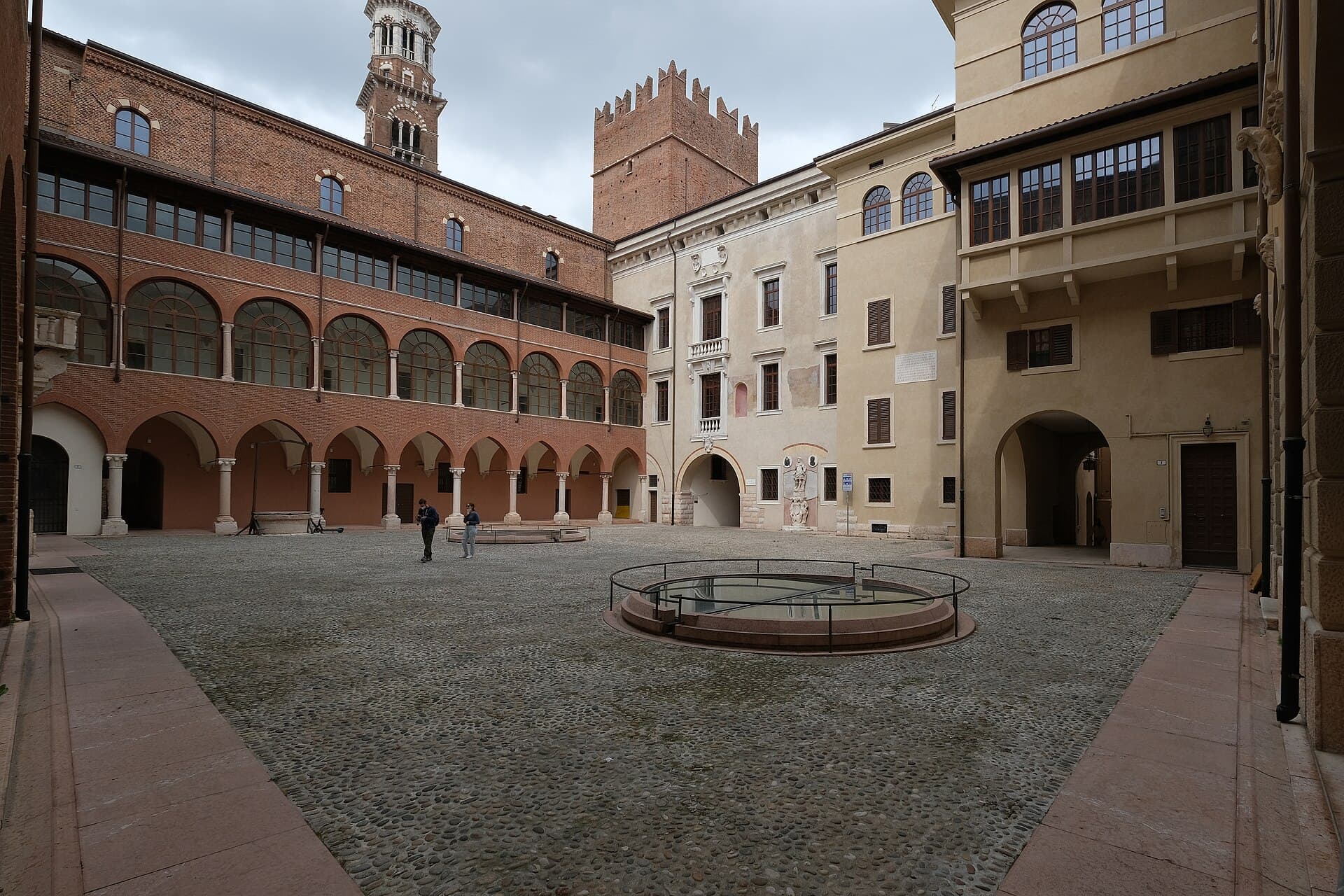 Palazzo del CapitanioA palace on Piazza dei Signori in the heart of Verona, the seat of the Venetian 4 minutes walk4.7
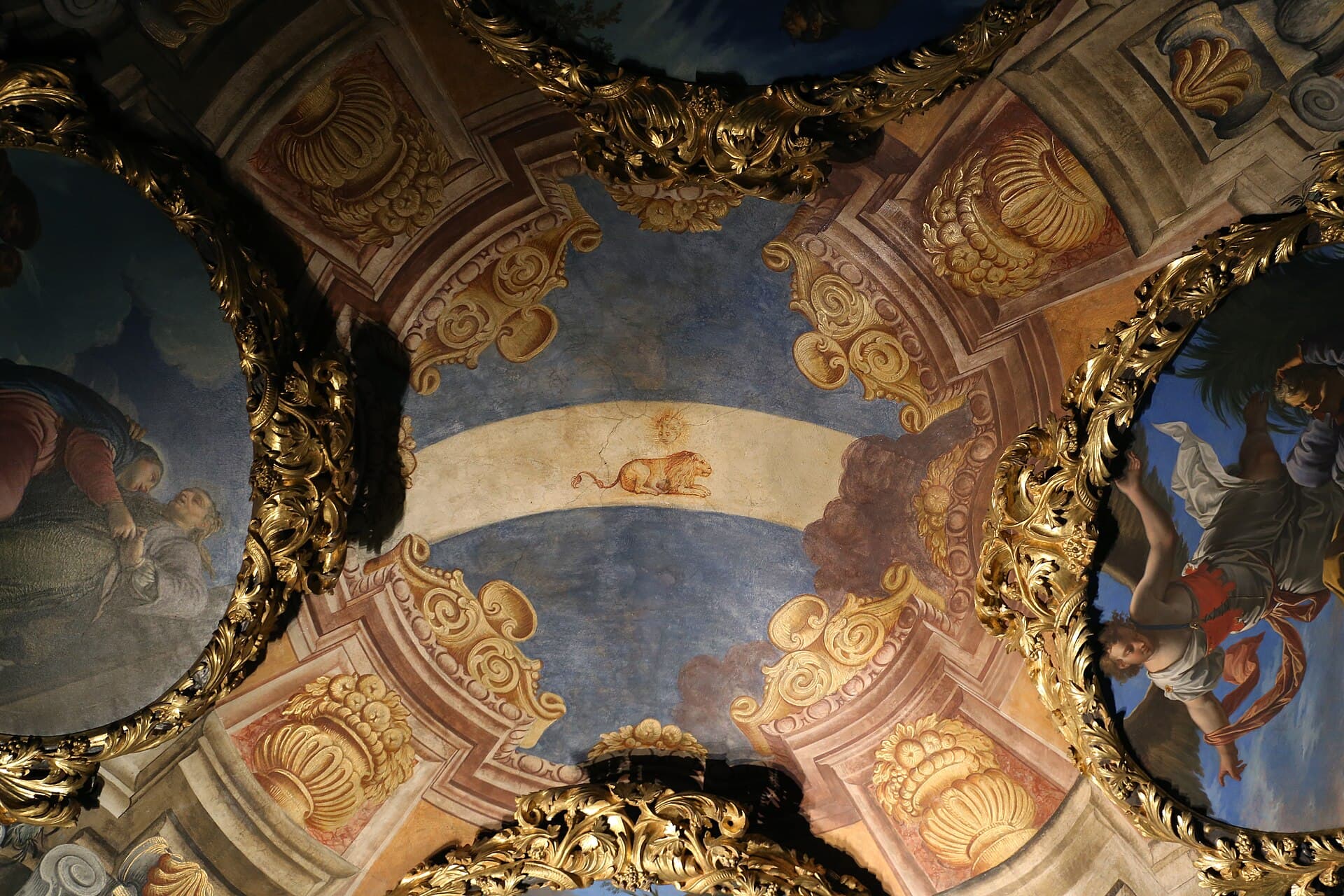 Cappella dei Notai (Chapel of the Notaries)A few steps above the vegetable market, behind a door nobody notices, hides one 5 minutes walk4.4
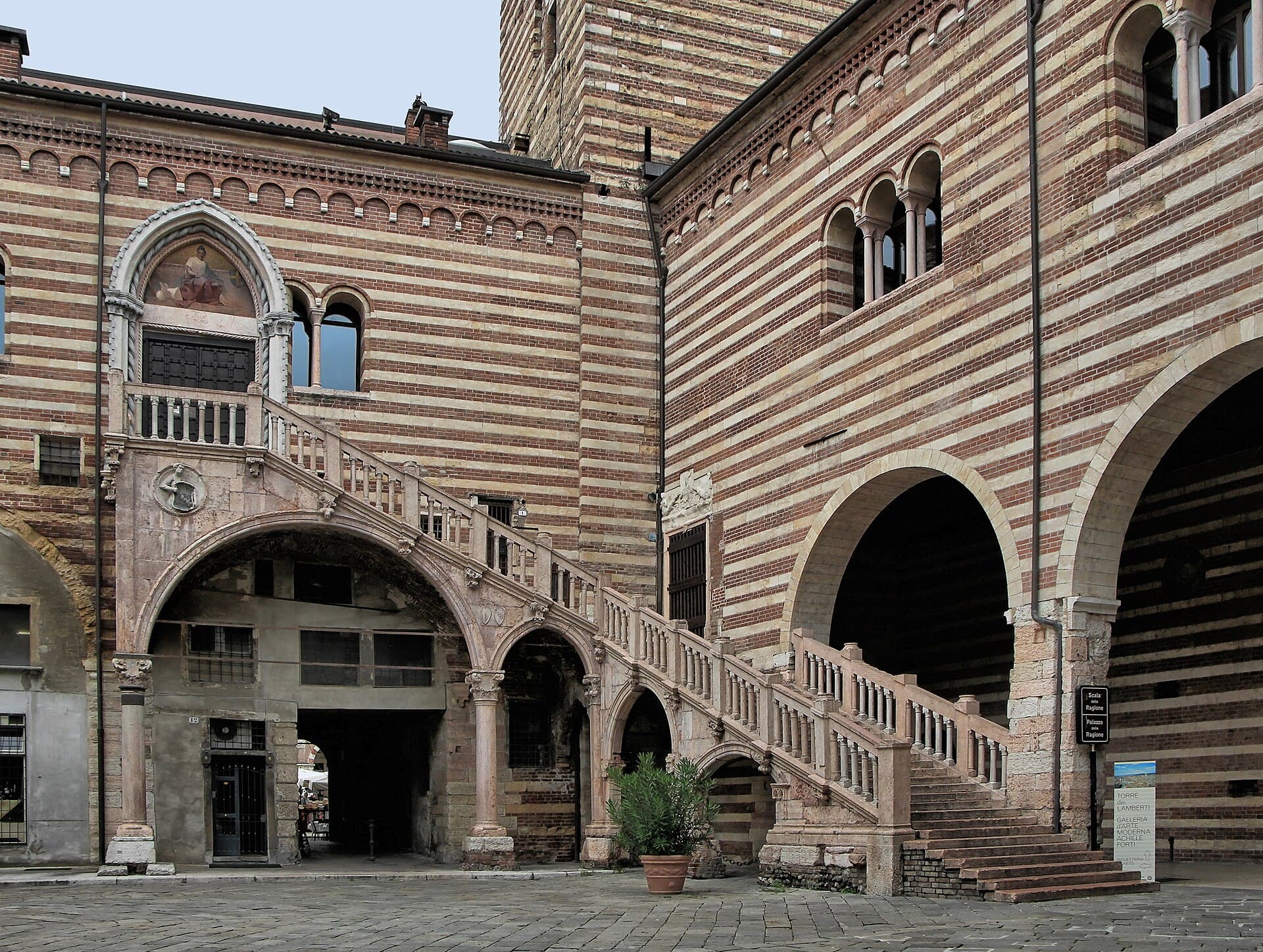 Scala della RagioneAn external stone staircase in the Mercato Vecchio courtyard in central Verona, 5 minutes walk4.6
The Arena is a vast Roman amphitheatre in the city centre, built for games and combat, the third largest surviving and today hosting huge summer opera productions. This is a smaller theatre on the opposite bank, built for drama rather than games, far less known and much quieter.
Clearly yes. The far bank is quieter than Verona's crowded centre, and beyond the museum and theatre it holds the Castel San Pietro with its viewpoint, the church of Santo Stefano and historic bridges. Half a day on that side balances a day in the centre.