
Samurai armour and Noh masks
Among Europe's most important Edo-period collections.
This Photo was taken by Wolfgang Moroder. Feel free to use my photos, but please mention me as the author and send me a message. This image is not in the public domain. Please respect the copyright pr — CC BY-SA 3.0 · Eripuk — CC BY-SA 4.0 · Ritamargaret — CC BY-SA 4.0 · Lucamato — CC BY-SA 4.0
A museum of Asian art on the top floor of the Ca' Pesaro palace on the Grand Canal, holding one of the most important collections of Japanese Edo-period art in Europe. The collection originates in a single journey: Prince Henry of Bourbon-Parma gathered about thirty thousand objects during a tour of Asia between 1887 and 1889, most of them from Japan, China and Indonesia. They were collected at a moment when Japan was opening after two centuries of isolation and its old elite was selling its possessions in the upheaval of the Meiji era. The display holds samurai armour, swords, paintings on silk, lacquerware, tea implements, musical instruments and Noh theatre masks. What makes the visit strange in a good way is the combination: you climb three floors of a Venetian baroque palace on the Grand Canal to find yourself before Japanese armour. The ticket is usually shared with the modern art gallery on the lower floors.
Among Europe's most important Edo-period collections.
Gathered as Japan's old elite sold its possessions in the Meiji upheaval.
Japanese armour on the top floor of a baroque palace on the canal.
The top floor of Ca' Pesaro, the Grand Canal
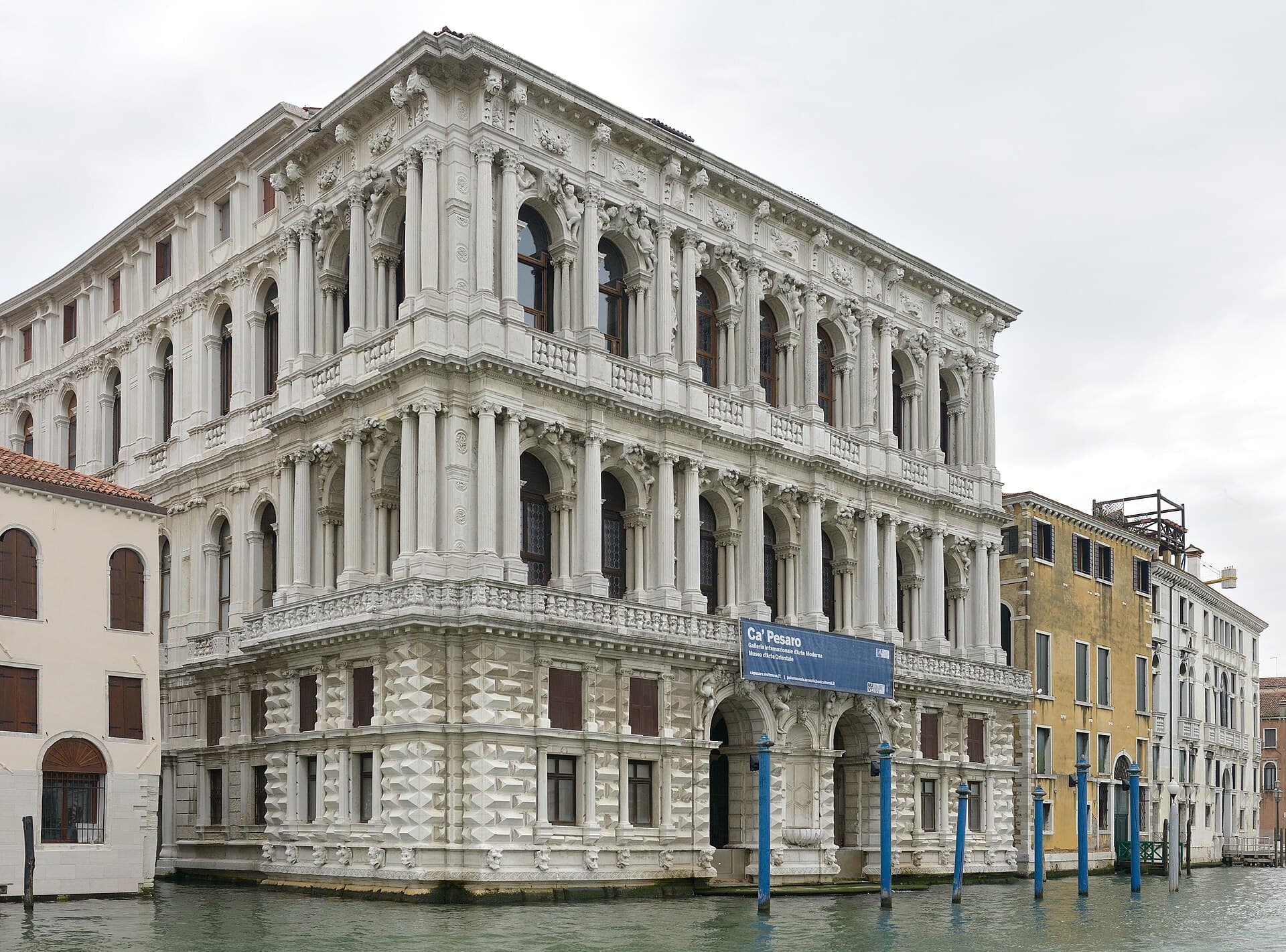 Ca' PesaroCa' Pesaro is the grandest Baroque palace on the Grand Canal, its heavy marble f1 minute walk4.4
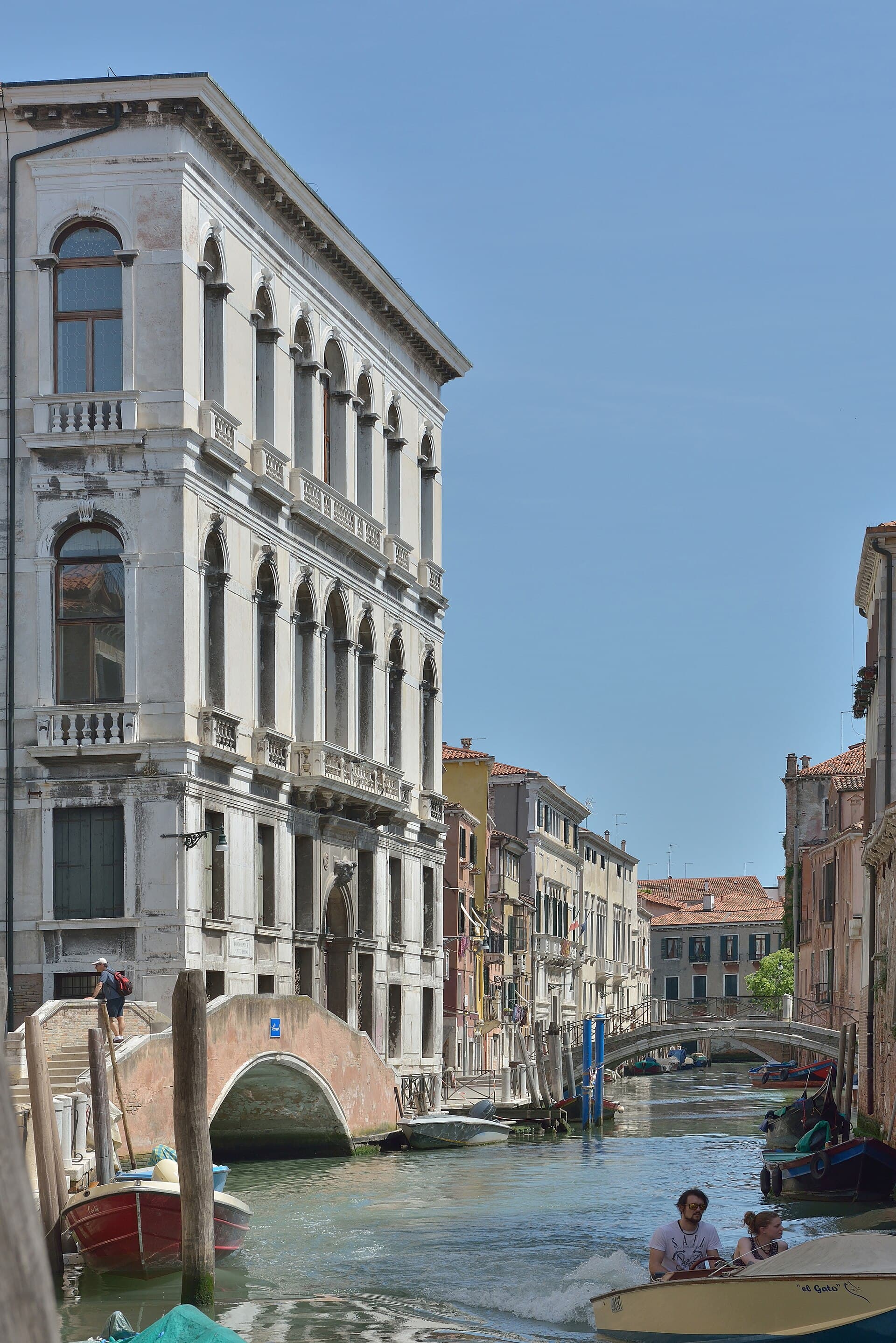 Palazzo Diedo – Berggruen Arts & CultureUntil 2012, people came into this palace to stand before a judge. Now they come 4 minutes walk4.2
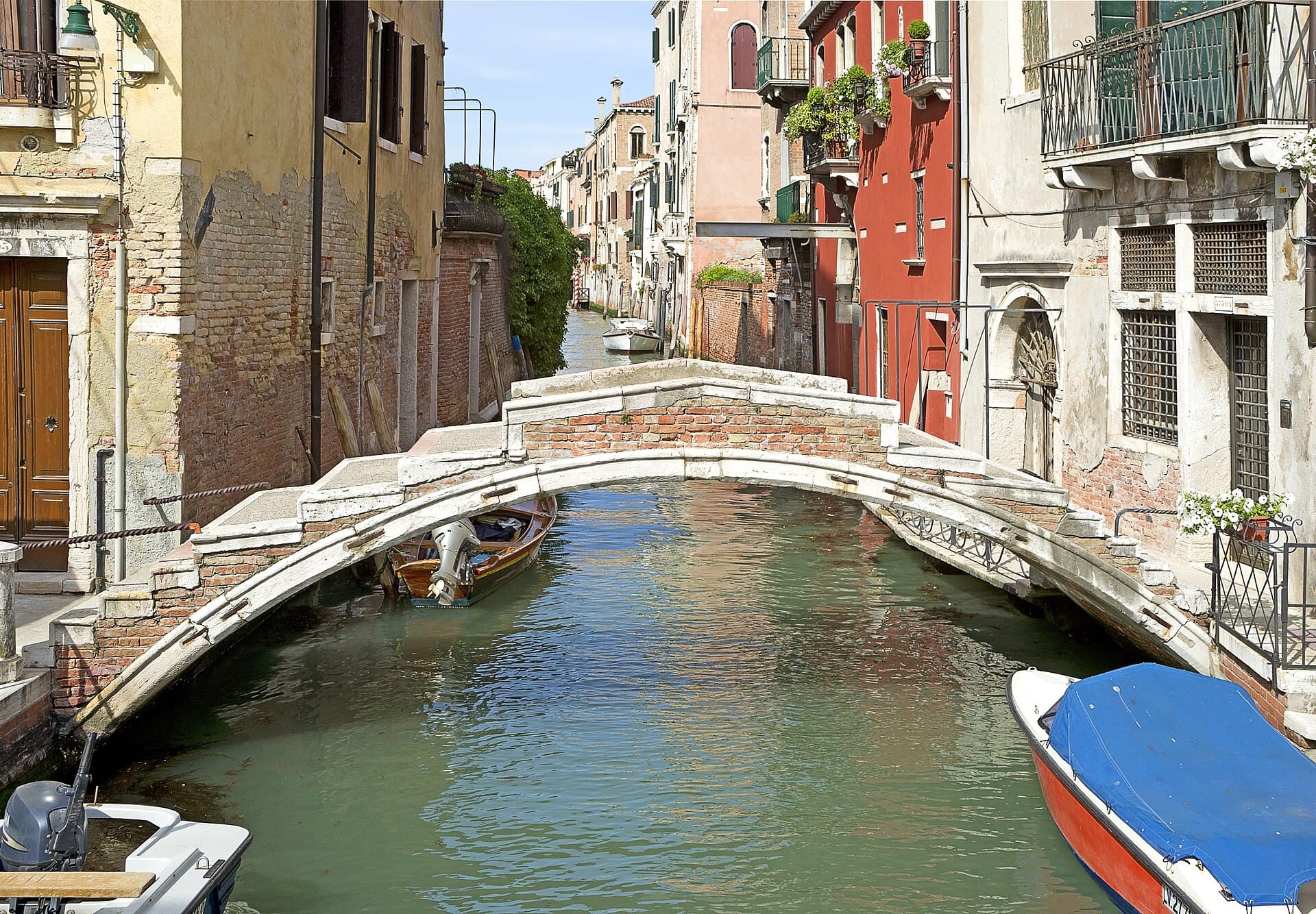 The Ponte ChiodoA small bridge in the Cannaregio district, one of only two bridges in Venice lef4 minutes walk4.5
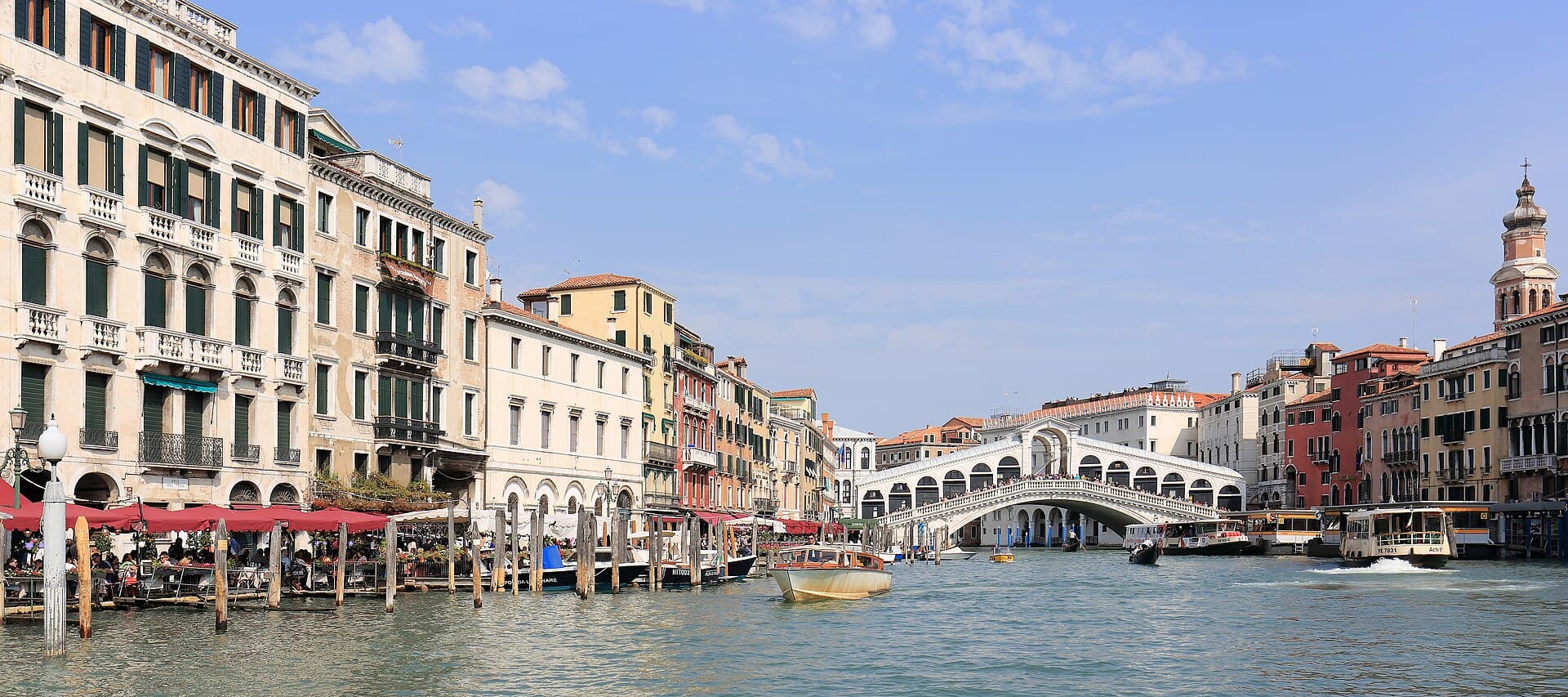 Grand CanalThe Grand Canal is Venice's main street — four kilometres of water cutting the c5 minutes walk4.7
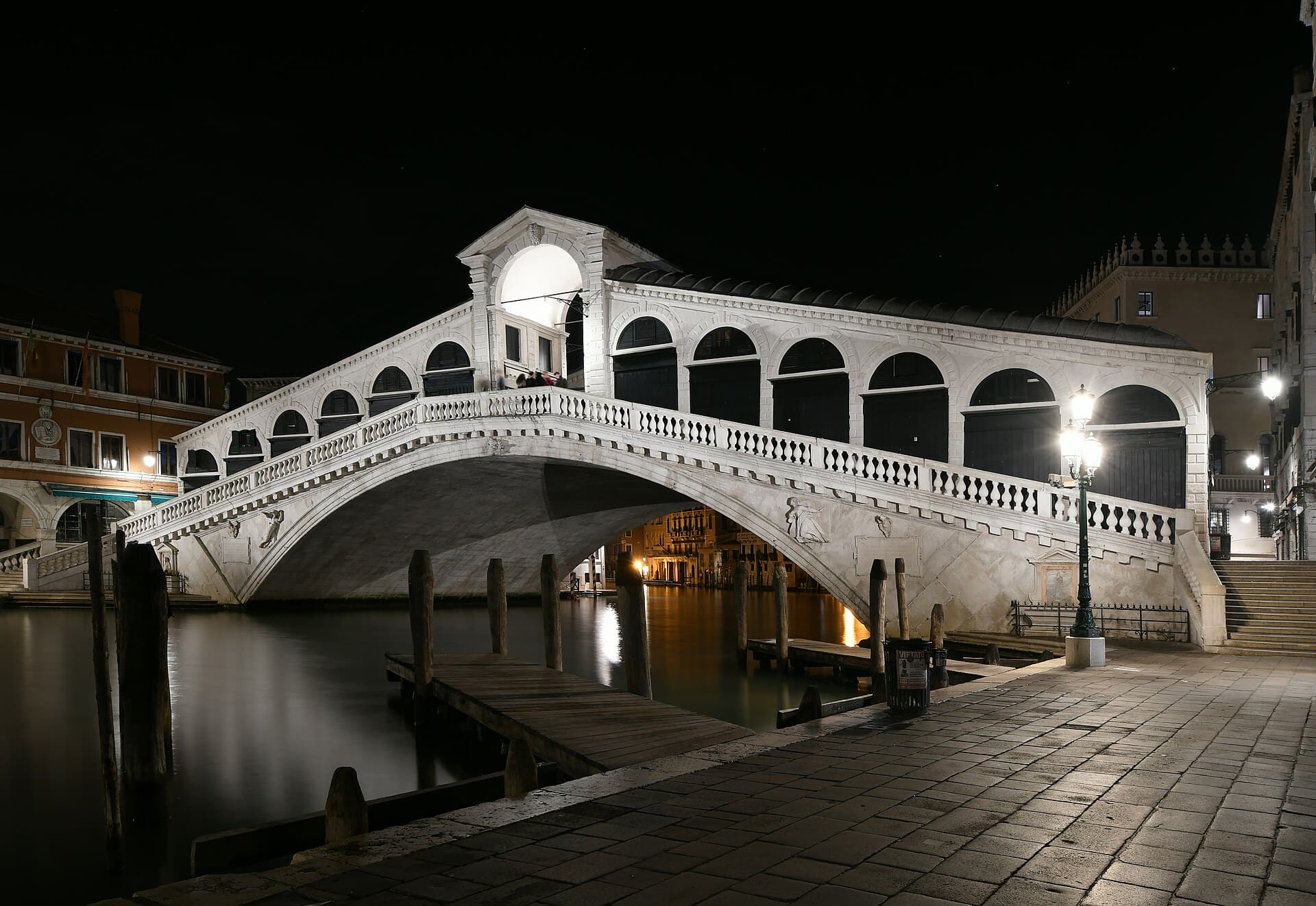 Rialto BridgeThe Rialto is Venice's most famous bridge and the oldest crossing of the Grand C6 minutes walk4.8
A period in Japan beginning in 1868 when imperial authority was restored and shogunate rule ended. Japan took a strategic decision to modernise rapidly on western lines to avoid China's fate: the samurai class was abolished, sword-carrying banned, and the army, industry and education rebuilt on European foundations. This led to the sale of enormous quantities of traditional art and weapons that had suddenly lost their social value, bought cheaply by European collectors.
The international modern art gallery, holding works by Klimt, Chagall, Kandinsky, Miró and Moore alongside Italian artists of the nineteenth and twentieth centuries. The palace itself is a seventeenth-century Longhena design and its canal facade is among the grandest baroque fronts in Venice. A full visit to all three floors needs two to three hours.