
The elephant
In the rotunda.
Kurt Kaiser — CC0 · Corey Cavalier from Raleigh, USA — CC BY 2.0 · Another Believer — CC BY-SA 3.0 · Michael Barera — CC BY-SA 4.0 · digital photo by User:Postdlf taken 1-8-05 — CC BY-SA 3.0 · Martin Kraft — CC BY-SA 4.0 · Brian Sharp / User: (WT-shared) 2old at wts wikivoyage — CC BY-SA 4.0 · Michael Barera — CC BY-SA 4.0
The Smithsonian's natural history museum on the National Mall, opened in 1910 in a grand building with a green dome. It was one of the first Smithsonian buildings made specially for the national collections, and it received 3.3 million visits in 2025. Its collections hold more than 148 million specimens of plants, animals, fossils, minerals, meteorites and cultural objects, the largest natural history collection in the world, and some 185 scientists work here. A huge African elephant greets visitors in the rotunda beneath the dome. Famous highlights include the blue Hope Diamond in the gem hall, the fossil hall with its dinosaur skeletons, the Ocean Hall and the hall of human origins. Entry is free, like all Smithsonian museums, usually 10:00–17:30, per visitor guides. It opens 364 days a year and gets crowded at weekends, so arrive at opening time.
In the rotunda.
Deep blue.
In the fossil hall.
National Mall, Constitution Avenue, Washington
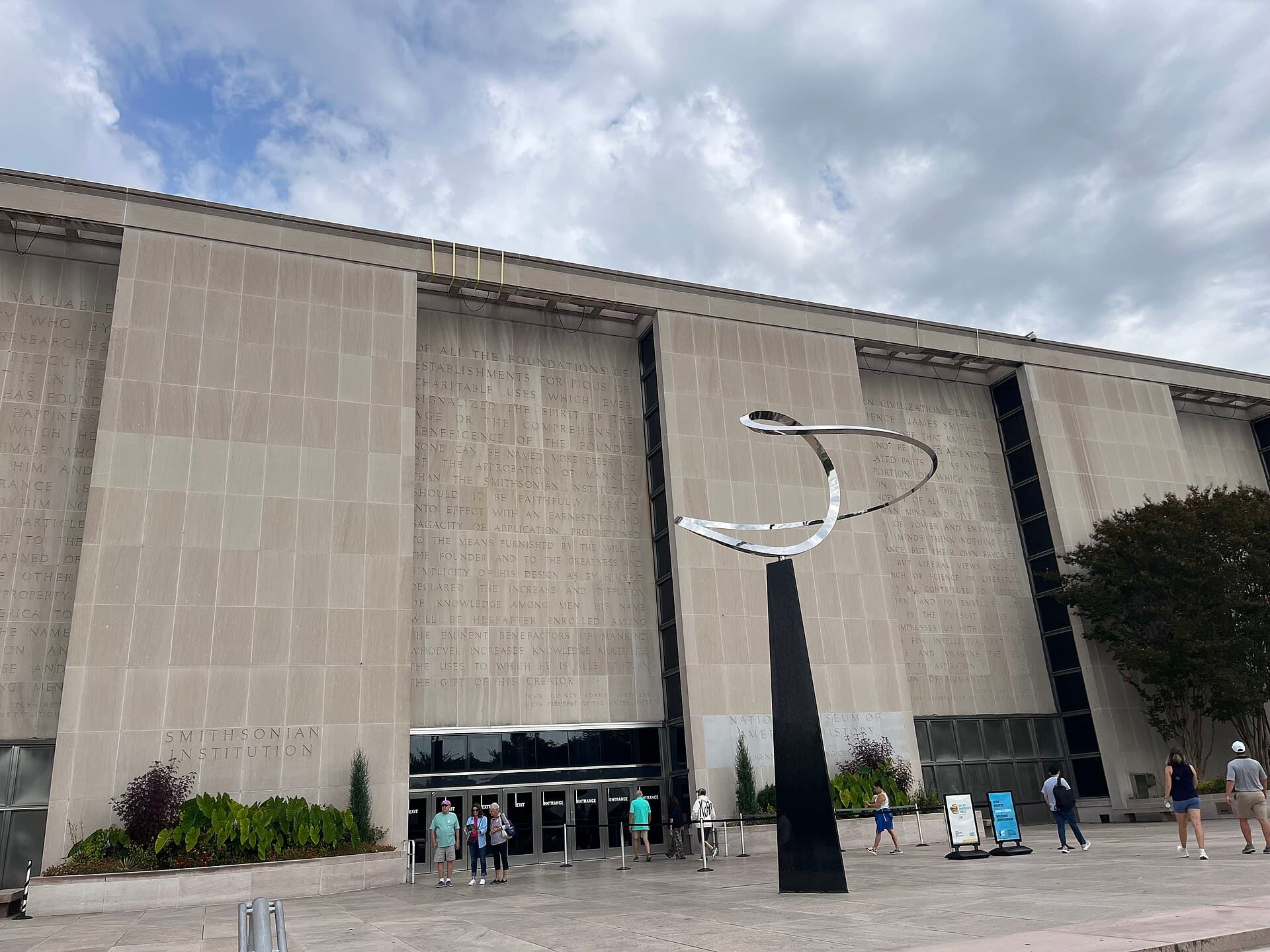 National Museum of American HistoryThe Smithsonian museum of the heritage of the United States in social, political4 minutes walk4.8
 National Gallery of ArtOne of the foremost art museums in the United States, on the National Mall, foun7 minutes walk4.9
 National Museum of African American History and CultureA Smithsonian museum on the National Mall beside the Washington Monument, the wo7 minutes walk4.7
 National Air and Space MuseumThe Smithsonian museum of human flight and space exploration, whose main buildin8 minutes walk4.7
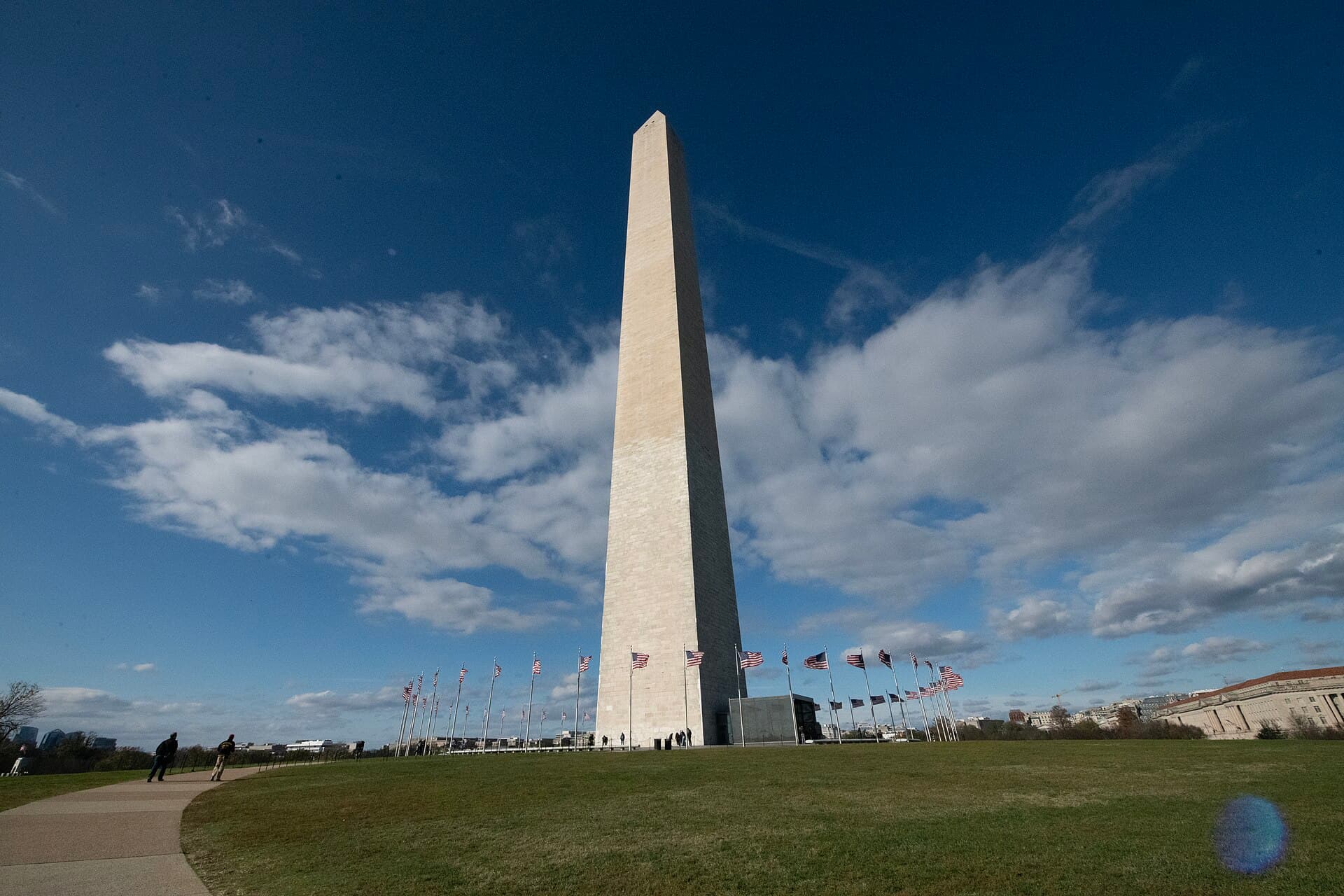 Washington MonumentA white obelisk 169 metres tall at the centre of the National Mall, built to hon10 minutes walk4.6
Yes, entry is free like all Smithsonian museums, usually 10:00–17:30, per visitor guides.