
Two different banks
The south is rebuilt; the north retains more original fabric.
Bybbisch94, Christian Gebhardt — CC BY-SA 4.0 · Fuzre Fitrinete — CC BY 3.0 · Fuzre Fitrinete — CC BY 3.0 · Fuzre Fitrinete — CC BY 3.0
A pedestrian street and group of buildings on Dresden's northern bank, within what is known as the Baroque Quarter, part of the Neustadt that differs entirely from the tourist centre opposite. The difference between the two banks of the Elbe is what rewards understanding: the southern bank, the Altstadt, holds everything that gets photographed — the Zwinger, the Frauenkirche, the opera — and is almost entirely rebuilt since 1945. The northern bank, the Neustadt, survived the bombing to a greater degree, so it has more original urban fabric, and it is today the city's quarter of nightlife, cafés and independent shops. This inverts the usual expectation: the part called the New Town is older in its surviving buildings than the part called the Old Town. The Neue Terrasse area is part of an effort to revive the Baroque Quarter with shops, crafts and cafés in eighteenth-century buildings. Practical points: free and always open. The area is livelier in the evening, and it is cheaper and less crowded than the opposite bank.
The south is rebuilt; the north retains more original fabric.
Cafés, independent shops and nightlife instead of visitor frontages.
The name says new; the buildings say otherwise.
The Baroque quarter, Dresden
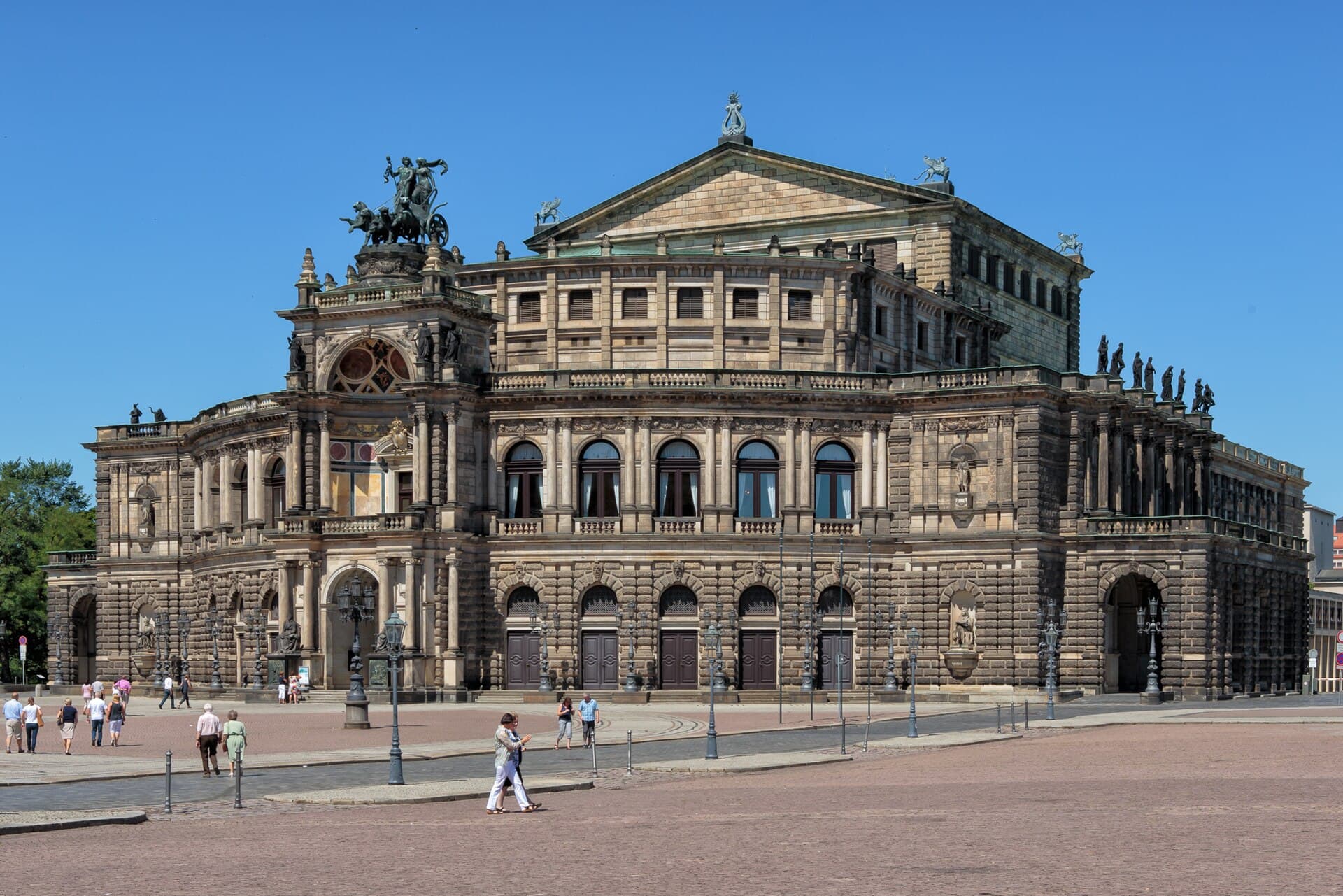 SemperoperThe Semperoper is by broad consent Germany's most famous and most beautiful oper5 minutes walk4.7
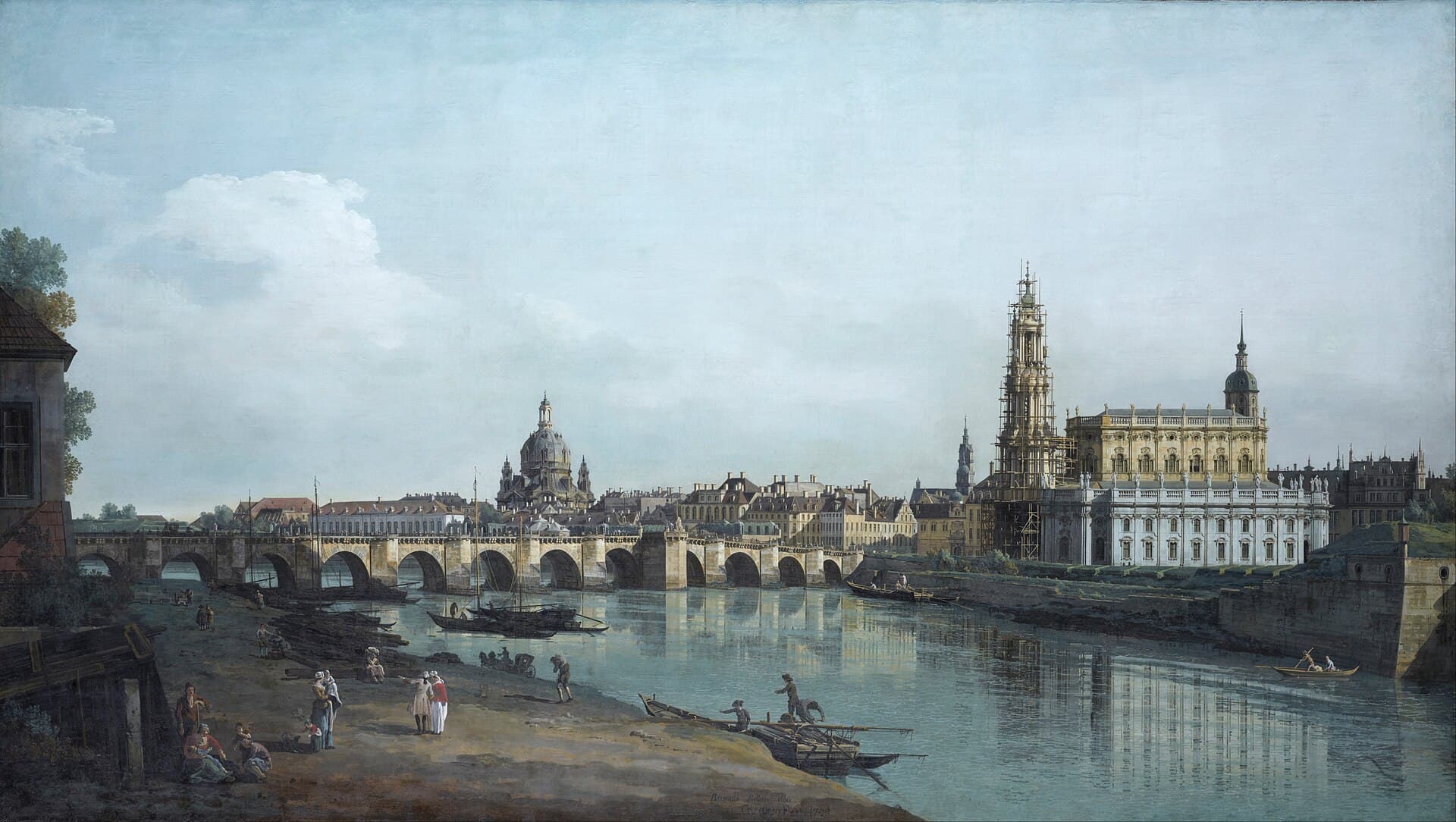 Canaletto ViewThe Canaletto View is not a building but an angle. You stand on the north bank o5 minutes walk4.7
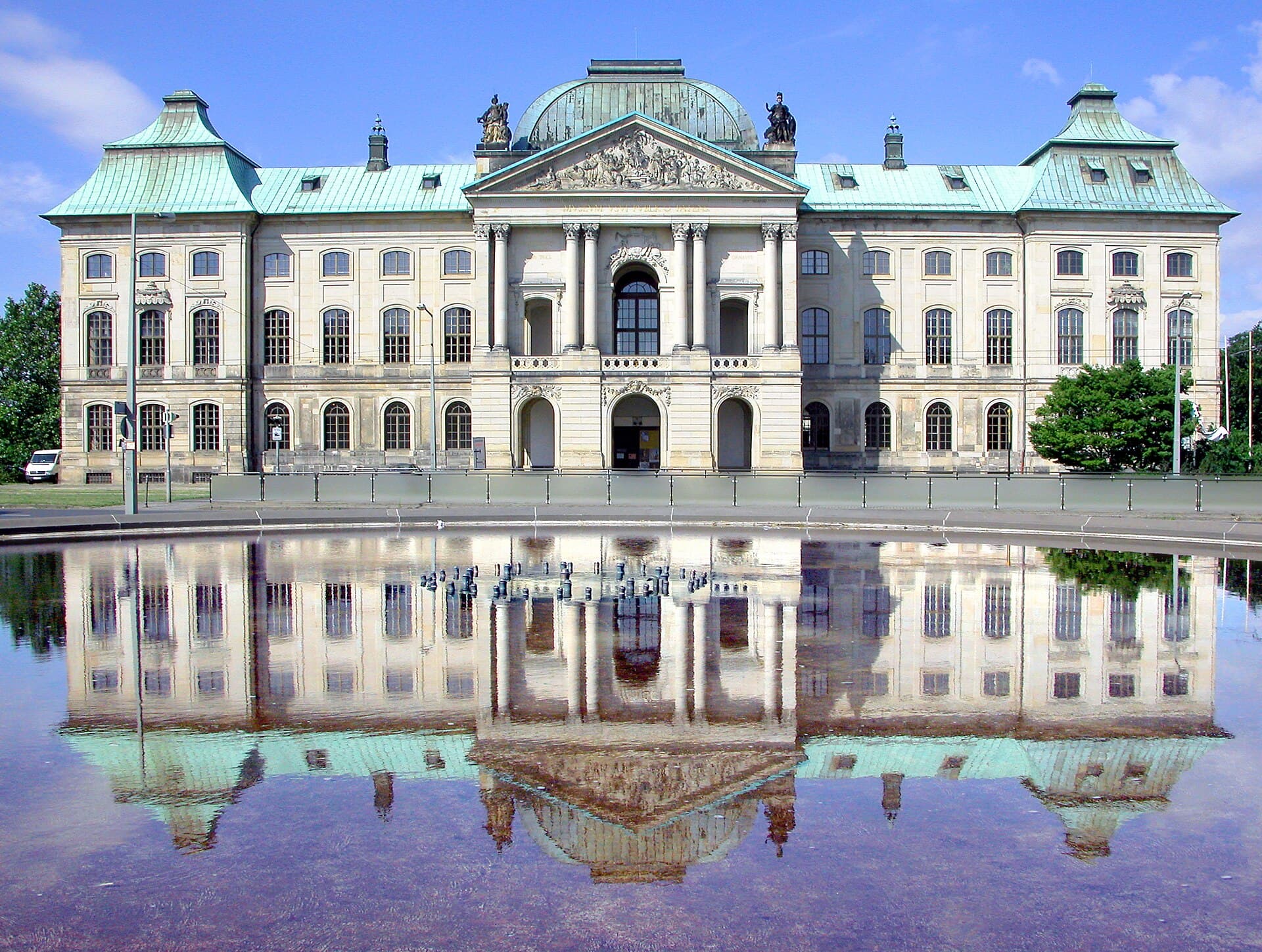 Japanese Palace (Japanisches Palais)The Japanese Palace witnesses Europe's eighteenth-century obsession with the Far5 minutes walk4.3
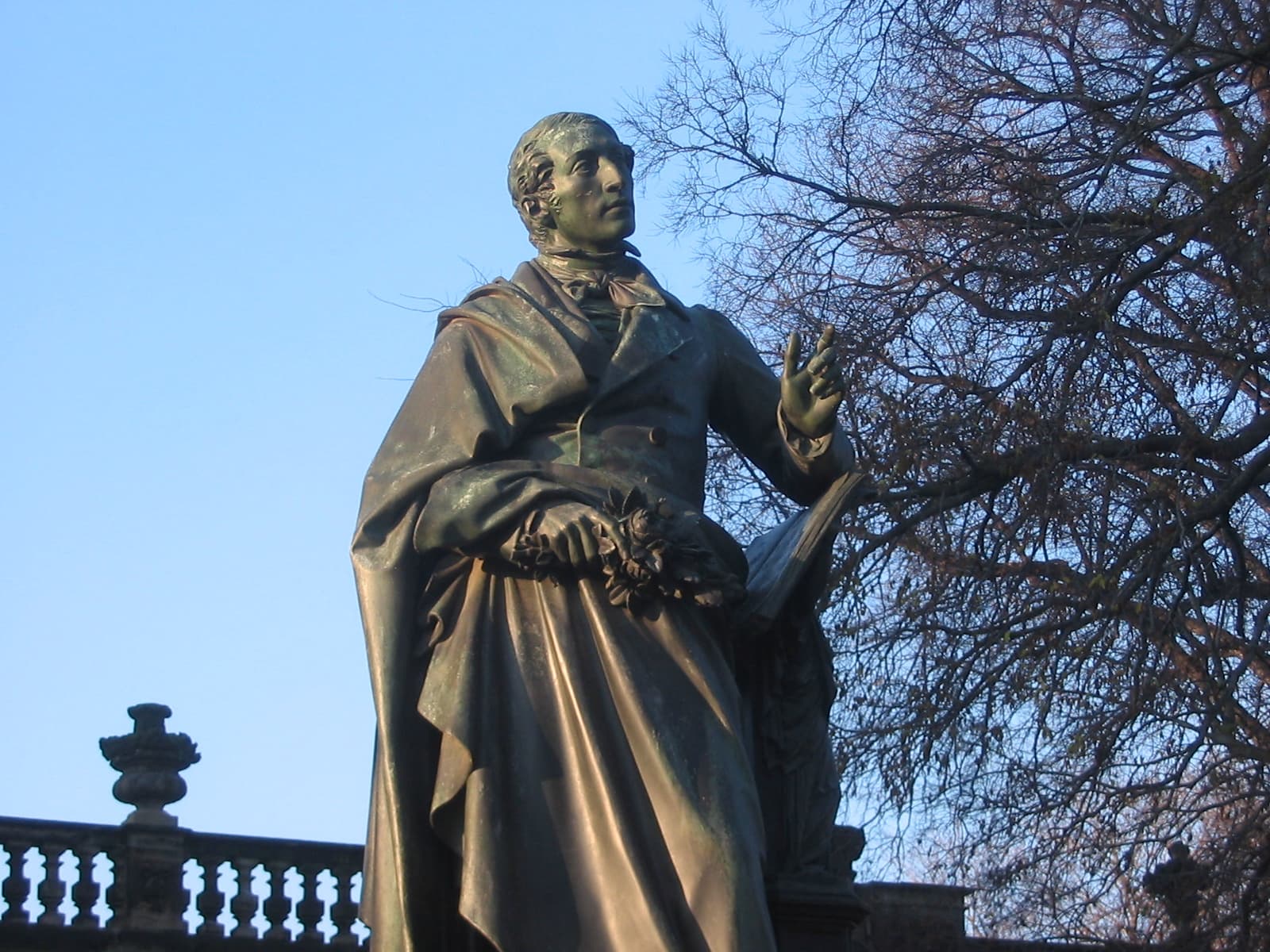 The Carl Maria von Weber MonumentA bronze statue in front of Dresden's Semper Opera House, to the composer Carl M5 minutes walk4.9
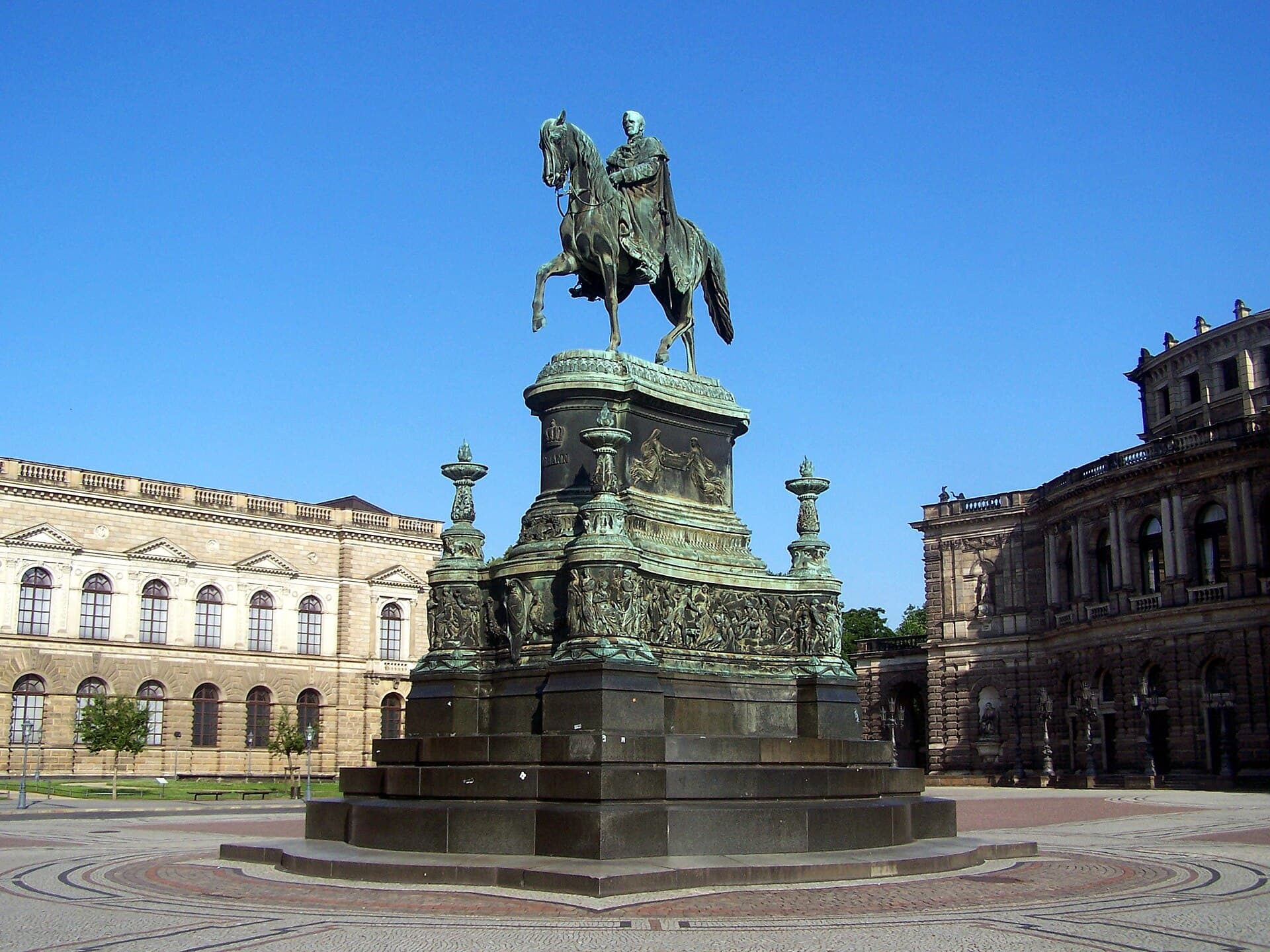 The King Johann MonumentAn equestrian statue of King Johann of Saxony standing on the Theaterplatz direc6 minutes walk4.9
It did not survive entirely but was far less damaged. The February 1945 raids concentrated on the historic centre on the southern bank, where population density and timber-framed buildings burned in a firestorm. Parts of the Neustadt remained standing, which is why it has nineteenth-century residential buildings in original condition today — rare in many German cities.
If you want to walk to every sight, the southern bank is closer but pricier and more crowded. If you want better prices, an evening scene and restaurants residents actually use, the northern bank — and the two are ten minutes apart on foot across the bridge. For a stay longer than two nights, the north is clearly better.