
The Temple of Zeus columns
Vast drums left lying where the earthquake threw them.
dronepicr — CC BY 2.0 · Holger Uwe Schmitt — CC BY-SA 4.0 · Holger Uwe Schmitt — CC BY-SA 4.0 · Holger Uwe Schmitt — CC BY-SA 4.0
**Where the Olympic Games began, and were held for a thousand years** — in a green valley between two rivers and a pine hill, in the western Peloponnese. The first dated games were held here in **776 BC**, and they continued every four years until they were **banned in the 4th century AD** — more than **a thousand unbroken years**, a run no sporting institution in history comes near. It was not merely a stadium: it was a **sanctuary of Zeus**, and here stood the **Temple of Zeus**, which held his seated statue in gold and ivory — **one of the Seven Wonders of the ancient world**, some twelve metres high. The temple today is **fallen columns**, thrown down by an earthquake and left by the excavators where they found them — a more affecting sight than re-erection would have been. You walk between the older **Temple of Hera**, the **palaestra** where wrestlers trained, the **workshop of Pheidias** where the statue was made, and the **stadium** with its vaulted entrance. ✅ And the modern **Olympic flame** is still lit here before every games.
Vast drums left lying where the earthquake threw them.
A vaulted passage the athletes walked through to the track.
Where the statue of Zeus was made, later turned into a church.
Archaia Olympia, 27065 Ilia, Greece
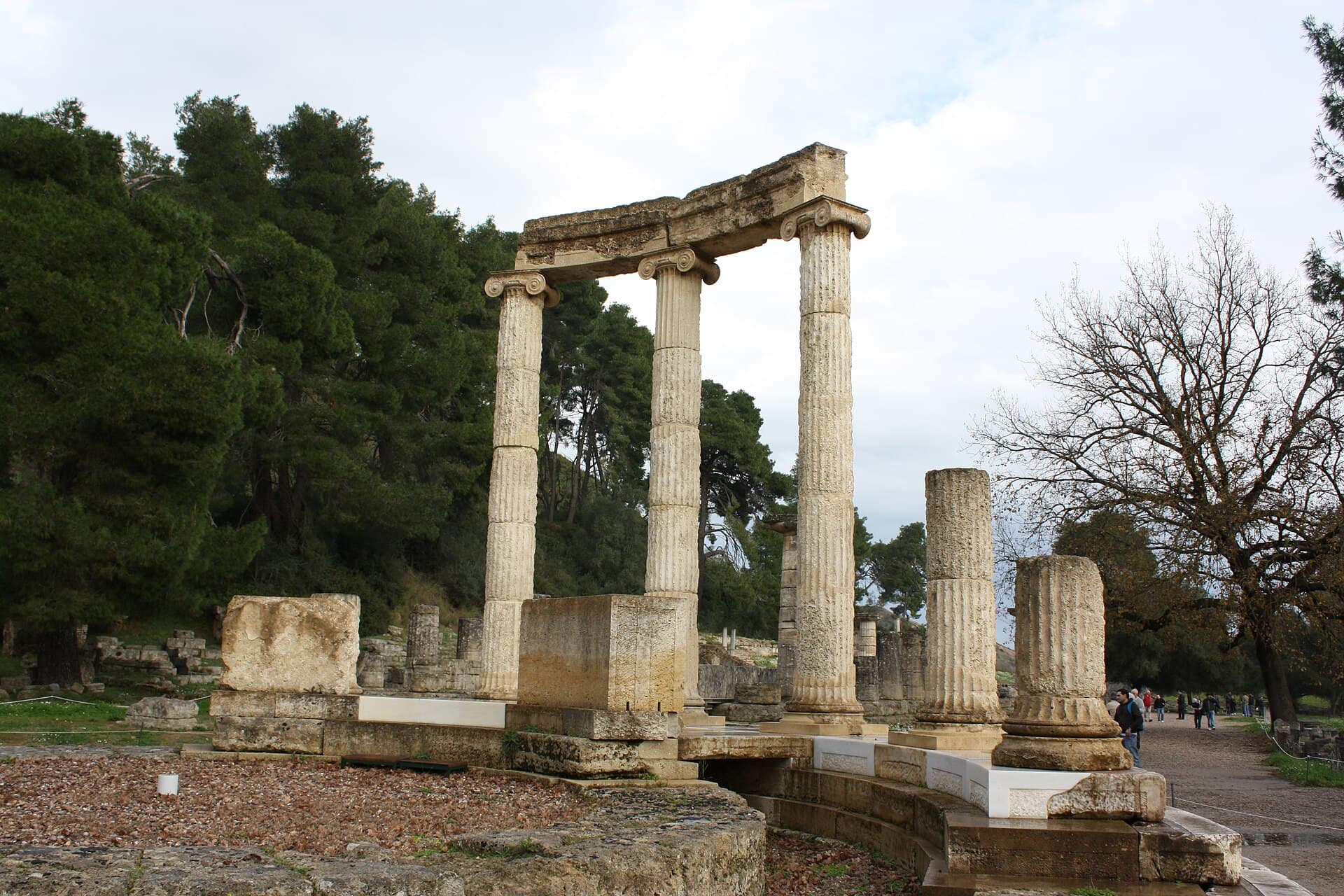 Philippeion**The only building at Olympia dedicated to human beings rather than a god** — w1 minute walk4.9
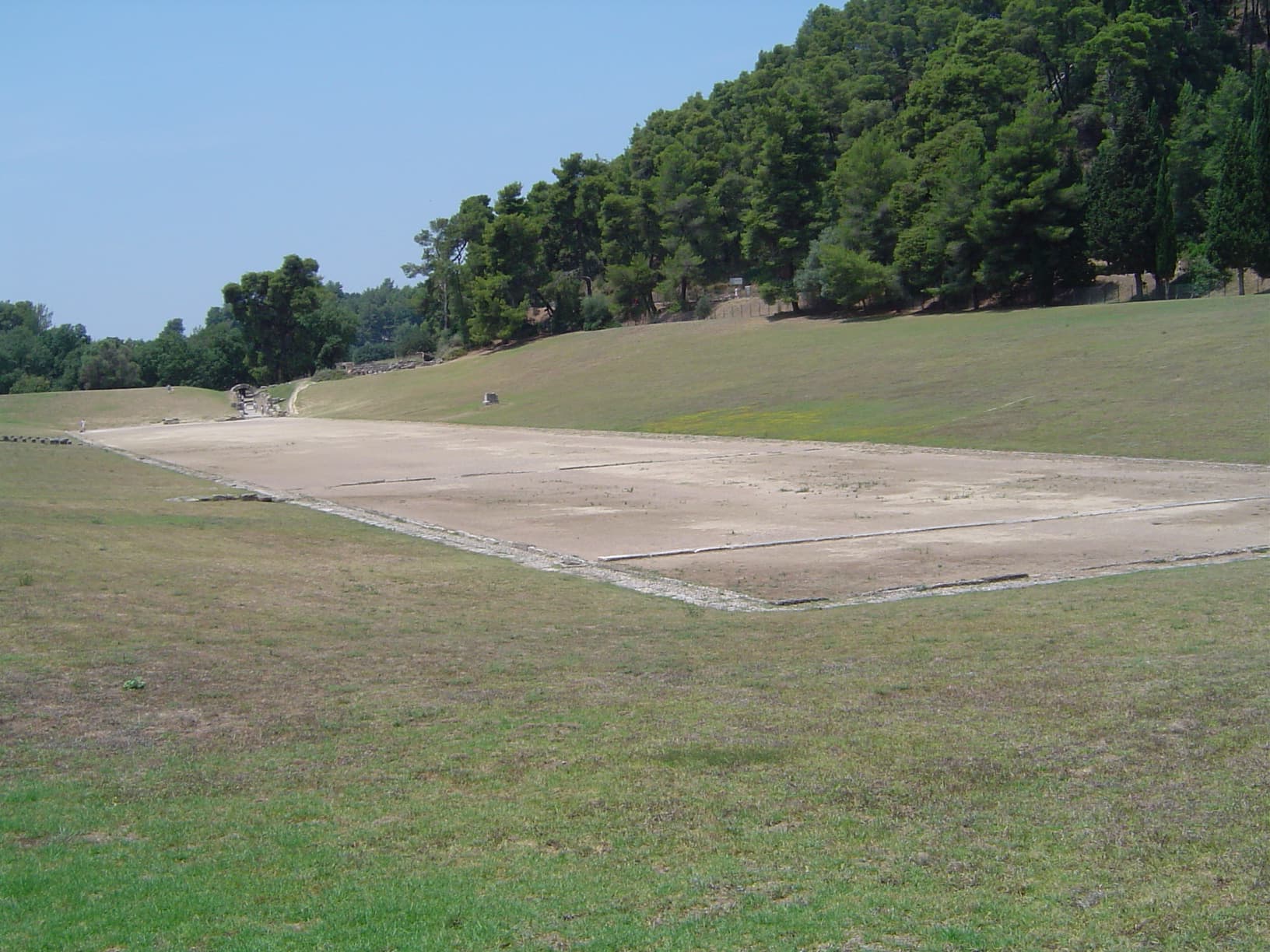 Stadium at Olympia**The original stadium — a long earth floor with no stone seating** — which is e4 minutes walk4.7
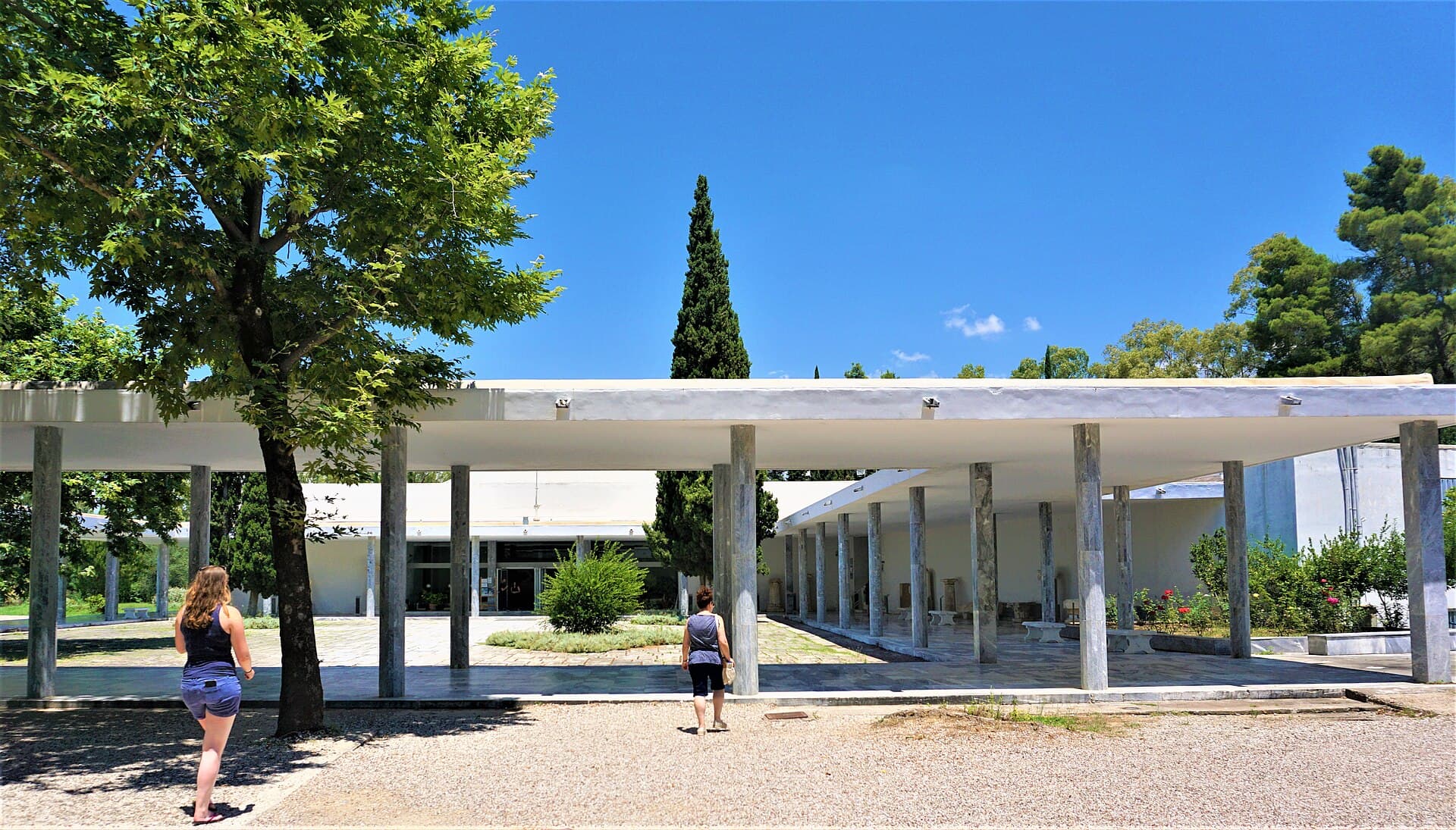 Archaeological Museum of Olympia**One of the greatest museums in Greece, holding the object that explains classi7 minutes walk4.8
**Because they were a pagan festival in an empire that had become Christian — that is the principal reason.** ✅ **The context**: the games were not a neutral sporting event but **worship of Zeus**: sacrifices, processions, oaths before his statue, and prizes consecrated to him. Once Christianity became the religion of the Roman state, that was a problem. ✅ **The decision**: it is traditionally attributed to the emperor **Theodosius I**, who banned pagan rites in the late 4th century, with his successors completing what he began. **The exact date of the last games is uncertain** and the sources conflict — but the direction is clear. ✅ **What followed**: the sanctuary was closed and the **statue of Zeus removed** — one account has it carried to Constantinople, where a fire later destroyed it. Then **earthquakes** brought down the columns and **river floods** buried the site in silt for centuries — and that silt, incidentally, **is what preserved it** until the 19th-century excavations.
**One night, or a stop on a Peloponnese loop — not a day trip from Athens.** ⚠ **From Athens**: about **300 km** and **three and a half hours** each way — seven hours of driving for one day, which does not make sense; day trips are sold but they are punishing. ✅ **The right arrangement**: make it part of a **Peloponnese circuit**: Athens → **Nafplio** (Mycenae and Epidaurus) → **Olympia** → perhaps **Delphi** via the Rio–Antirrio bridge or the ferry. Or spend a night in the small village of **Archaia Olympia** at the site itself. ✅ **And staying over** lets you enter **at opening**, before the coaches and before the heat — which changes the whole visit. ✅ **Cruise ships** dock at **Katakolo**, 35 km away, and their groups come from there — so if there is a ship in port, expect crowds between 10 and 2.