
The vaulted passage
32 metres of tunnel the athletes walked to the arena.
Dwaipayanc — Public domain · Jean Housen — CC BY-SA 4.0 · dronepicr — CC BY 2.0 · Holger Uwe Schmitt — CC BY-SA 4.0
**The original stadium — a long earth floor with no stone seating** — which is exactly what surprises visitors. You enter through a **vaulted passage** some 32 metres long, the same one the athletes and judges walked through to the arena — and coming out of it, a **rectangle of earth and grass** opens in front of you, ringed by earth banks. There are no seats: the crowd — **around 45,000 people** — **sat on the ground** on the surrounding slopes. The one stone seat was for the priestess of Demeter, **the only woman permitted to attend**. At each end are the stone **start and finish lines**, still in place, with the grooves a runner set his toes into. The distance between them is **192.27 metres** — a unit called a *stadion*. ✅ And you can **run on it**, as many people do — nothing stops you.
32 metres of tunnel the athletes walked to the arena.
Stone with grooves a runner set his toes into.
The one stone seat — for the only woman allowed to attend.
Archaia Olympia, 27065 Ilia, Greece
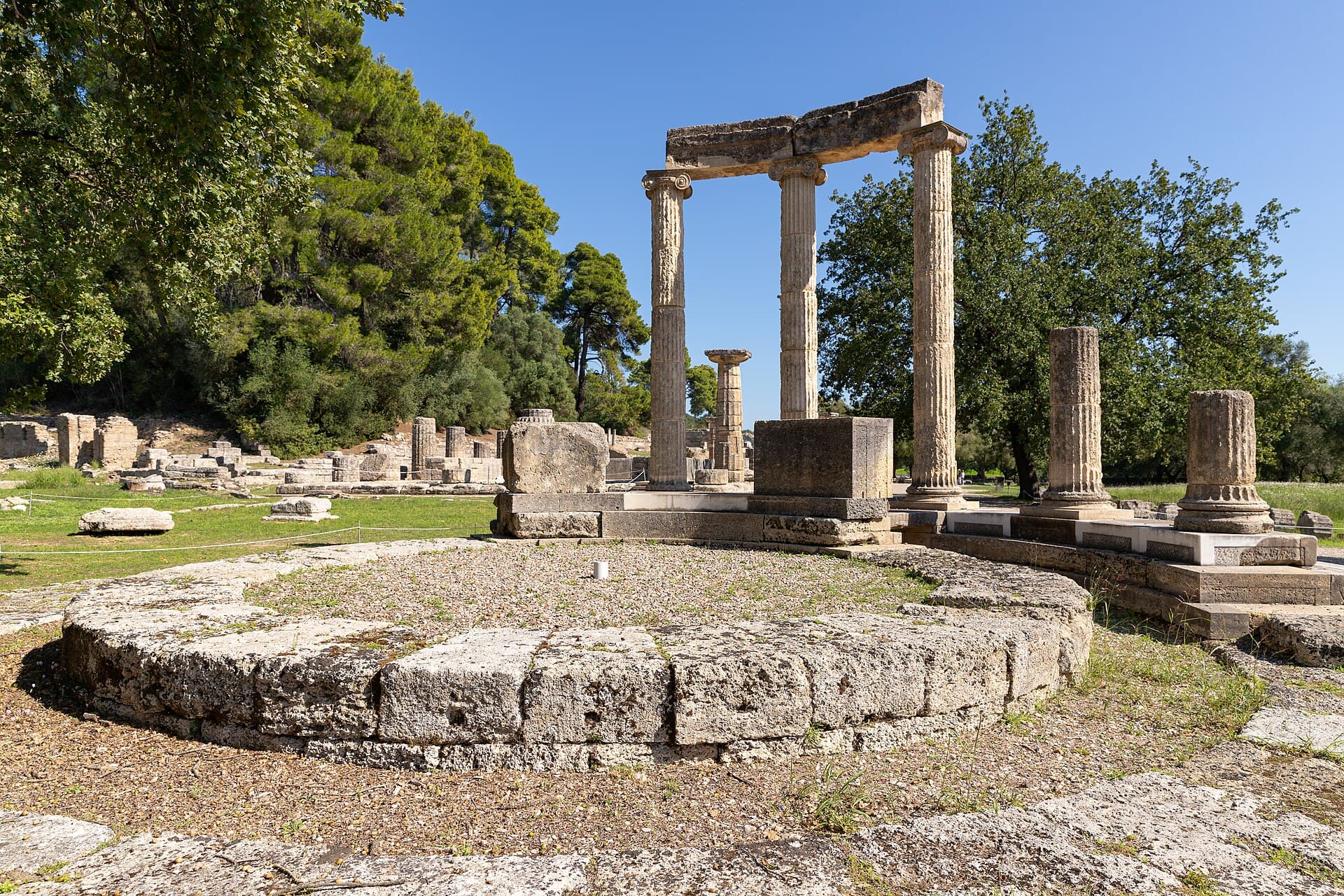 Olympia**Where the Olympic Games began, and were held for a thousand years** — in a gre4 minutes walk4.6
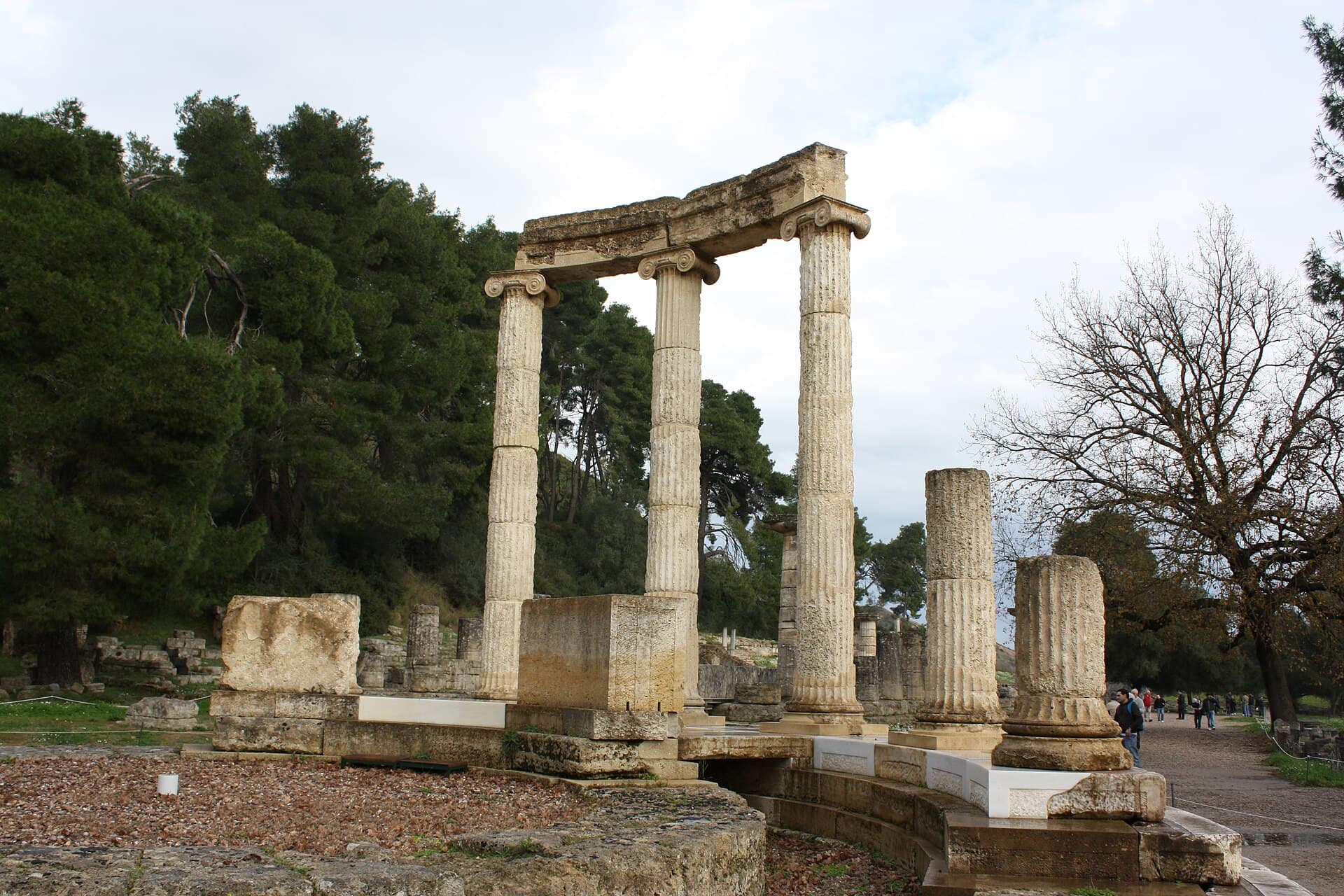 Philippeion**The only building at Olympia dedicated to human beings rather than a god** — w4 minutes walk4.9
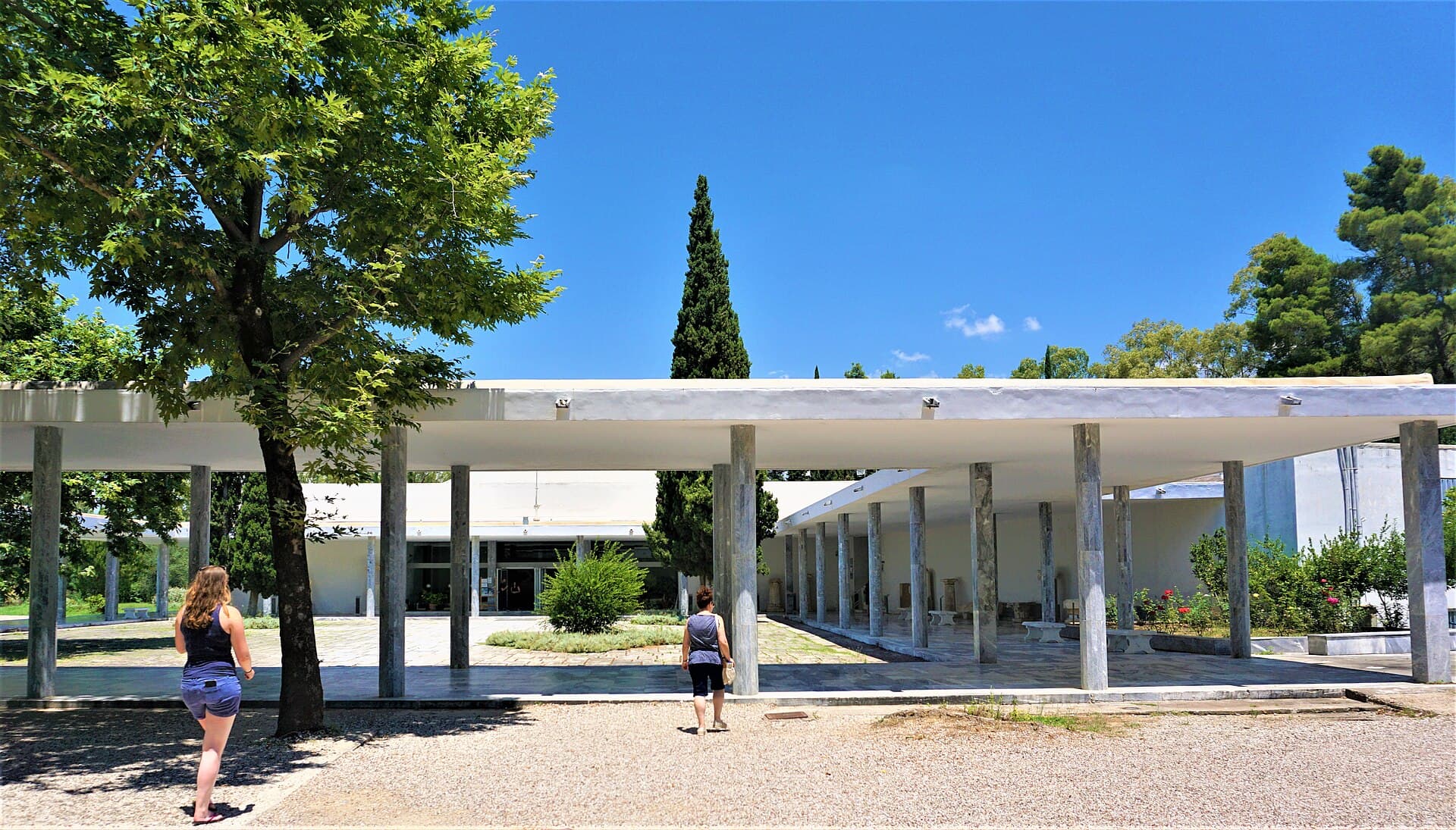 Archaeological Museum of Olympia**One of the greatest museums in Greece, holding the object that explains classi7 minutes walk4.8
**Four fundamental differences that surprise most people.** ✅ **First: very few events.** There were no dozens of sports — just **foot races** over several distances, **wrestling**, **boxing**, the **pankration** (near-unrestricted fighting), the **pentathlon**, and **chariot and horse racing**. No swimming, no standalone throwing events, no team sports. ✅ **Second: no medals.** The winner took an **olive wreath** and nothing else, with no prize for second — **the loser got nothing**. The real reward came later from his own city. ✅ **Third: competitors were men only**, ⚠ and **married women were barred from attending** at all (there were separate women's games called the Heraia). ✅ **Fourth: it was a religious festival** for Zeus, not a neutral sporting event — sacrifices and processions were part of it. ✅ **What is the same**: the **sacred truce** suspending wars so people could travel, and the four-year cycle.
**Yes — and the international word came from this very place.** ✅ **The origin**: a **stadion** (στάδιον) was a Greek **unit of distance** before it was a building. Here it is **192.27 metres** — the distance between the start and finish lines in this stadium specifically. ✅ **Olympia's most prestigious race** was the **stadion**: a single run over that distance, and it was **the oldest and highest event** — so much so that **Olympiads were named after its winner**, and events were dated by them. ✅ **The name then moved from the distance to the place**: the building where that race was run came to be called a *stadion* — hence Latin *stadium*, and through it English, French and the rest, and Arabic *istad*. ⚠ **A curiosity**: the stadion's length **was not standardised** between Greek cities — Delphi's, for instance, differs from Olympia's.