
The circular form
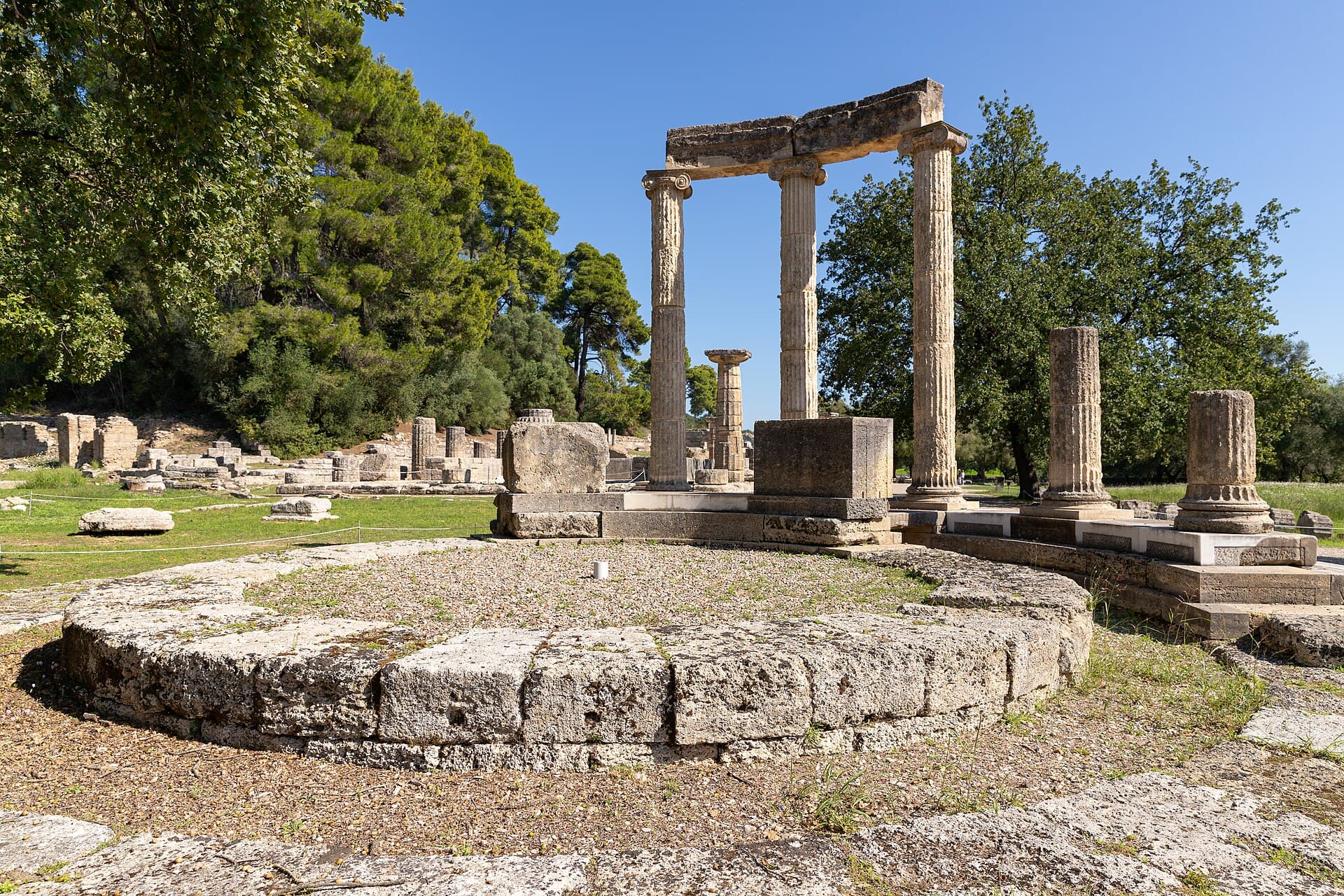
Re-erected columns on a round base of an unusual type.
Wknight94 talk — CC BY-SA 3.0 · Haubi|Gerhard Haubold — CC BY-SA 4.0 · Holger Uwe Schmitt — CC BY-SA 4.0 · Rigorius — CC BY-SA 4.0
**The only building at Olympia dedicated to human beings rather than a god** — which is why it matters far beyond its small size. It is a **circular** structure, some of its columns re-erected, begun by **Philip II of Macedon** after his victory at **Chaeronea** in 338 BC — the battle that brought the Greek cities under Macedonian control. His son **Alexander the Great** finished it. What stood inside is the surprise: **five statues in gold and ivory** — the material reserved for images of the gods — representing **Philip, Olympias, Amyntas, Alexander and Eurydice**. A ruling family placing itself, in the holiest Greek sanctuary, **in the material gods were made of**. ⚠ This was not an architectural gesture but **a political statement**: Macedon announcing that it was no longer on the margin of the Greek world but at its centre. ✅ It is very small: **fifteen minutes** covers it — but know its story before you walk past.
Re-erected columns on a round base of an unusual type.
The spot that held five gold-and-ivory figures of a ruling family.
In the sanctuary's heart by the Temple of Hera — chosen, not accidental.
Archaia Olympia, 27065 Ilia, Greece
 Olympia**Where the Olympic Games began, and were held for a thousand years** — in a gre1 minute walk4.6
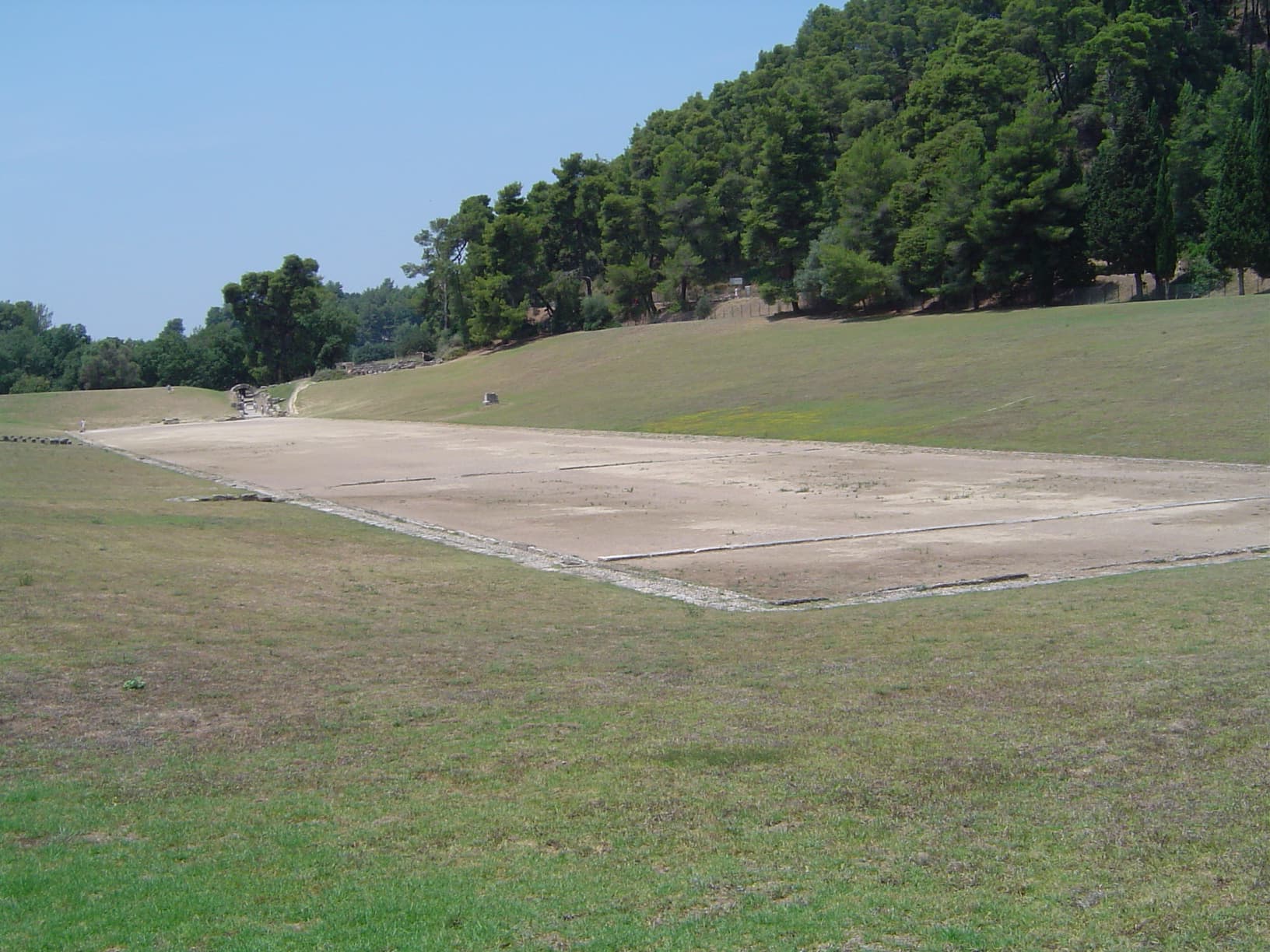 Stadium at Olympia**The original stadium — a long earth floor with no stone seating** — which is e4 minutes walk4.7
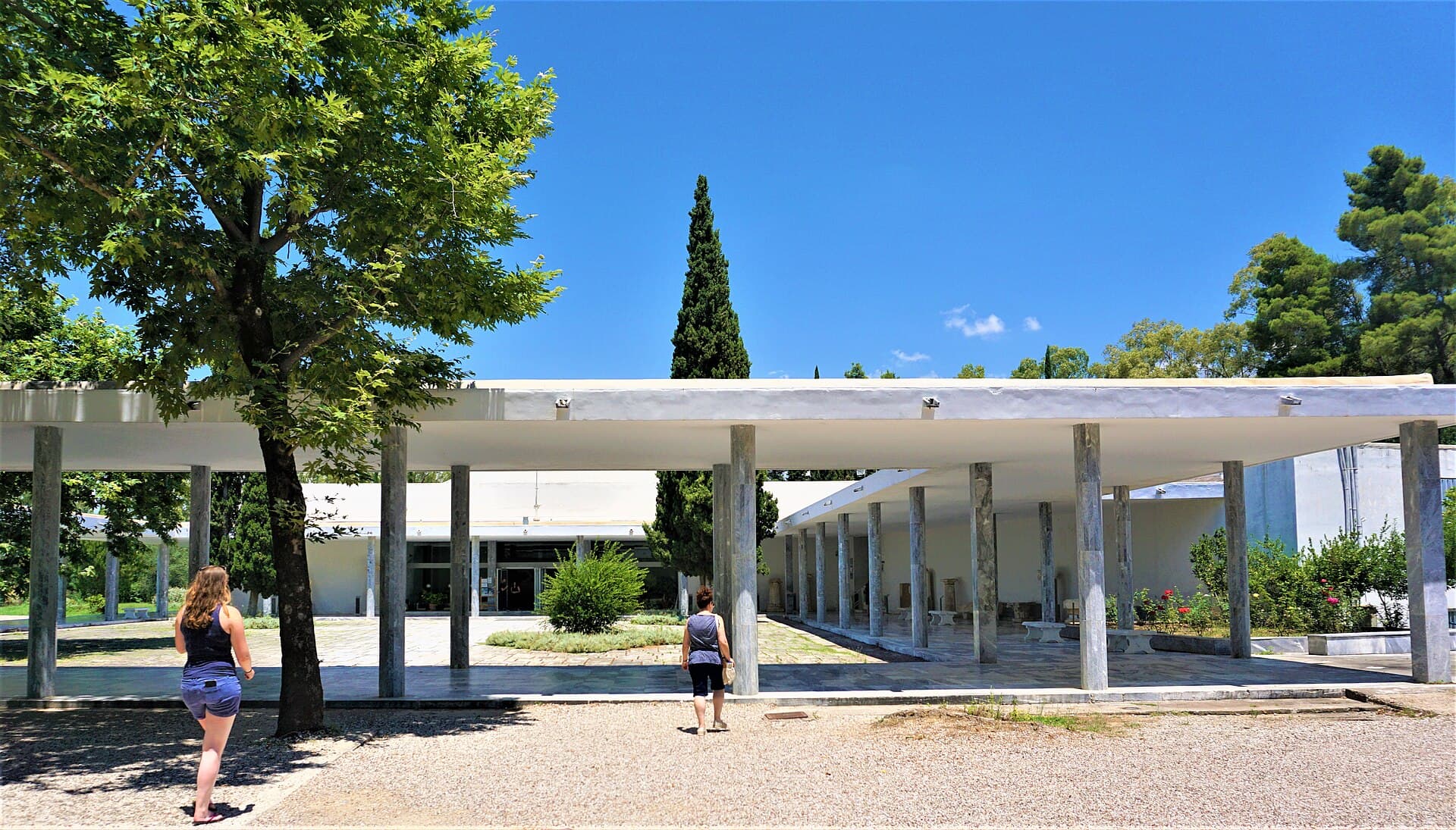 Archaeological Museum of Olympia**One of the greatest museums in Greece, holding the object that explains classi7 minutes walk4.8
**Because that material was reserved for gods — and using it for people was a claim nobody could miss.** ✅ **The technique**: **chryselephantine** statues (gold and ivory) were the most costly and difficult in the Greek world: a wooden core, exposed skin carved in **ivory**, drapery in sheet **gold**. They were used for the greatest images of the gods — **Zeus at Olympia itself** (one of the Wonders) and **Athena in the Parthenon**. ✅ **The implication**: when Philip placed his family in that material **inside the sanctuary of Zeus**, metres from the statue of Zeus himself, he was saying something no Greek needed explained: **the Macedonian house stood close to the divine**. ⚠ **The context matters**: Greeks regarded Macedonians as **half-foreigners** on the edge of their world. After Chaeronea, Philip was their master — and the Philippeion is **the architectural announcement** of that shift.
**The battle that ended the independence of the Greek cities — and the Philippeion is its monument.** ✅ **What happened**: in **338 BC** **Philip II of Macedon** met an alliance of Greek cities led by **Athens and Thebes** at **Chaeronea** in Boeotia. Philip won decisively — and his son **Alexander**, then eighteen, is recorded as commanding a wing and breaking the **Theban Sacred Band**. ✅ **The result**: the age of the independent Greek city-state was effectively over. Philip imposed the **League of Corinth**, uniting Greece under his leadership in preparation for invading Persia — the project Alexander inherited and carried out. ✅ **And why here?** Because Olympia was **the place all Greeks came to**. Building a monument to the Macedonian house here, immediately after the battle, **addressed the whole of Greece at once** — the cleverest possible location for a political message in the Greek world.