
The west pediment
Lapiths against Centaurs, with Apollo calm in the middle of the chaos.
Joyofmuseums — CC BY-SA 4.0 · Holger Uwe Schmitt — CC BY-SA 4.0 · Holger Uwe Schmitt — CC BY-SA 4.0 · Holger Uwe Schmitt — CC BY-SA 4.0
**One of the greatest museums in Greece, holding the object that explains classical sculpture** — a few minutes' walk from the site. Its heart is the **central hall**: here the **two pediments of the Temple of Zeus** are reassembled in full on facing walls. One shows the **chariot race** between Pelops and Oenomaus in a moment of stillness before the start; the other the **battle of Lapiths and Centaurs** in violent confusion — and between them stands **Apollo**, calm, one arm outstretched, one of the most famous faces in Greek art. In its own room is the **Hermes of Praxiteles**: a marble Hermes holding the infant Dionysus, **among the most famous statues to survive**, taught for the curve of its body and the polish of its marble. There is also the winged **Nike of Paionios** and the inscribed **helmet of Miltiades** — dedicated to Zeus by the commander at Marathon. ✅ It is fully air-conditioned, clearly arranged, and well labelled in English.
Lapiths against Centaurs, with Apollo calm in the middle of the chaos.
Polished marble and a curve of the body taught in the textbooks.
An inscribed bronze helmet dedicated to Zeus by the victor of Marathon.
Archaia Olympia, 27065 Ilia, Greece
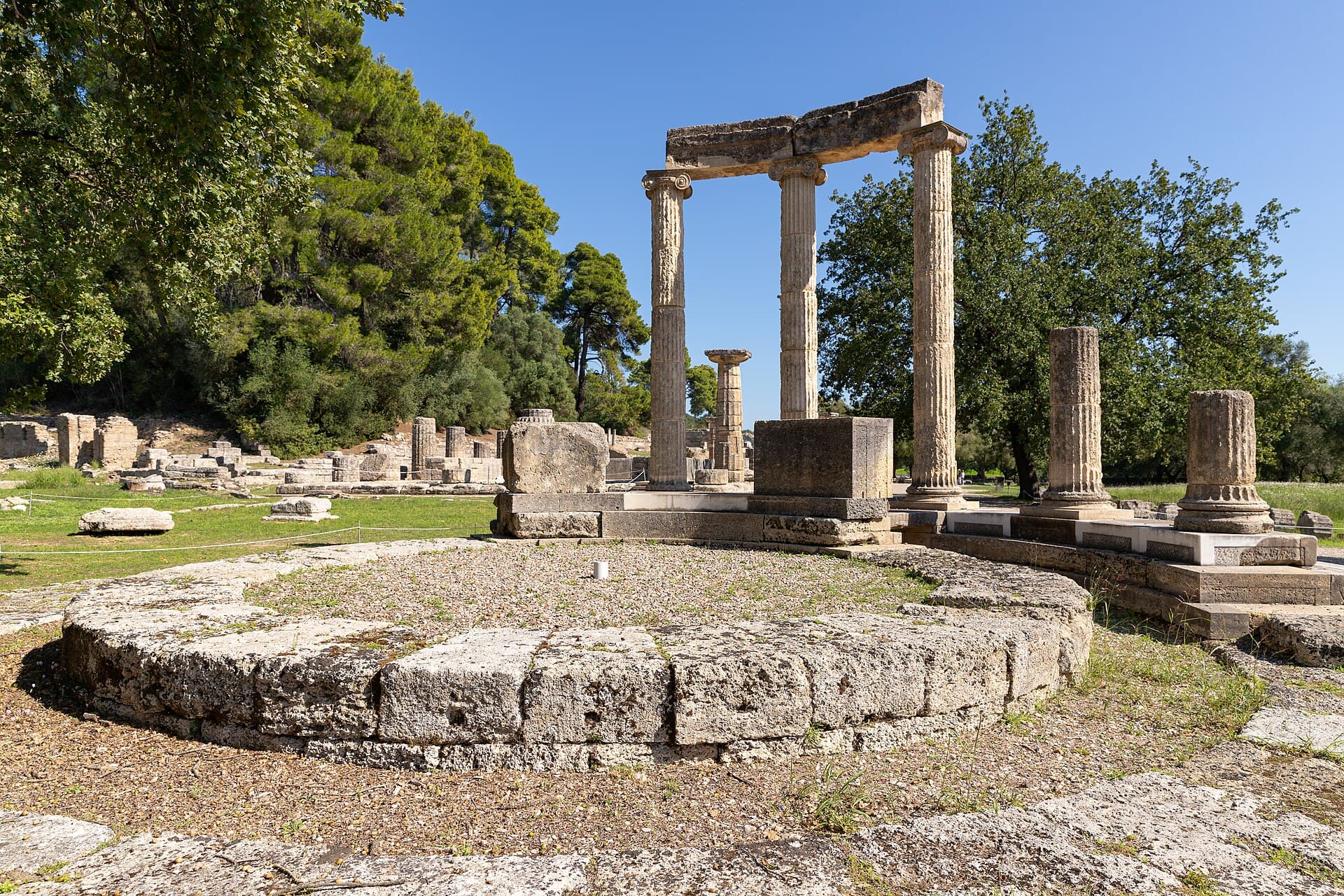
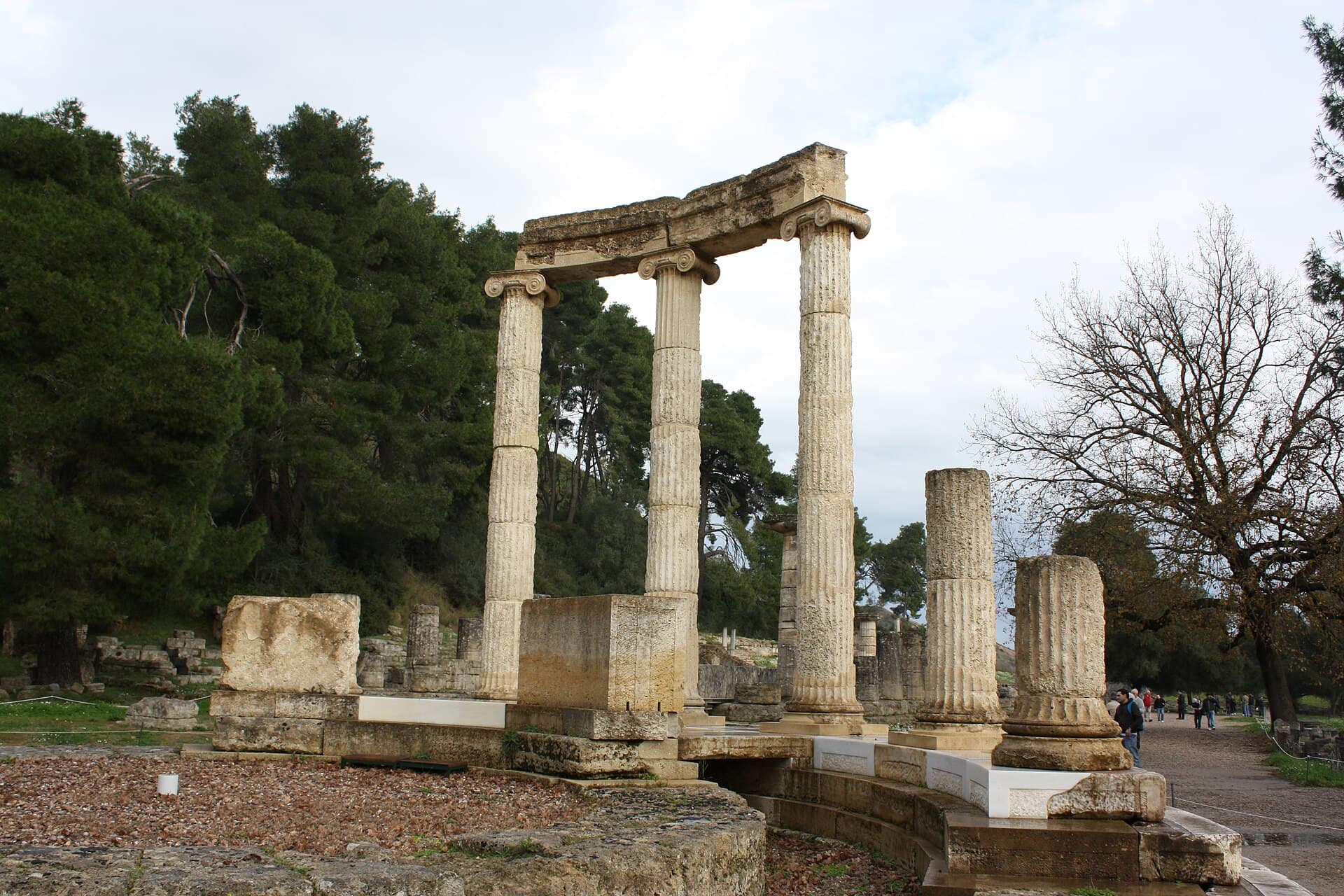 Philippeion**The only building at Olympia dedicated to human beings rather than a god** — w7 minutes walk4.9
 Olympia**Where the Olympic Games began, and were held for a thousand years** — in a gre7 minutes walk4.6
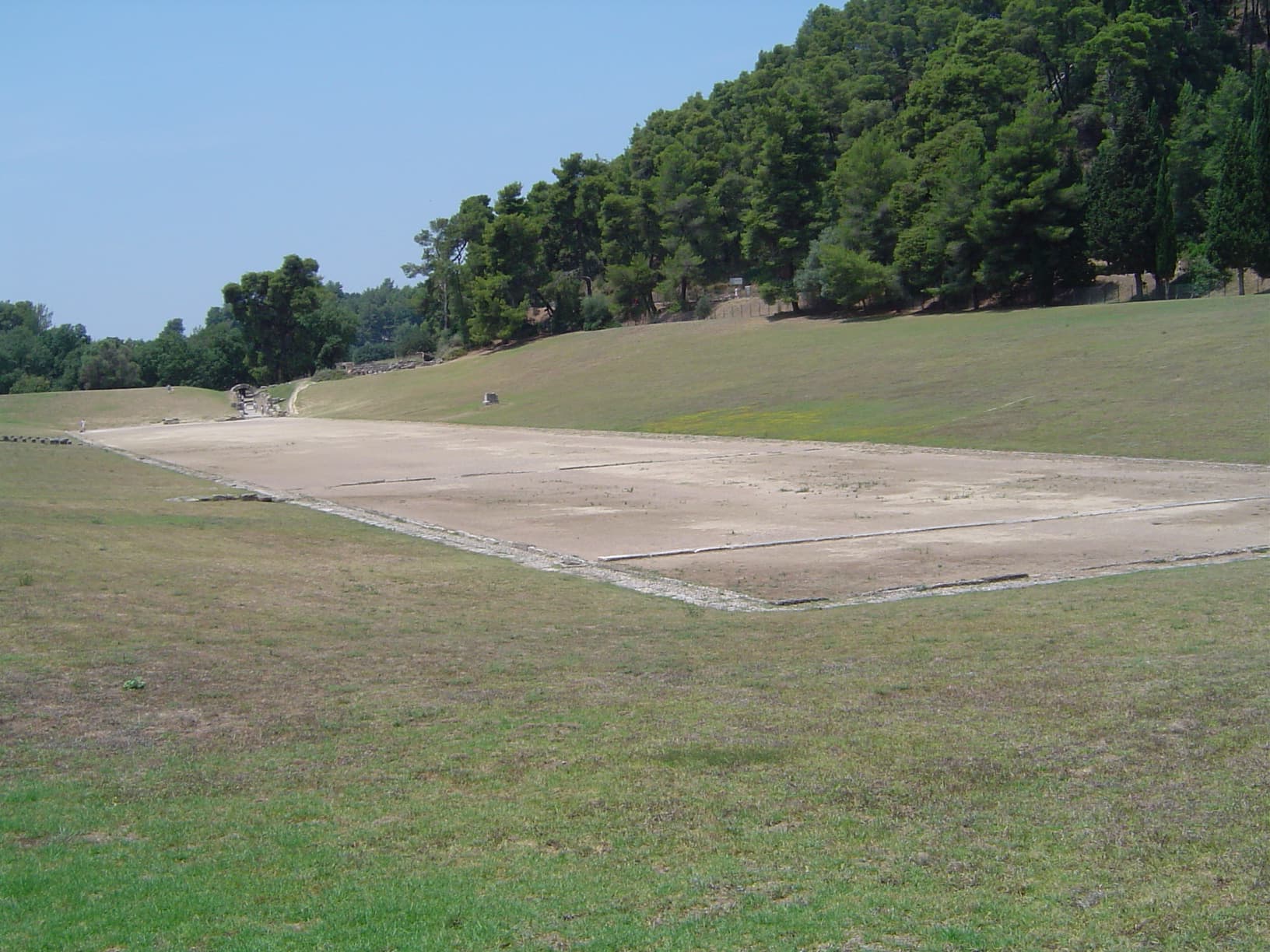 Stadium at Olympia**The original stadium — a long earth floor with no stone seating** — which is e7 minutes walk4.7
**Because both survive, and almost complete — which hardly ever happens.** ✅ **What a pediment is**: the stone triangle above a temple's front, filled with sculpture. Most Greek temple pediments were **lost, scattered or removed** (the Parthenon's are in London). ✅ **Here both survived**, and both are reassembled in one hall on facing walls — so you see **the two fronts together** as they were. ✅ **What matters artistically is the deliberate contrast between them**: the **east** shows the moment **before** the chariot race — figures standing still and tense, time suspended. The **west** shows a **battle** at full movement: twisted bodies, screaming mouths, centaurs seizing women. ✅ **And Apollo between them**: standing at the centre of the chaos, **his face entirely calm**, arm outstretched to impose order — and this opposition of human passion against divine composure is the essence of classical art, and is usually taught from this very pediment.
**Museum first — except in summer heat.** ✅ **In spring, autumn and winter**: **start with the museum**. The reason is that the site at Olympia is **mostly foundations**: stone squares, fallen columns and floors, with no standing buildings. Go in first and you see stones. ✅ **See the pediments and the Hermes first**, though, and you then stand before the Temple of Zeus's foundations knowing **what stood above them**, and before an empty base knowing **what stood on it** — and the site transforms. ⚠ **In July and August, reverse it**: the site **at opening** while it is bearable, and the museum at midday because it is air-conditioned. That is not a preference but **safety**: Olympia sits in an inland valley with no sea breeze, and 1 pm in August on open ground is genuinely dangerous.