
The red lighting
The glass vault is lit at night and becomes one of the city's landmarks.
Corentin Eustacchi — CC BY-SA 4.0 · Dennis G. Jarvis — CC BY-SA 2.0 · Otourly — CC BY-SA 3.0 · Otourly — CC BY-SA 3.0
Lyon's national opera house, and one of Europe's boldest examples of fusing a contemporary building with a historic one. The original is nineteenth-century, and in the early 1990s the architect Jean Nouvel redesigned it in an unusual way: he kept the old stone facades and the foyer, removed everything between them, then added a barrel-vaulted glass dome above the roof and excavated further floors below ground. The result is a historic shell around an entirely contemporary interior. The glass vault is lit red at night and is among Lyon's most recognisable sights after dark. It is best seen twice: by day to read the relationship between old and new, and at night for the lighting. Practical points: the facade and square are always free. Getting inside means a ticket to a performance, and the programme covers opera, ballet and concerts. Short, cheap performances are sometimes staged in the foyer or the basement — a practical way to see the interior without a full opera ticket.
The glass vault is lit at night and becomes one of the city's landmarks.
Nineteenth-century facades wrap a wholly contemporary building.
Floors were added below ground because horizontal expansion was impossible.
Place de la Comédie, beside the city hall, Lyon
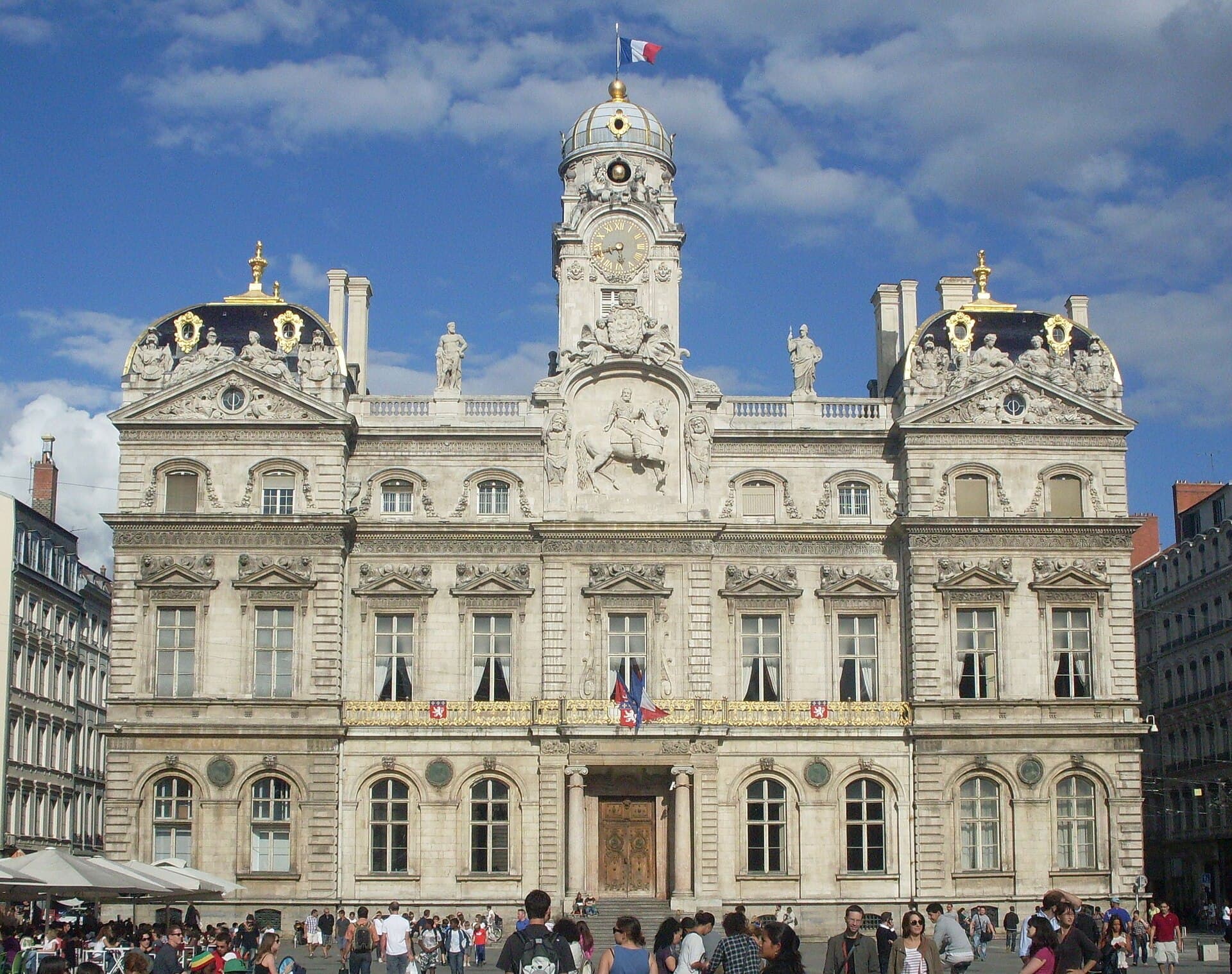 Lyon City HallLyon's city hall on Place des Terreaux, dating from the seventeenth century, amo2 minutes walk4.4
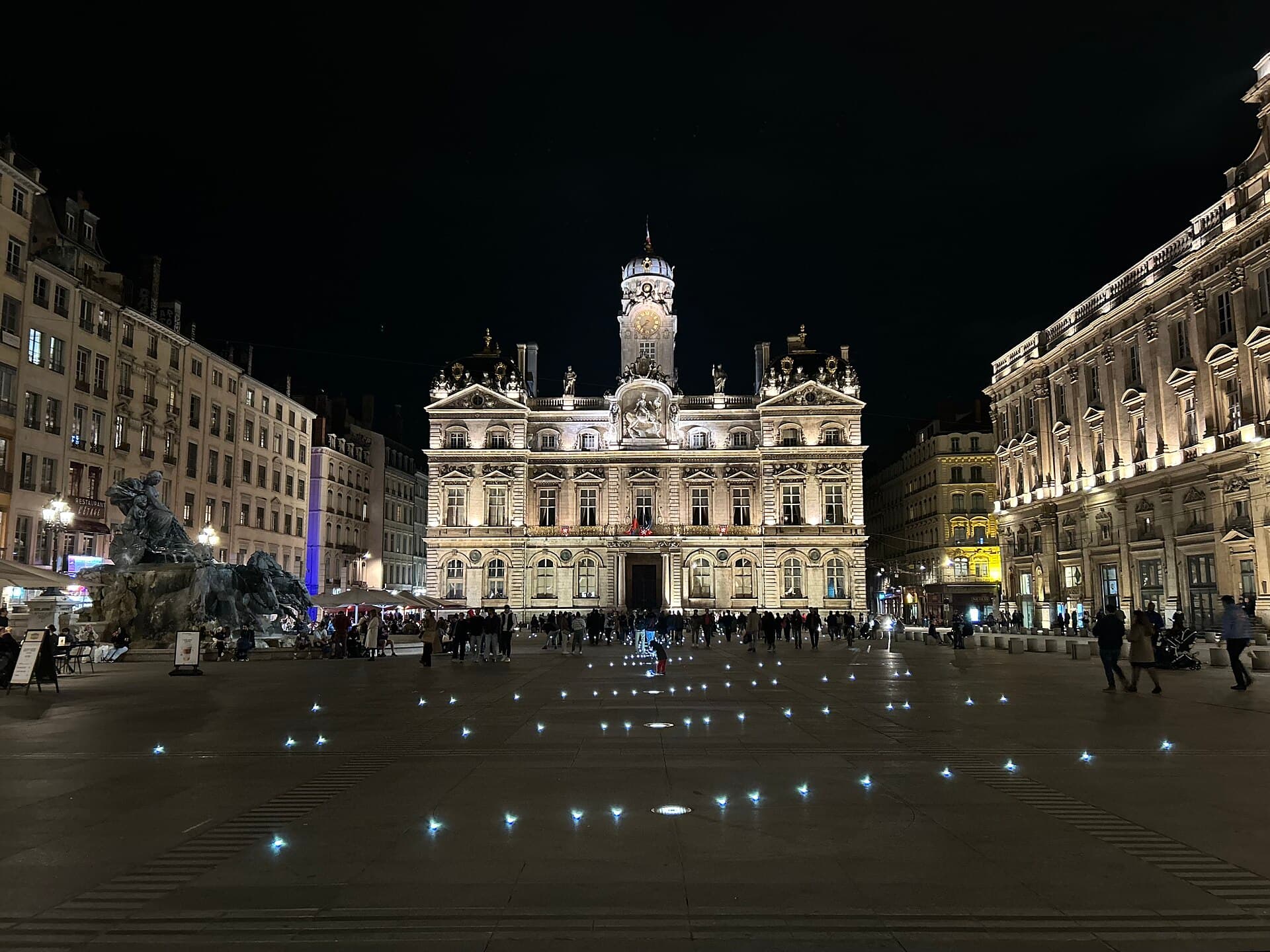 Place des TerreauxThe Terreaux is Lyon's formal salon: the city hall's grand seventeenth-century f3 minutes walk4.4
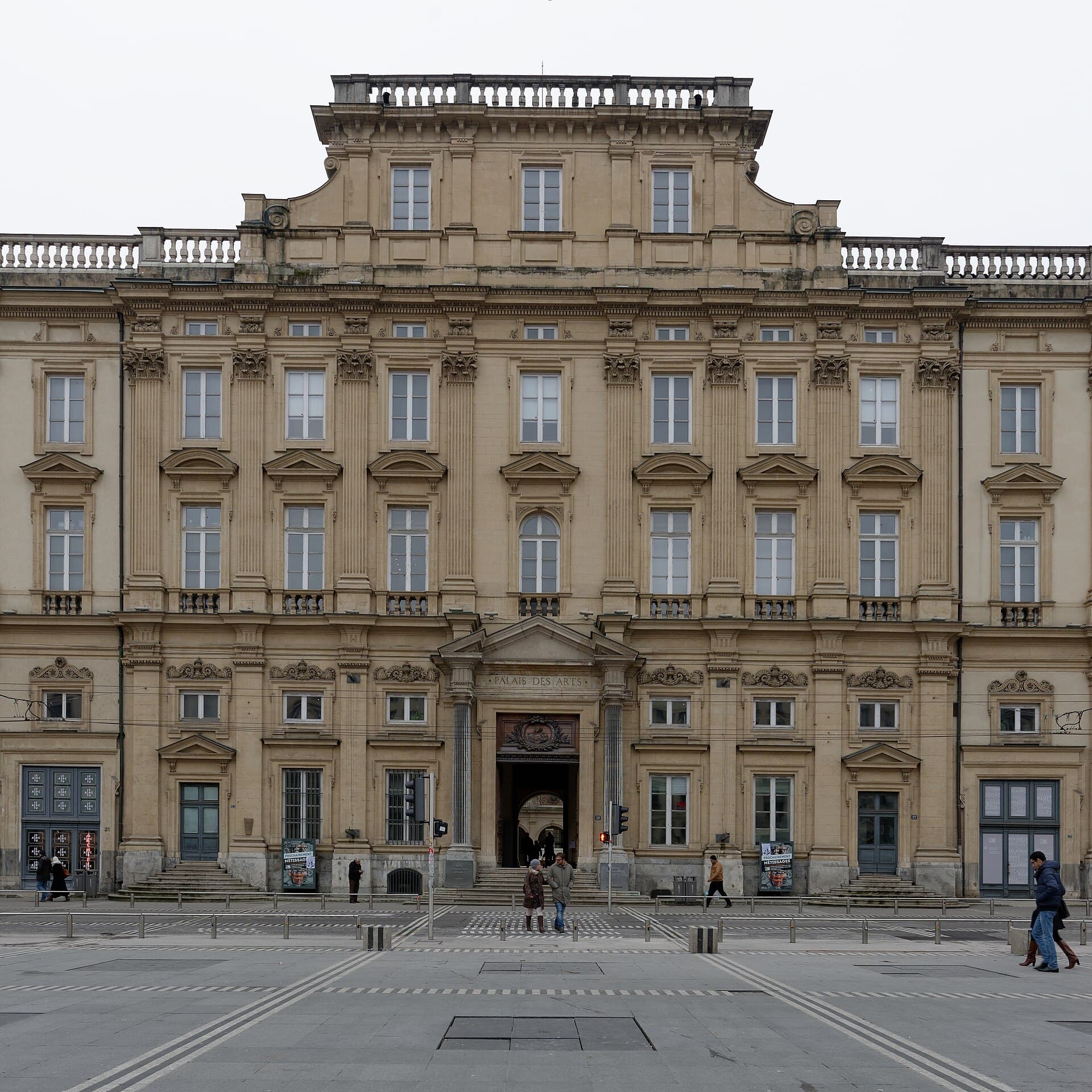 Museum of Fine Arts, LyonOne of the most important art museums in France outside Paris, occupying a seven3 minutes walk4.4
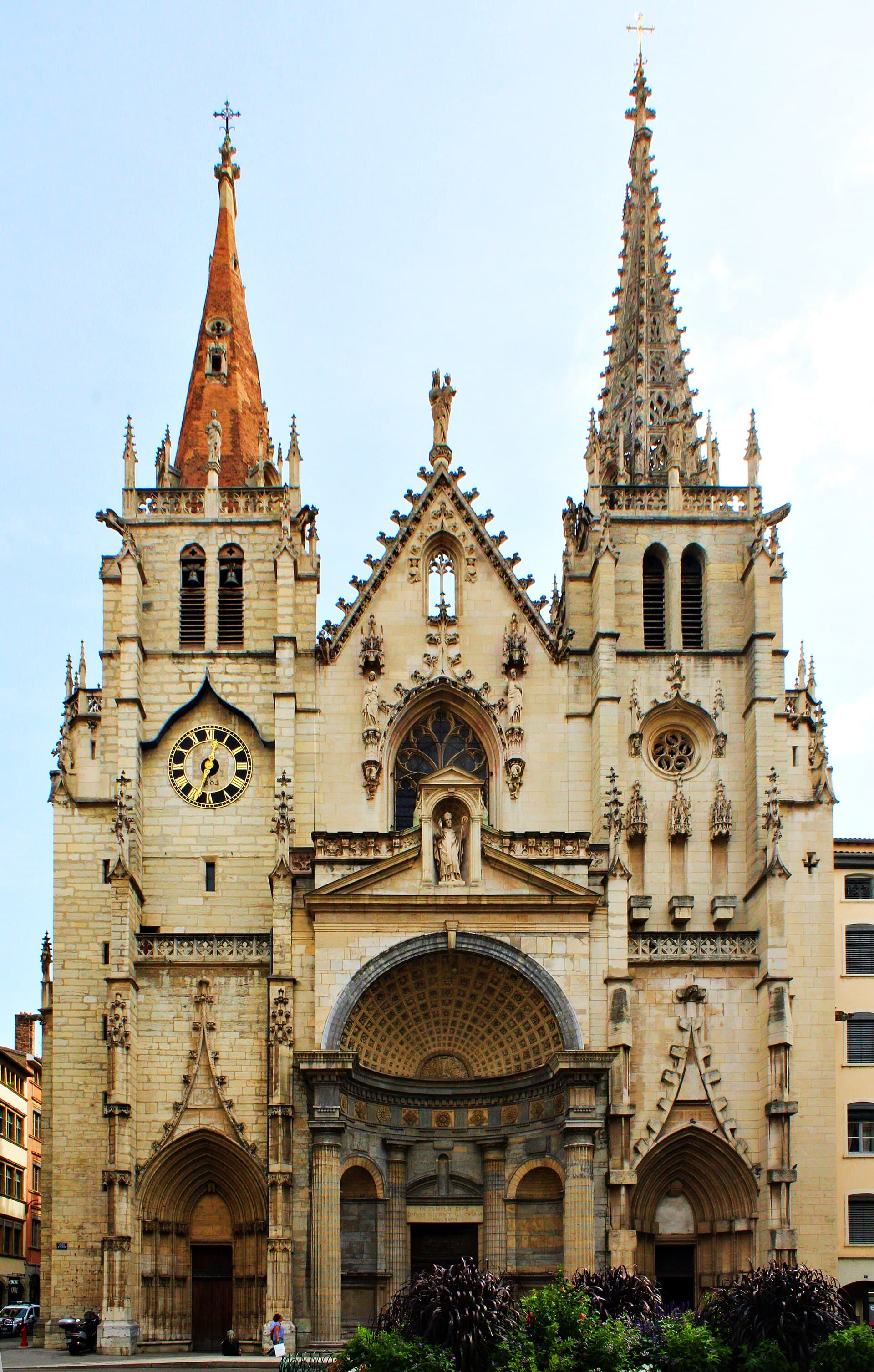 Church of Saint-NizierA Gothic church in the middle of the Presqu'île, among the most prominent religi5 minutes walk4.6
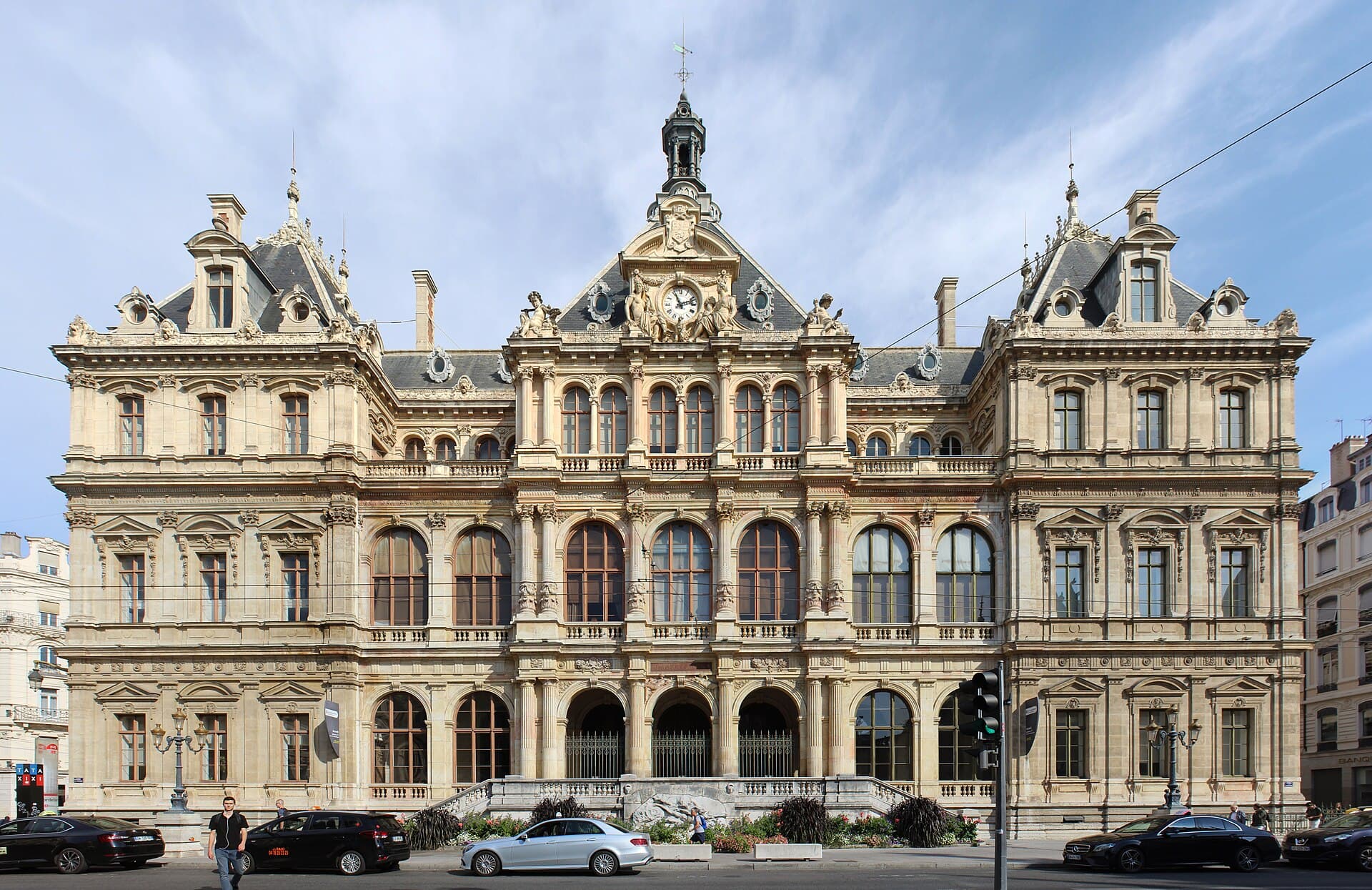 The Palais de la BourseA mid-nineteenth-century building in the heart of Lyon, built as the city's stoc5 minutes walk4.8
Look in the programme for short performances, midday concerts, or shows staged in the foyer or the small underground theatre — far cheaper and shorter, and they let you see the interior space that is half the point of the building.
Shortly after sunset, when the red lighting is on and the sky has not gone fully dark. In those minutes you see the stone facade and the lit vault together, the view that explains the building in a single image.