
Commerce as virtue
The facade sculpture celebrates trade itself.
Chabe01 — CC BY-SA 4.0 · Chabe01 — CC BY-SA 4.0 · A. Marc — Public domain · Chabe01 — CC BY-SA 4.0
A mid-nineteenth-century building in the heart of Lyon, built as the city's stock exchange and chamber of commerce, and also known as the Palais du Commerce. It opened in 1860 in the presence of Napoleon III. The facade is eclectic and rich in sculpture: figures representing trading cities and industries, the carved names of merchants and bankers, and ornament celebrating commerce itself as a virtue. This reflects Lyon in that period: it was the capital of the European silk industry, and its wealth rested on textiles, trade and banking. The city built itself a commercial building with the grandeur of a royal palace. The great interior hall with its glass roof and iron columns is among the most important interiors in Lyon, and is used today for exhibitions and events. The building is still the seat of the chamber of commerce, and entry depends on events. The facade is free to see from the square.
The facade sculpture celebrates trade itself.
Lyon's wealth rested on textiles, trade and banking.
The great hall is among Lyon's most important interiors.
Place de la Bourse, the Presqu'île
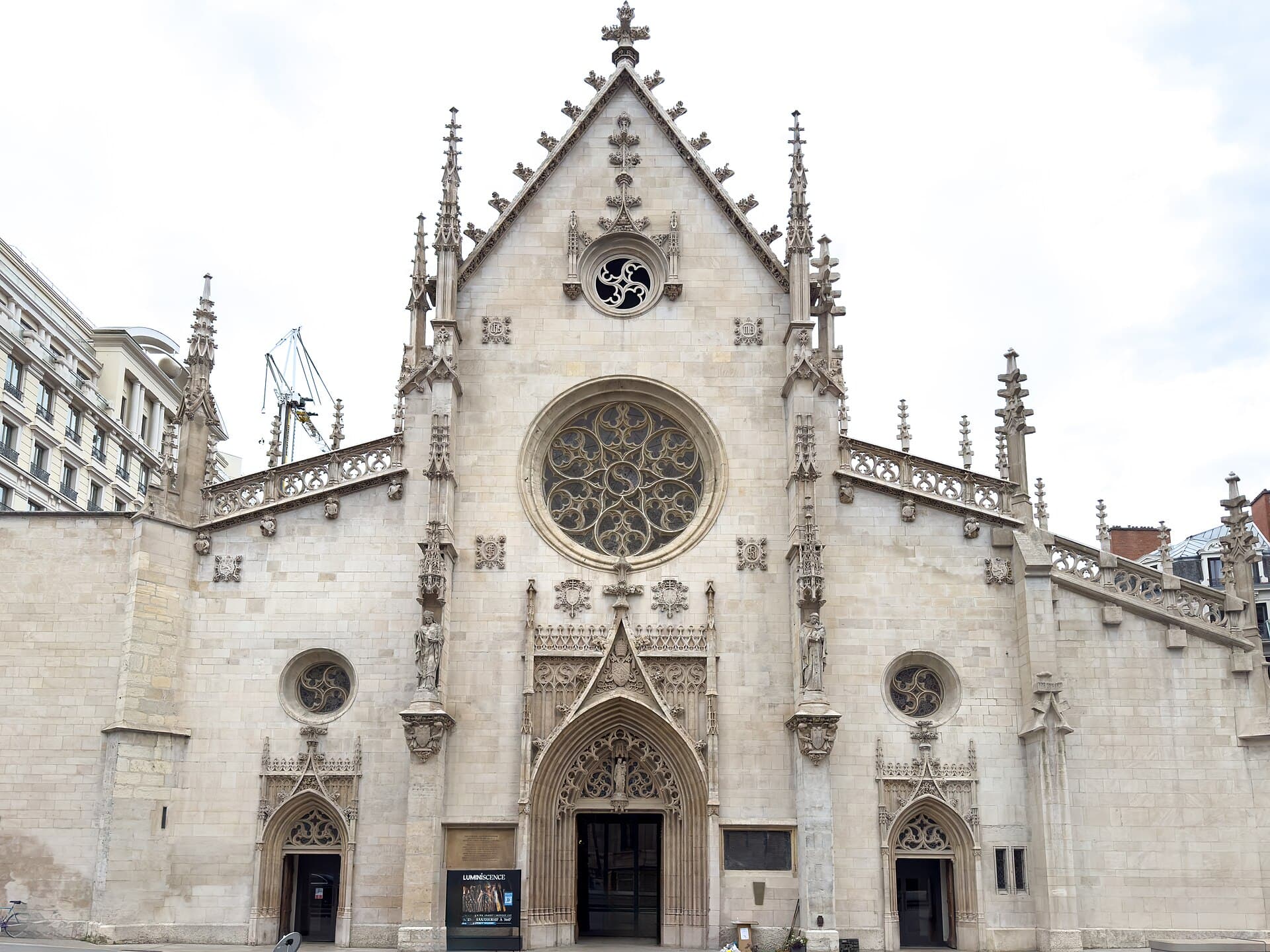 The Basilica of Saint BonaventureA Gothic church in the commercial heart of Lyon, and the only surviving church o1 minute walk4.6
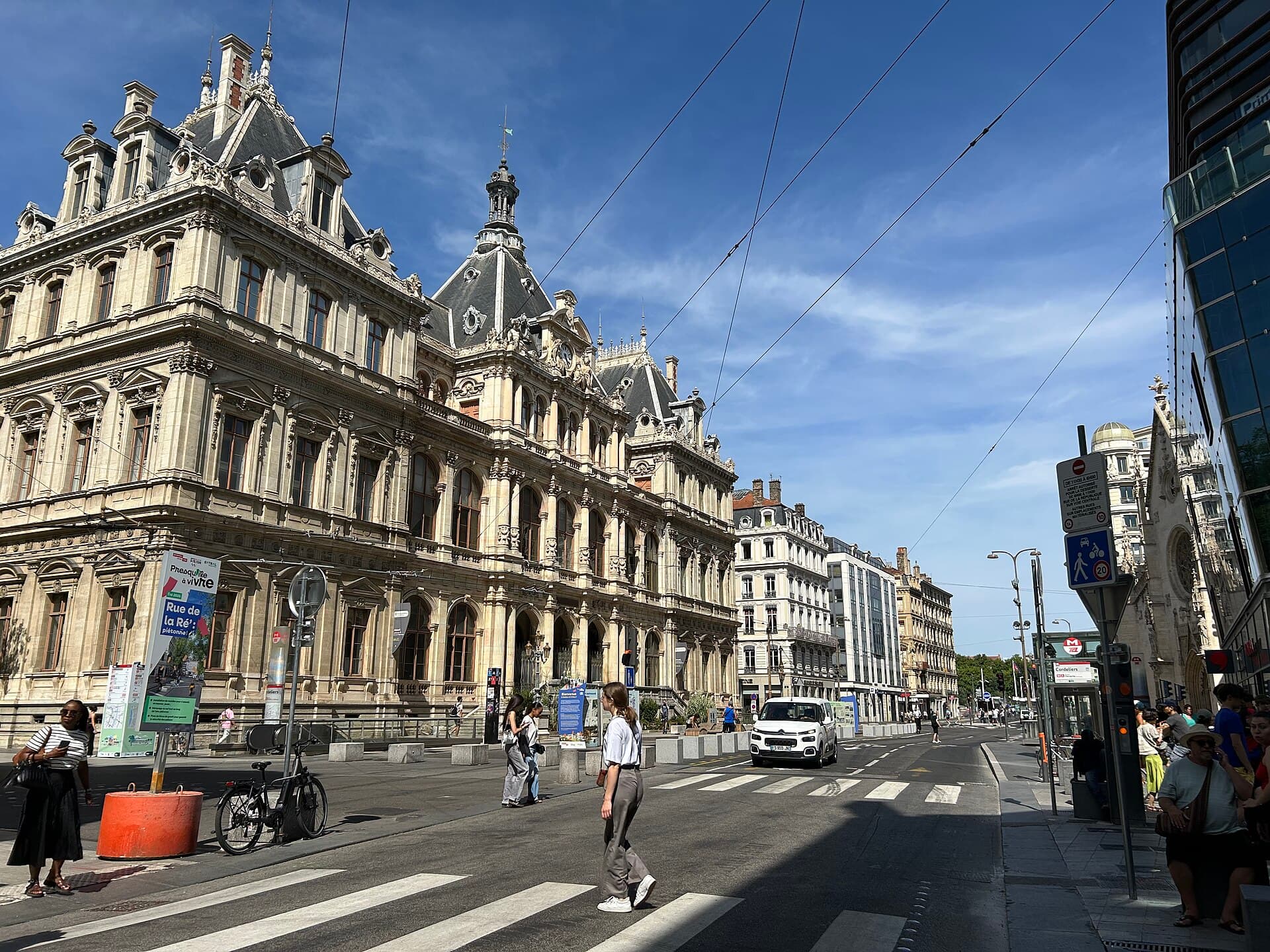 Place des CordeliersA square in the heart of the Presqu'île, one of the main meeting points in Lyon'1 minute walk4.6
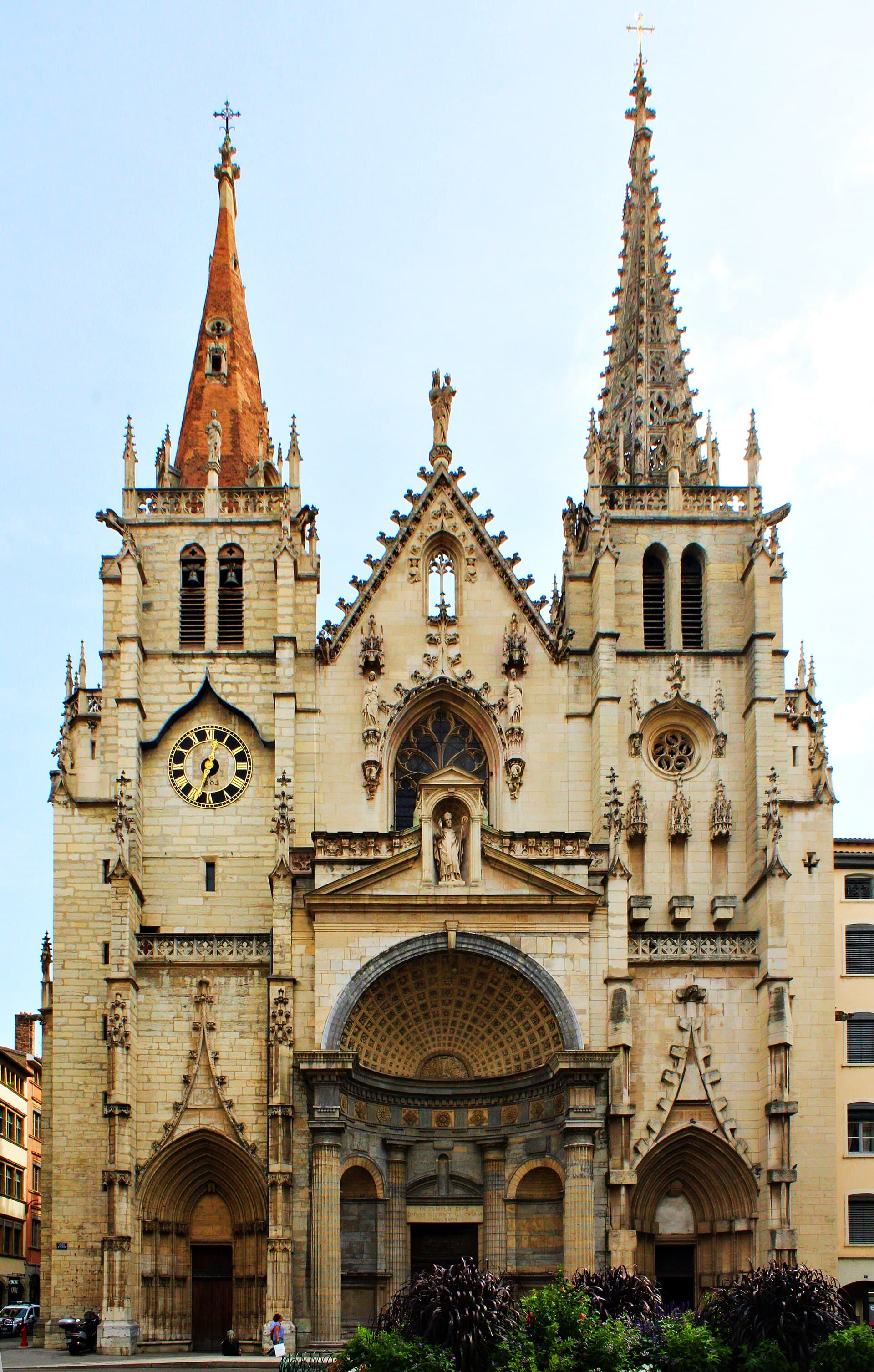 Church of Saint-NizierA Gothic church in the middle of the Presqu'île, among the most prominent religi3 minutes walk4.6
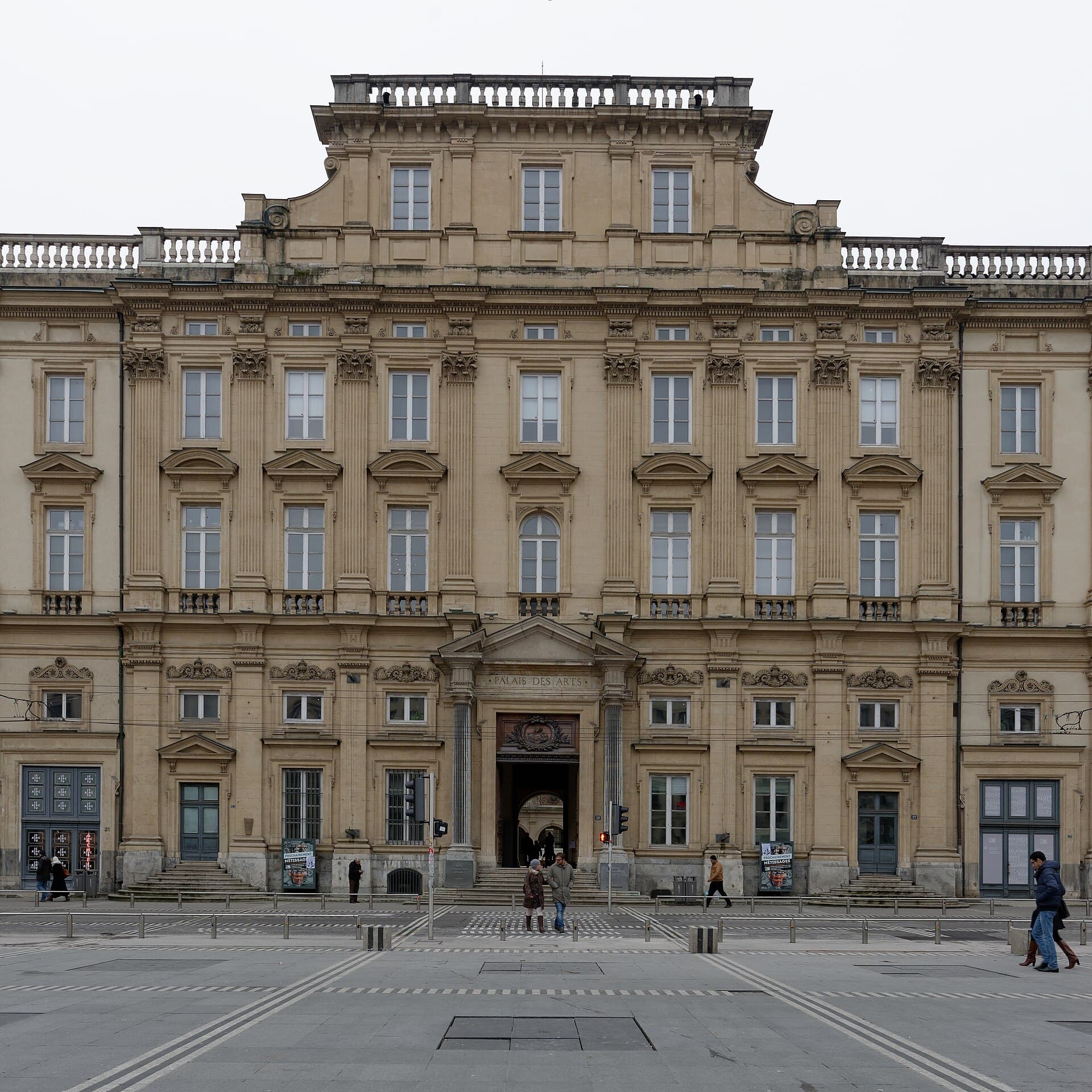 Museum of Fine Arts, LyonOne of the most important art museums in France outside Paris, occupying a seven5 minutes walk4.4
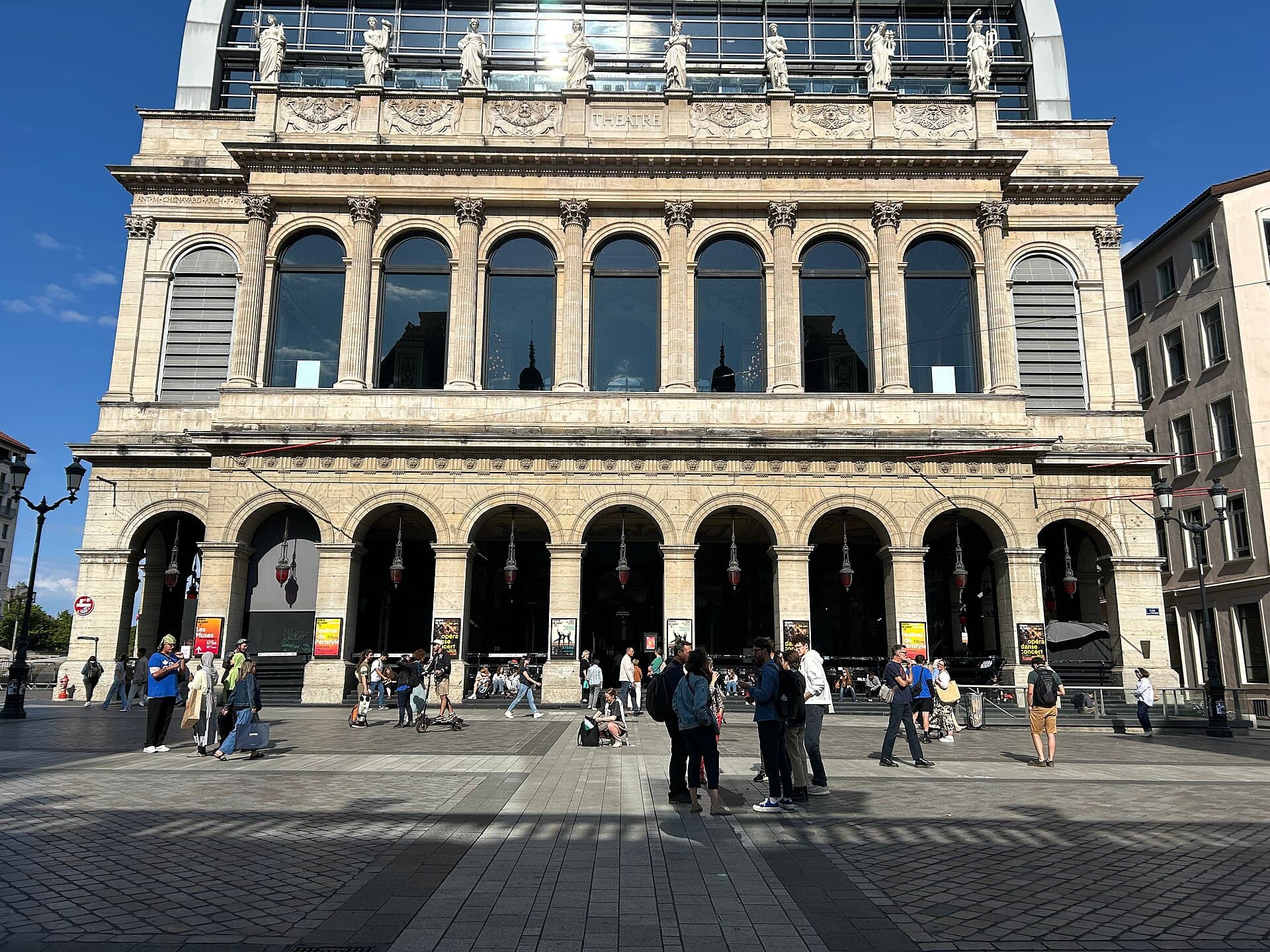 Opéra Nouvel, LyonLyon's national opera house, and one of Europe's boldest examples of fusing a co5 minutes walk4.4
Because King Francis I granted the city a monopoly on importing raw silk into France in 1540, and local weaving was then encouraged to reduce imports from Italy. By the nineteenth century Lyon held tens of thousands of weavers working looms in their own homes — the canuts. The invention of the Jacquard loom in 1804 changed the industry worldwide, and its punched cards are regarded as a conceptual ancestor of computer programming.
The whole city is on the World Heritage list and is among the largest inscribed areas in Europe. The essentials: Vieux Lyon with its Renaissance streets and traboules; the Fourvière basilica on the hill with its view; the Roman theatre beside it; the fine arts museum; and the Musée des Confluences with its futuristic architecture. And Lyon is France's food capital — the bouchons are its traditional restaurants.