
Stone archways
One after another.
CzRadiofun — Public domain · Polar1 — CC BY 3.0 · Polar1 — CC BY 3.0 · Sgnpkd — CC BY-SA 4.0 · Polar1 — CC BY 3.0 · Windmemories — CC BY-SA 4.0 · Polar1 — CC BY 3.0 · Sgnpkd — CC BY-SA 4.0
The main street of Chaozhou's old city and its axis for centuries, spanned by stone memorial archways, or paifang, raised in honour of the city's scholars and officials; they began under the Song and multiplied under the Ming and Qing, until forty-three stood on this road of barely 1.6 kilometres. The nineteen that remained were taken down in 1951 because they obstructed traffic; twenty-two were then rebuilt between 2004 and 2009 on their original sites, in their original form and materials, and the street reopened in October 2009. It now runs 1,948 metres beneath twenty-three archways, most of them all-stone, with three openings and four pillars. Arcaded buildings along both sides house tea shops, sweet shops and local food stalls, old lanes branch off it, and it fills up in the evening when the archways are lit. The street is always open and free, per visitor guides.
One after another.
Branching off the street.
On the archways.
Taiping Road, central old city, Chaozhou
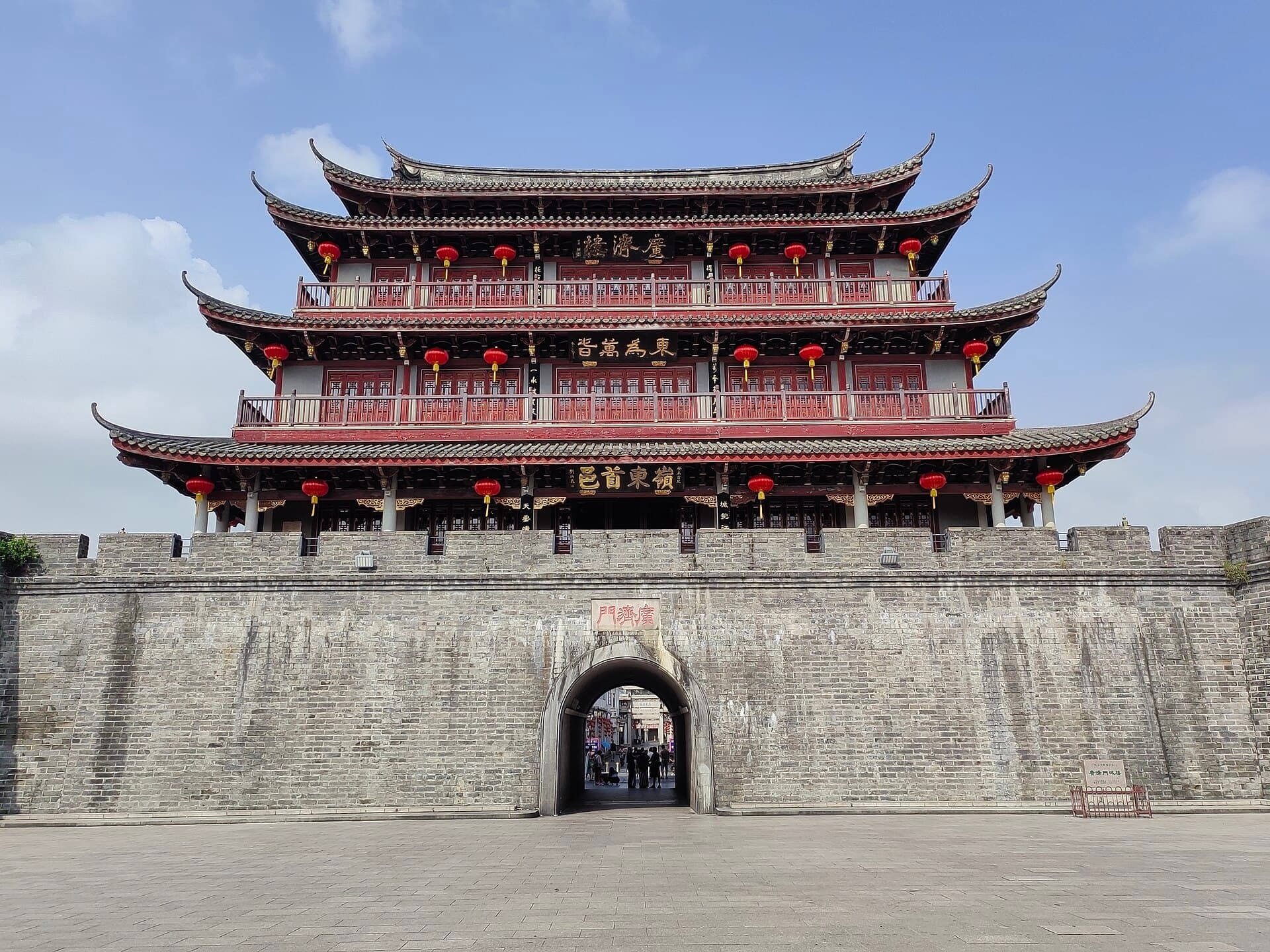 Guangji Gate and Chaozhou City WallThe old city gate facing Guangji Bridge, topped by a three-storey tower with dou4 minutes walk
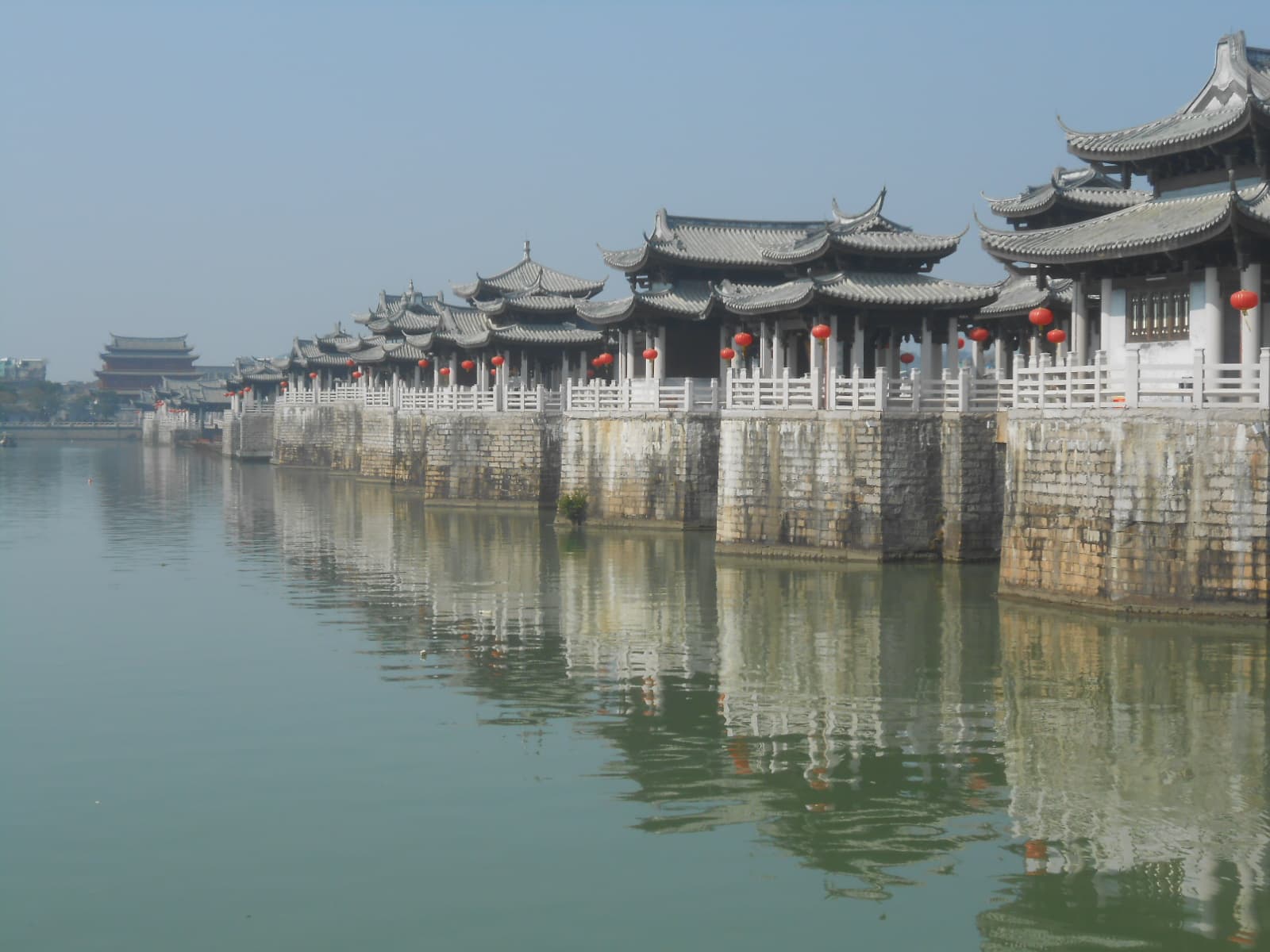 Guangji BridgeAn old bridge across the Han River east of Chaozhou's old city, counted among Ch9 minutes walk
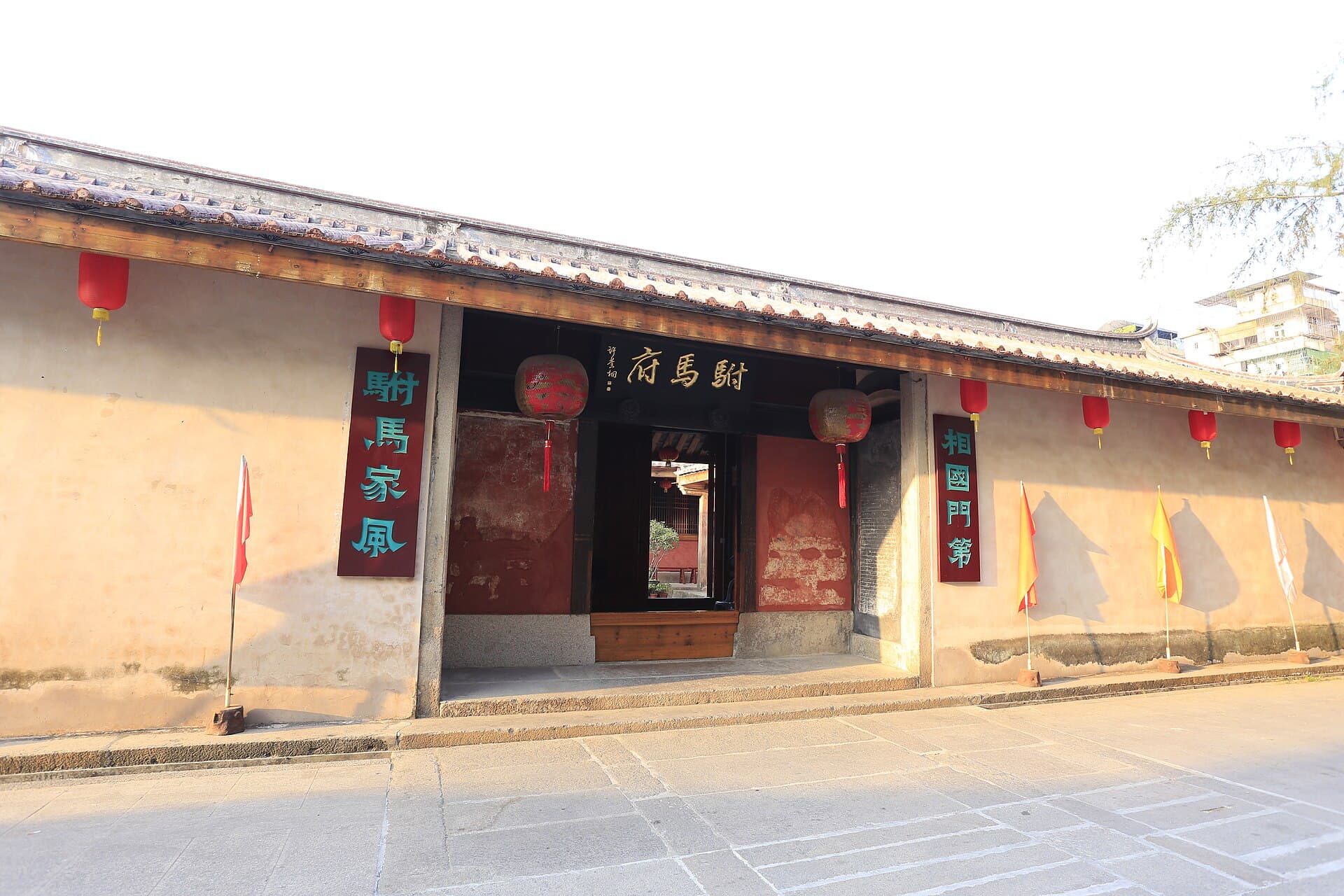 Xu Fuma MansionThe home of Xu Jue and his wife, Princess De'an, daughter of Emperor Yingzong of13 minutes walk
Stone gateways the city once raised to honour its scholars and officials, carved with their names and titles; most were rebuilt on their original sites between 2004 and 2009.