
Timber halls
From the Song era.
Zhangzhugang — CC BY-SA 4.0 · Haier7917 — CC BY-SA 3.0 · Zhangzhugang — CC BY-SA 4.0 · Zhangzhugang — CC BY-SA 4.0 · Zhangzhugang — CC BY-SA 4.0 · Zhangzhugang — CC BY-SA 4.0 · FradonStar — CC BY-SA 4.0 · Zhangzhugang — CC BY-SA 4.0
The home of Xu Jue and his wife, Princess De'an, daughter of Emperor Yingzong of the Song, begun between 1064 and 1067; more than nine hundred years old, it is one of the oldest surviving mansion-style homes in China, counted among the «three treasures» of Chaozhou's old city, and a protected national monument. It covers about two thousand square metres in three successive courtyards five bays wide, with side wings that give the whole plan the shape of the Chinese character «gong», two bars joined by an upright; it has been repaired many times over the centuries while keeping its original layout, one of its four wells still holds clear water, and it opened to visitors in 2009. Visitors walk through halls of timber columns and beams, courtyards with ornamental trees, and narrow side passages. Tickets cost CNY 20, and the mansion is open Tuesday to Sunday from 9 am to 5.30 pm, with last entry at 5 pm, closed on Mondays, per visitor guides.
From the Song era.
In the shape of a character.
Its water still clear.
Dongfucheng, off Zhongshan Road, old city, Chaozhou
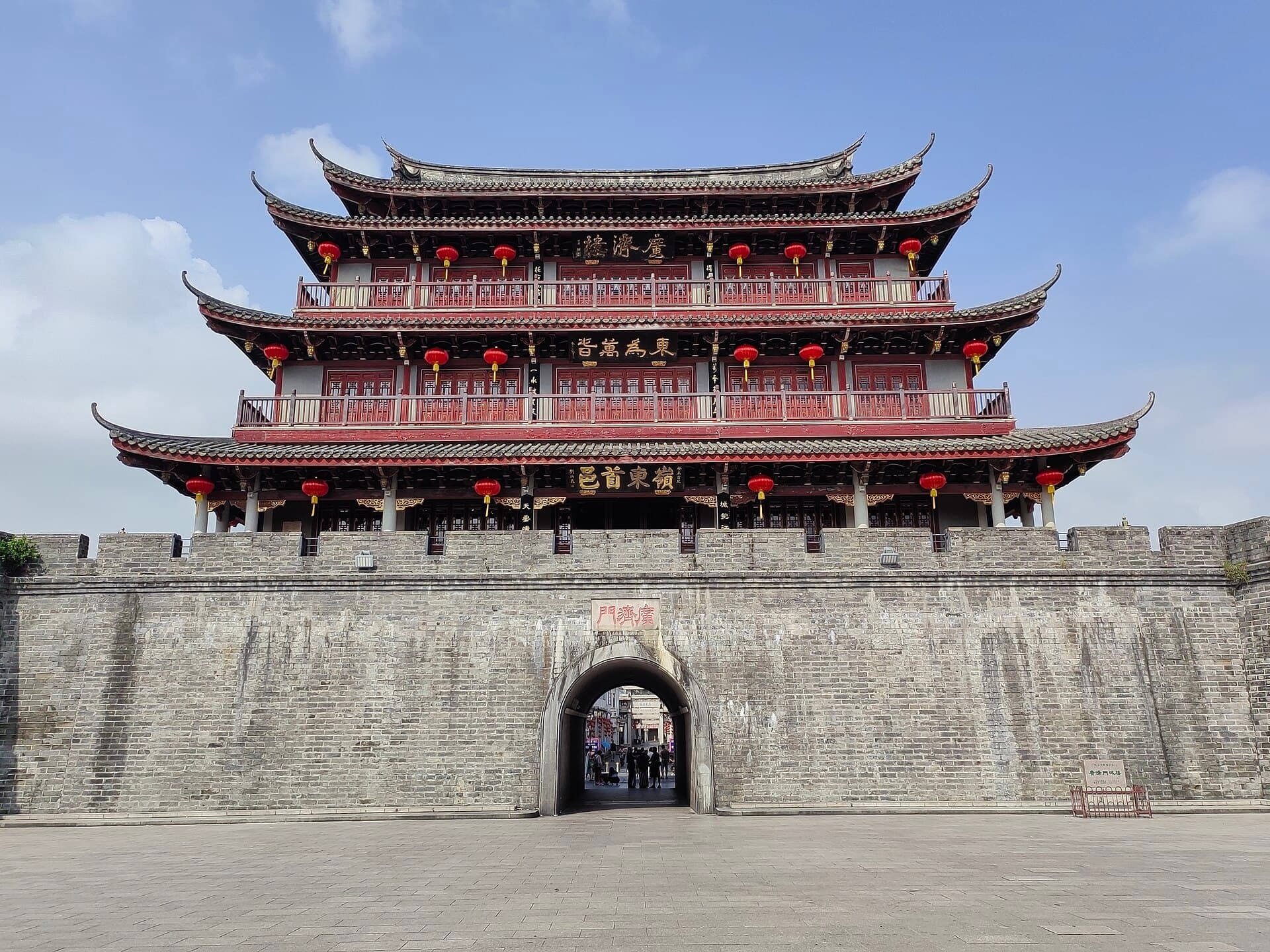 Guangji Gate and Chaozhou City WallThe old city gate facing Guangji Bridge, topped by a three-storey tower with dou12 minutes walk
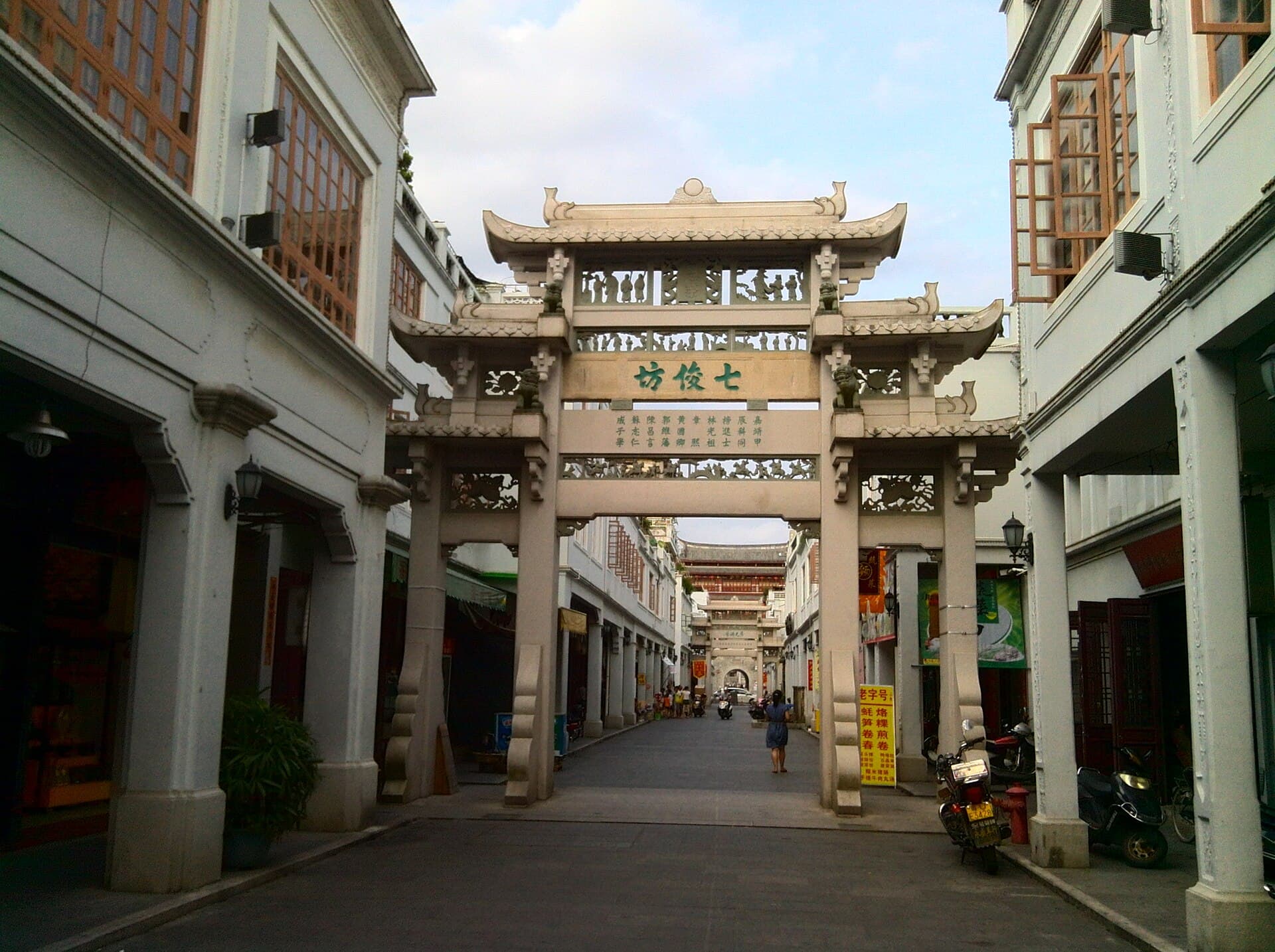 Paifang Street (Memorial Arch Street)The main street of Chaozhou's old city and its axis for centuries, spanned by st13 minutes walk
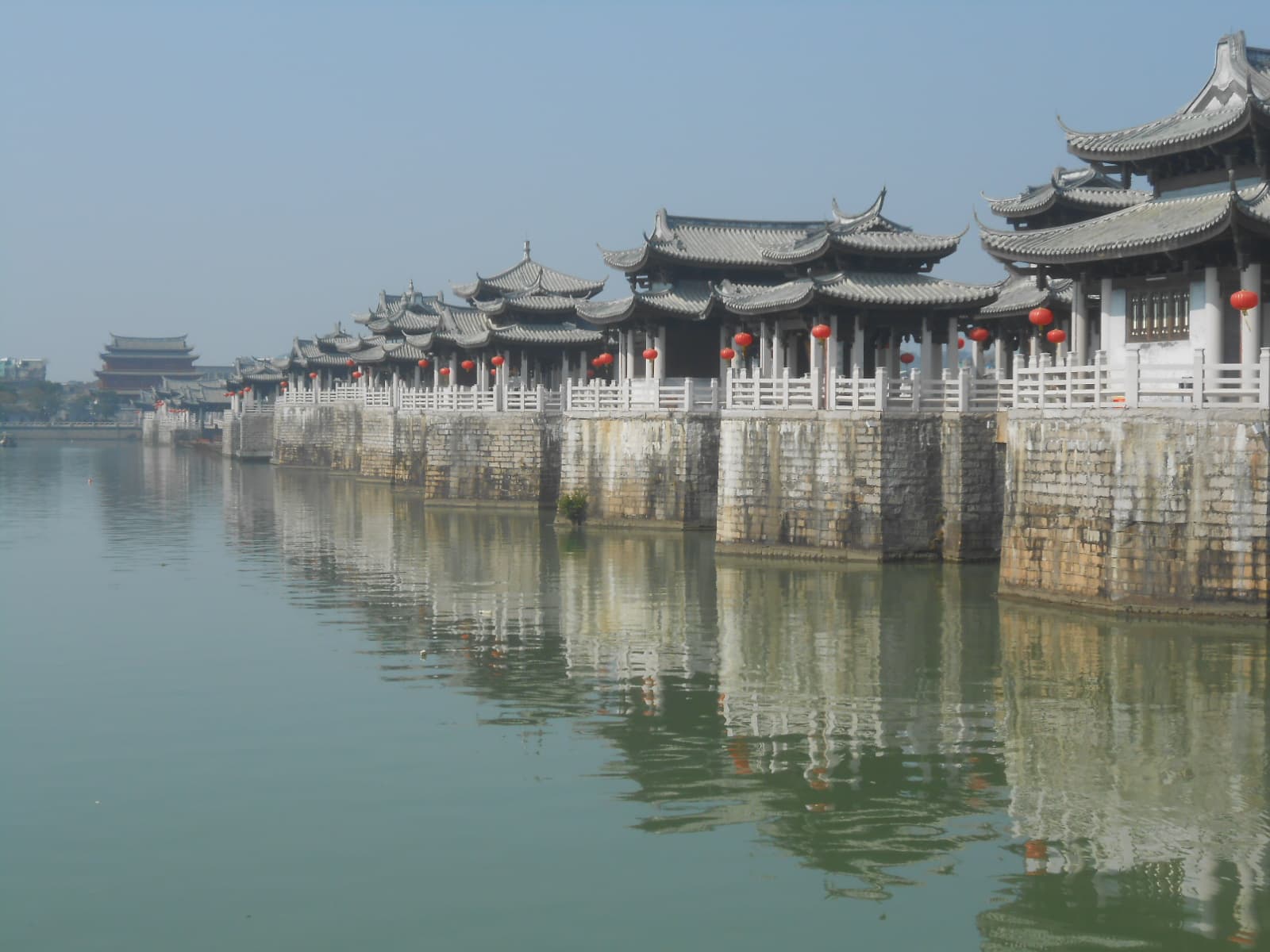 Guangji BridgeAn old bridge across the Han River east of Chaozhou's old city, counted among Ch16 minutes walk
It is one of China's oldest surviving mansion homes, built in the eleventh century for a Song princess and her husband, and it still keeps its original three-courtyard layout.