
The golden dome
Orange and gold tiles.
لا روسا — CC BY-SA 4.0 · Daniel Case — CC BY-SA 3.0 · Diego Delso — CC BY-SA 4.0 · Diego Delso — CC BY-SA 3.0 · Jeses — CC BY-SA 2.5
Mexico City's most beautiful and best-known building, a white marble palace crowned by domes clad in orange and gold tiles, called Mexico's «cathedral of art». The Italian architect Adamo Boari began it in 1904 to mark the centenary of independence; work stopped with the Mexican Revolution and the soft ground sinking beneath it, and it was finally finished in 1934. Its façade is in ornate Art Nouveau, while the interior is Art Deco, with geometric lines and coloured marble. Its upper floors hold huge murals by the great Mexican painters: Diego Rivera, José Clemente Orozco, David Alfaro Siqueiros and Rufino Tamayo. It is also the national opera house and theatre, and its main hall has a glass curtain made by Tiffany showing the two volcanoes near the city. The Ballet Folklórico de México performs its famous shows here in traditional costume. For the best view of the palace and its dome, go up to the eighth-floor café of the Sears building opposite. The museum is closed on Mondays and free for everyone on Sundays.
Orange and gold tiles.
Rivera, Orozco, Siqueiros.
Dance in traditional dress.
Avenida Juárez, western edge of the Historic Centre, beside the Alameda Central park
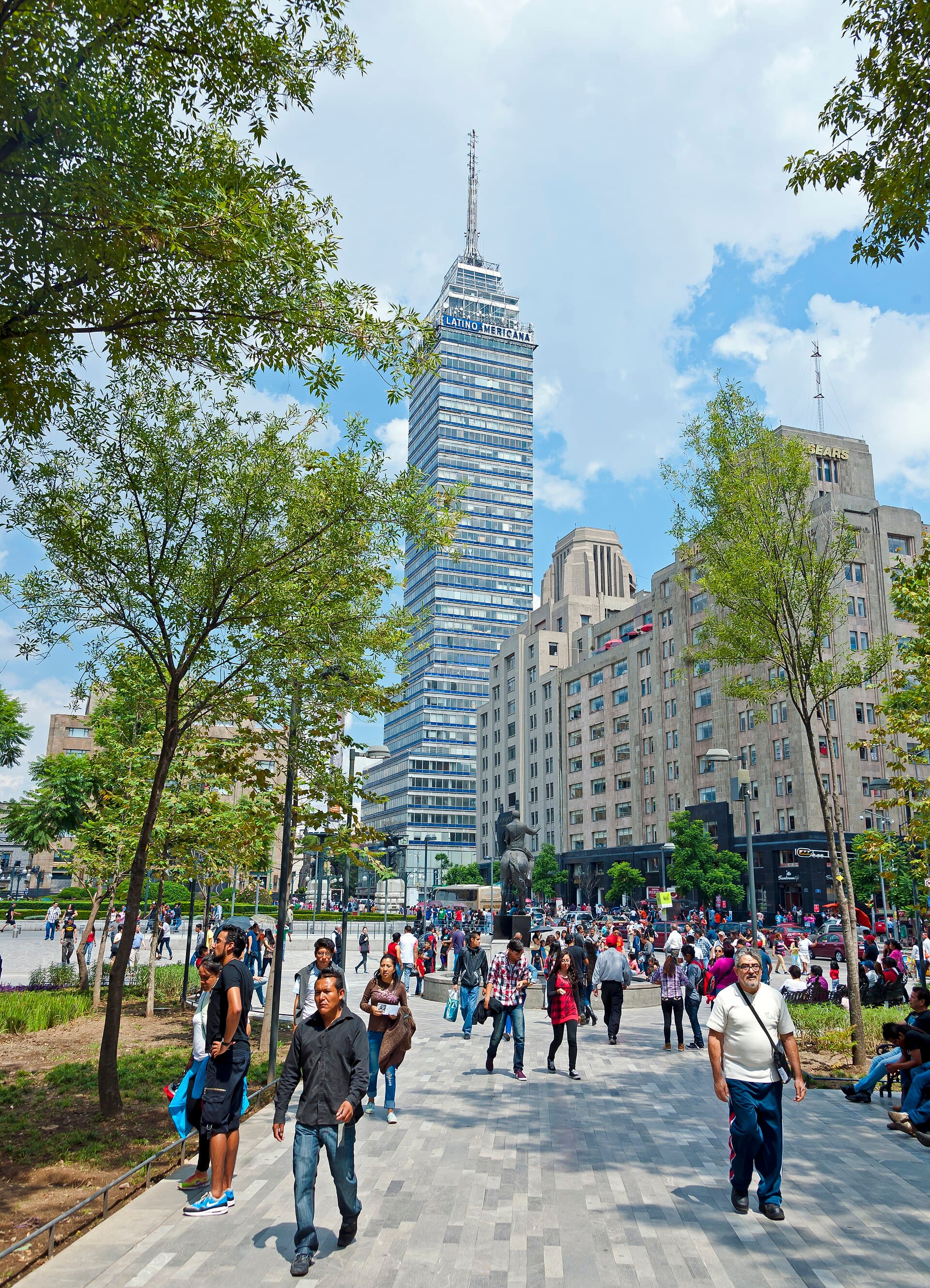 Torre LatinoamericanaA 166-metre skyscraper in the heart of Mexico City, opened in 1956 and for almos2 minutes walk4.5
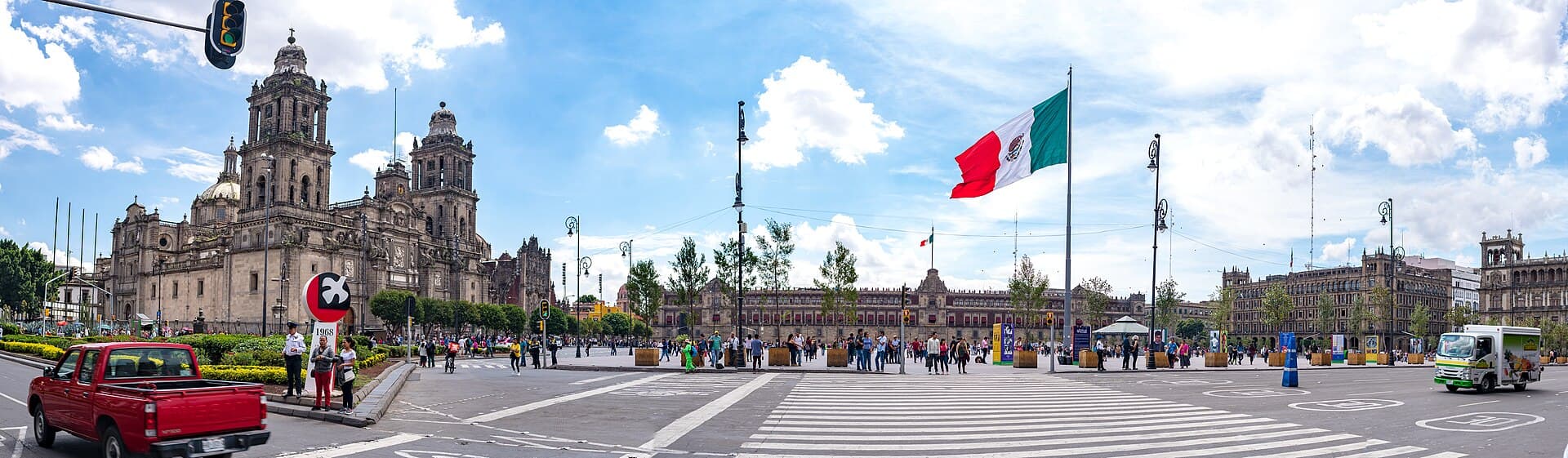 Zócalo (Constitution Square)Mexico City's main square and one of the largest in the world, which before the 11 minutes walk4.6
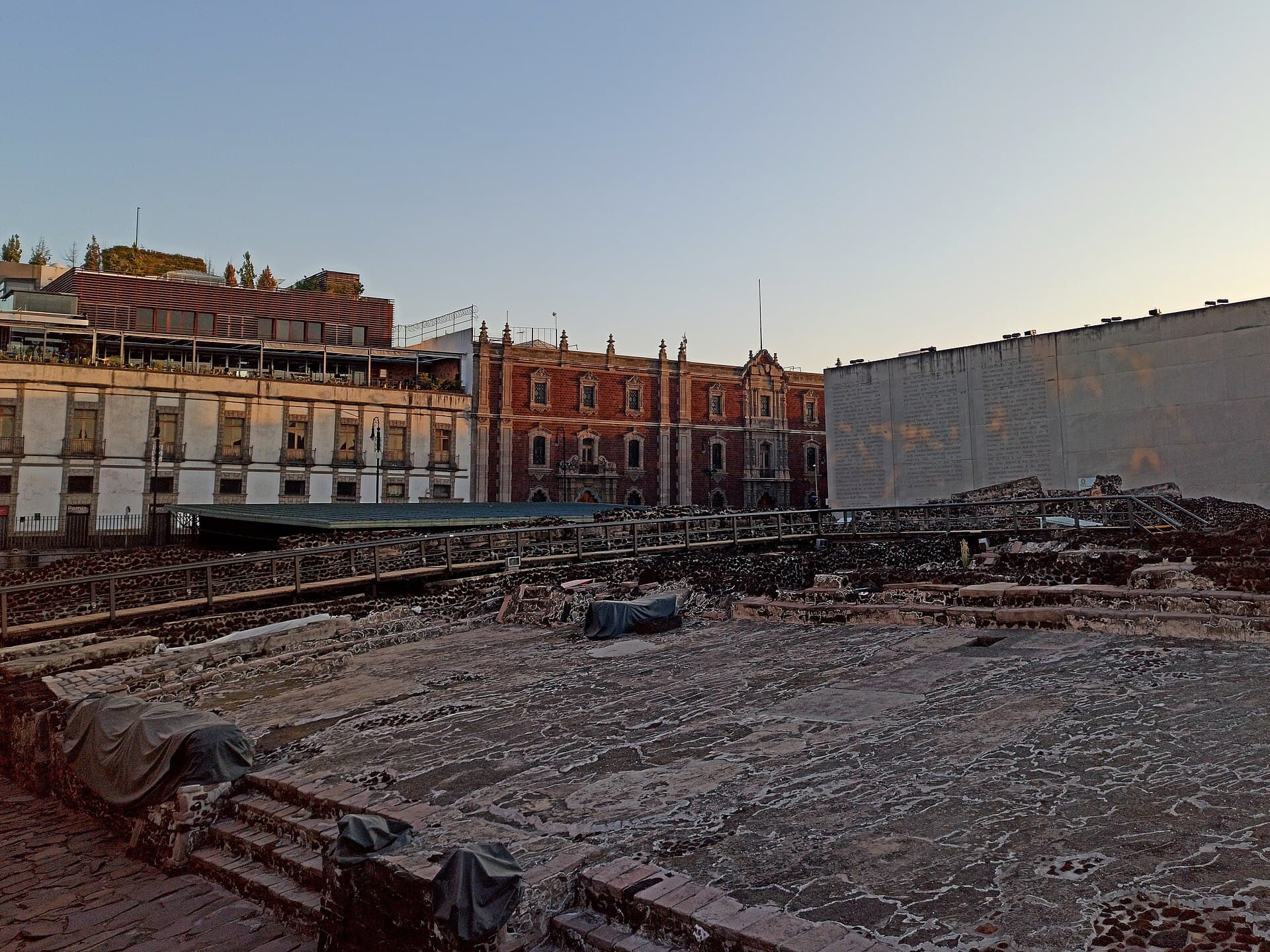 Templo MayorThe ruins of the main pyramid of Tenochtitlan, the Aztec capital built on an isl12 minutes walk4.9
Yes, on Sundays the museum is free for everyone. Other days it costs 95 pesos, and the palace is closed on Mondays.