
The flag ceremony
The giant flag at dawn.
Nan Palmero from San Antonio, TX, USA — CC BY 2.0 · Uwebart — CC BY-SA 3.0 · José Luiz — CC BY-SA 4.0 · Cvmontuy — CC BY 4.0 · Cvmontuy — CC BY 4.0
Mexico City's main square and one of the largest in the world, which before the Spanish conquest was the ceremonial centre of Tenochtitlan, the Aztec capital. Its official name is Constitution Square; «zócalo» means plinth, after the base of an independence monument that was built without the monument ever going on top, then buried, leaving only the name. The square is framed by the country's most important buildings: the National Palace with its long red-stone front, the presidential seat holding Diego Rivera's murals; the Metropolitan Cathedral with its towers; and, just behind them, the ruins of the Aztec Templo Mayor. In the middle flies a giant flag, raised in the morning and lowered in the evening in a military ceremony. The square is the heart of Mexican public life, hosting concerts, festivals and protests, and the Independence celebration on the night of 15 September. Around it branch the streets of the Historic Centre, on UNESCO's list, with their colonial buildings and shops. The city sits about 2,240 metres up, so the sun is strong and evenings turn cool. Watch your bag in crowds, and visit in the morning, when the square is calmer.
The giant flag at dawn.
Its red-stone front.
Colonial streets around.
Historic Centre, Mexico City; Zócalo metro station
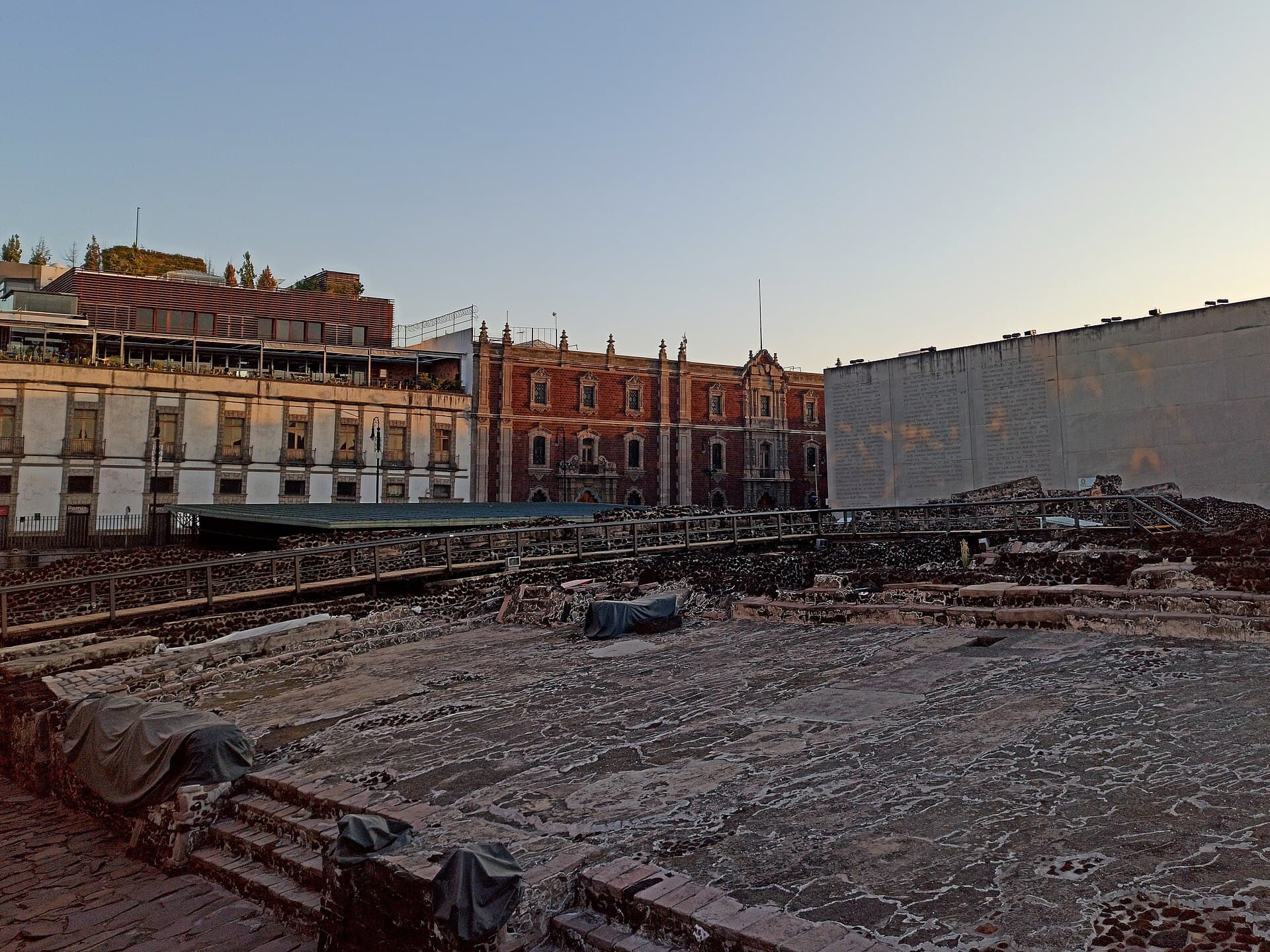 Templo MayorThe ruins of the main pyramid of Tenochtitlan, the Aztec capital built on an isl3 minutes walk4.9
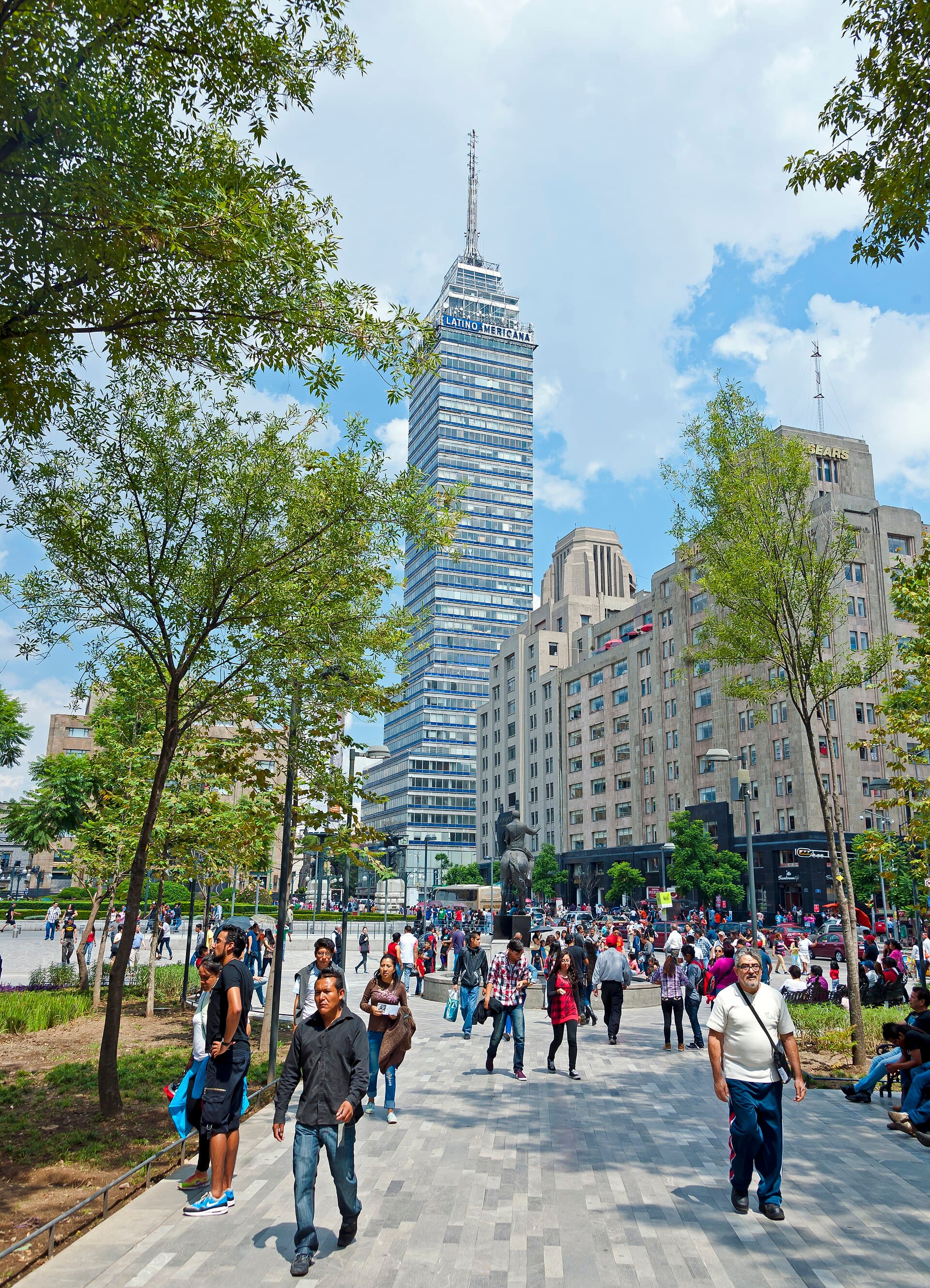 Torre LatinoamericanaA 166-metre skyscraper in the heart of Mexico City, opened in 1956 and for almos10 minutes walk4.5
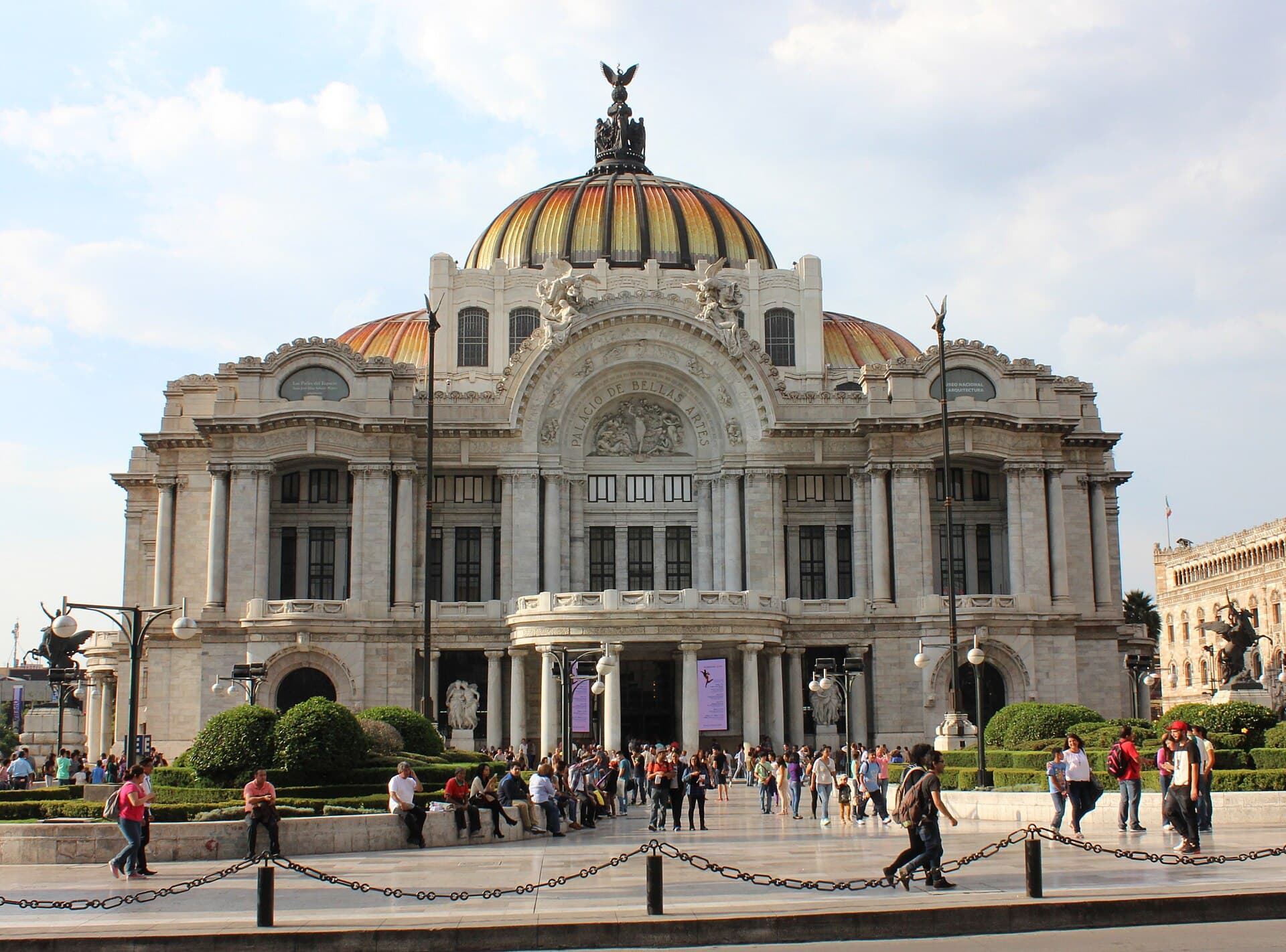 Palacio de Bellas ArtesMexico City's most beautiful and best-known building, a white marble palace crow11 minutes walk4.7
The National Palace, the Metropolitan Cathedral, the ruins of the Aztec Templo Mayor and the streets of the Historic Centre, all a few minutes' walk apart.