
The top deck
City to the mountains.
Daniel Case — CC BY-SA 3.0 · Adam Jones from Kelowna, BC, Canada — CC BY-SA 2.0 · Adam Jones from Kelowna, BC, Canada — CC BY-SA 2.0 · Adam Jones from Kelowna, BC, Canada — CC BY-SA 2.0 · Rafael Aparicio — CC BY-SA 3.0
A 166-metre skyscraper in the heart of Mexico City, opened in 1956 and for almost 27 years the tallest completed building in Mexico. It became famous for coming through the devastating magnitude 8.1 earthquake of 1985 undamaged while many buildings around it were hit, making it a symbol of earthquake-resistant engineering. At the top are an open-air and a glassed-in viewing deck, from which the vast city stretches in every direction to the mountains, with the golden dome of Bellas Artes and the Alameda park right below. On clear days the volcanoes ringing the valley appear. On the 38th floor a small museum covers the city and the tower through the centuries, including the story of building it on the soft bed of an old lake. The upper floors also have a restaurant and café with a view. The best time to go up is just before sunset, to see the city by day and then as its lights come on. Smog can hide the view on some days; mornings after rain are the clearest.
City to the mountains.
Right below you.
The city lights up.
Corner of Eje Central and Madero, Historic Centre, opposite the Palacio de Bellas Artes
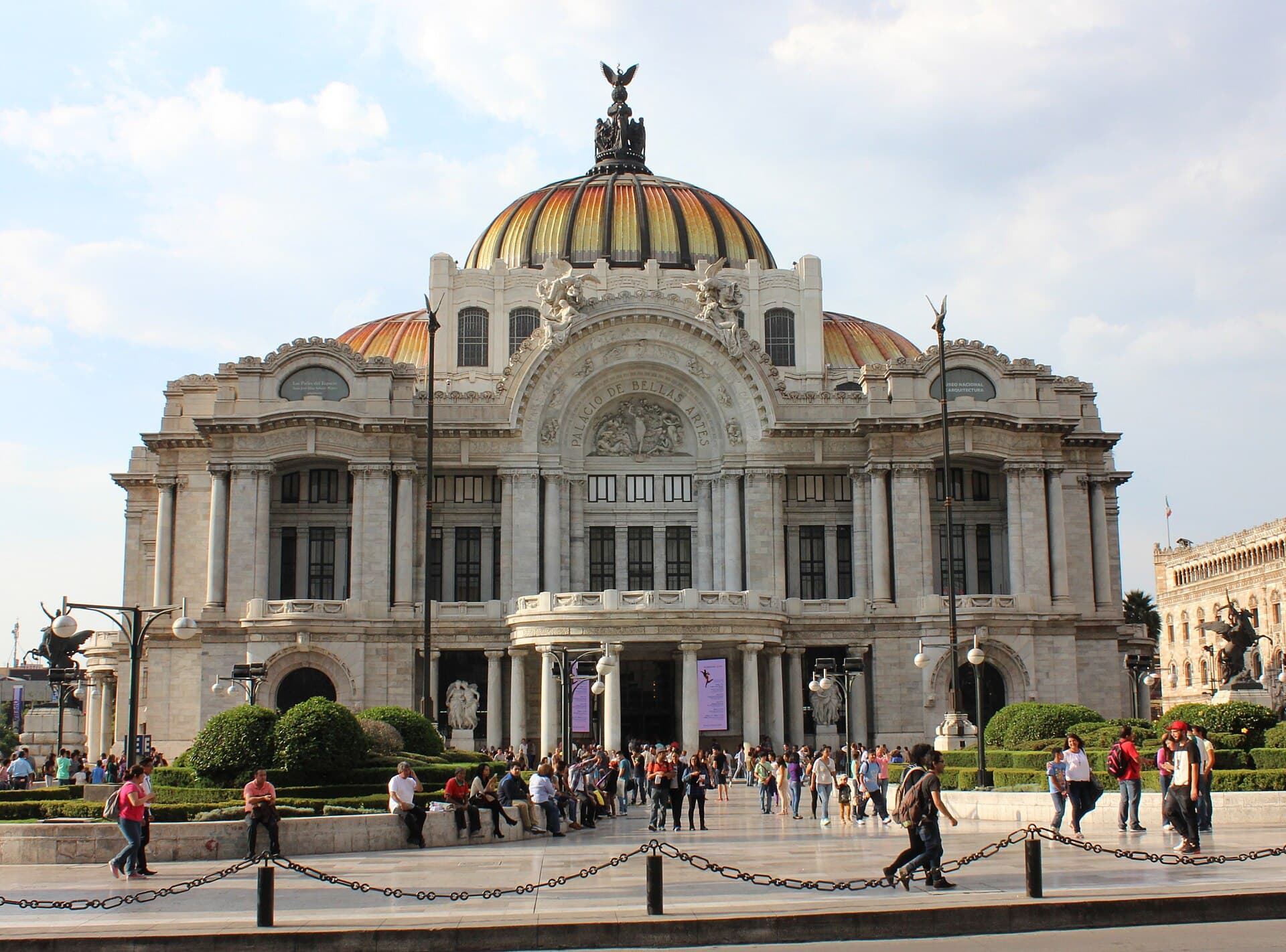 Palacio de Bellas ArtesMexico City's most beautiful and best-known building, a white marble palace crow2 minutes walk4.7
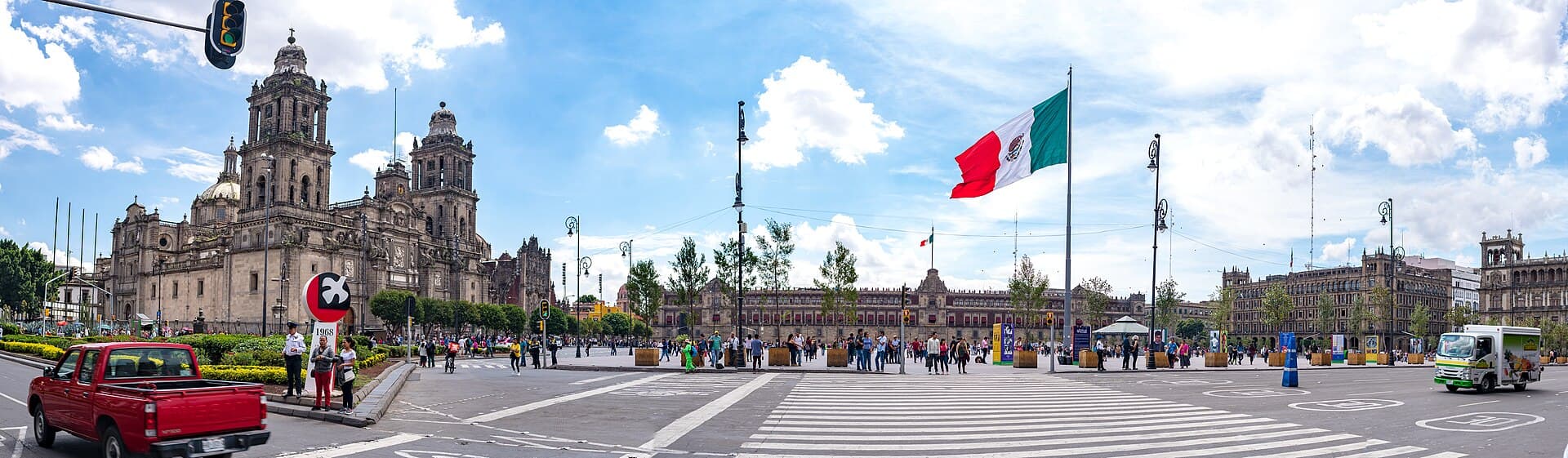 Zócalo (Constitution Square)Mexico City's main square and one of the largest in the world, which before the 10 minutes walk4.6
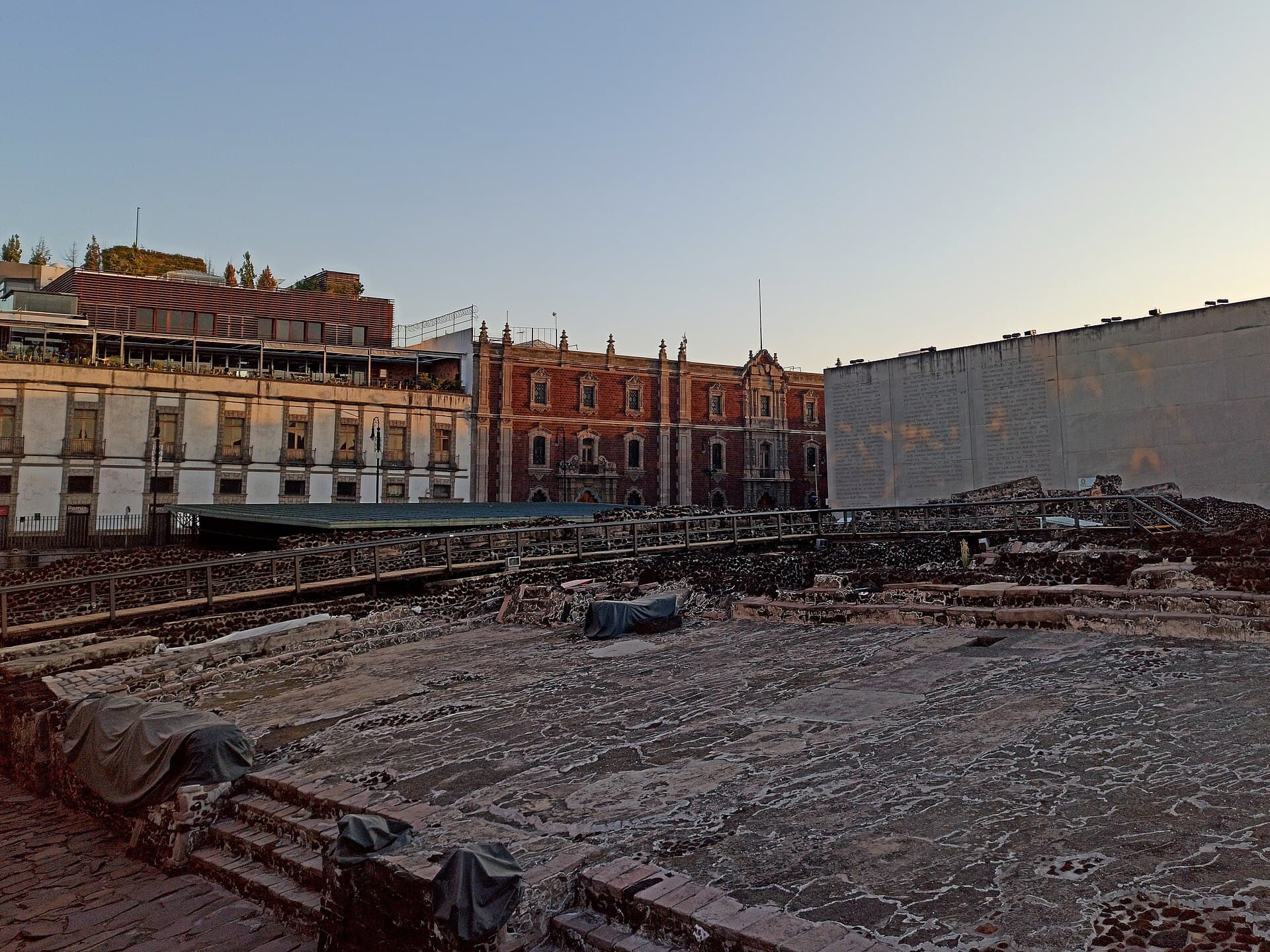 Templo MayorThe ruins of the main pyramid of Tenochtitlan, the Aztec capital built on an isl12 minutes walk4.9
Just before sunset, to see the city by day and by night, or on a clear morning after rain. Avoid days of heavy smog.