
A wall of stone pyramids
Every block carved into a projecting pyramid.
Velvet — CC BY-SA 3.0 · Berthold Werner — CC BY-SA 3.0 · Pinotto992 — CC0 · Palickap — CC BY-SA 4.0
A square at the western edge of Naples's old city, holding the church of Gesù Nuovo with its strange stone facade, the obelisk of the Immaculate Conception, and the Santa Chiara complex behind it. The church facade is the striking thing: an entire wall of projecting stone blocks, each carved into a small pyramid. The facade originally belonged to a fifteenth-century palace converted into a church in the sixteenth, so the old front was left in place above a religious building. Some of the stones carry carved marks around which many theories have grown — some have read them as musical symbols or charms. The likelier explanation is ordinary masons' marks indicating where each block belonged. At the centre of the square stands an eighteenth-century baroque obelisk, one of three such in Naples raised in thanksgiving after plagues and earthquakes. The square is public and free; entry to the church is normally free.
Every block carved into a projecting pyramid.
Read as musical symbols; likelier ordinary masons' marks.
One of three in Naples raised after plagues and earthquakes.
The western edge of the old city
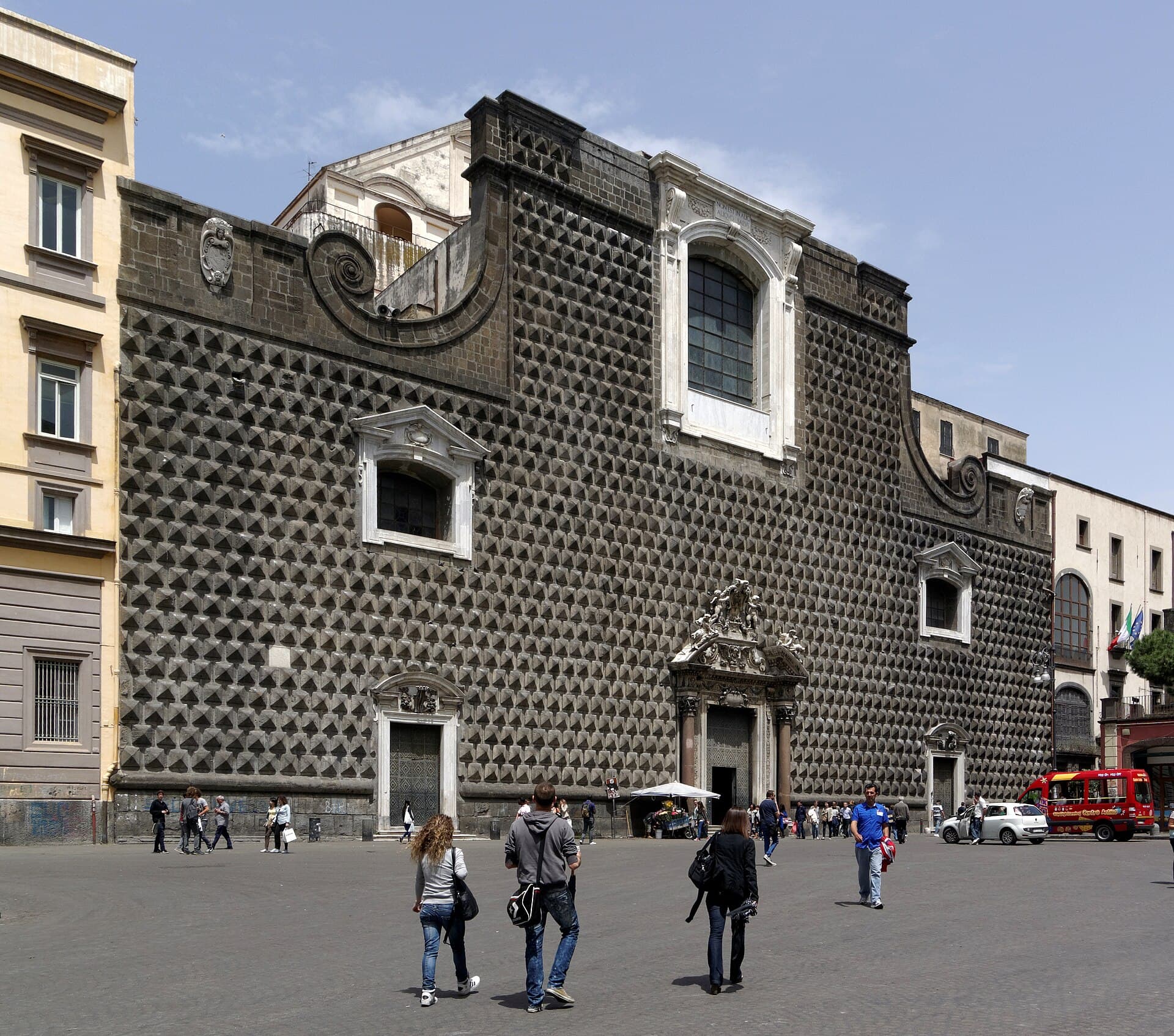 Gesù NuovoThe Gesù Nuovo façade is Naples's architectural riddle: an entire wall of protru1 minute walk4.8
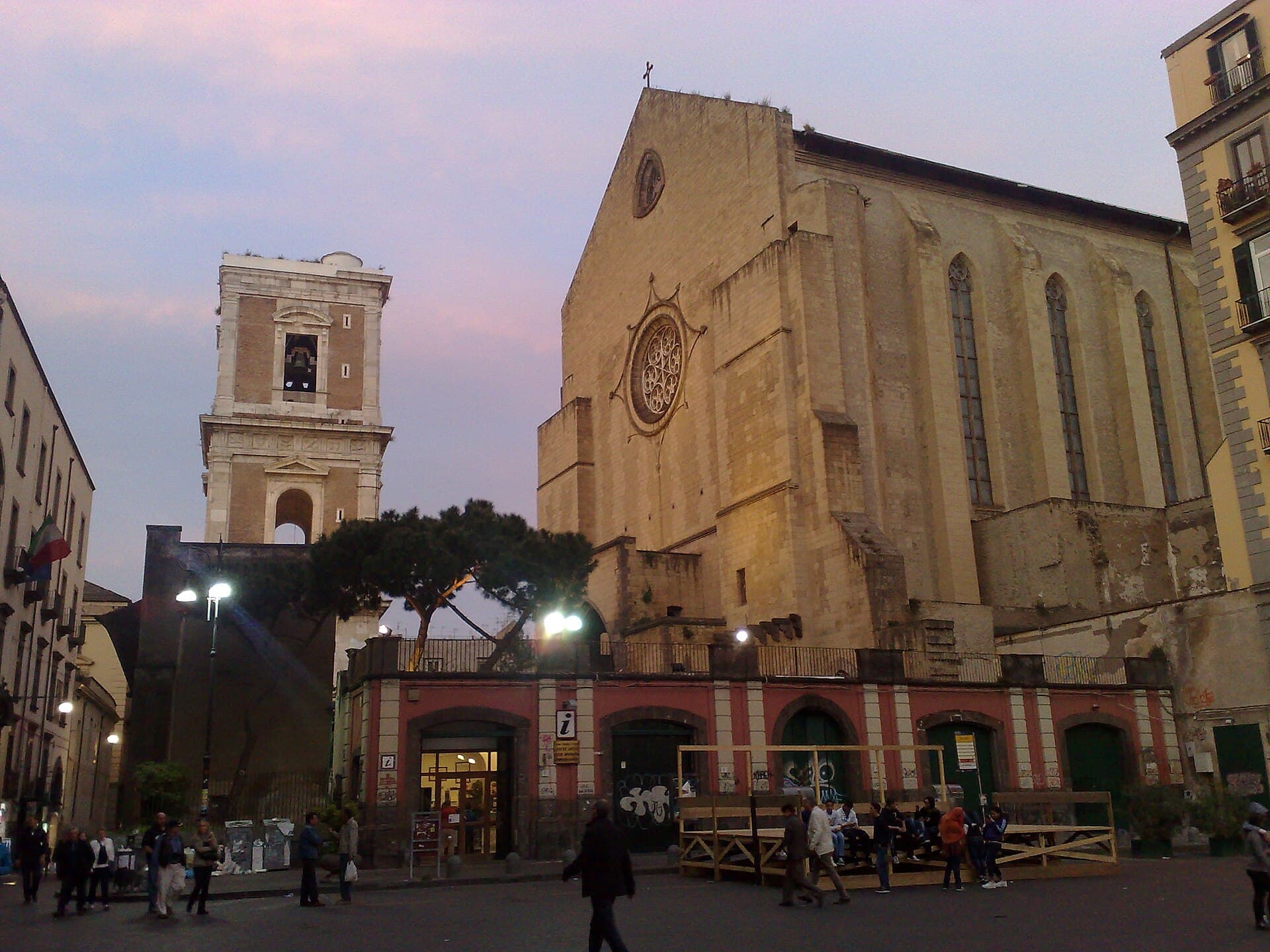 Santa Chiara ComplexBehind the huge Gothic church of Santa Chiara — the greatest of Angevin Naples a1 minute walk4.6
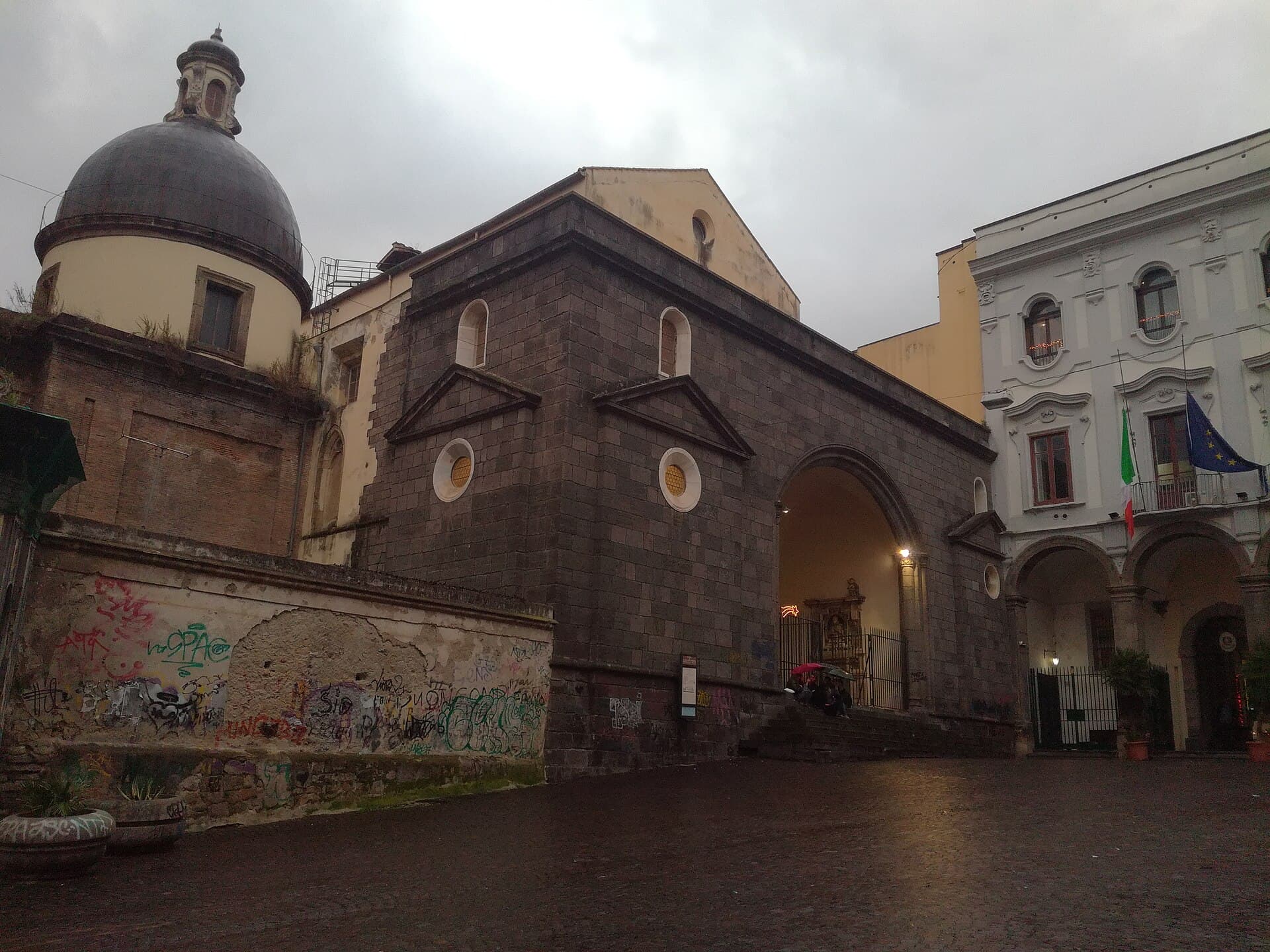 Sant'Anna dei Lombardi"The Tuscan Renaissance church of Naples": Sant'Anna dei Lombardi (Monteoliveto)3 minutes walk4.8
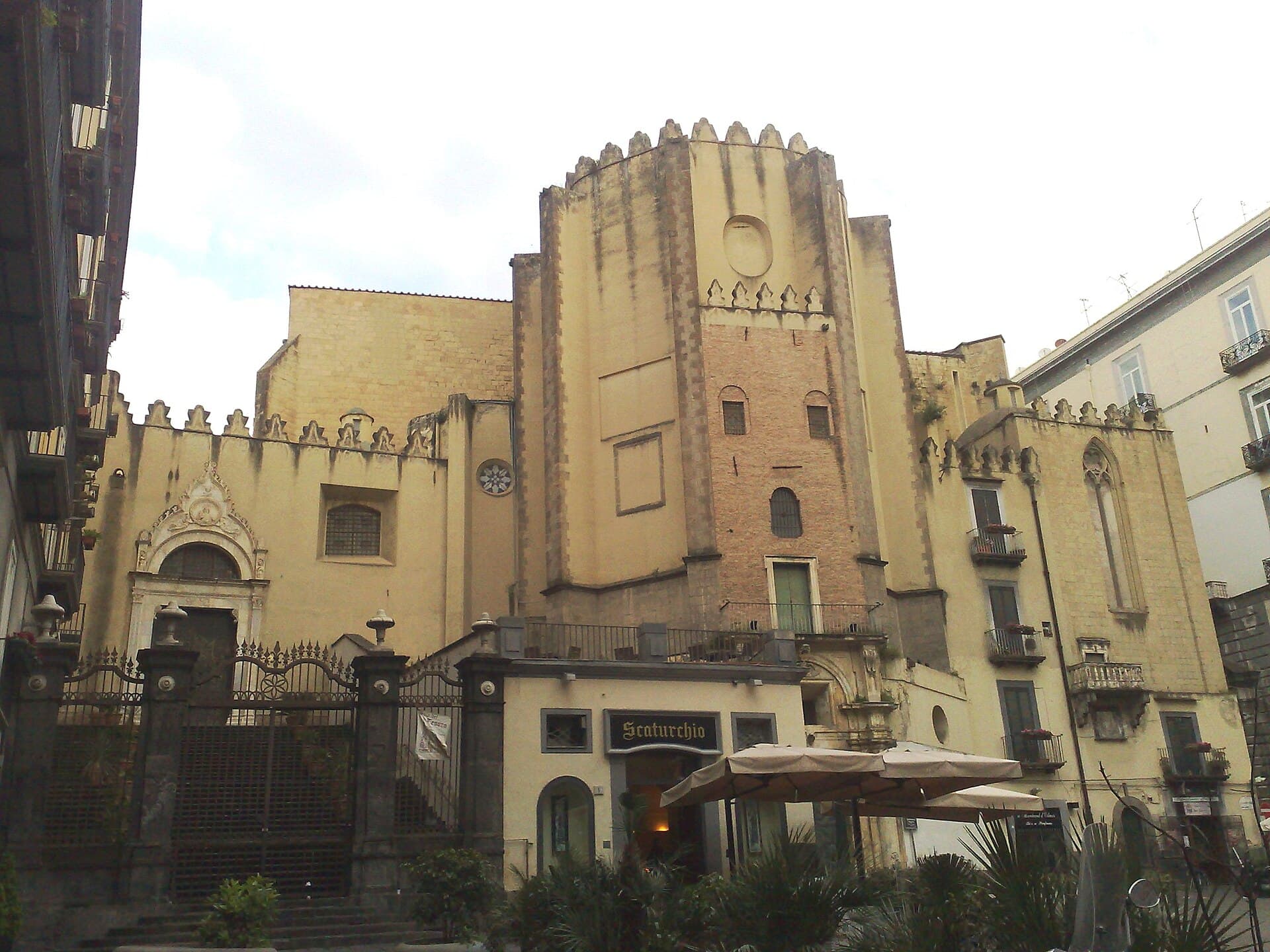 San Domenico MaggioreAbove the sacristy, on a wooden gallery running around three walls some four met4 minutes walk4.6
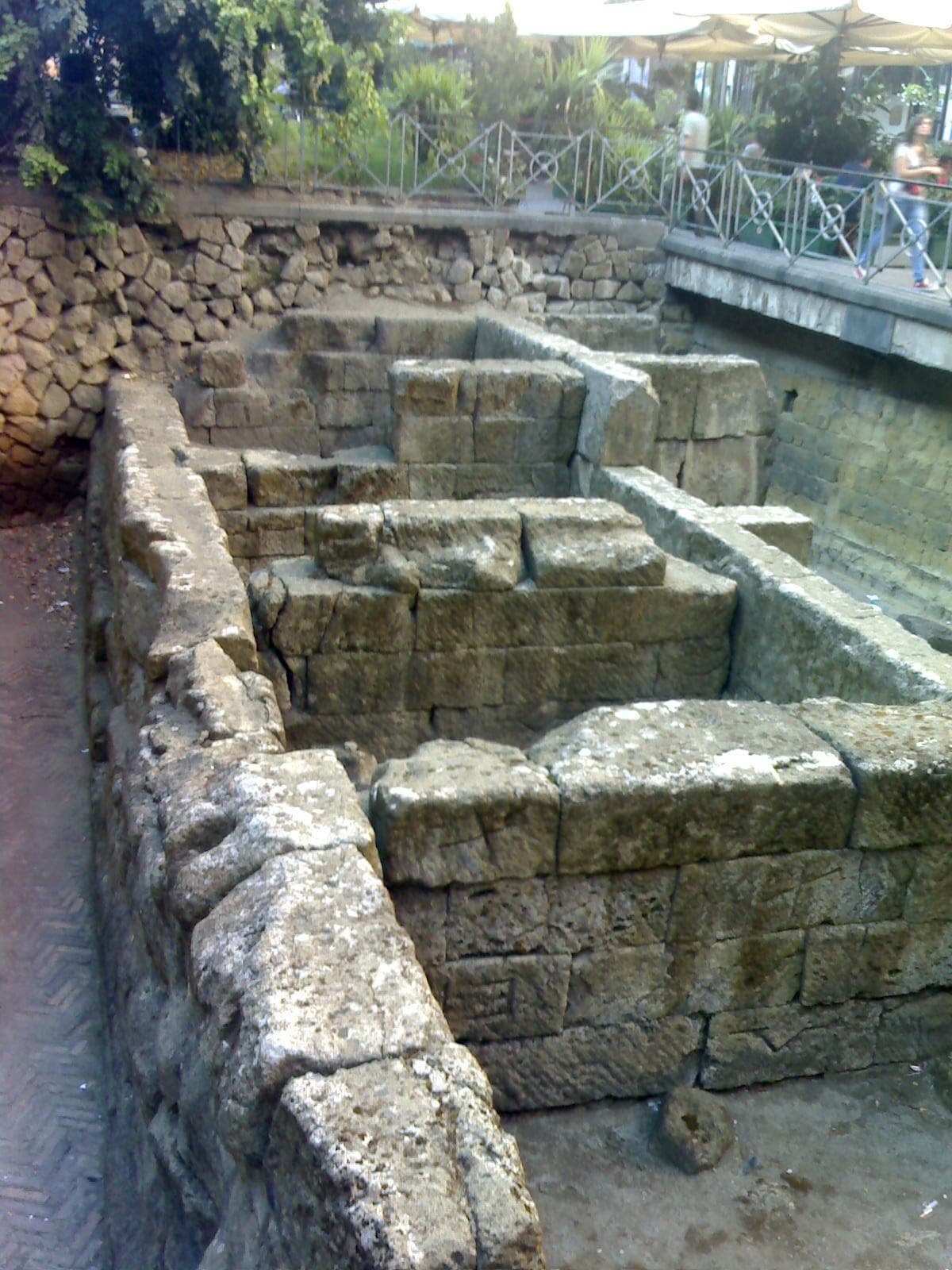 The Greek WallsThe remains of the wall of the Greek city of Neapolis, exposed below street leve4 minutes walk4.1
A fourteenth-century monastic complex directly behind the square, best known for its tiled nuns' cloister: columns and benches covered in coloured eighteenth-century majolica showing rural and marine scenes and flowers. The church itself burned in the bombing of 1943 and was rebuilt to its original Gothic form rather than the baroque it had become. The cloister is ticketed and the church free.
The long straight street cutting the old city from west to east — the name means literally Naples-splitter. It is originally the decumanus of the Greek and Roman city, one of its main axes, and has kept its straight line for two and a half thousand years while the city grew around it. It begins at Piazza del Gesù Nuovo, and walking east takes you past churches, monasteries, markets and the famous nativity workshops on Via San Gregorio Armeno.