
The majolica walk
Columns and benches sheathed in painted tile — the south's most famous courtyard.
IlSistemone — CC BY-SA 3.0 · This Photo was taken by Wolfgang Moroder. Feel free to use my photos, but please mention me as the author and send me a message. This image is not in the public domain. Please respect the copyright pr — CC BY-SA 3.0 · Robertofusco — CC BY-SA 4.0 · Marco Ober — CC BY-SA 4.0
Behind the huge Gothic church of Santa Chiara — the greatest of Angevin Naples and its royal burial place — hides the city's most famous courtyard and most photographed corner: the Clarissan cloister with its majolica walk, where eighteenth-century artists sheathed every column and stone bench in painted tiles — vines, lemons and country scenes in yellow and blue glowing under the southern sun, set in a hushed convent garden that cannot believe roaring Spaccanapoli lies just past its wall. The church itself is a resurrection story: the bombs of 1943 burned it to the bone, and Naples rebuilt it bare Gothic as its Angevin original, the surviving tombs of the Anjou kings within. The complex adds a small museum, Roman baths found beneath the convent, and a grand Neapolitan nativity scene. Church free, cloister ticketed — and the rule of visiting: never leave Spaccanapoli without this hour of stillness.
Columns and benches sheathed in painted tile — the south's most famous courtyard.
The church returned from 1943's fire to Angevin purity.
Naples's French kings in their surviving marble.
Via Santa Chiara 49, 80134 Naples
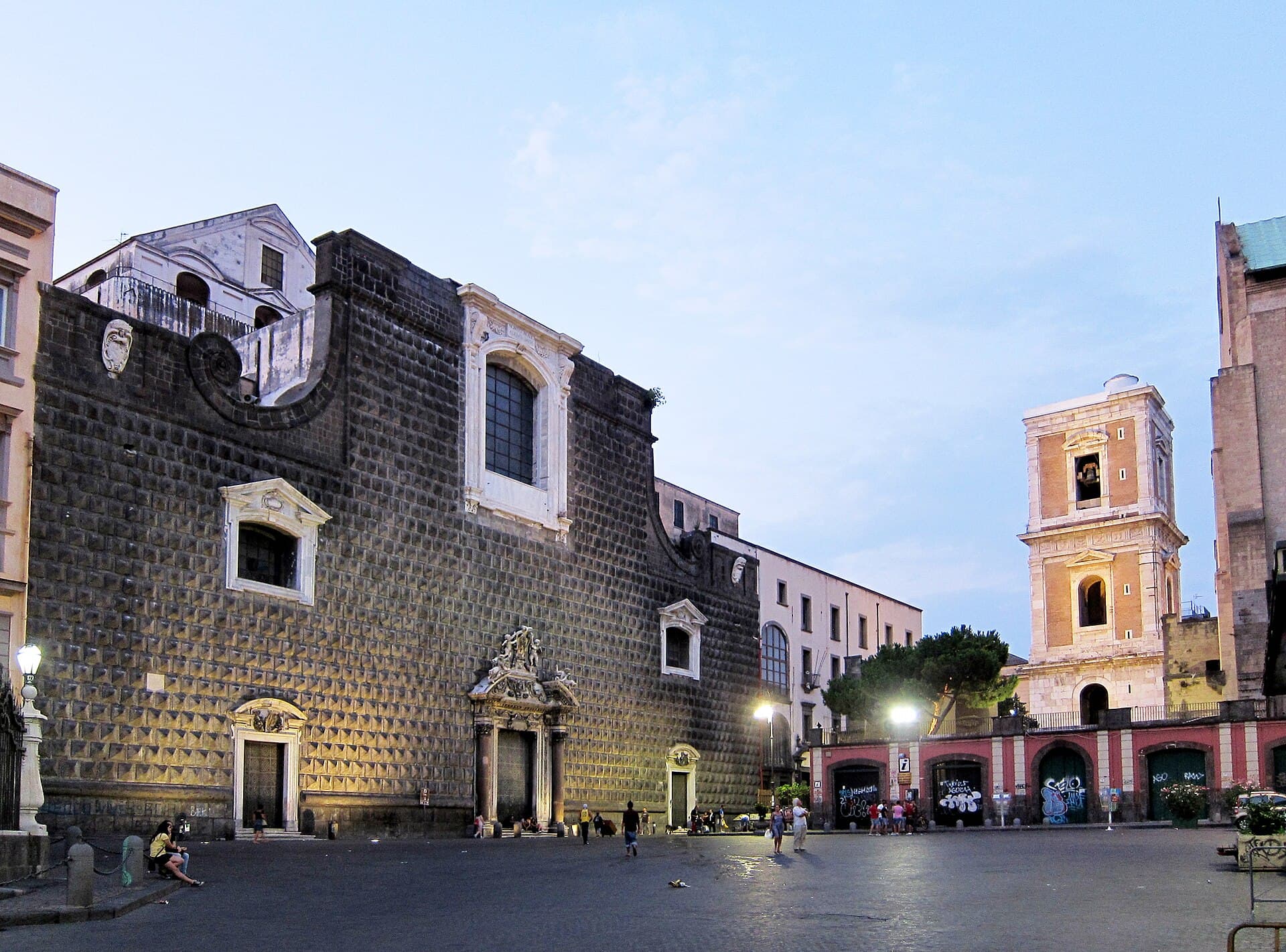 Piazza del Gesù NuovoA square at the western edge of Naples's old city, holding the church of Gesù Nu1 minute walk4.8
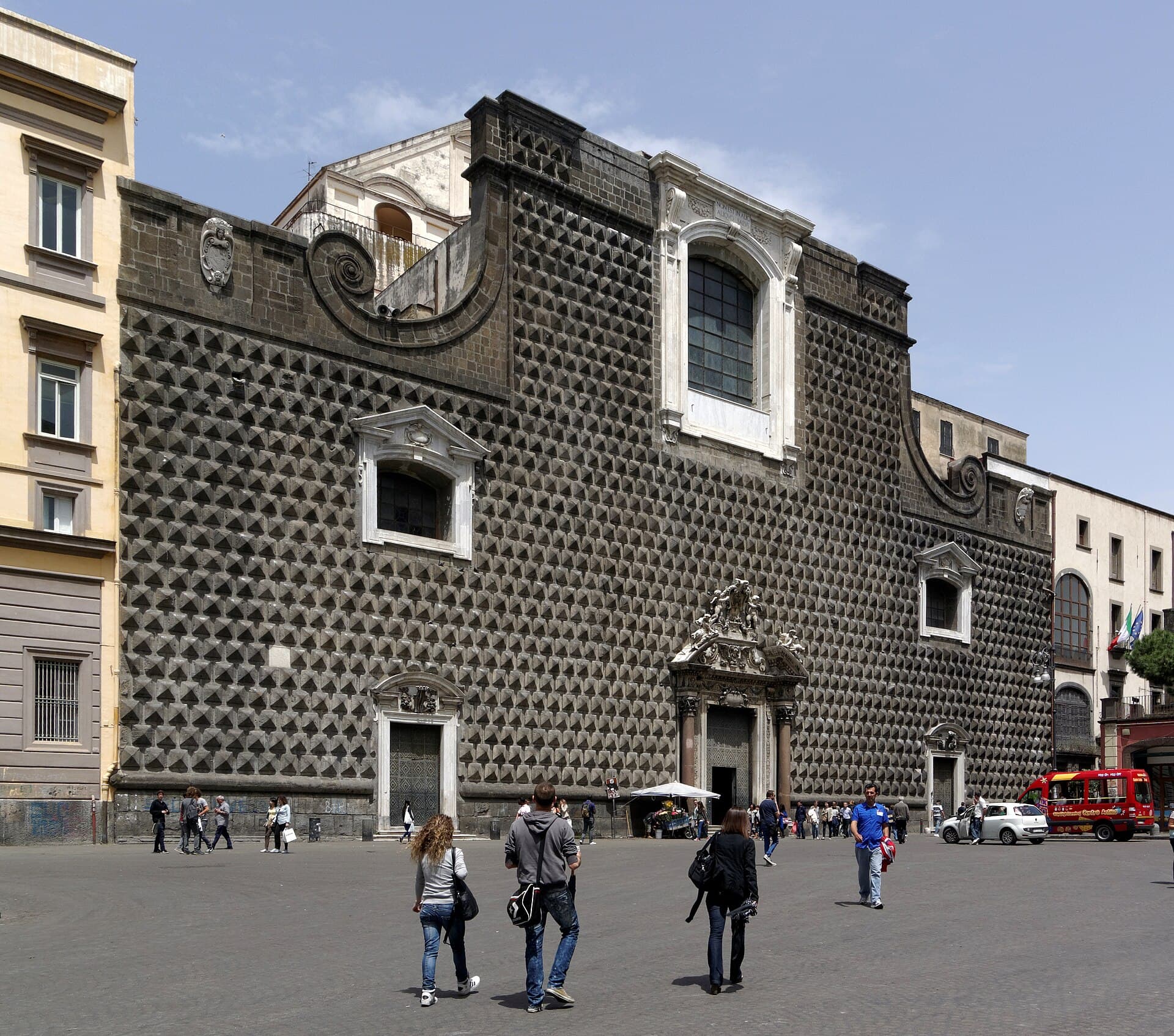 Gesù NuovoThe Gesù Nuovo façade is Naples's architectural riddle: an entire wall of protru2 minutes walk4.8
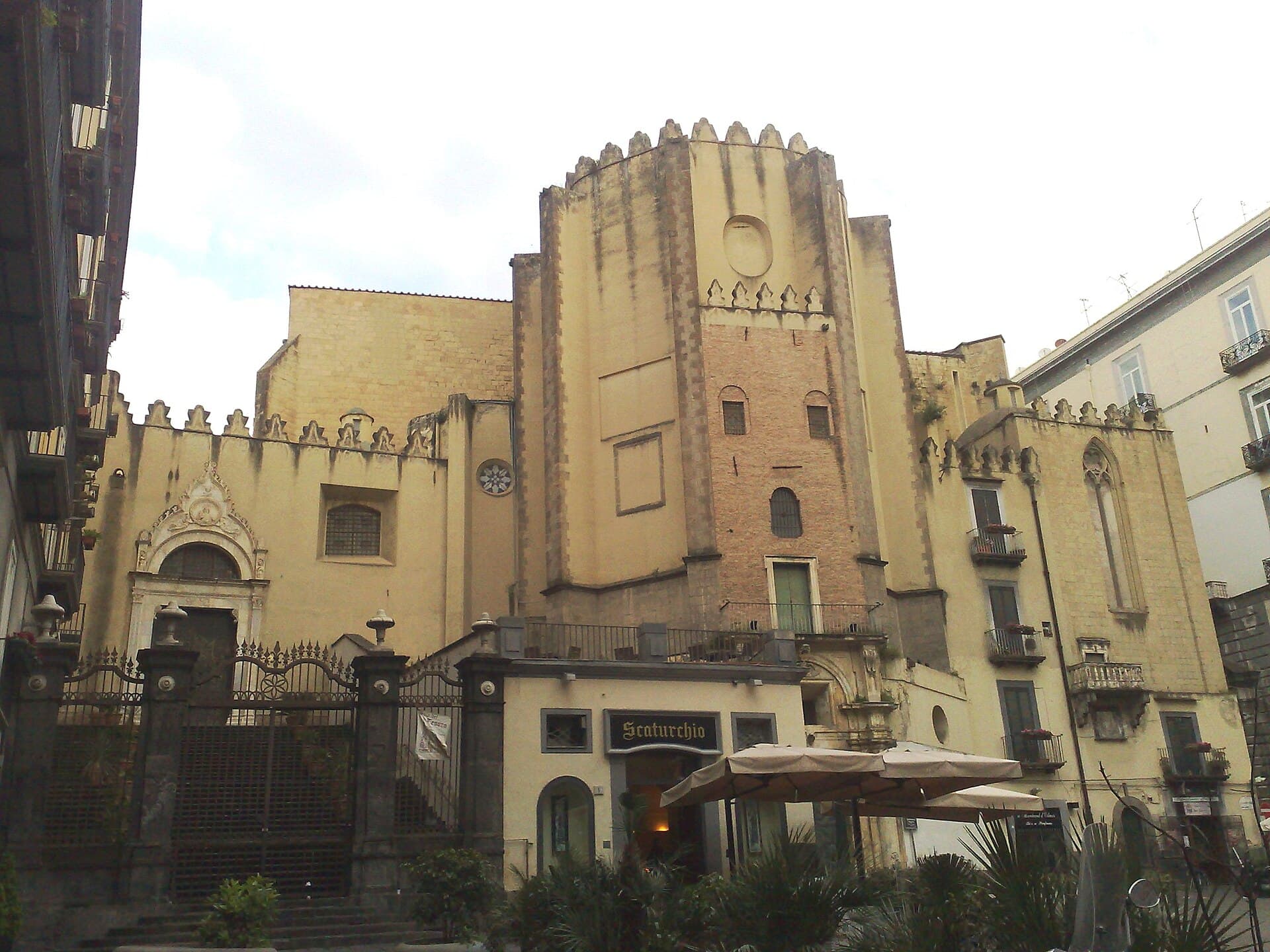 San Domenico MaggioreAbove the sacristy, on a wooden gallery running around three walls some four met3 minutes walk4.6
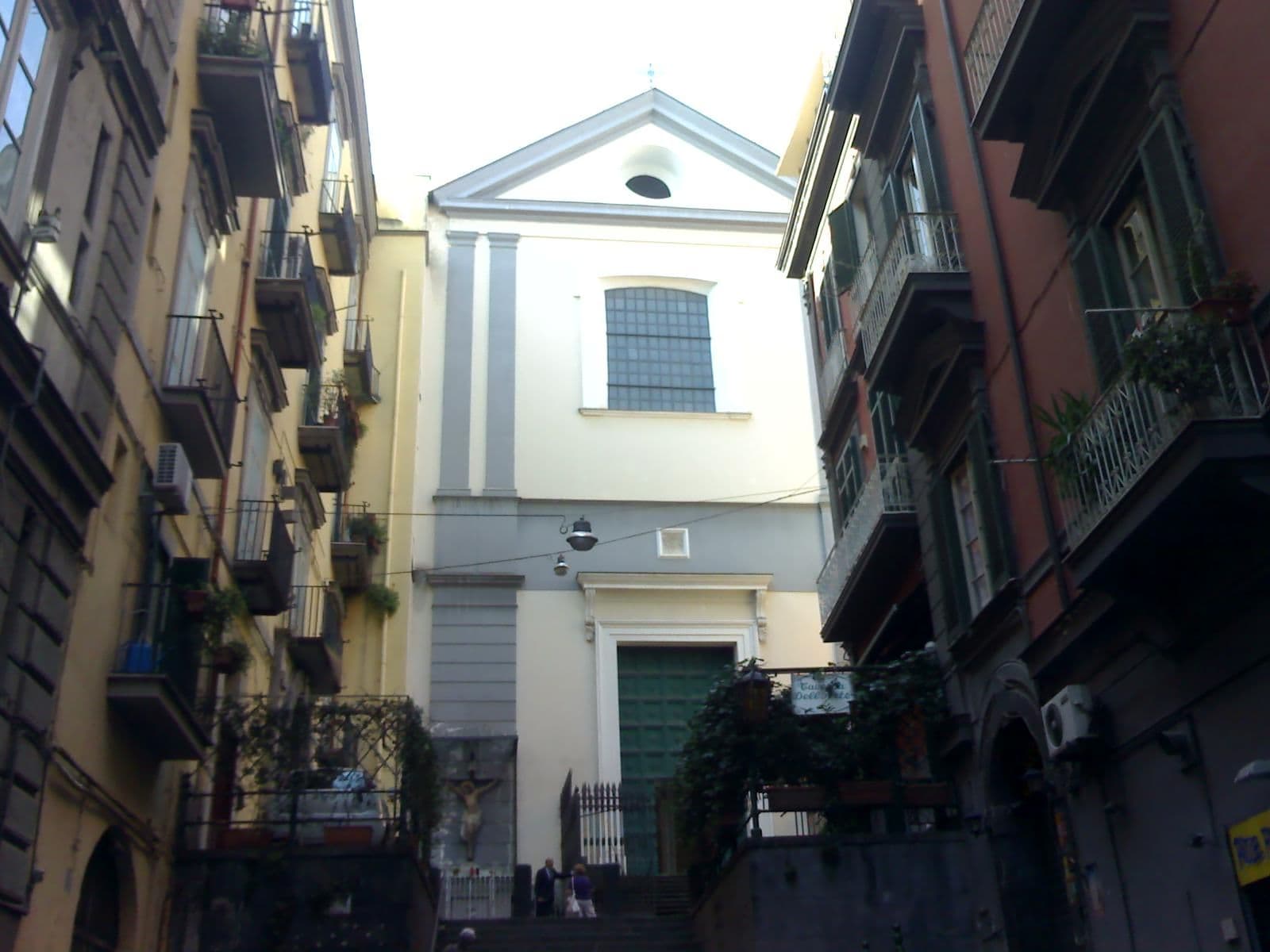 Basilica of San Giovanni MaggioreIt stayed shut for forty-two years after collapses closed it in 1970, and it reo4 minutes walk4.7
 Sant'Anna dei Lombardi"The Tuscan Renaissance church of Naples": Sant'Anna dei Lombardi (Monteoliveto)4 minutes walk4.8
Painted tin-glazed ceramics famous in Naples and Sicily — and when the Clarissans renewed their cloister in 1739 they commissioned Naples's father-son tile masters to sheathe it in cheerfully worldly scenes: vines and country dances — a bold choice for an enclosed order that made the world's most famous ceramic garden.
Not all did: centuries of Baroque melted in a two-day blaze and Giotto's frescoes were lost but for fragments. The great marble tombs stood cracked and were restored — the church today a double lesson: war's loss, and Naples's choice to recover the original rather than the ornament.
Church ten free minutes, cloister a meditative half hour, museum and baths for the curious — then cross to the Gesù Nuovo: a strange diamond façade, a crowded Baroque interior and a saint-doctor's story. The pair fills a satisfying ninety minutes.