
The passage of the dead
A wooden gallery above the sacristy carrying forty-odd coffins of Aragonese kings and Neapolitan nobles, displayed rather than buried.
IlSistemone — CC BY-SA 3.0 · Giuseppe Guida — CC BY-SA 4.0 · Giuseppe Guida — CC BY-SA 4.0 · Giuseppe Guida — CC BY-SA 4.0
Above the sacristy, on a wooden gallery running around three walls some four metres off the floor, stand forty-odd draped coffins: Aragonese kings and princes, Neapolitan nobles and their wives, kept in plain sight rather than buried under the paving. Neapolitans call it the passage of the dead, and it is both the strangest thing in San Domenico Maggiore and the last thing you forget after leaving. The church is late thirteenth century, raised by Charles II for the Dominicans on Gothic bones that Neapolitan Baroque later reworked until the marble and gilding almost hid them. Thomas Aquinas taught theology in the attached convent in 1272; his cell is still opened on the full route, along with the crucifix that legend says spoke to him with the words: you have written well of me, Thomas. One local oddity: what faces the piazza is not the front of the church but its apse. The historic main façade looks onto a courtyard off a narrow lane on the far side, even though the staircase on the square is the door most visitors use today. Two things to know before you book. First, Caravaggio's Flagellation of Christ, painted for this very church, is no longer in it: it moved to the Capodimonte museum in 1972 and an old copy attributed to Andrea Vaccaro hangs in its place. Second, the church itself is free and open, while the sacristy, the treasury room, Aquinas's cell and the Carafa crypt are seen on a guided route, from around €8 and up to €11 for the full one. If the great nave is all you want, fifteen minutes will satisfy you. If you came for the coffins, book a slot ahead rather than waiting on the next free guide at the door. Outside, the square — with its obelisk vowed after the plague of 1656 and finished only in 1737 — is one of the most likeable corners of the old city after dark: students on the steps, cafés open late, a venerable pastry shop on the corner. You are directly on the Spaccanapoli line, and the Sansevero chapel with its Veiled Christ is three minutes' walk away, so the two fit comfortably into one morning. The ground is flat and easy with children, but mind your bag and the delivery scooters that come fast down the narrow lanes; in the old centre that is daily routine, not bad luck.
A wooden gallery above the sacristy carrying forty-odd coffins of Aragonese kings and Neapolitan nobles, displayed rather than buried.
The room the philosopher occupied while teaching here in 1272, together with the crucifix legend says addressed him.
A plague-vow obelisk and steps full of students, in one of the liveliest corners of the old city at night.
Piazza San Domenico Maggiore 8A, 80134 Naples, Italy
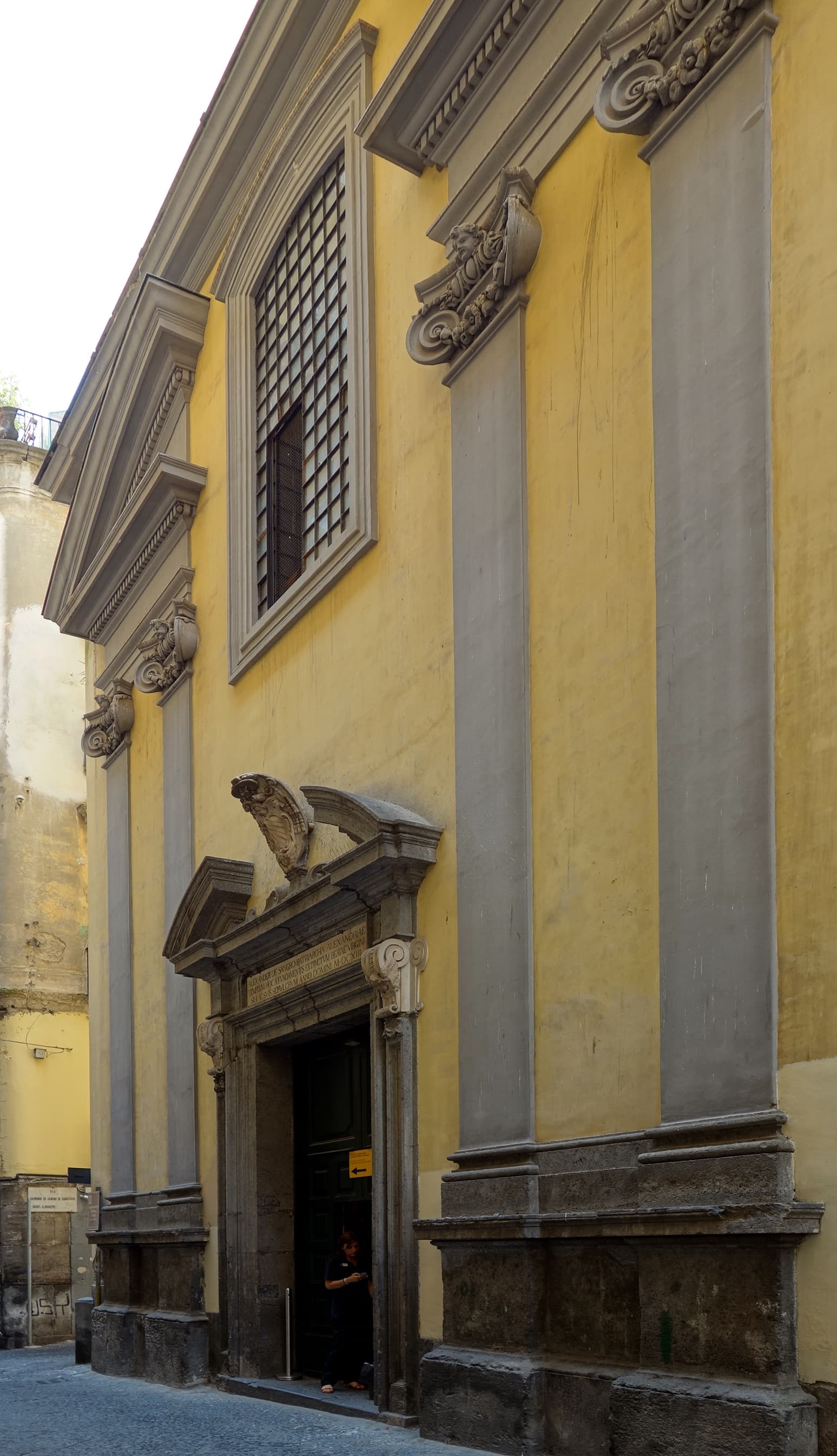 Sansevero ChapelIn a narrow lane of old Naples waits one of art's great shocks: the Veiled Chris1 minute walk4.6
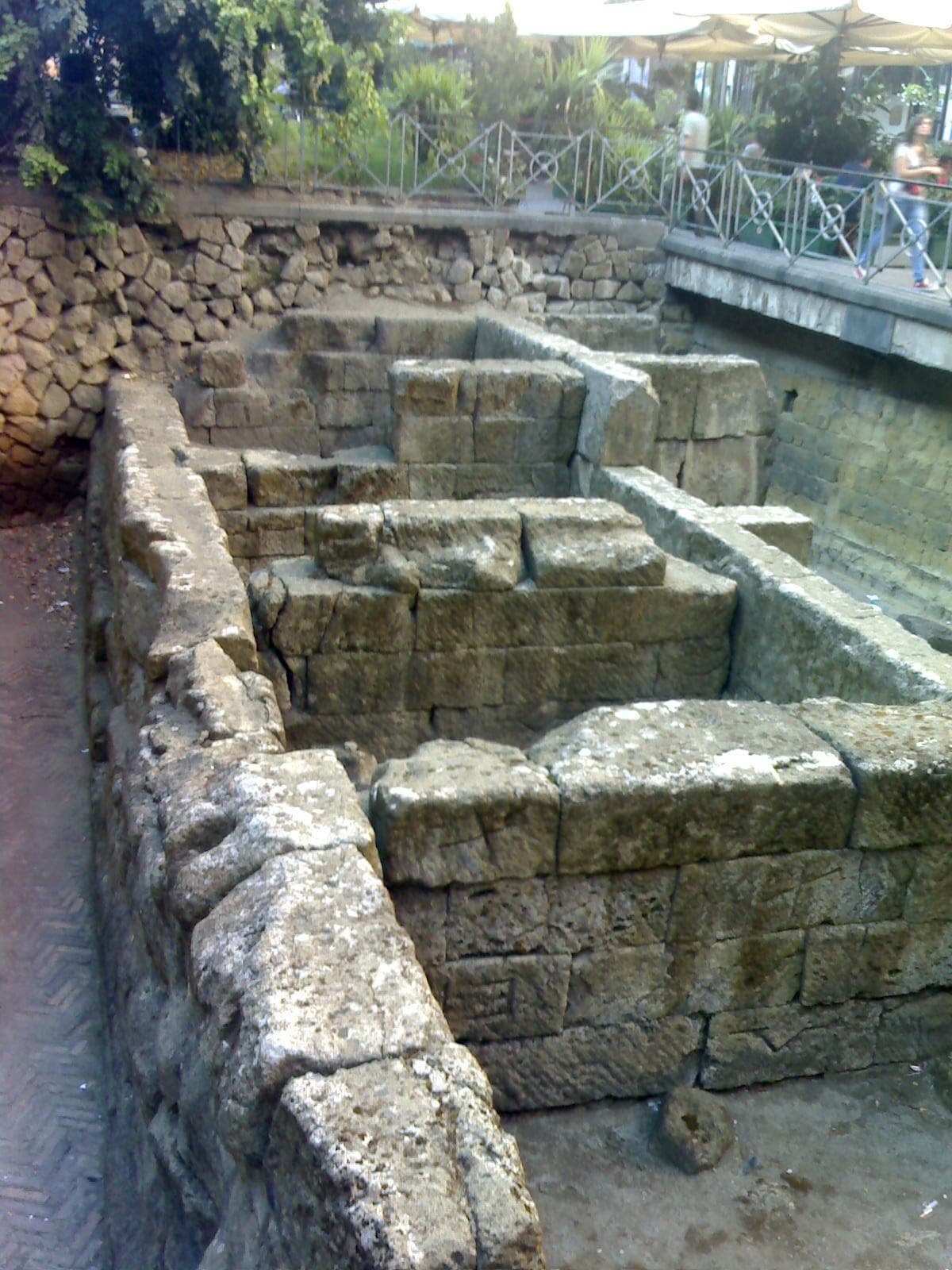 The Greek WallsThe remains of the wall of the Greek city of Neapolis, exposed below street leve3 minutes walk4.1
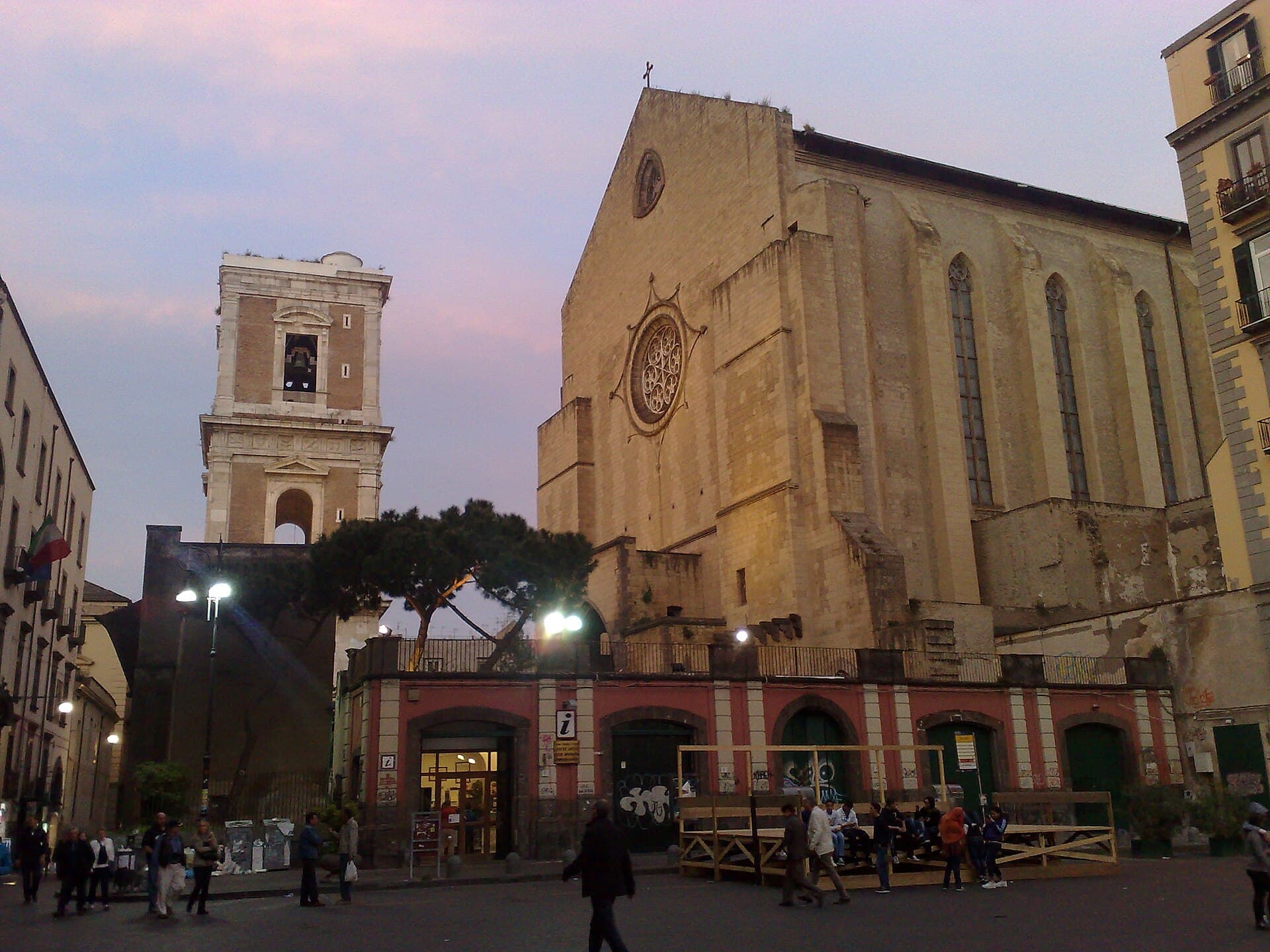 Santa Chiara ComplexBehind the huge Gothic church of Santa Chiara — the greatest of Angevin Naples a3 minutes walk4.6
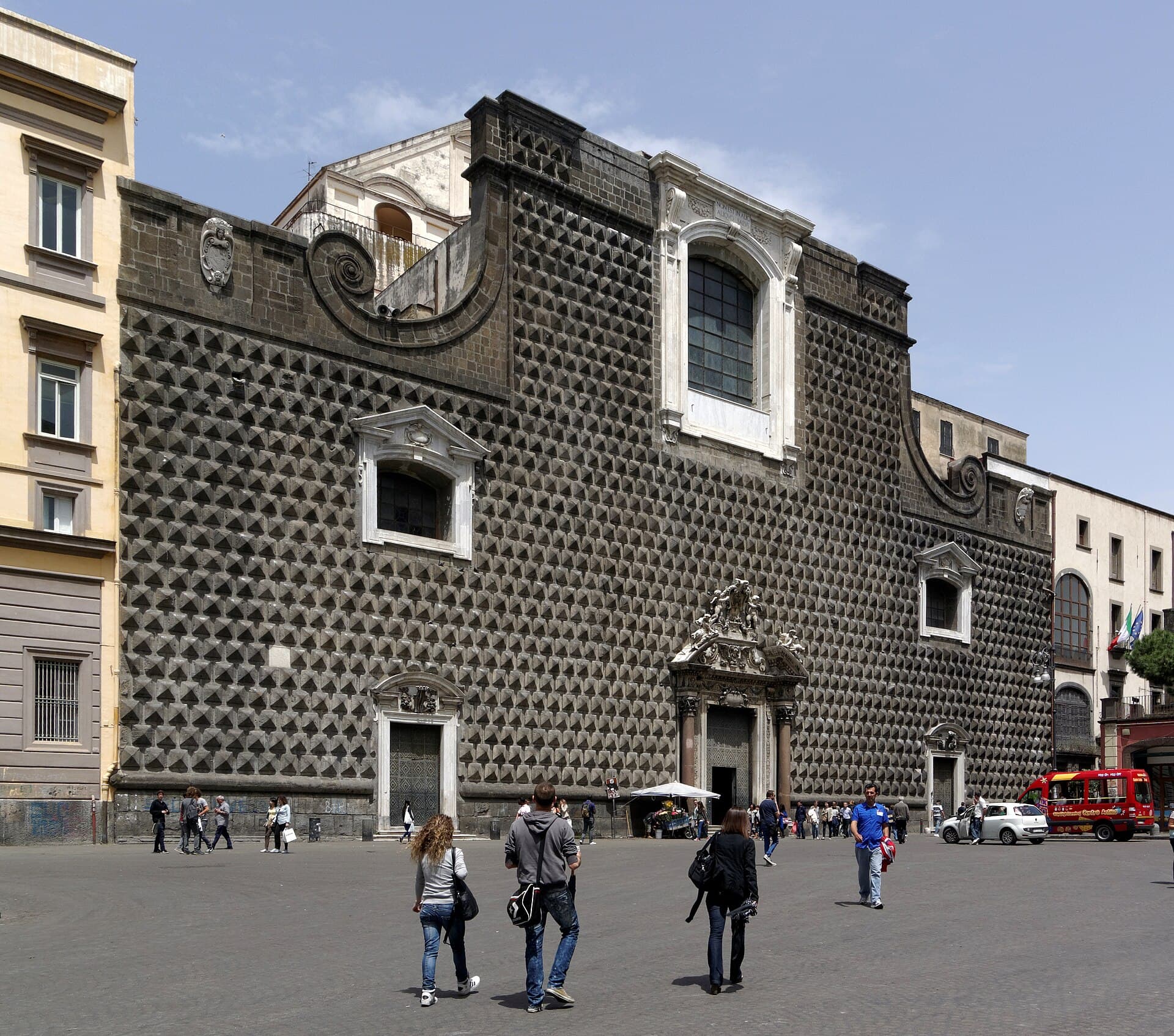 Gesù NuovoThe Gesù Nuovo façade is Naples's architectural riddle: an entire wall of protru3 minutes walk4.8
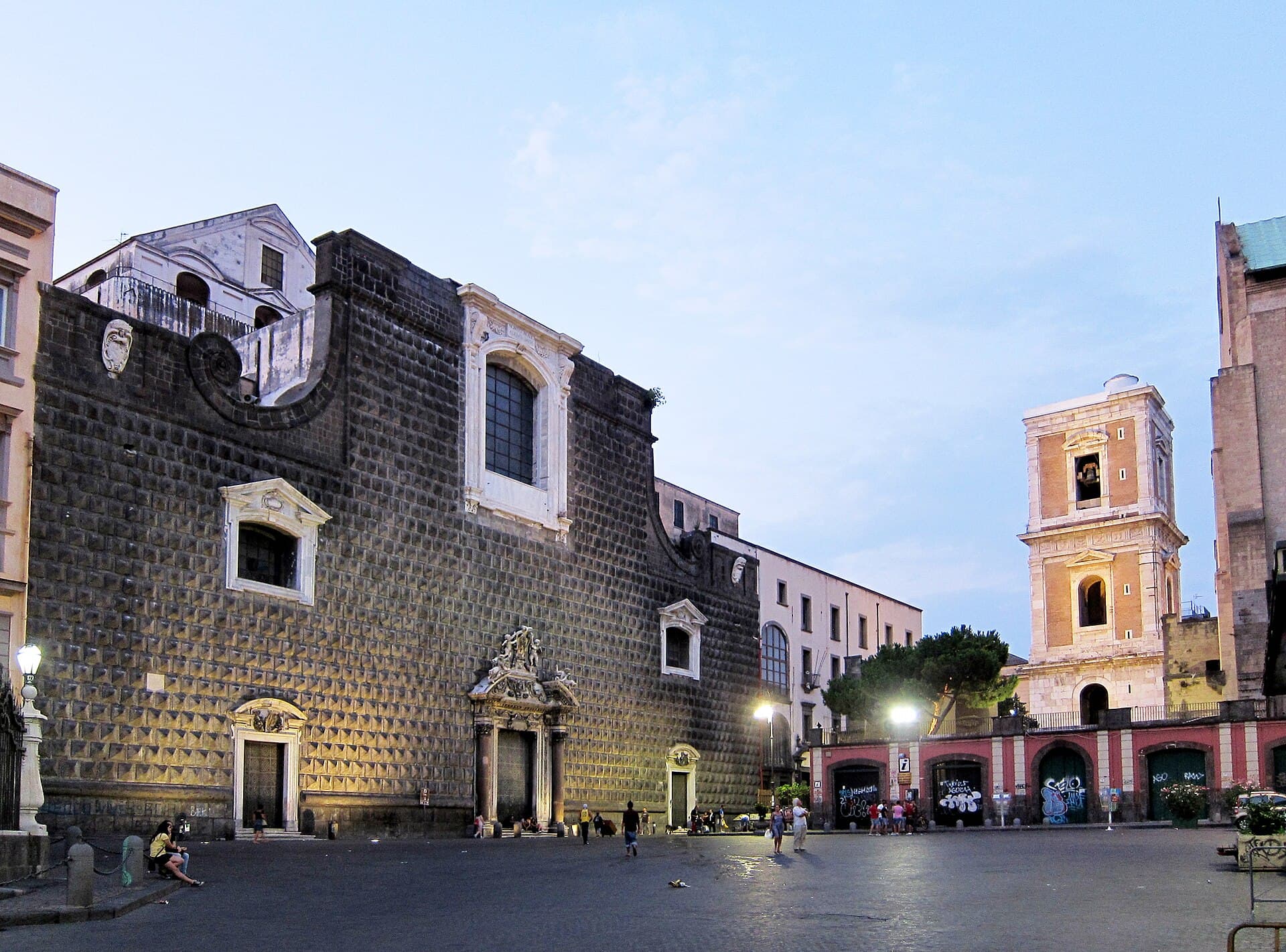 Piazza del Gesù NuovoA square at the western edge of Naples's old city, holding the church of Gesù Nu4 minutes walk4.8
If your budget or your morning allows only one church museum in Naples, choose Sansevero and its Veiled Christ; the impact is far stronger. But if historical strangeness is what you travel for, few things in Europe look quite like that row of Aragonese coffins above the sacristy, and it is behind the ticket. The church on its own still earns a free quarter of an hour as you walk Spaccanapoli.
No. The Flagellation of Christ was painted for this church around 1607, but it moved to the Capodimonte museum in 1972 and an old copy took its place. If Caravaggio is the reason you came, go up to Capodimonte rather than standing here.