
The new city
Neapolis is the origin of the name Naples.
IlSistemone — CC BY-SA 3.0 · John Robert Cozens — Public domain
The remains of the wall of the Greek city of Neapolis, exposed below street level in Piazza Bellini in the heart of old Naples. The massive stone blocks visible date from the fourth century BC and belong to the wall that enclosed the Greek settlement that gave the city its name — Neapolis means the new city. Naples is among the few European cities to have kept its original Greek street plan to this day: three parallel longitudinal streets crossed by transverse ones in a regular grid. Walking the old city today, you walk a layout twenty-five centuries old. The remains lie exposed in a railed pit in the middle of a square full of cafés and academy students — and that juxtaposition, a Greek wall with café tables above it, is among the clearest things about Naples. A public square, free to see at any time.
Neapolis is the origin of the name Naples.
The old city's streets still follow the Greek grid.
The juxtaposition that sums up Naples.
Piazza Bellini, the old city centre
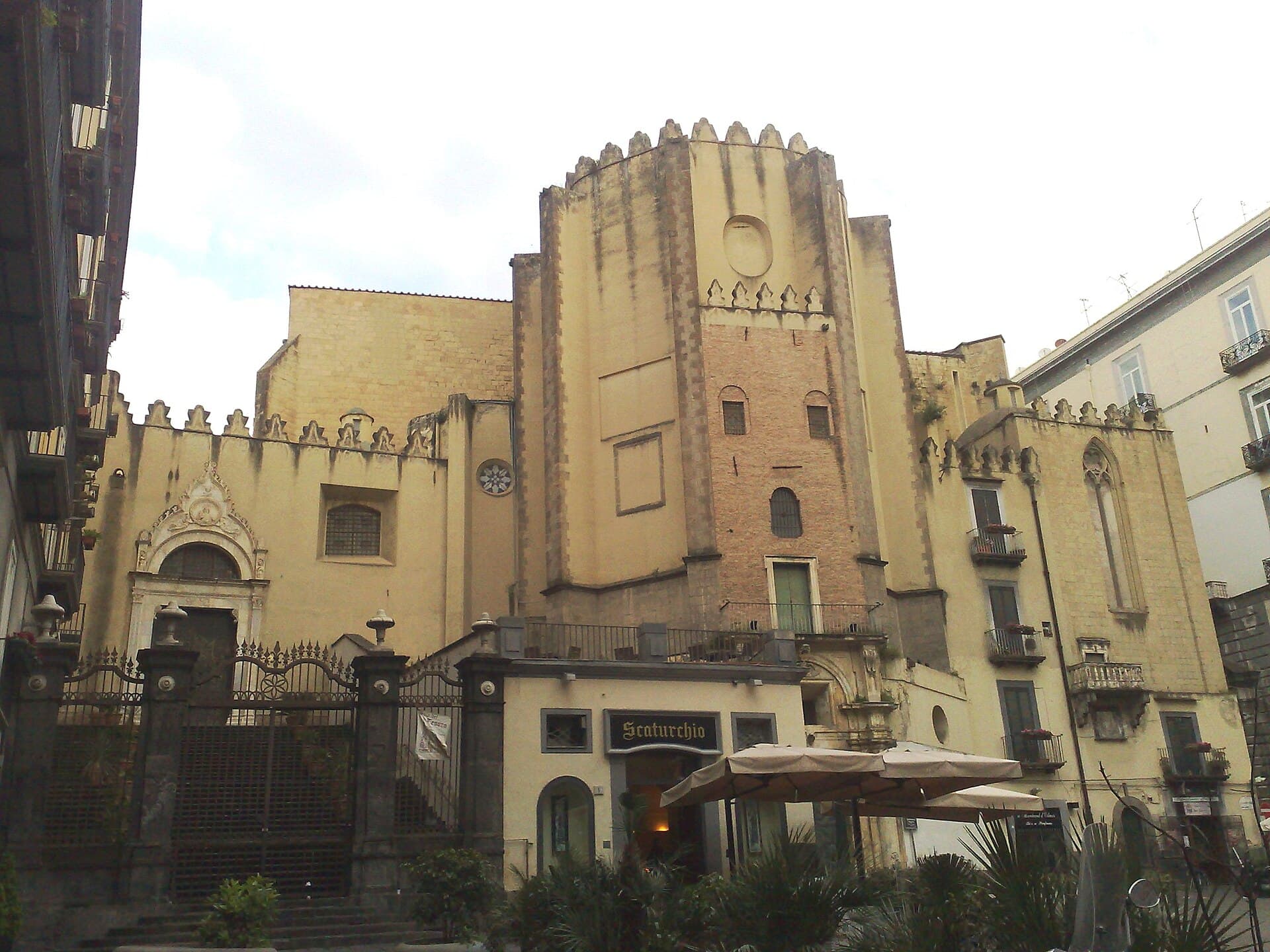 San Domenico MaggioreAbove the sacristy, on a wooden gallery running around three walls some four met3 minutes walk4.6
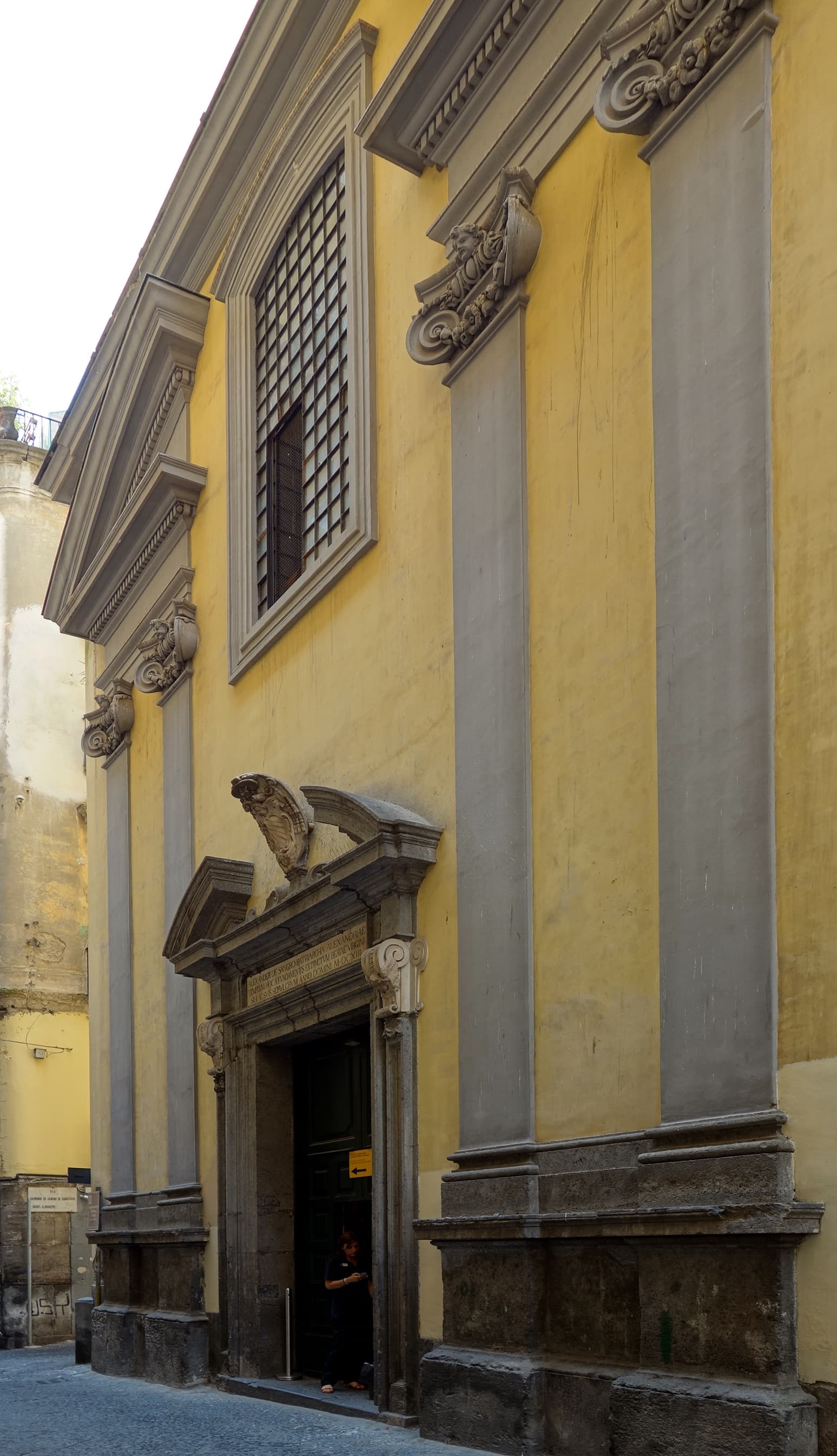 Sansevero ChapelIn a narrow lane of old Naples waits one of art's great shocks: the Veiled Chris3 minutes walk4.6
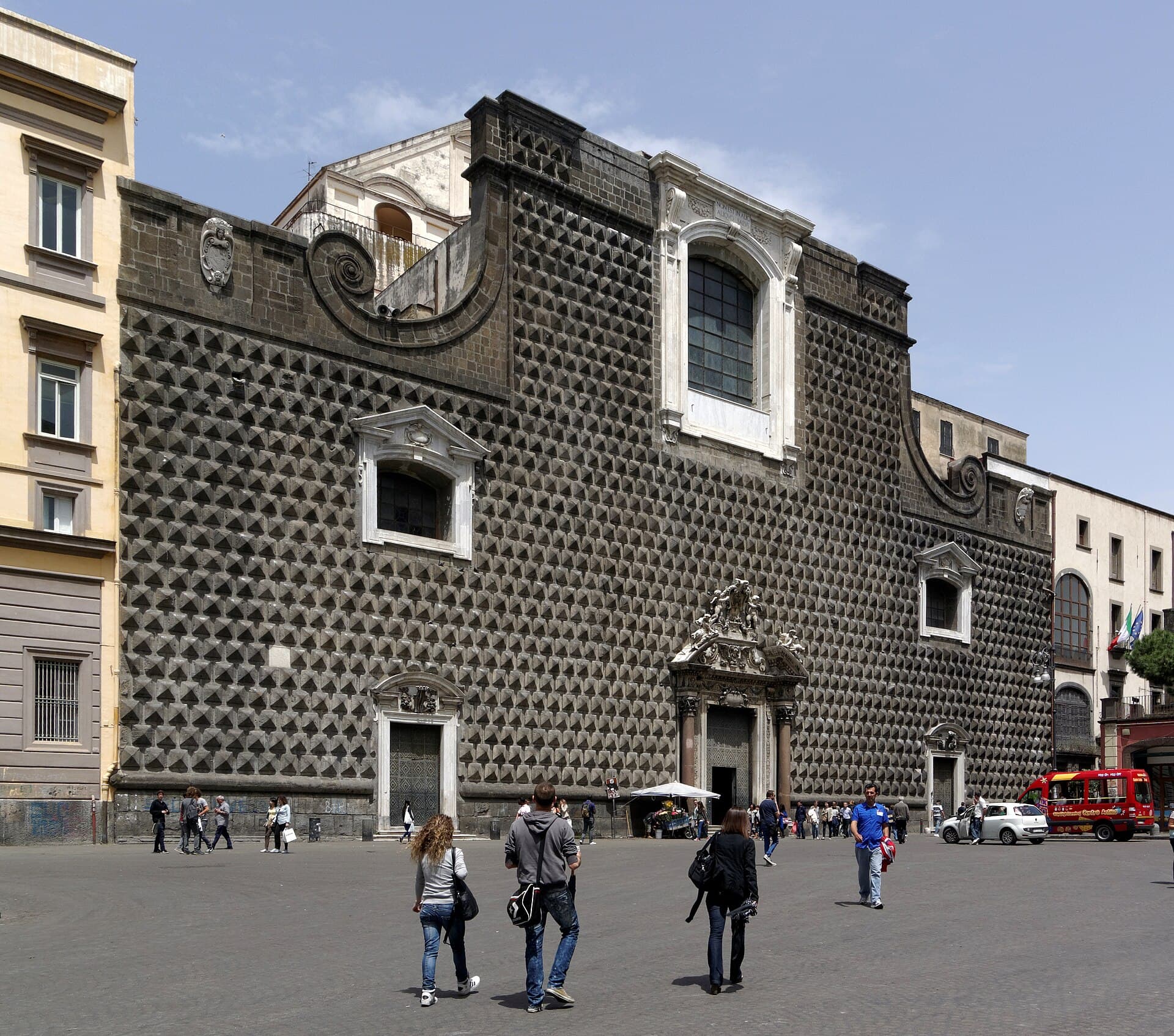 Gesù NuovoThe Gesù Nuovo façade is Naples's architectural riddle: an entire wall of protru3 minutes walk4.8
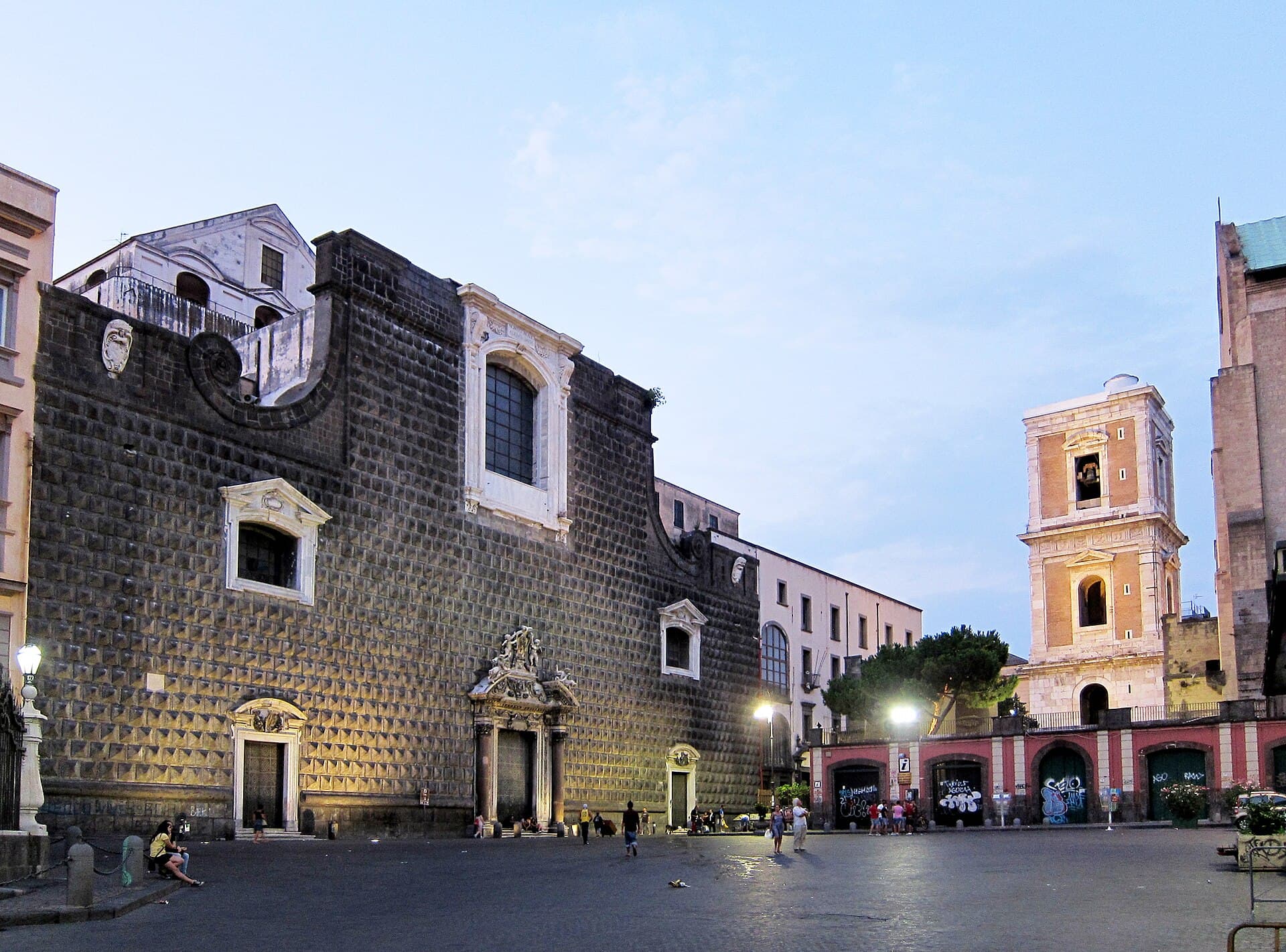 Piazza del Gesù NuovoA square at the western edge of Naples's old city, holding the church of Gesù Nu4 minutes walk4.8
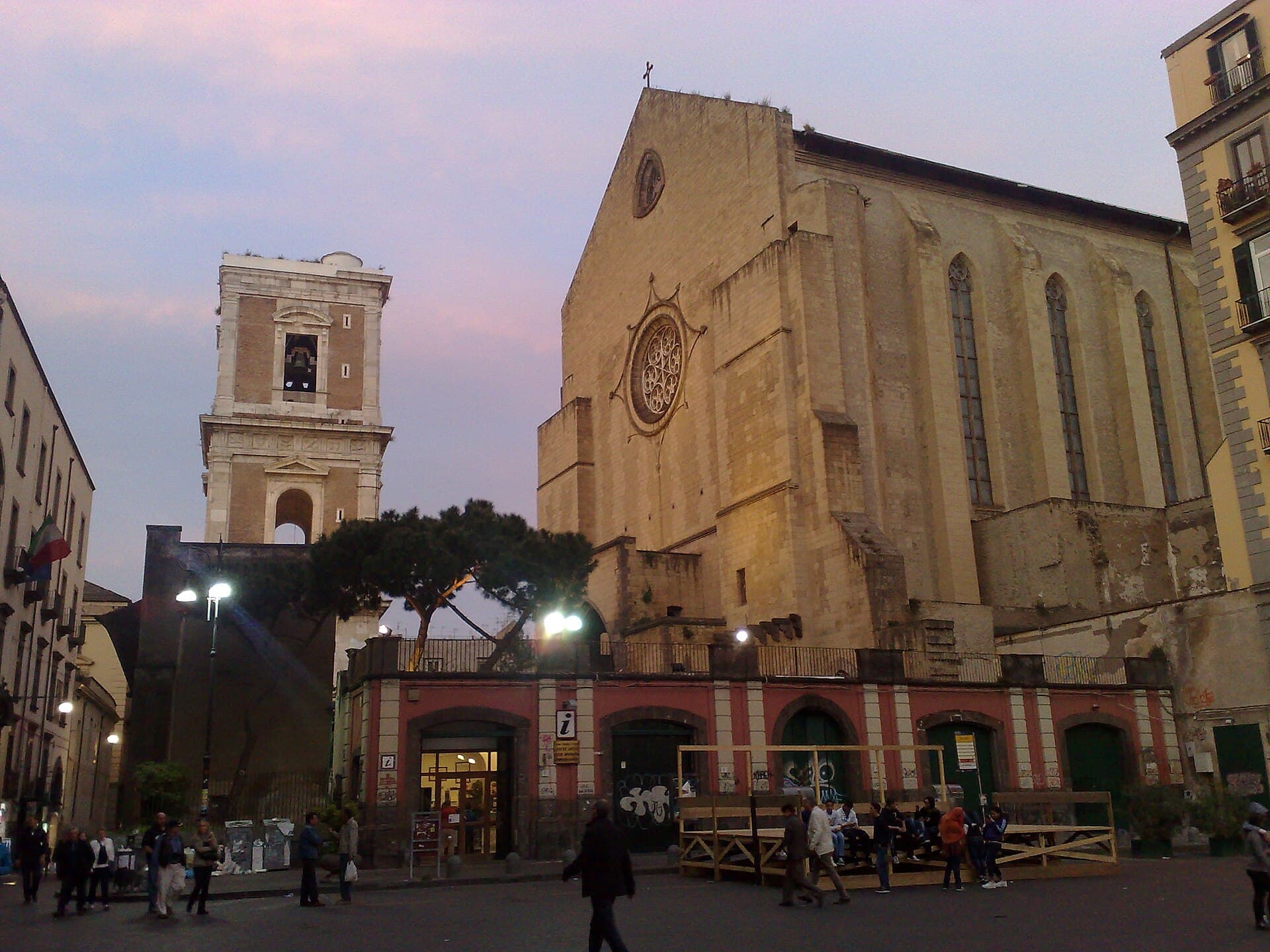 Santa Chiara ComplexBehind the huge Gothic church of Santa Chiara — the greatest of Angevin Naples a4 minutes walk4.6
Few cities match its density: a Greek settlement of the eighth century BC, then a Roman city, then a Byzantine duchy, then Norman, then an Angevin kingdom, then Aragonese, then Spanish, then Bourbon. Each layer left an architectural trace that was not demolished but built upon. Beneath the streets is a network of tunnels, cisterns and caves called Naples Underground, open to visitors, holding traces of all these periods including Second World War air-raid shelters.
The square is among Naples's liveliest in the evening: cafés and bars with their tables spread outdoors, and a crowd of students from the neighbouring Academy of Fine Arts and the university. It suits sitting and watching more than a quick visit. Around it are the church of Santa Maria Maggiore alla Pietrasanta with its eleventh-century tower, and second-hand bookshops in the lanes.