
Painted, not real, windows
An Italian device for visual regularity at lower cost.
Myrabella — CC BY-SA 3.0 · Patrice Semeria — Public domain · Bybbisch94, Christian Gebhardt — CC BY-SA 4.0
The oldest planned square in Nice and its largest, laid out in the late eighteenth century as the city's northern gate on the road to Turin. Its design is purely Savoyard: identical ochre buildings on four sides, arcaded at ground level, with regular windows and trompe-l'œil painting on the facades — painted rather than real windows and columns, a common Italian device for achieving visual regularity at lower cost. At the centre stands a statue of Giuseppe Garibaldi, born in Nice in 1807 when the city was Savoyard. The irony is that the hero of Italian unification was born in a city that became French, and he himself opposed its cession to France in 1860 and regarded it as a betrayal. The square today is a tram interchange with cafés and nightlife, and the entrance to the port district. A public space, free to see.
An Italian device for visual regularity at lower cost.
The hero of Italian unity from a city that became French.
He regarded Sardinia's handing of Nice to France as a betrayal.
North-east of old Nice
 La Tête CarréeA monumental sculpture of a squared human head about twenty-six metres high, by 3 minutes walk4.1
 Castle Hill CemeteryOn the summit of the castle hill, where Nice's citadel stood before Louis XIV de4 minutes walk4.9
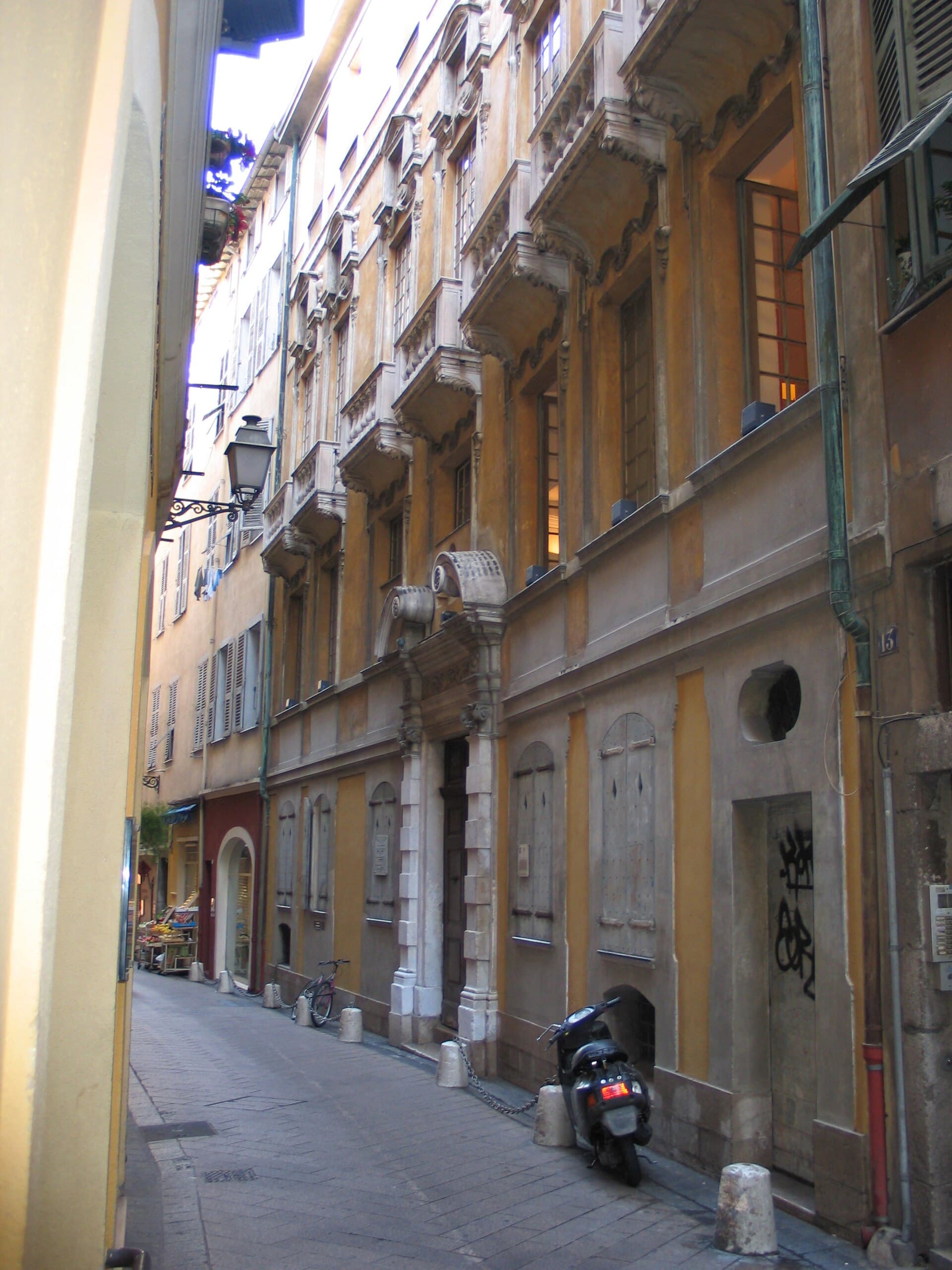 Palais LascarisThe Palais Lascaris hides in the narrowest lanes of old Nice: a façade that prom5 minutes walk4.5
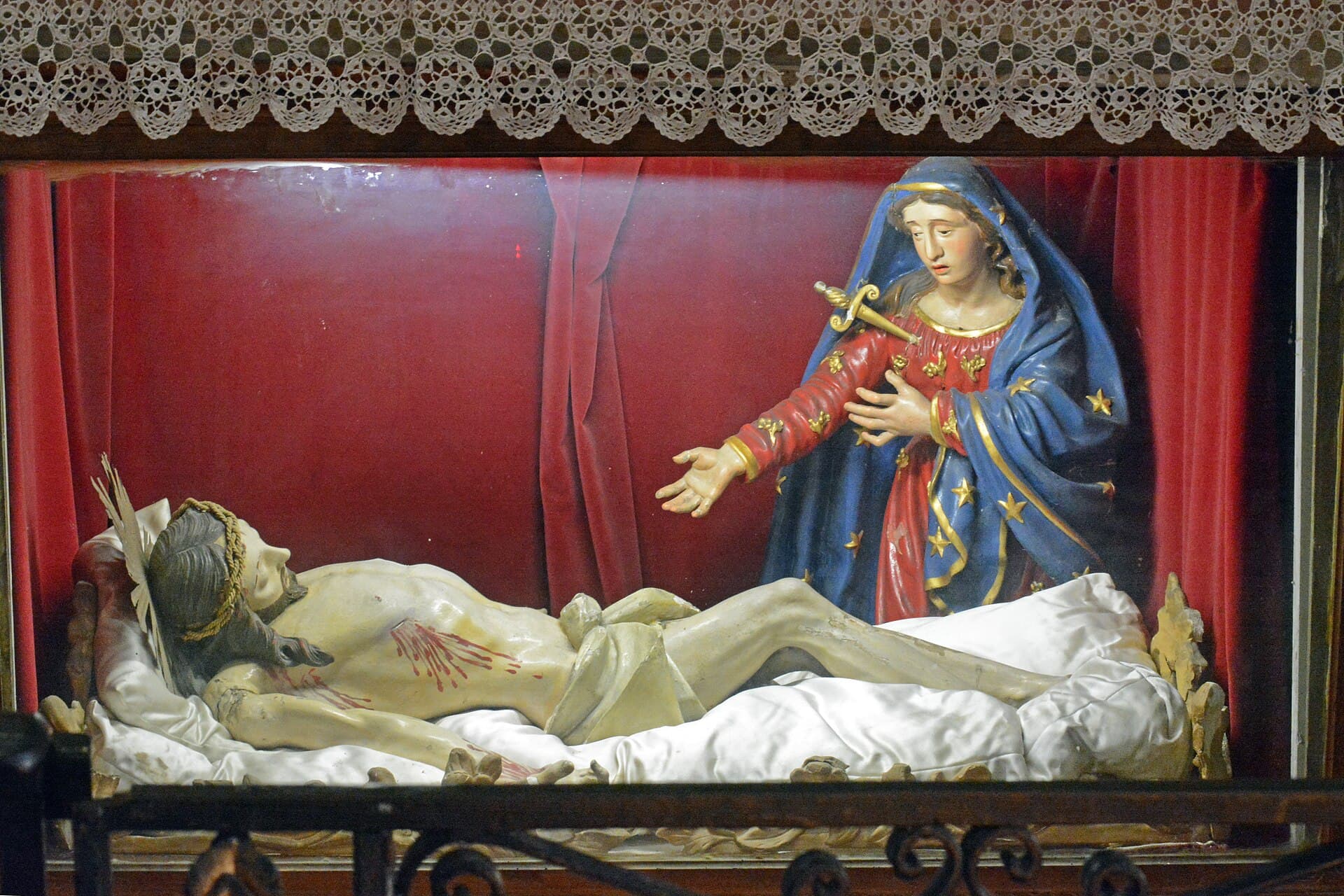 The Church of Saint James the GreaterA Jesuit church in old Nice, built in the seventeenth century and known locally 7 minutes walk4.7
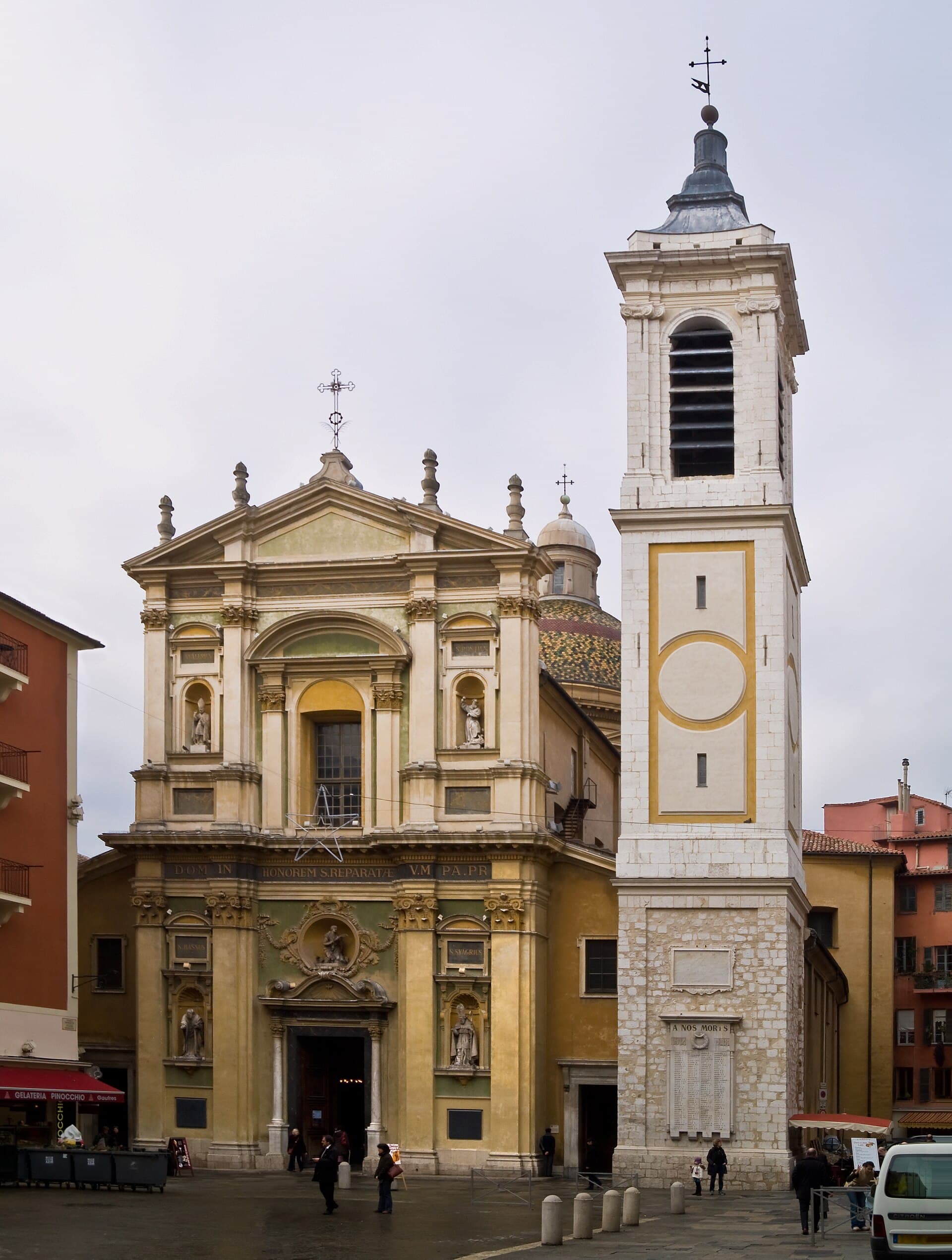 Cathédrale Sainte-RéparateIn old Nice's lane-maze, Place Rossetti opens suddenly onto a Baroque cathedral 7 minutes walk4.7
An Italian military leader and revolutionary, and among the principal makers of Italian unification in the nineteenth century. He led campaigns in South America and then in Italy, most famously the Expedition of the Thousand in 1860, when he sailed with a thousand red-shirted volunteers, brought down the Kingdom of the Two Sicilies and handed it to the king of Sardinia. He refused office and titles and returned to his farm. He is among the most popular figures in modern European history, and many streets and squares in Italy and beyond carry his name.
The port district to the south with its restaurants, antique shops and boats — quieter than old Nice and more local. The MAMAC museum of modern and contemporary art is minutes north. And Rue Bonaparte and the Libération quarter with its market. The tram from the square reaches the beach and the old town in minutes.