
Kalyan Minaret
Bukhara's symbol.
Umid1108 — CC BY-SA 4.0 · Arina Pan — CC BY-SA 4.0 · travelmag.com — CC BY 2.0 · Patrickringgenberg — CC BY-SA 3.0 · Jean Housen — CC BY-SA 4.0 · BeshevI — CC BY-SA 4.0 · Yuldasheva Muattaroy — CC0 · Myu471 — CC BY-SA 4.0
Bukhara's best-known religious complex, whose name means «at the foot of the great one», the great minaret. It has three parts, the Kalyan Mosque, the Kalyan Minaret and the Mir-i-Arab Madrasa, with the mosque and madrasa facing each other across a square. The Qarakhanid ruler Muhammad Arslan Khan built the minaret in 1127; it is 45.6 metres tall (48 with its tip), nine metres across at the base and six at the top, with a brick spiral stair inside. When Genghis Khan destroyed the original mosque in 1220 he left the minaret standing, and it is Bukhara's symbol today. Ubaydullah Khan rebuilt the Kalyan Mosque in 1515, one of the largest mosques in Central Asia, and built the twin-domed Mir-i-Arab Madrasa in 1535, still a working madrasa. The minaret's shaft is wrapped in bands of patterned brickwork. The square is open and free; the mosque courtyard may charge a small fee, and it is best to avoid prayer times. It is loveliest at sunset and in the evening, when the minaret is lit.
Bukhara's symbol.
Twin turquoise domes.
The minaret lit.
Centre of old Bukhara
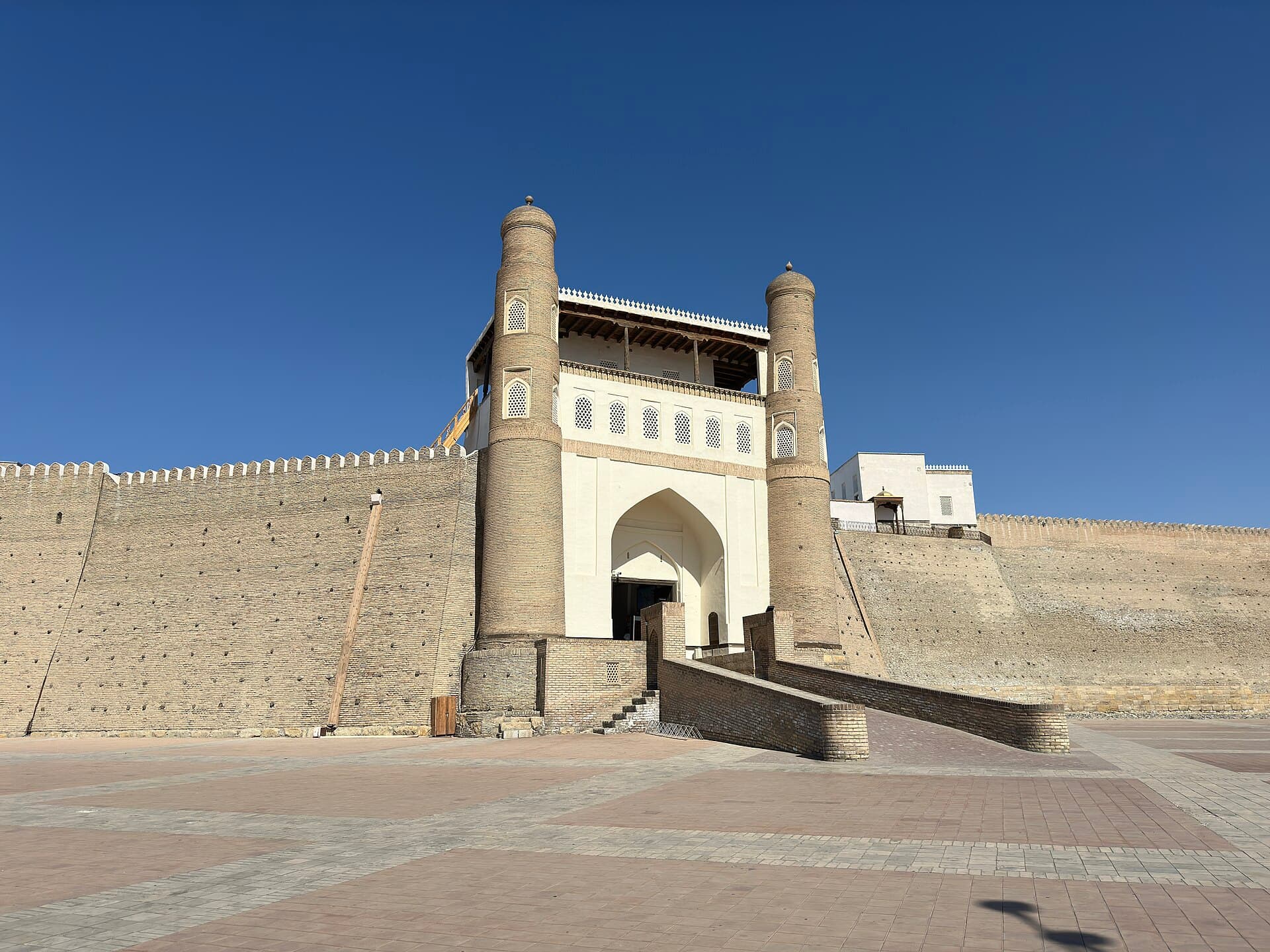 Ark of BukharaA massive fortress in Bukhara, first built around the 5th century AD; its presen6 minutes walk4.5
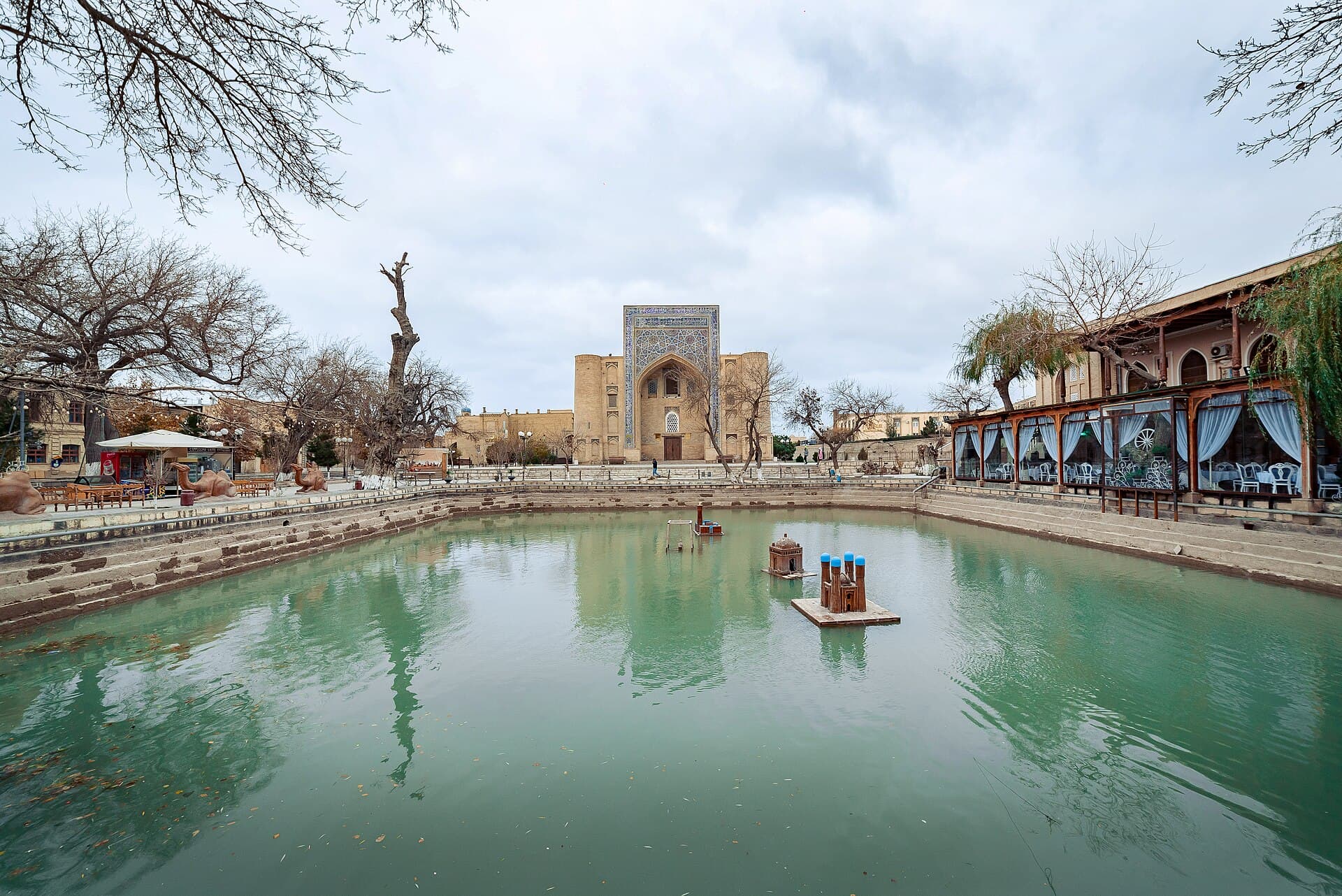 Lyabi-Hauz squareThe square around one of Bukhara's few surviving pools, whose name means «by the7 minutes walk4.5
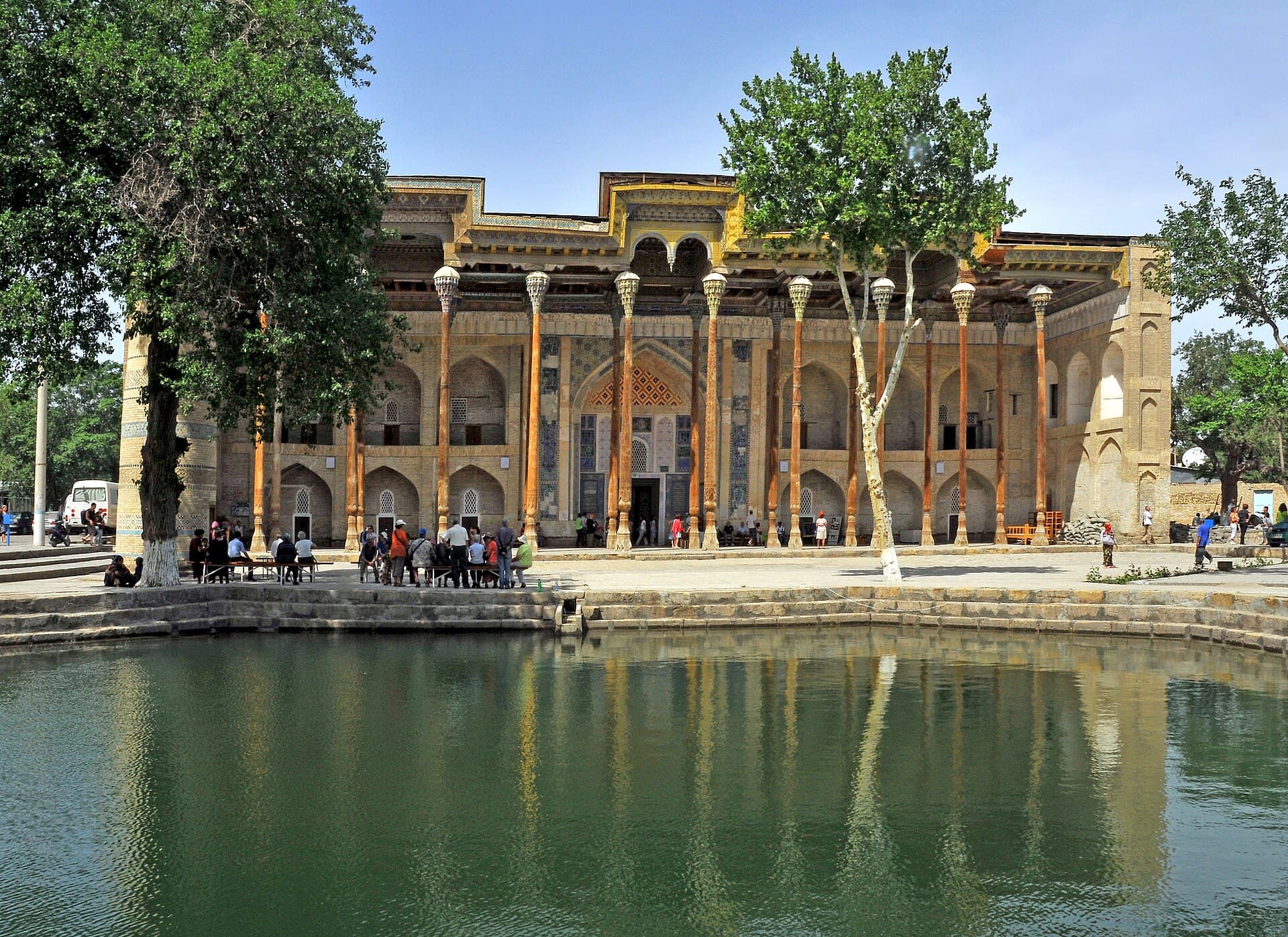 Bolo Hauz MosqueA historic mosque in Bukhara, built in 1712 opposite the Ark fortress on the squ9 minutes walk4.7
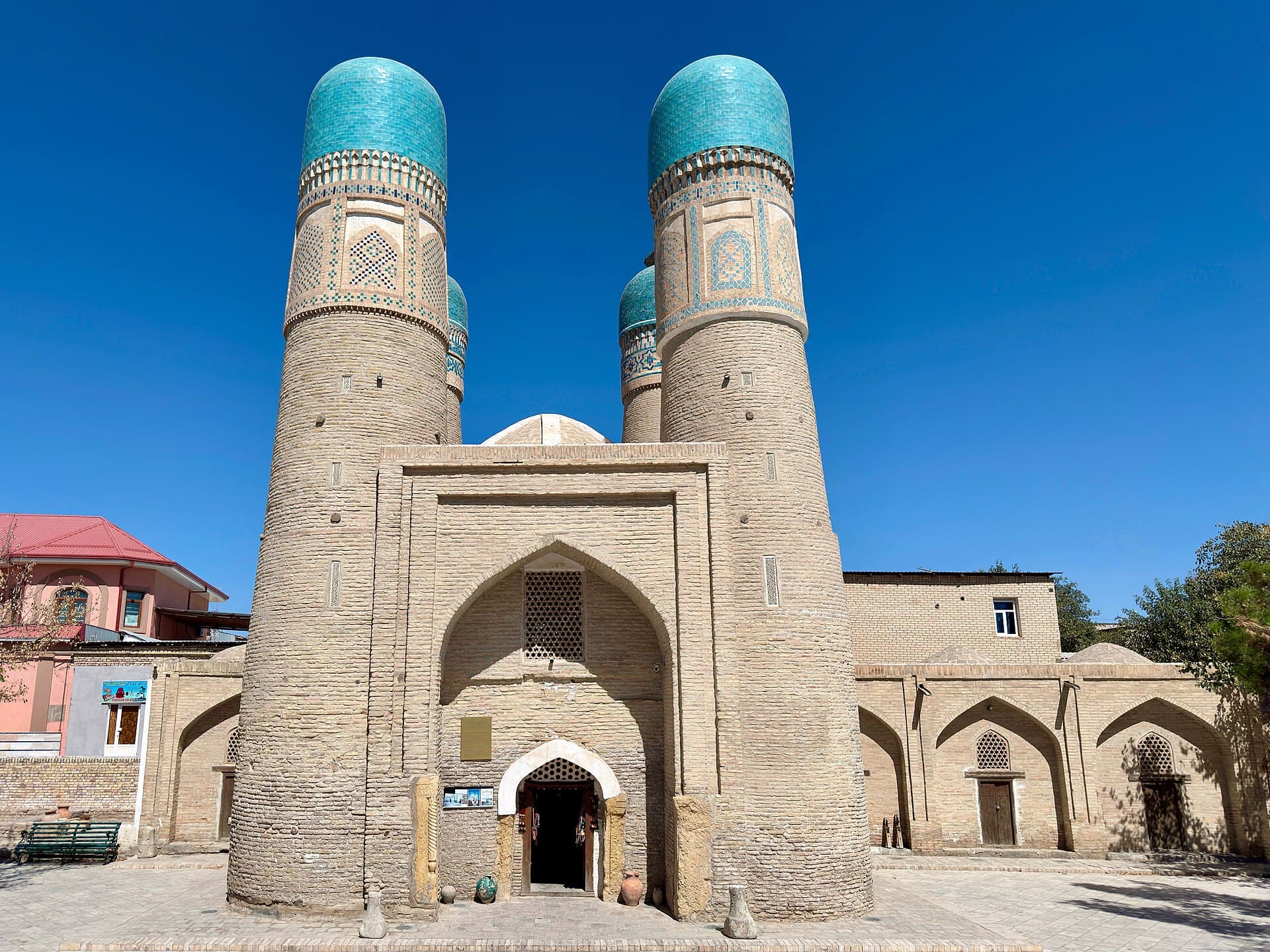 Chor MinorA small, unique building in Bukhara whose Persian name means «four minarets», af13 minutes walk4.5
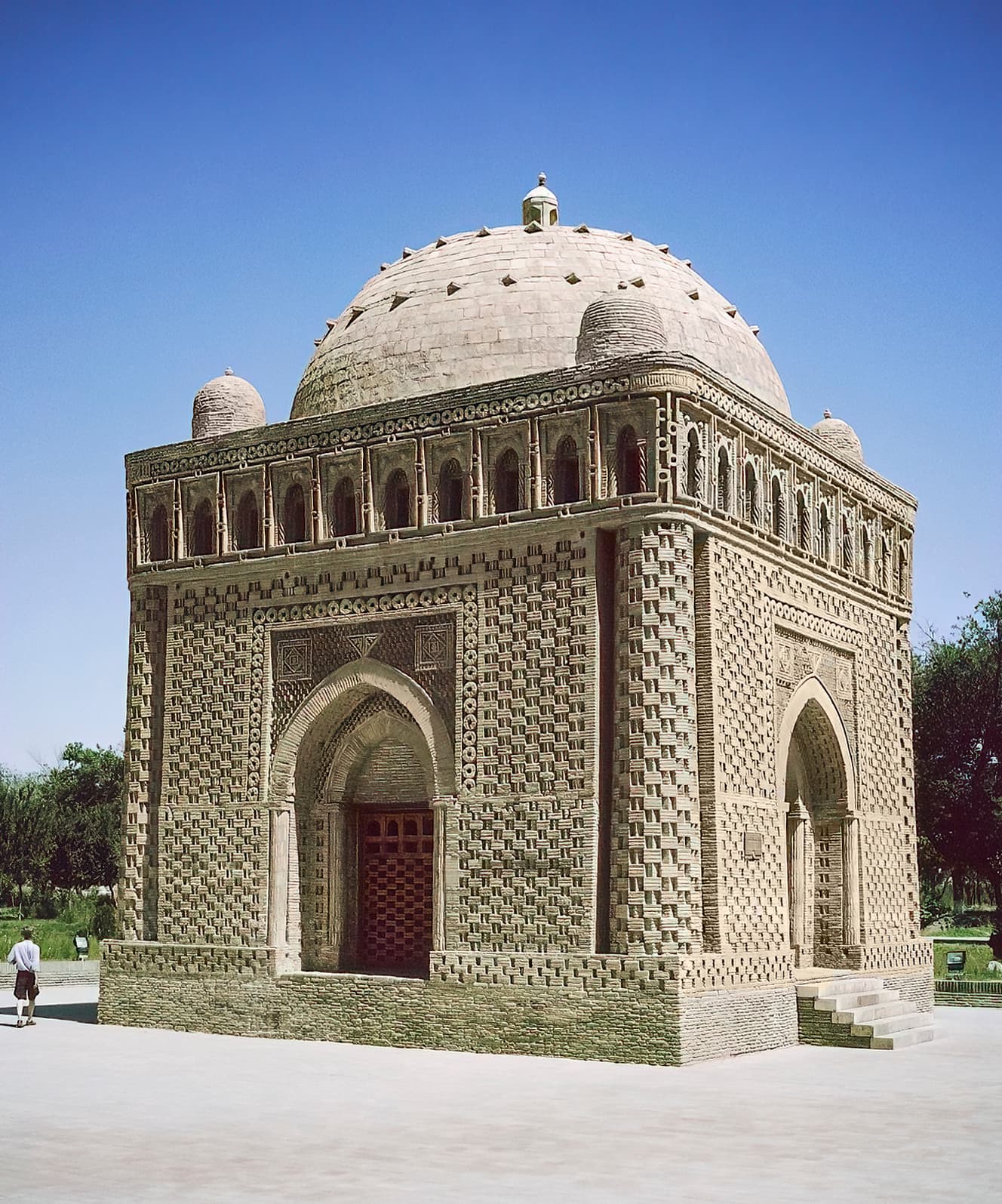 Samanid Mausoleum (Ismail Samani)A 10th-century mausoleum in northwest Bukhara, resting place of the powerful Sam16 minutes walk4.6
It was built in 1127 and survived when Genghis Khan destroyed the original mosque in 1220; it stands 45.6 metres tall.