
Three obelisks in three directions
An entirely deliberate sightline from the right corner.
R. Bitzer — CC BY-SA 3.0 · Livioandronico2013 — CC BY-SA 4.0 · Giorgio Galeotti — CC BY 4.0 · Giorgio Galeotti — CC BY 4.0
Four fountains in the corners of a street crossing in Rome, set up between 1588 and 1593, forming together a point of urban planning rather than mere decoration. Each fountain sits in a niche in a building's corner with a reclining figure: the river Tiber, the river Arno, and the goddesses of wisdom and strength. The two rivers stand for Rome and Florence, the two goddesses for two virtues. The real reason for them is planning. Pope Sixtus V reorganised Rome in the late sixteenth century by cutting long straight streets linking the major churches to one another, and marked the important crossings with obelisks and fountains so a pilgrim would know where he was. From this crossing in particular you can see — standing in the right spot — three obelisks in three directions: at Santa Maria Maggiore, in Piazza del Popolo, and at the Quirinal. That sightline is entirely deliberate. Viewing is free, but the crossing is busy with traffic — take care.
An entirely deliberate sightline from the right corner.
The Tiber and the Arno, wisdom and strength.
The straight streets and markers were designed so a visitor knew where he was.
The crossing of Via delle Quattro Fontane and Via del Quirinale
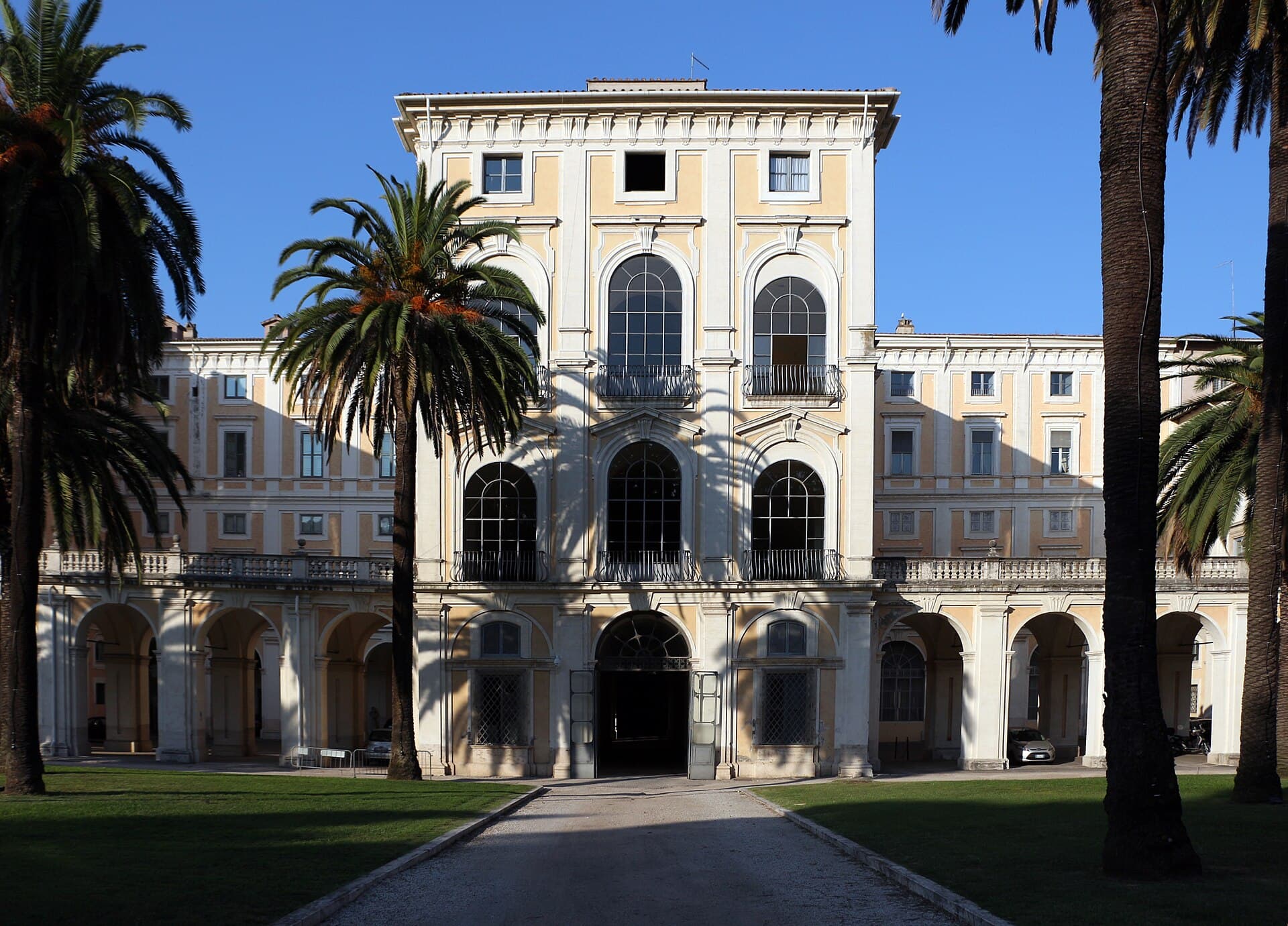 Galleria Nazionale d'Arte AnticaA Baroque palace built for the family of Pope Urban VIII by three of the sevente2 minutes walk4.7
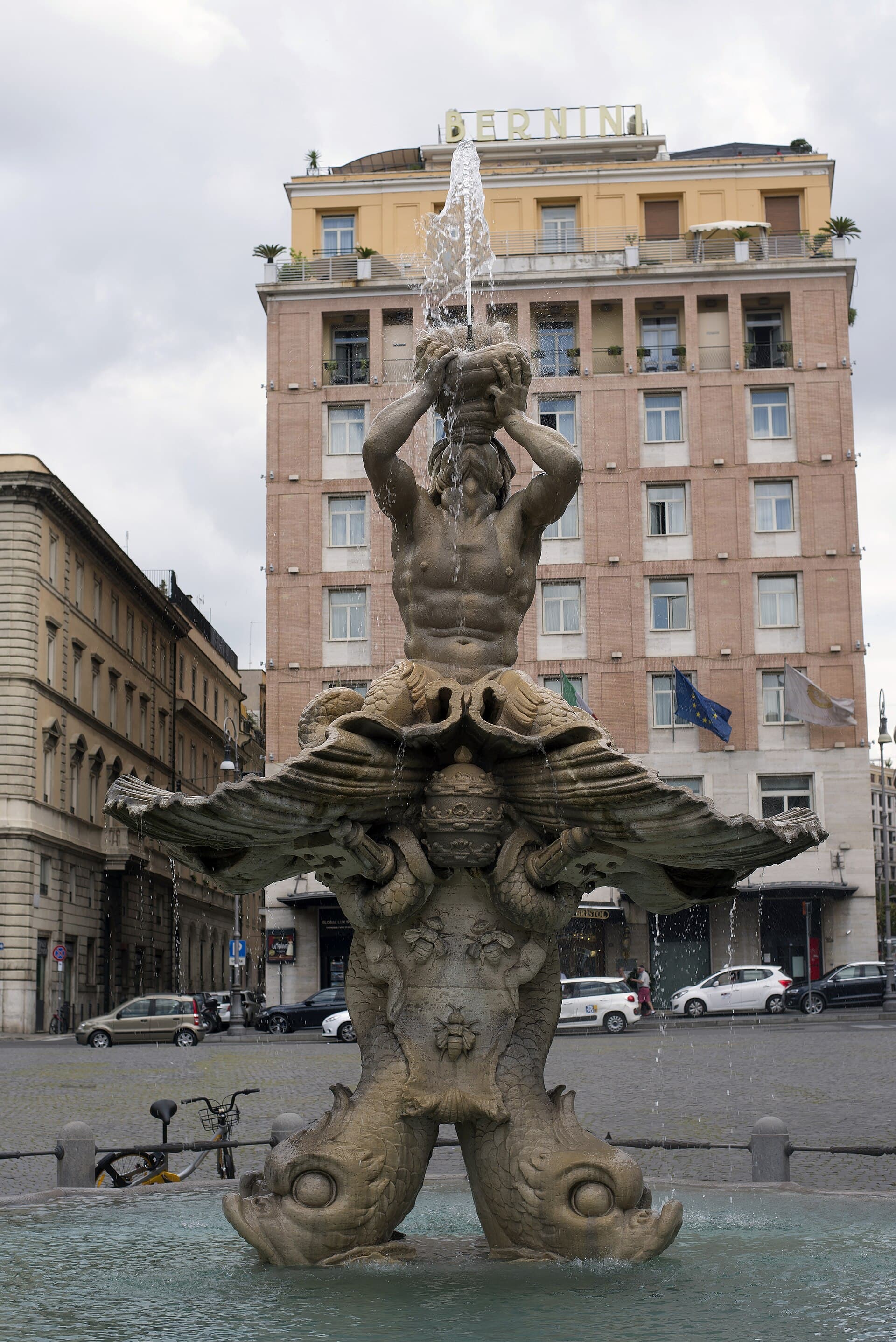 Triton FountainBernini's fountain at the centre of Piazza Barberini, carved in 1643 for Pope Ur3 minutes walk4.7
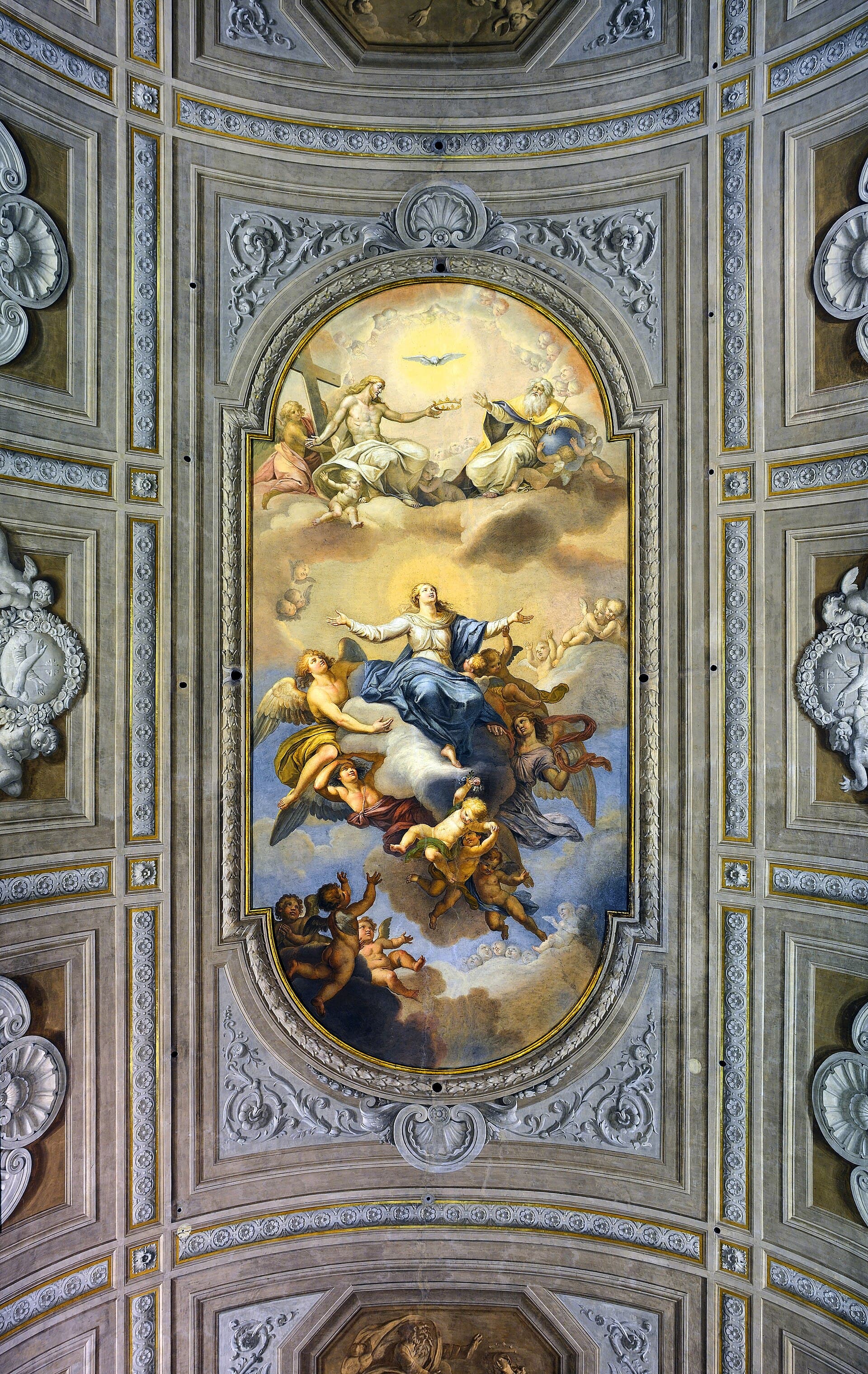 Santa Maria della Concezione dei CappucciniSix small rooms beneath the Capuchin church, their walls and ceilings decorated 5 minutes walk4.7
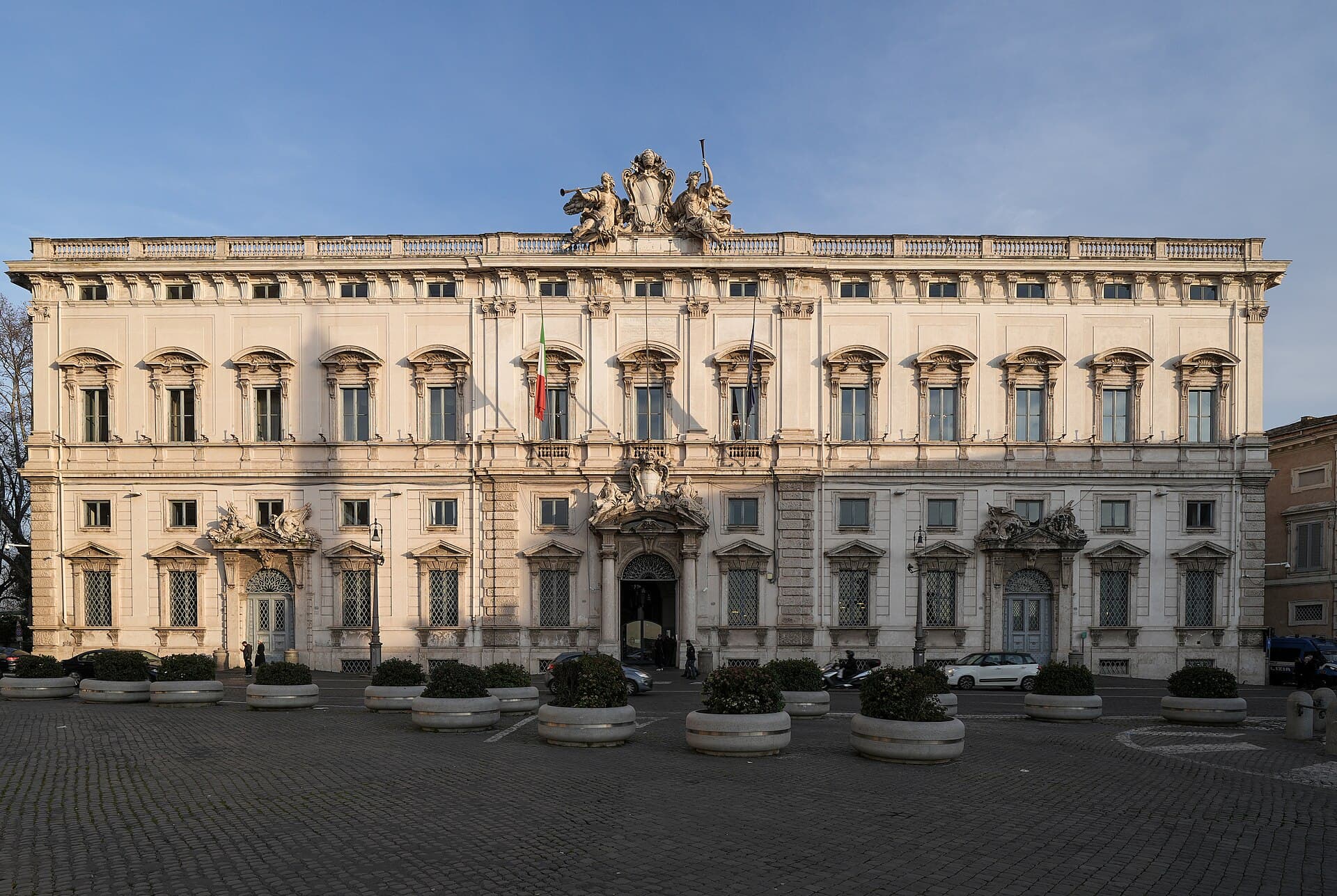 Palazzo della ConsultaA late Baroque palace designed by Ferdinando Fuga and completed in 1737 for Pope5 minutes walk4.4
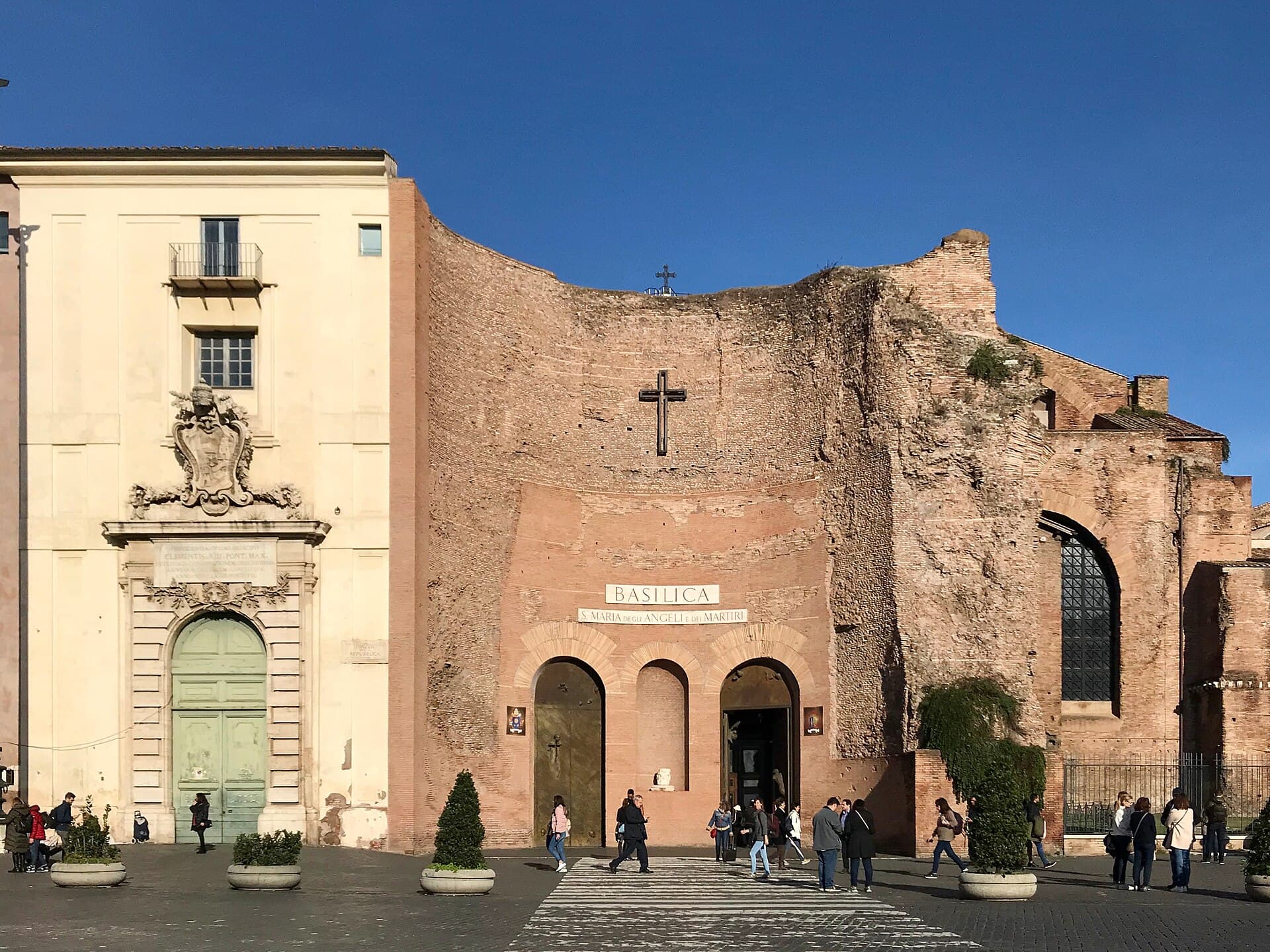 Santa Maria degli Angeli e dei MartiriA church built inside the central hall of the Baths of Diocletian — the largest 7 minutes walk4.8
Looking for halal food near The Four Fountains? There are several options nearby, from Moroccan and Indian kitchens to quick casual spots and places with a view. Confirm the halal status and opening hours before you go — these can change.
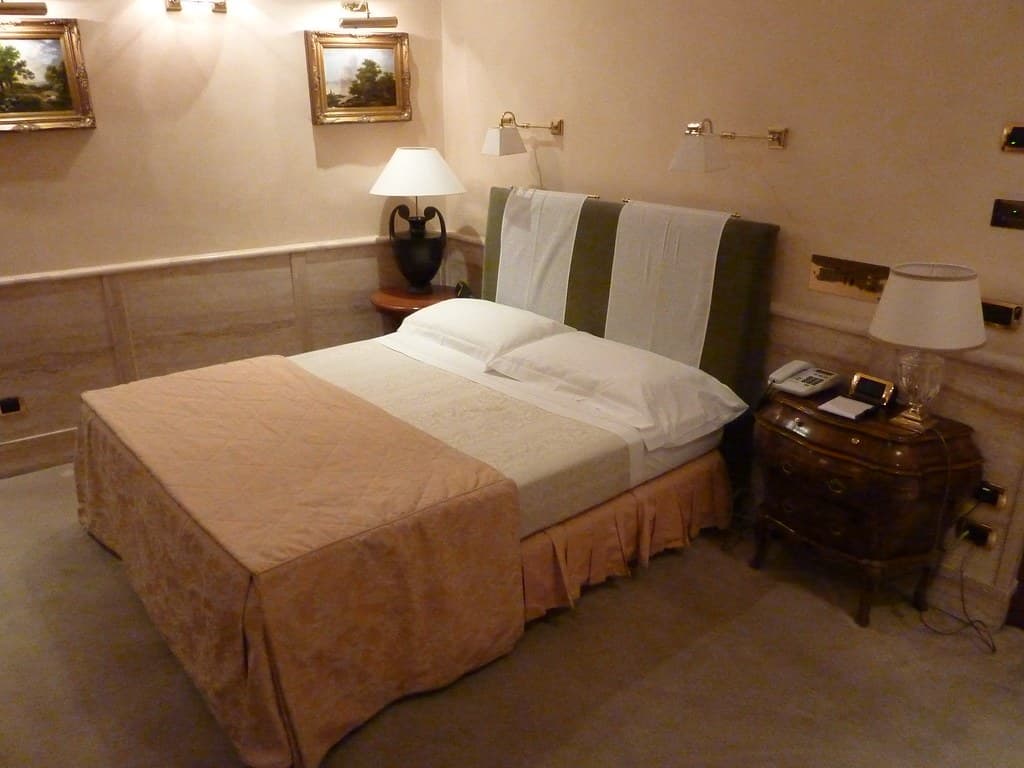 Hotel BaroccoA four-star hotel looking directly onto Piazza Barberini and Bernini's Triton Fo4 minutes walk · $$$$4.9The St. Regis RomeRome's oldest grand hotel and its most historic: opened in January 1894 as the G5 minutes walk · $$$$4.8
A programme that reshaped Rome in only five years (1585–1590). The city was then a mass of twisting lanes around the Tiber with the major churches scattered and hard to move between. The pope cut long straight streets linking them, raised ancient Egyptian obelisks at their ends as markers visible from a distance, and restored a Roman aqueduct to feed the fountains. This plan is the basis of modern Rome's shape, and later influenced the planning of Paris and Washington.
Borromini's San Carlo alle Quattro Fontane is on the corner itself — a very small church with an undulating facade and an oval dome, counted among the most important baroque buildings. A hundred metres away is Bernini's Sant'Andrea al Quirinale — his bitter rival, and the comparison between them is a complete lesson in the baroque. The Palazzo Barberini with its national gallery is also close.