
The full sweep from the lower lawn
From Royal Victoria Park all thirty houses fit in one frame and you see why this arc became the emblem of Bath.
Public domain · Simon Cobb — CC0 · Bärbel Miemietz — CC BY-SA 4.0 · Lewis Clarke — CC BY-SA 2.0
Thirty houses bend into a single arc some 150 metres long, carried on 114 Ionic columns of honey-coloured Bath stone, with nothing between them and the park but grass. This is the Royal Crescent, the picture that stands for the whole of Bath and one of the main reasons the city sits on the World Heritage list. John Wood the Younger designed it and it went up between 1767 and 1774 as the first crescent of terraced houses in Europe; every later one in Britain, from Brighton to Edinburgh, follows its lead. The uniform front is an elegant trick. Wood drew only the facade; each buyer then took a plot and built whatever he liked behind it, so the rear is a jumble of mismatched roofs and windows. Locals call it 'Queen Anne fronts and Mary-Anne backs'. In the early 1970s the owner of No. 22 painted her door yellow instead of the customary white, the council ordered it repainted, she appealed and the Secretary of State for the Environment ruled in her favour, and the door is still yellow: the most photographed doorway on the street. The visit is a walk and a long look, nothing more. The houses are private homes, Nos. 15 and 16 are a five-star hotel, and No. 1 is a museum with its own page. The lawn directly in front belongs to the residents; a sunken wall called a ha-ha, invisible until you stand on it, divides it from the public park below and was built in the 1700s to keep grazing animals off without breaking the view. The lower lawn, part of Royal Victoria Park, is open to everyone and is where the full sweep fits in one frame, and where families with children can spread out away from the crowd. It sits on a gentle rise about ten minutes' walk uphill from the centre via the Circus, on paved streets that are fine for pushchairs. The best light is late afternoon, when the stone turns gold and the columns throw long shadows; the worst time is midday in July and August, when tour groups arrive on foot now that coaches are banned from the crescent itself. In winter you may have it almost to yourself, but the light is gone by about four. Bridgerton fans will recognise the Featherington house facade, which is the front of No. 1, and will not be the only ones taking that particular photo.
From Royal Victoria Park all thirty houses fit in one frame and you see why this arc became the emblem of Bath.
One door broke with white in the early 1970s, the minister ruled against the council, and it is now the most photographed doorway on the street.
A stone-faced ditch you cannot see until you stand on it, built to keep livestock off two and a half centuries ago and still marking private lawn from public park.
Royal Crescent, Bath BA1 2LS
 No. 1 Royal CrescentThirty terraced houses in a single sweep of honey-coloured stone above a green l1 minute walk4.4
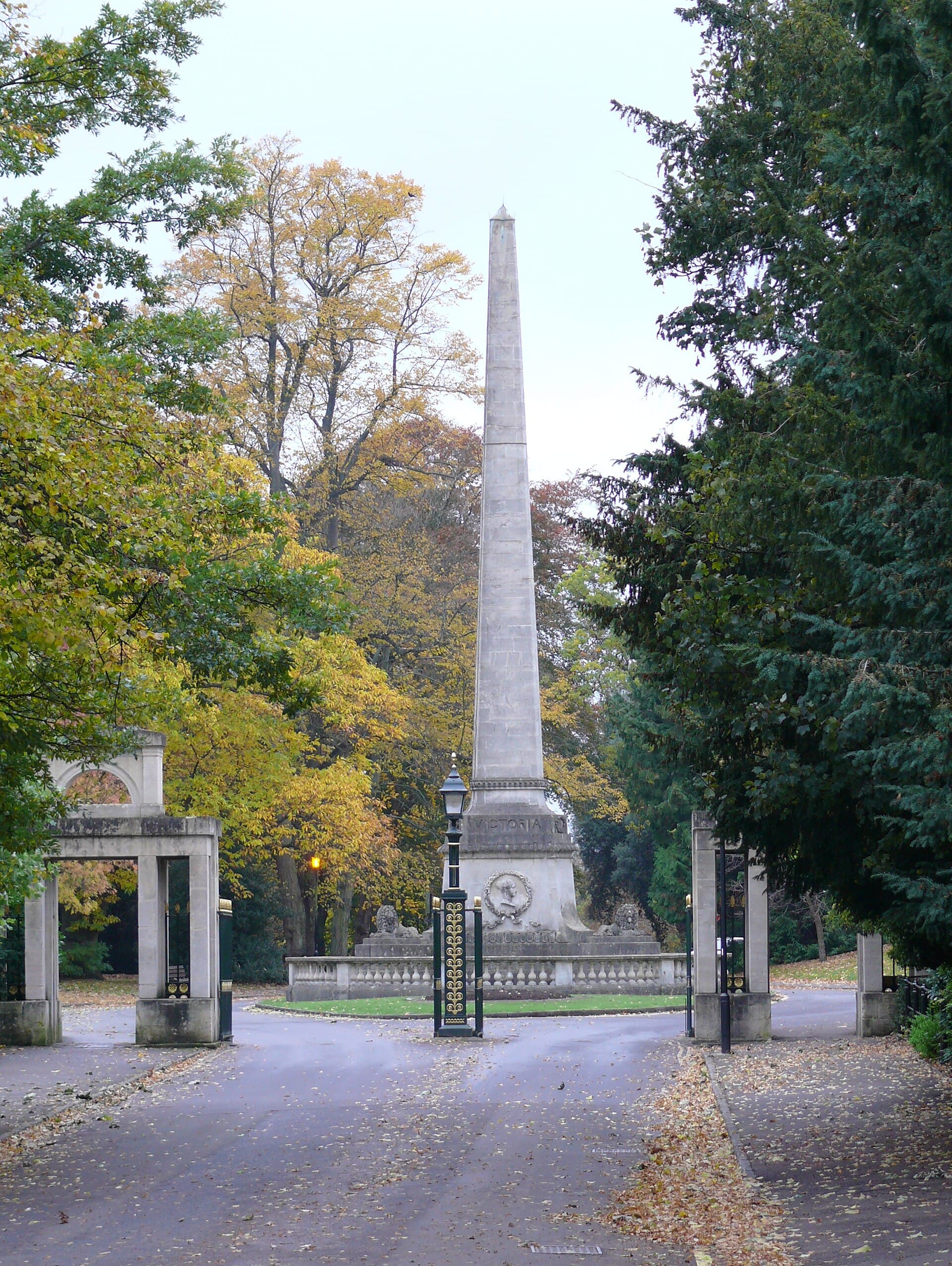 Royal Victoria ParkThe photograph everyone takes of Bath, that long stone arc of the Royal Crescent2 minutes walk4.5
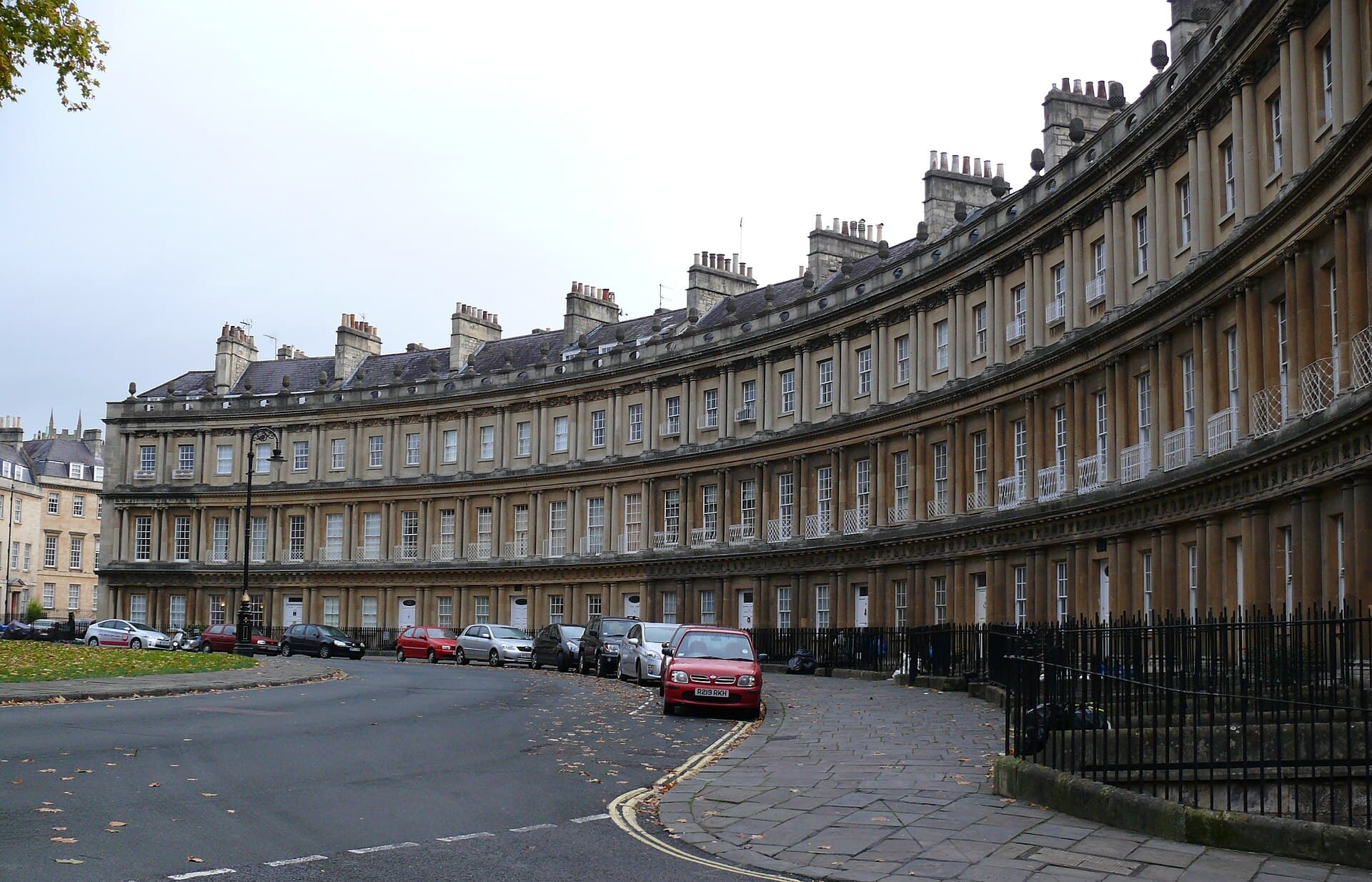 The Circus, BathThe diameter of this ring of stone is, give or take a few feet, that of Stonehen4 minutes walk4.4
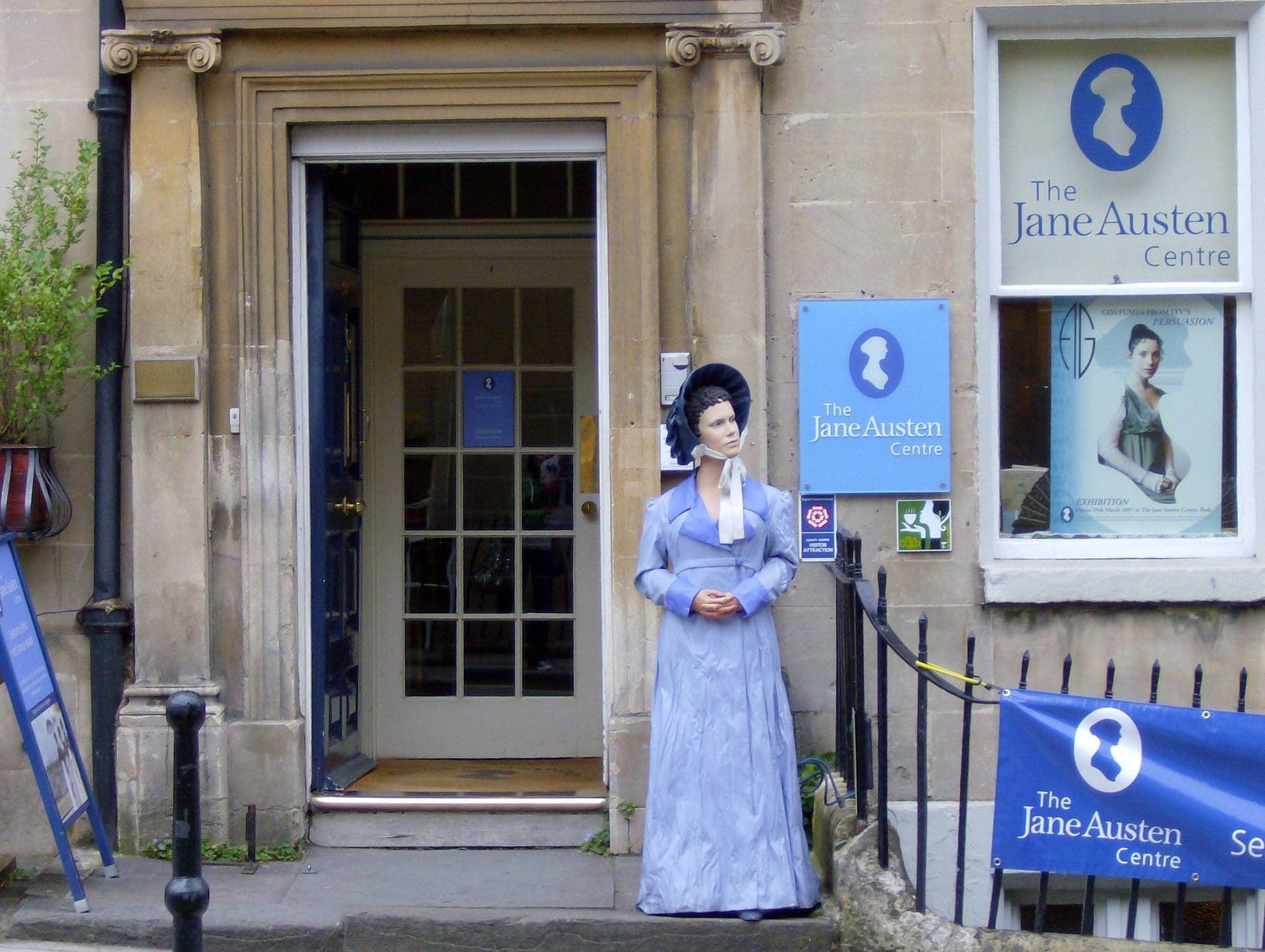 The Jane Austen CentreJane Austen never lived here. She lodged for a few months in 1805 at number 25, 6 minutes walk4.4
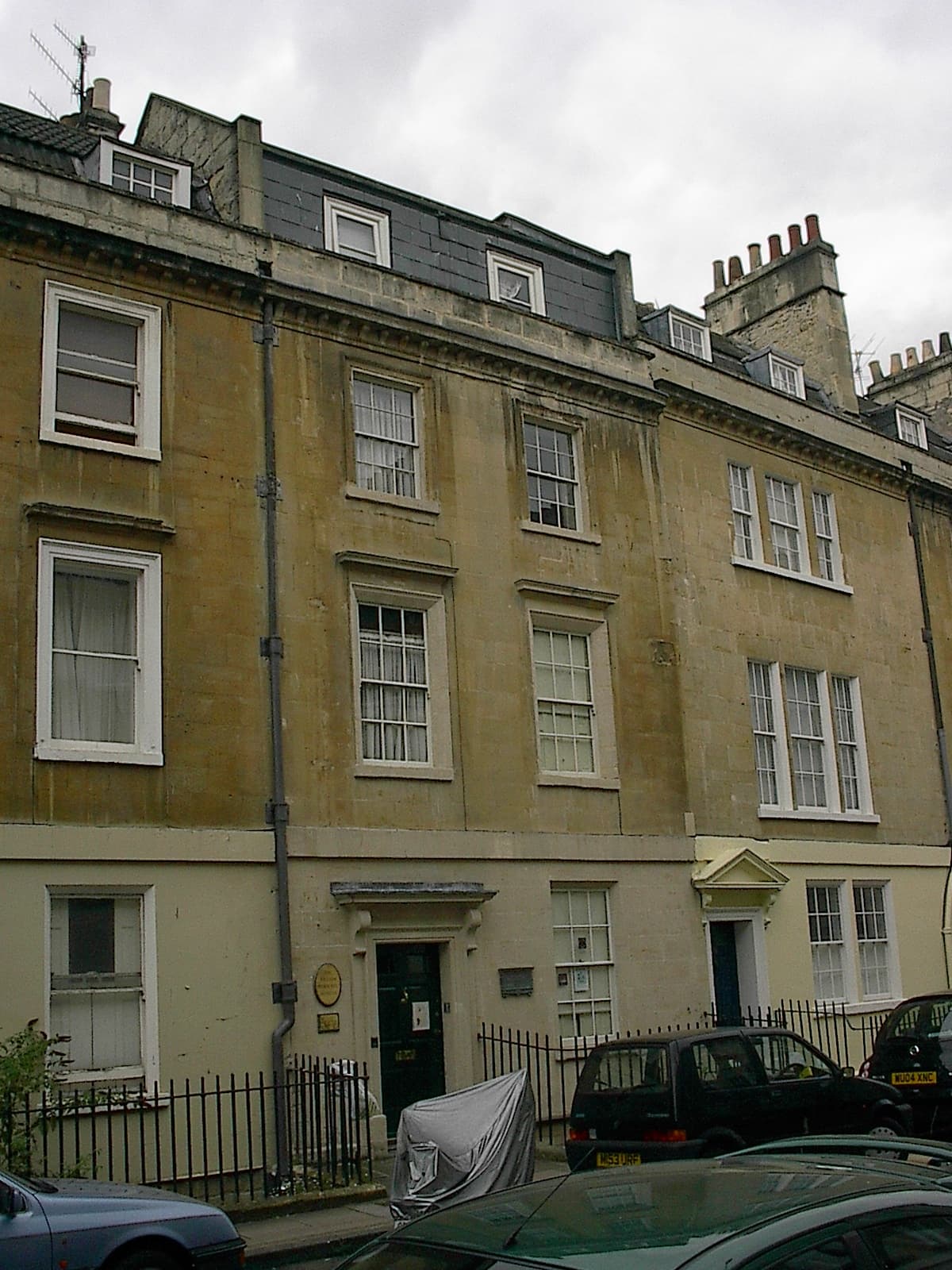 Herschel Museum of AstronomyOn the night of 13 March 1781, in a back garden no bigger than a family living r6 minutes walk4.6
Yes, but as a twenty-to-forty-minute stop, not a destination for a day. The facade and the view from the park are the whole point; the only interior you can enter is the No. 1 museum, which charges separately. Pair it with the Circus on the way up and Royal Victoria Park below, which has a large children's playground, and it becomes a complete family morning.
The lawn immediately beside the houses is private to the residents and closed to visitors. Step down a few metres to the lower lawn in Royal Victoria Park, which is public and open, and in any case the better vantage point because it shows you the whole arc.