
Student scrawl from 1597-98
Campaign slogans Pisan students left on the marble for their candidates in a university rectorship election — «W il Catone», «W il Moro» — still legible four centuries later.
Lucarelli — CC BY-SA 3.0 · Sgado walter — CC BY-SA 4.0 · Sgado walter — CC BY-SA 4.0 · Sgado walter — CC BY-SA 4.0
In 1597 and 1598, on the marble front of this church in the middle of Pisa's busiest shopping street, someone wrote two short slogans cheering on candidates for rector of the university: «W il Catone» and «W il Moro». They are still there, faded but readable, while thousands of feet pass beneath them every day with every eye on the shop windows. Four-century-old student campaign propaganda, on permanent free display in the open air. The church is far older than its graffiti. It goes back to the late 10th or early 11th century — the first record is 1016, when a Benedictine named Bono rebuilt an existing chapel and dedicated it to the Archangel — outside the city walls of the time, on a site that tradition says held a Roman temple to Mars. The facade you see is 13th and 14th century: three portals below, three tiers of open trefoil-arched loggias stacked above. It is the same striped Pisan grammar as the Cathedral, but lighter, pulled toward Gothic, and wedged into a narrow street instead of standing on that famous lawn. Inside is modest and takes one slow circuit: a nave and two aisles, a 14th-century marble crucifix attributed to Nino Pisano, and paintings and fresco fragments running from the 13th century onward. The Madonna and Child by Lupo di Francesco above the central door is a copy — the original is in the Museo Nazionale di San Matteo. The 11th-12th-century crypt under the presbytery, frescoed with mythical beasts, has been flooded for years and cannot be visited. Behind the church, the 1943 bombing flattened the monastery and wrecked the interior; the marble front survived, and the architect Massimo Carmassi spent decades rebuilding the ruined block, laying a quiet residential courtyard on the footprint of the lost cloister — worth two minutes if you like seeing how a city stitches up a wound. The practical verdict: do not give it a slot in your itinerary. Entry is free, ten to twenty minutes covers it, and it sits directly on the natural walking line between the Arno and Piazza dei Miracoli, about ten minutes on foot from the Leaning Tower. The doors are generally open around 09:30-12:00 and again 16:00-19:00, with a long midday closure, and you may well find them locked outside those windows — no great loss, since the best thing here is read from the pavement. Borgo Stretto around it has old cafes and shaded seating under the arcades, and it is flat, step-free walking suitable for strollers and for anyone tiring of Pisa's cobbles.
Campaign slogans Pisan students left on the marble for their candidates in a university rectorship election — «W il Catone», «W il Moro» — still legible four centuries later.
Three tiers of trefoil-arched open galleries above three portals — the Cathedral's striped language, transplanted into a narrow shopping street.
Where the monastery stood until the 1943 bombing, Massimo Carmassi rebuilt a quiet residential courtyard on the footprint of the lost cloister — two minutes, and almost nobody finds it.
Borgo Stretto 8-12, 56127 Pisa, Italy
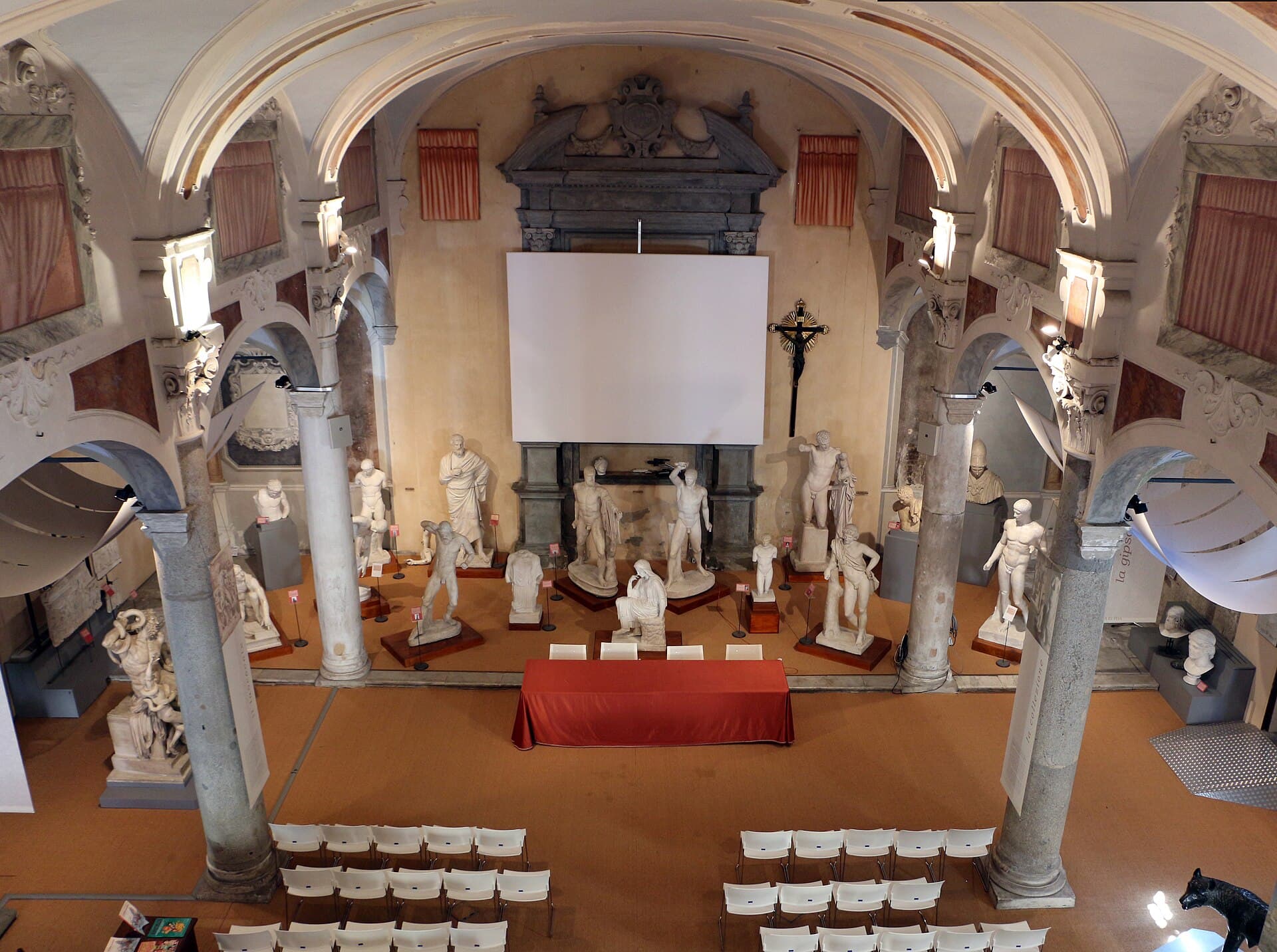 Gipsoteca di Arte Antica (Museum of Plaster Casts)The Laocoön wrestles his serpents beneath the arch of an empty Romanesque church2 minutes walk4.7
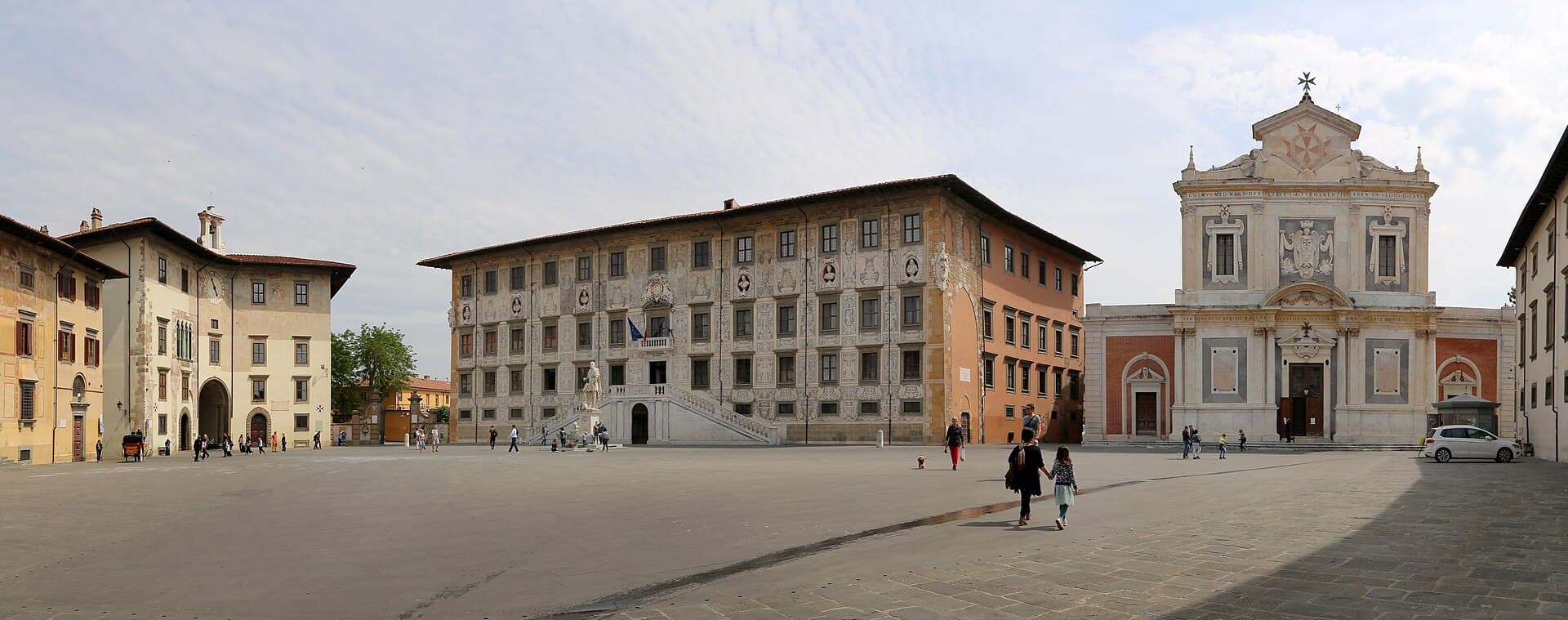 Piazza dei CavalieriThe Knights' Square is the second Pisa the tower crowds miss: the city's Roman f4 minutes walk4.7
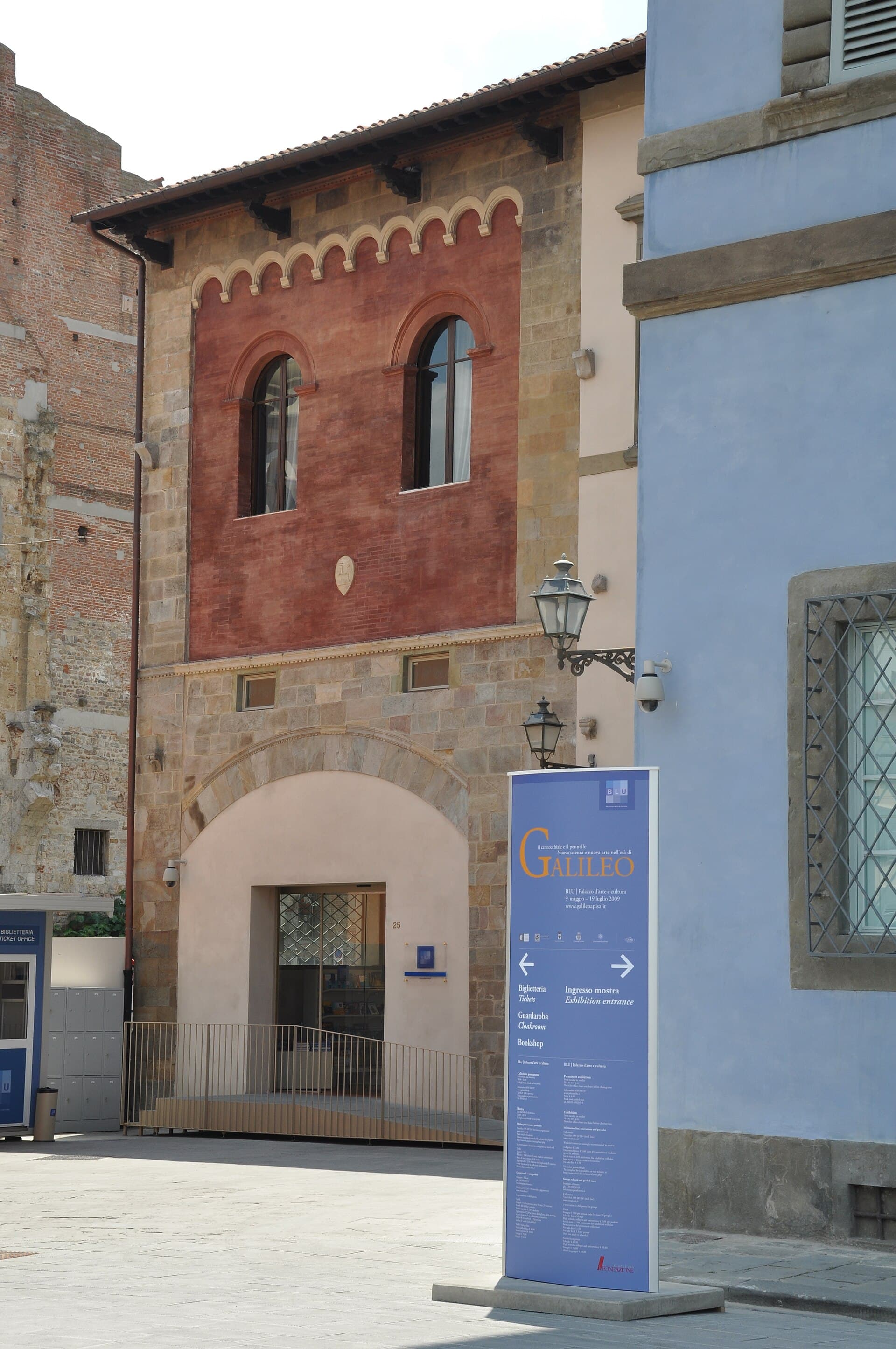 Palazzo BluOn the Arno's bank glows the Blue Palace — its odd sky colour an eighteenth-cent5 minutes walk4.4
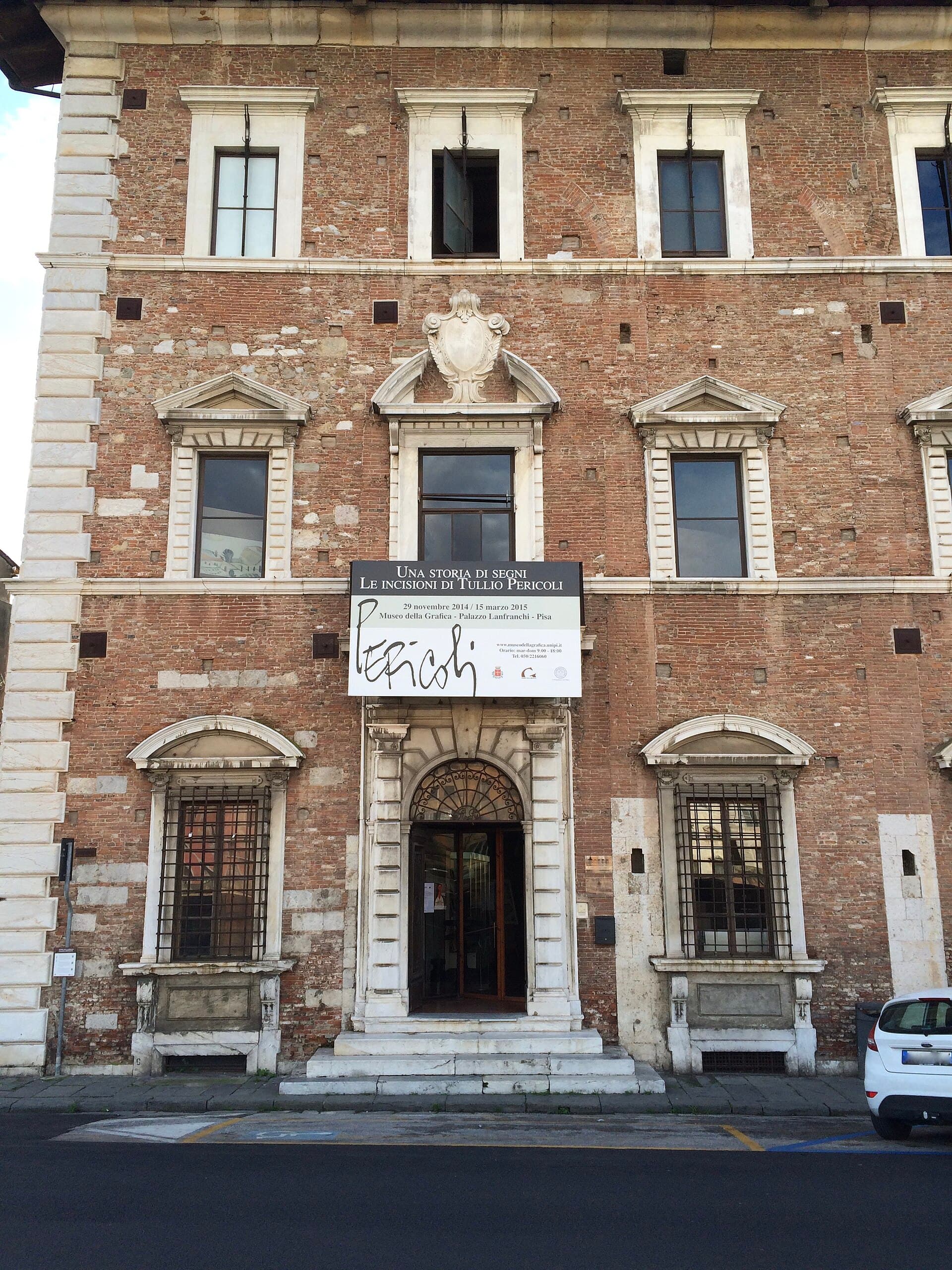 Museo della Grafica – Palazzo LanfranchiFrom the upper windows of Palazzo Lanfranchi the Arno runs between two banks of 5 minutes walk4.2
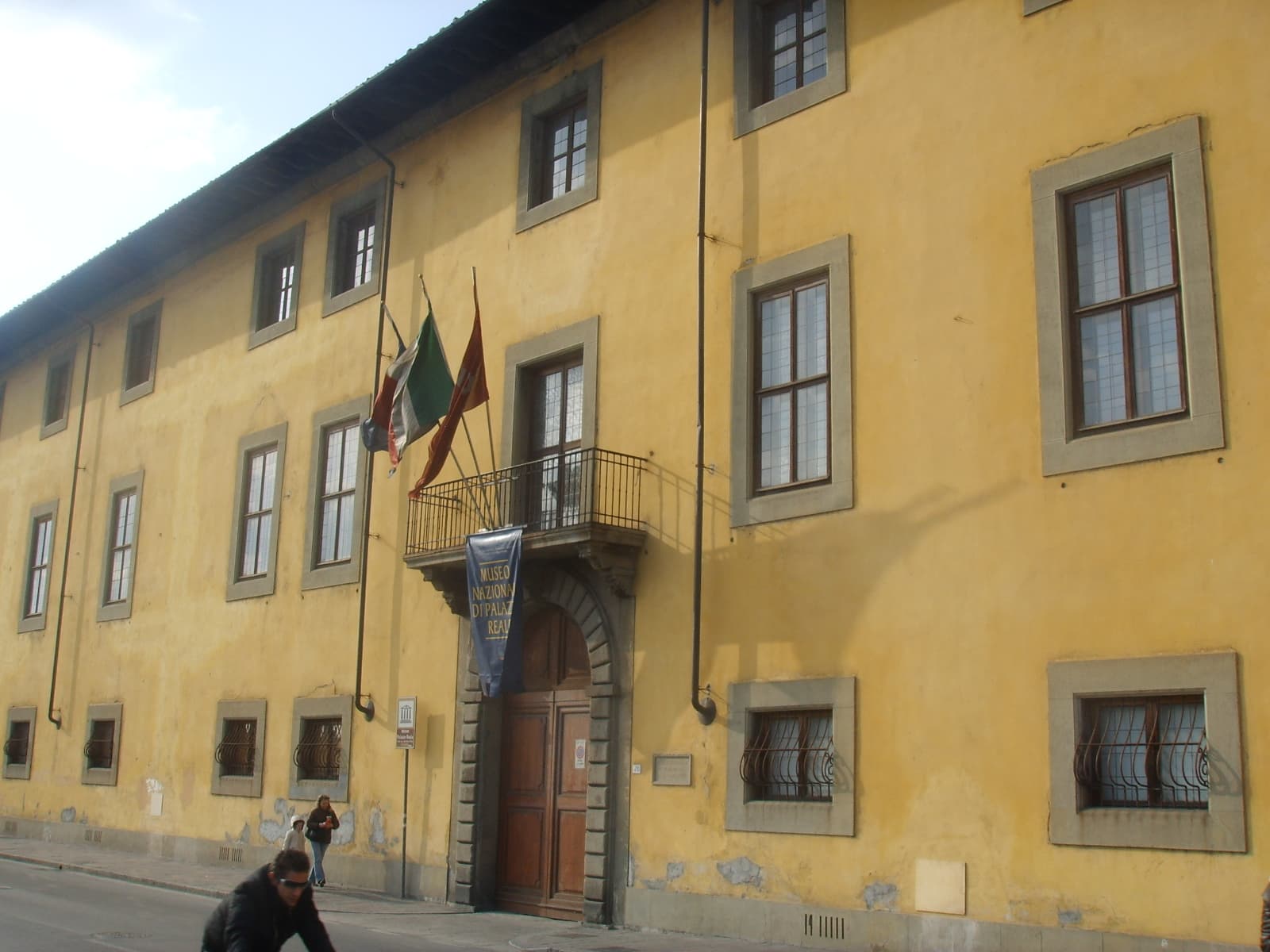 Museo Nazionale di Palazzo RealeA national museum inside Pisa's royal palace, on the bank of the Arno in the cit6 minutes walk4.1
No. Do not schedule it and do not detour for it. But it stands exactly on the natural walking line between the Arno and Piazza dei Miracoli, so if you are passing anyway the stop costs ten minutes and nothing at all in euros. A locked door is no disaster either — the historic graffiti is on the outside of the facade.
On the marble of the lower facade, around the three portals and roughly at eye level. Get within arm's length — it is faint and layered from several different centuries. Look for the repeated letter W and for the numbers 1597 and 1598. Do not run your fingers over the stone: these are recorded, protected inscriptions, not a souvenir wall.