
An early Christian apse behind the choir
Uncovered during the restoration after centuries hidden behind the wooden choir stalls, and genuinely the best thing here.
IlSistemone — CC BY-SA 3.0 · This Photo was taken by Wolfgang Moroder. Feel free to use my photos, but please mention me as the author and send me a message. This image is not in the public domain. Please respect the copyright pr — CC BY-SA 3.0 · MentNFG — CC BY-SA 4.0 · MentNFG — CC BY-SA 4.0
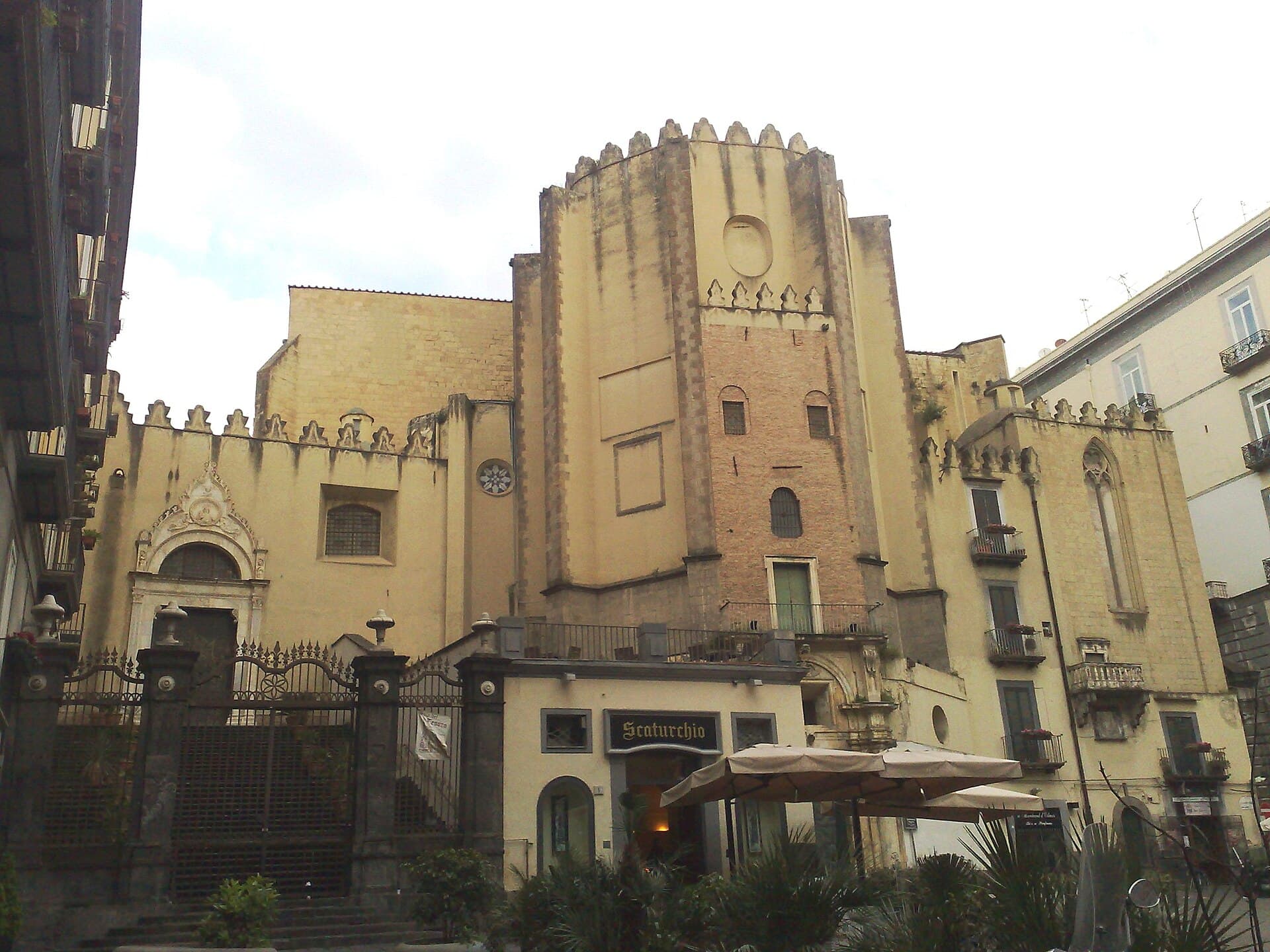
It stayed shut for forty-two years after collapses closed it in 1970, and it reopened only in January 2012. The restoration turned up more than fresh plaster: work from the late 1970s uncovered an early Christian apse hidden behind the seventeenth-century wooden choir, and it is now the clearest surviving trace of the first church on this site. This is one of the oldest church foundations in Naples, possibly raised over a Roman temple, and antique marble and Latin inscriptions lifted from that older world are still set into the fabric of the building. Inside, the mix is odd and rather persuasive: a broad Baroque nave rebuilt after a run of earthquakes and collapses, reused antique columns with carved capitals standing as though they had wandered in from another building entirely, and a marble Baptism of Christ attributed to the sixteenth-century sculptor Giovanni da Nola. Honesty first — it is not a lavish church by the standards of Santa Chiara or San Domenico Maggiore. The pleasure is in the layers rather than the spectacle, and in the fact that you will usually have the place to yourself while tour groups pack the streets two blocks away. It sits on Largo San Giovanni Maggiore, two minutes off Via Mezzocannone as it climbs towards the Federico II university, and three from Spaccanapoli. This is the student quarter: noise, cheap coffee, scooters arriving from directions you did not plan for. Entry is free, with no ticket and no booking, and the usual opening runs roughly 10:00 to 17:00, though the hours are not reliably posted and shift with the parish calendar. Neapolitan churches also close without warning for a service or for want of a volunteer, so keep a fallback within reach: the Cappella Pappacoda across the same square, San Domenico Maggiore a few minutes on. Half an hour covers it, less if you are moving fast. It is quiet and easy for families, though the entrance involves a ramp and a few steps that make a pushchair awkward, and the surrounding lanes are narrow with almost no pavement. Carry your bag in front of you on Via Mezzocannone and Corso Umberto; the pickpocketing here is real, not folklore. Modest dress applies as in any working church, and there is no prayer space inside — the nearest cluster of halal restaurants and small prayer rooms is around Garibaldi station, fifteen to twenty minutes on foot.
Uncovered during the restoration after centuries hidden behind the wooden choir stalls, and genuinely the best thing here.
Antique columns with carved capitals, plus old Latin inscriptions set straight into the church walls.
You will rarely share it with anyone, though it sits two streets from the busiest walkways in Naples.
Largo San Giovanni Maggiore, Vico S. Maria dell'Aiuto 14, 80134 Naples — main entrance up the ramps off Via Mezzocannone, side door on the largo
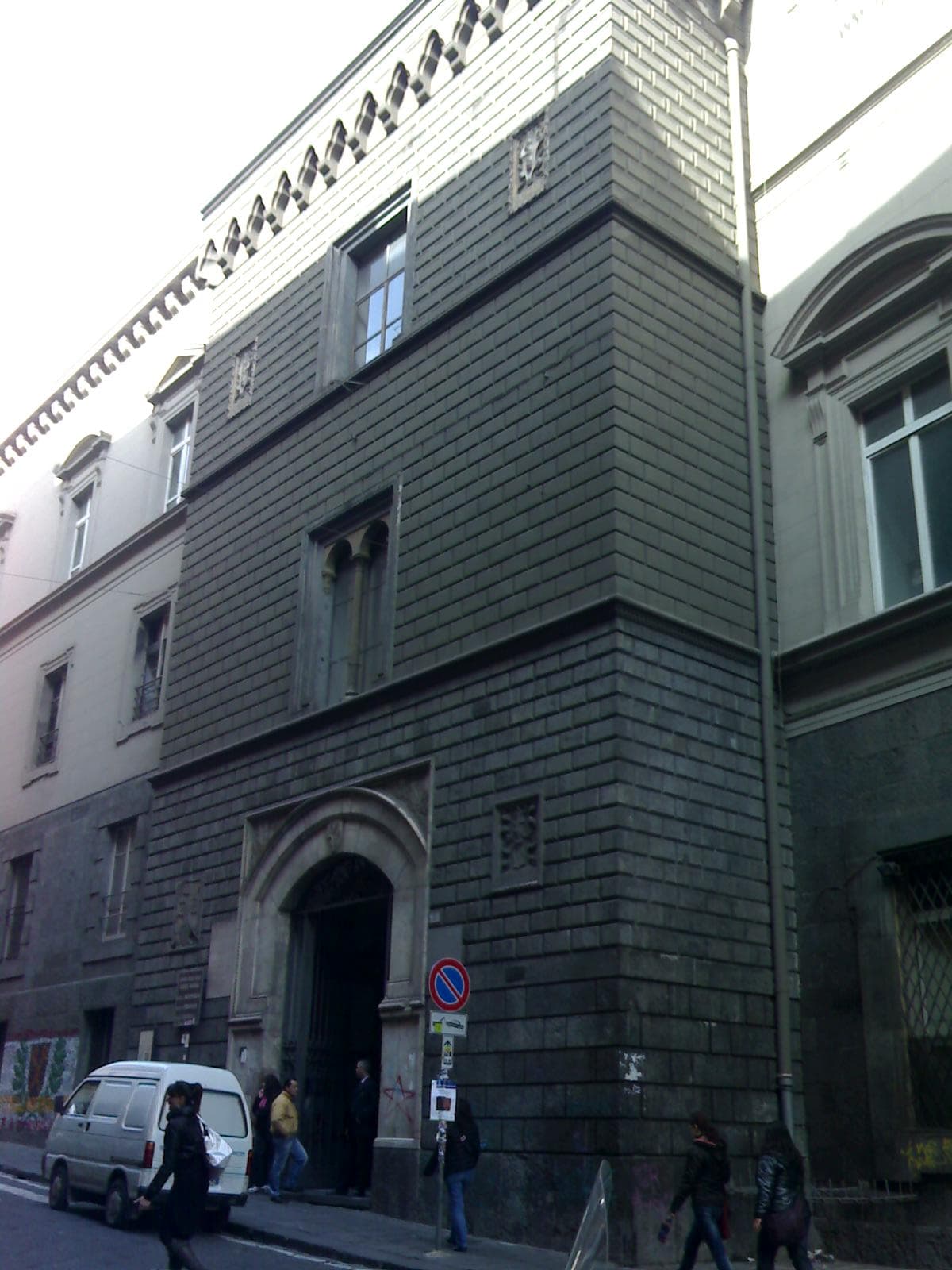 The Royal Mineralogical MuseumA university mineralogical museum founded in 1801 by decree of King Ferdinand IV1 minute walk4.7
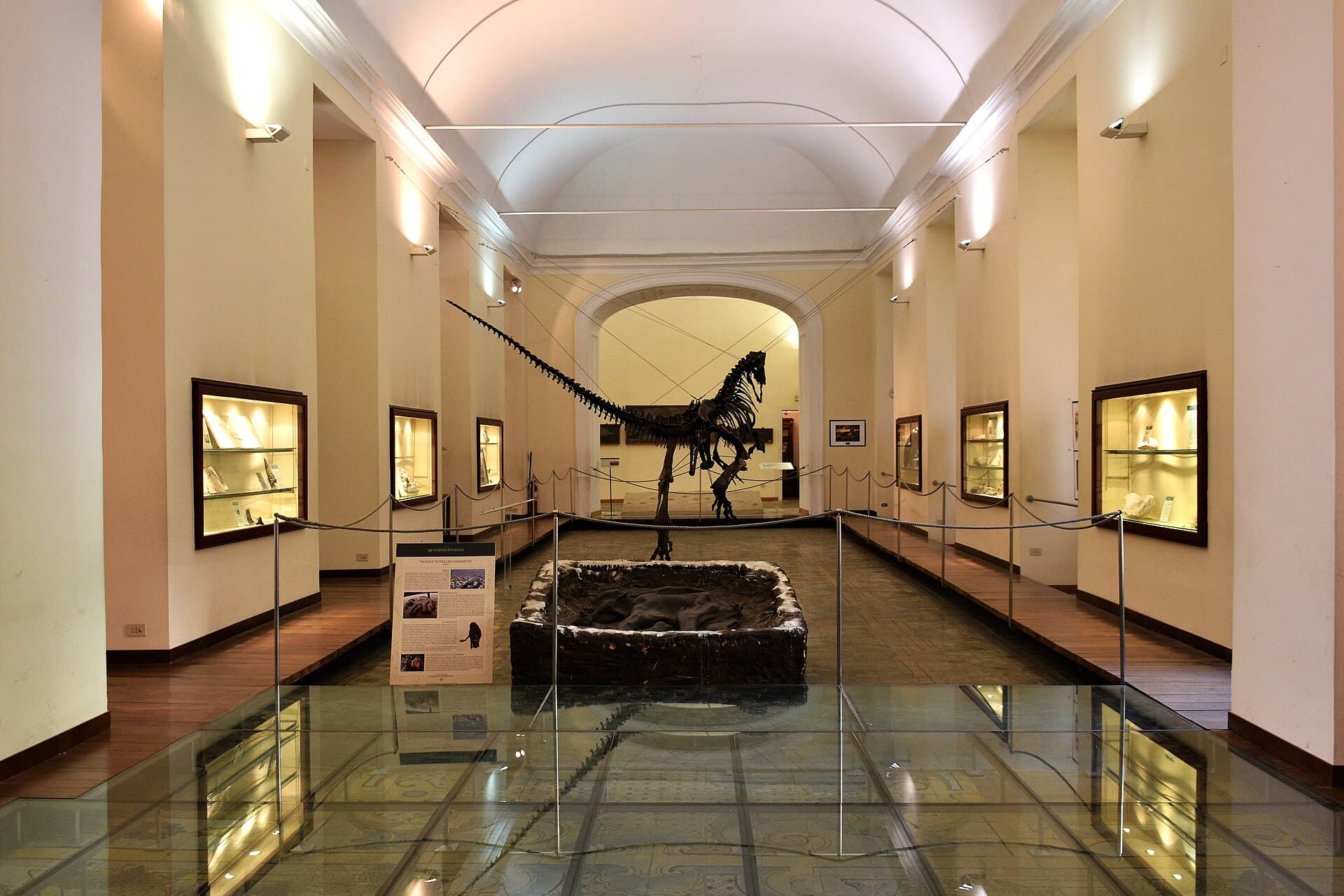 The Palaeontology MuseumA university palaeontology museum in Naples occupying the halls of the sixteenth3 minutes walk4.6
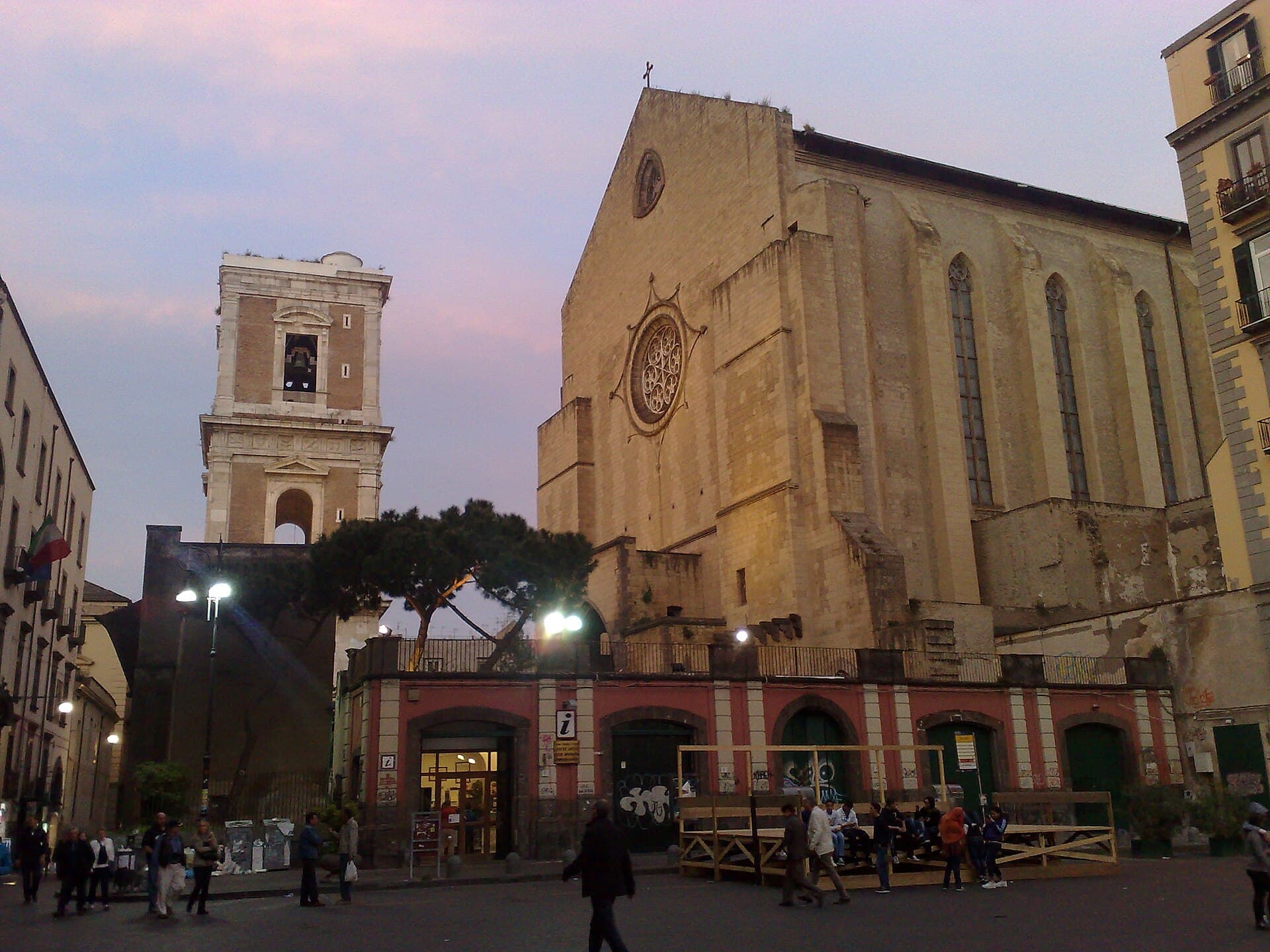 Santa Chiara ComplexBehind the huge Gothic church of Santa Chiara — the greatest of Angevin Naples a4 minutes walk4.6
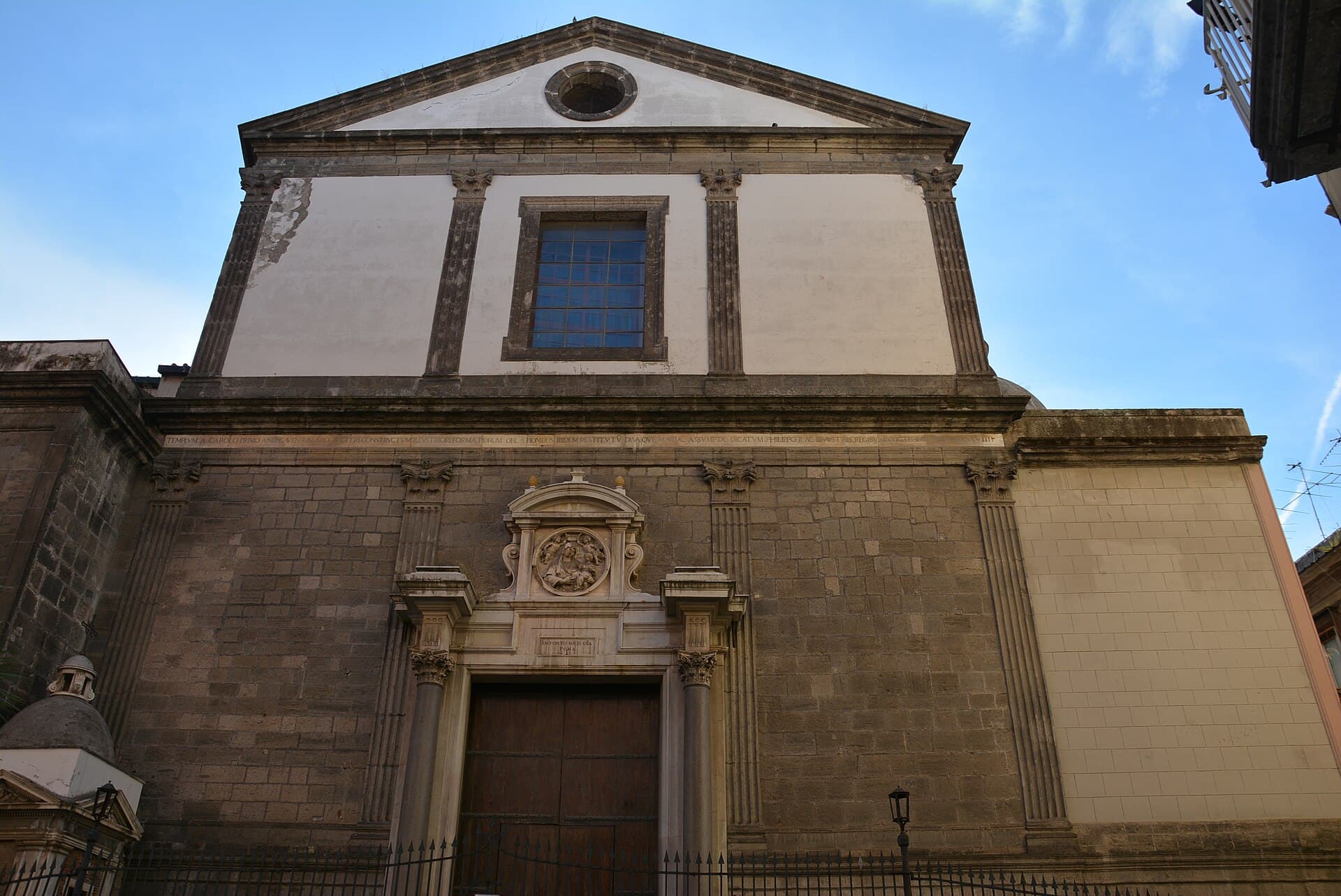 Santa Maria la NovaA flat wooden ceiling — no dome, no swirling illusion — carrying dozens of gilt-4 minutes walk4.5
 San Domenico MaggioreAbove the sacristy, on a wooden gallery running around three walls some four met5 minutes walk4.6
Honestly, no. On two days give the Duomo, Santa Chiara, San Domenico Maggiore and Napoli Sotterranea priority. This is a third-day church, or a ten-minute stop if you are already walking up Via Mezzocannone. If early Christian architecture is your thing, though, the apse alone justifies the detour.
No ticket and no booking — entry is free. But sudden closures happen, so do not build a day around it: treat it as a stop on a walk rather than a destination. If the door is locked, the Cappella Pappacoda is on the same square and San Domenico Maggiore is minutes away.