European buildings
From the concession era.
钉钉 — CC BY-SA 4.0 · Marvin Wan from Hong Kong, Hong Kong — CC BY-SA 2.0 · Inclavatura — CC BY-SA 4.0 · Diego Tirira from Quito, Ecuador — CC BY-SA 2.0 · 钉钉 — CC BY-SA 4.0 · Inclavatura — CC BY-SA 4.0 · User:veronicakkk — CC BY-SA 3.0 · Inclavatura — CC BY-SA 4.0
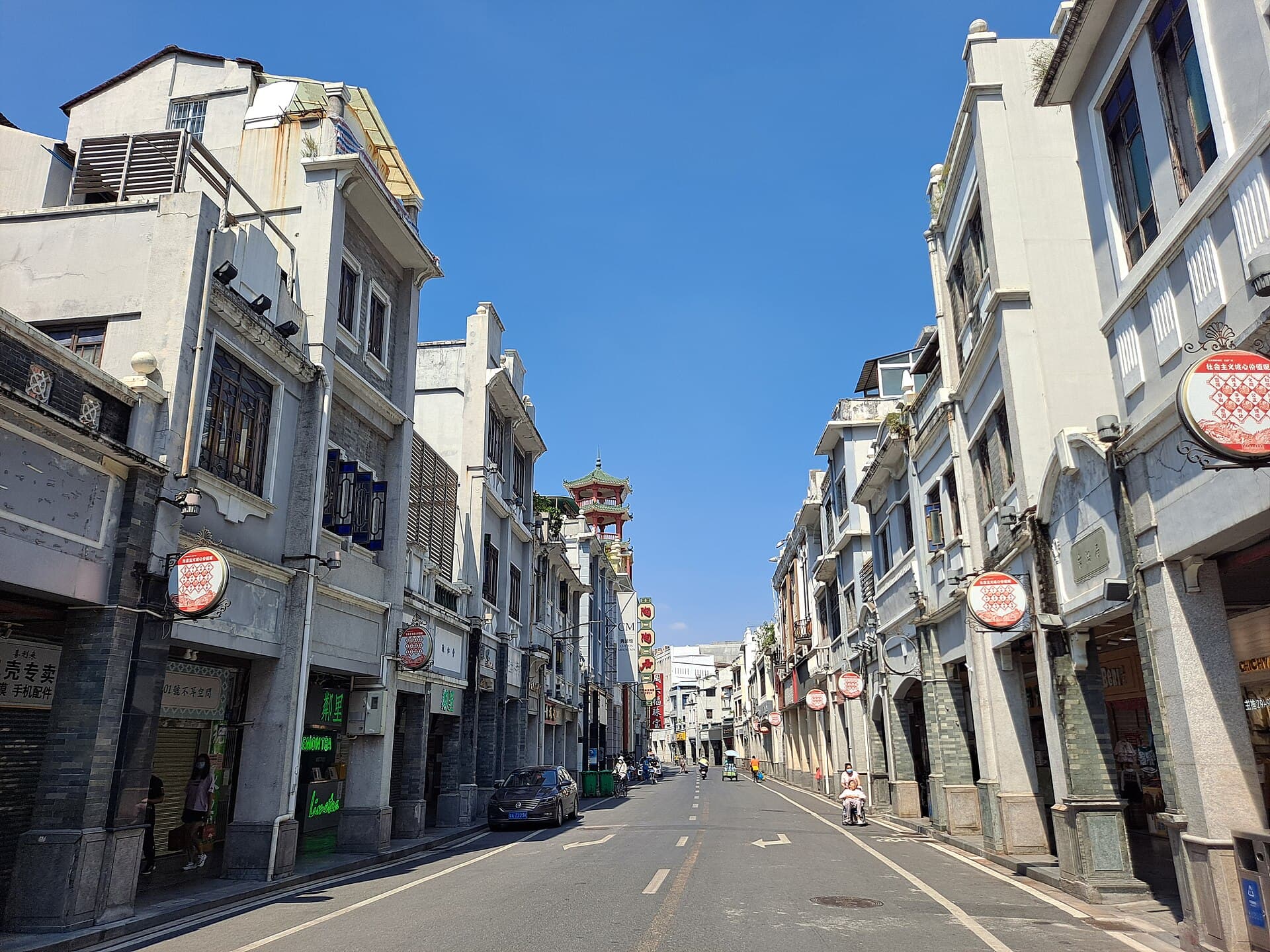
A small sandbank island on the Pearl River in western Guangzhou, its Chinese name meaning «sandy surface», which the Qing government split between Britain and France as two foreign concessions from 1859 to 1943, turning it into a quiet European quarter in the middle of the bustling Chinese city. The island keeps dozens of historic buildings from the concession era, consulates, banks and merchants' houses in a range of European styles, lining quiet, tree-shaded avenues; today it's a protected historic area. Visitors stroll through small gardens and along the riverside promenade, photographing the colourful buildings, and the island has cafés, curio and gift shops and hotels, including the famous White Swan on the riverbank. Wandering is free and possible at any hour; early morning or just before sunset is best, when the heat eases. Combine it with Shangxiajiu shopping street, about a kilometre north, on one walk.
From the concession era.
For strolling.
At sunset.
Liwan District, on the Pearl River, Guangzhou
It was split into British and French concessions from 1859 to 1943, and dozens of buildings from that era survive.