
The decagon
Four storeys of windows overhead.
Raimond Spekking — CC BY-SA 4.0 · Johan Bakker — CC BY-SA 4.0 · José Luiz — CC BY-SA 4.0 · NRM2181 — CC BY-SA 4.0
The strangest in shape of Cologne's twelve Romanesque churches, and the reason is that it was never designed as a church at all. At its heart is an oval hall the Romans put up in the fourth century outside their city walls; Christians took it over as a shrine, and between twelve hundred and nineteen and twelve hundred and twenty-seven medieval builders raised its walls into a ten-sided decagon and capped the whole thing with a dome. That dome is the event here: twenty-one metres across at its widest and thirty-four and a half metres from floor to apex. No wider vaulted space was built in Europe between Hagia Sophia and the dome of Florence cathedral — roughly eight centuries of nothing bigger. Chroniclers knew the place as the church at the golden saints, a name most people take as a description of its gilded mosaics rather than of anything else. A visit is short, free and immediate in its effect: you come in from the west and a ten-sided well opens above you with four storeys of windows stacked overhead all at once. Go down into the crypt for the eleventh- and twelfth-century floor mosaics. The church opens Monday to Saturday and is closed to sightseers on Sundays because of services.
Four storeys of windows overhead.
Floor mosaics from the eleventh century.
Gereonskloster 2, 50670 Cologne
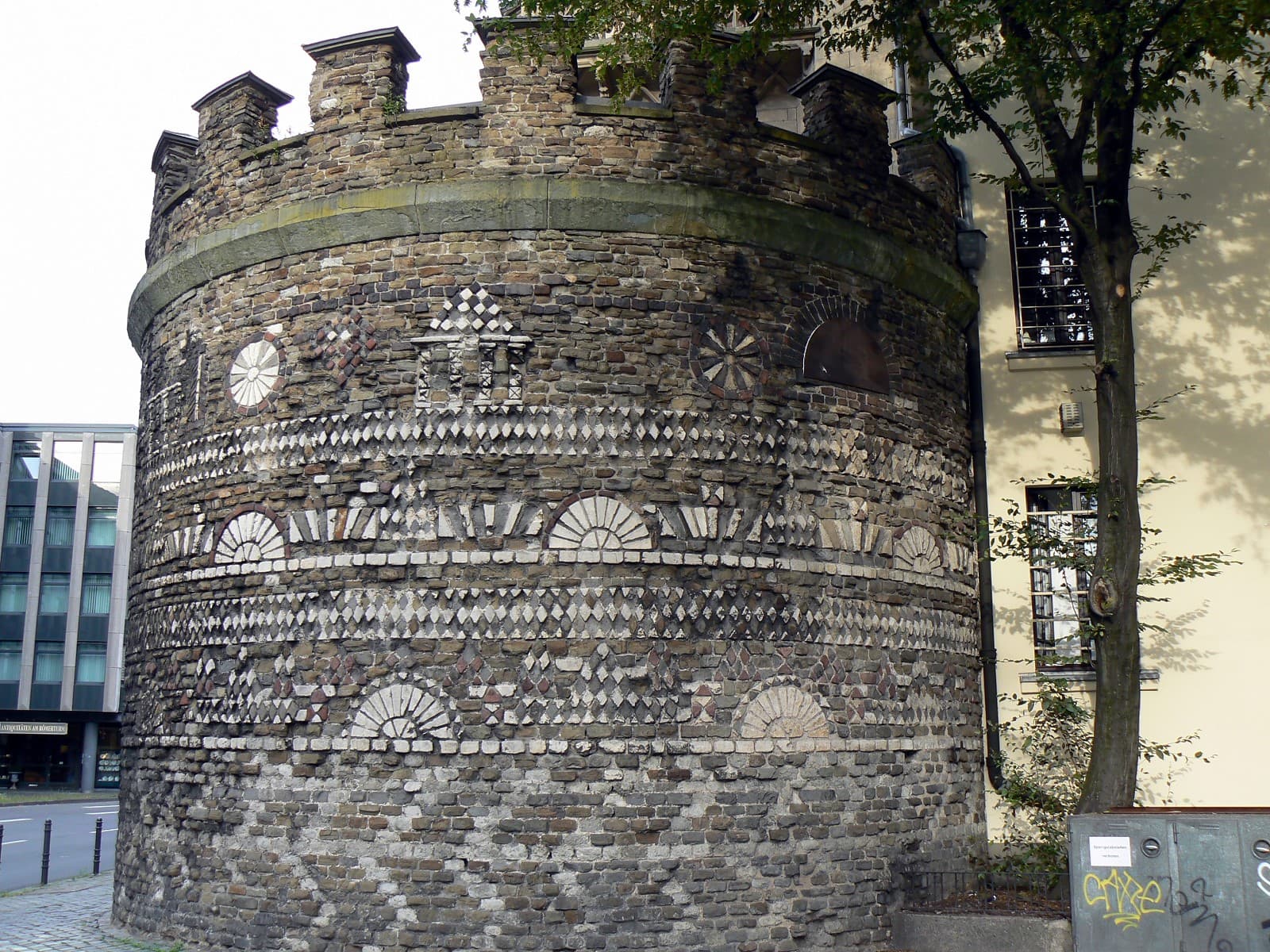 Roman TowerThe Roman Tower is the best surviving piece of Cologne's Roman wall. Cologne was4 minutes walk4.3
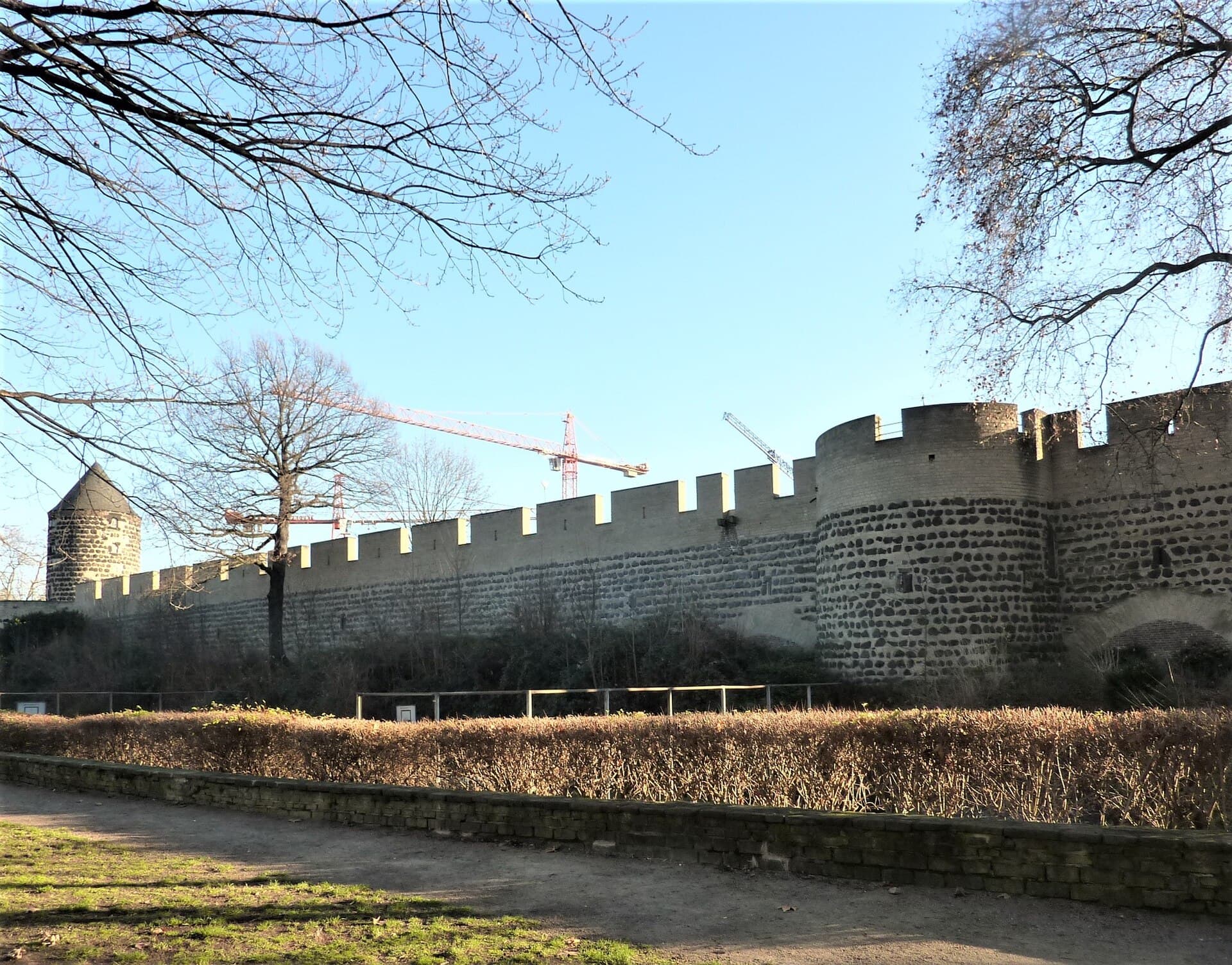 Cologne's Medieval City WallIn the late twelfth century Cologne roughly doubled its area and threw around th4 minutes walk4.3
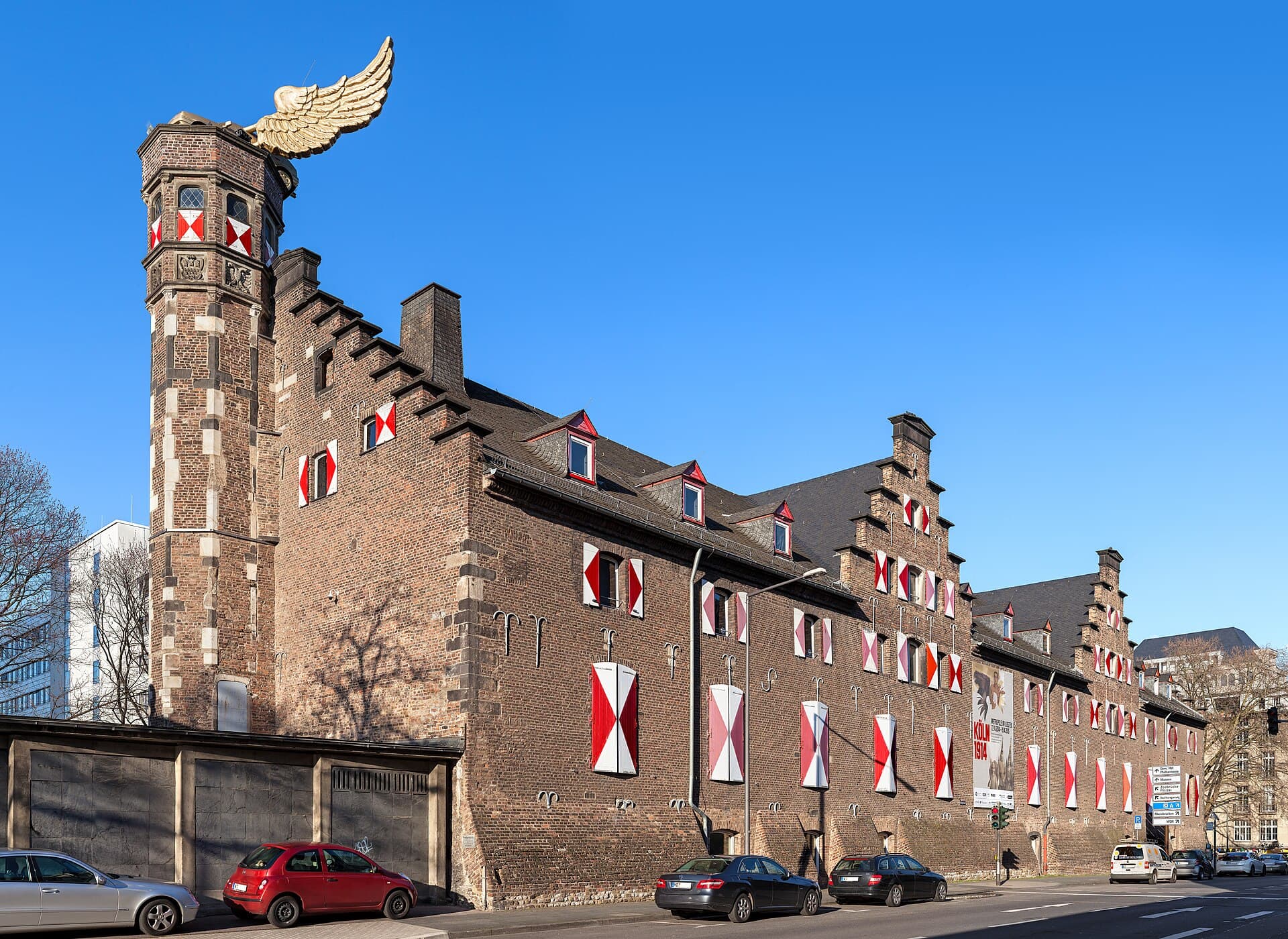 Cologne City MuseumA museum about Cologne itself: how it became a Roman colonia, then a rich mediev5 minutes walk4.2
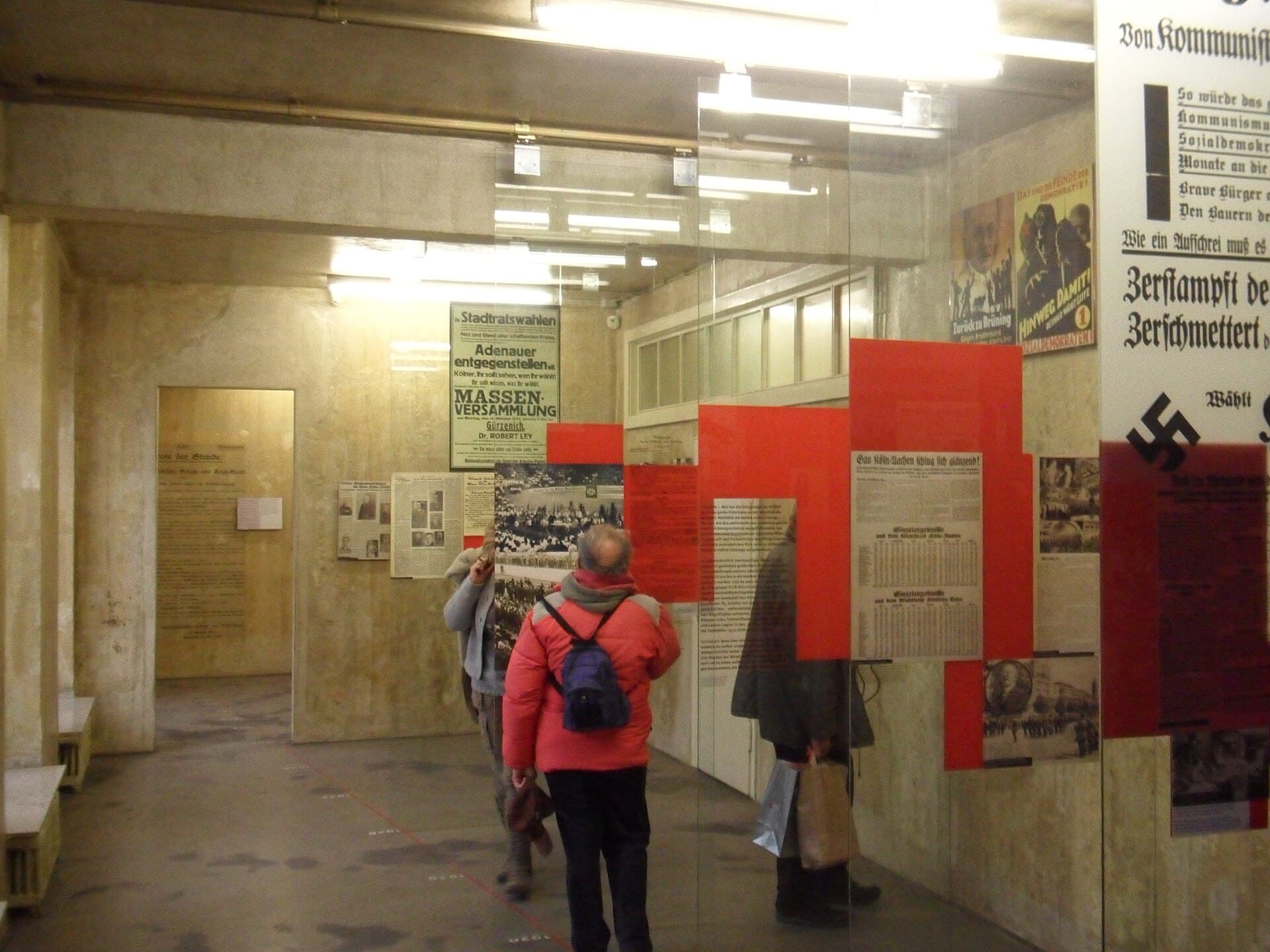 NS Documentation Centre (EL-DE Haus)The EL-DE House was the Gestapo's local headquarters in Cologne, and today it is5 minutes walk4.6
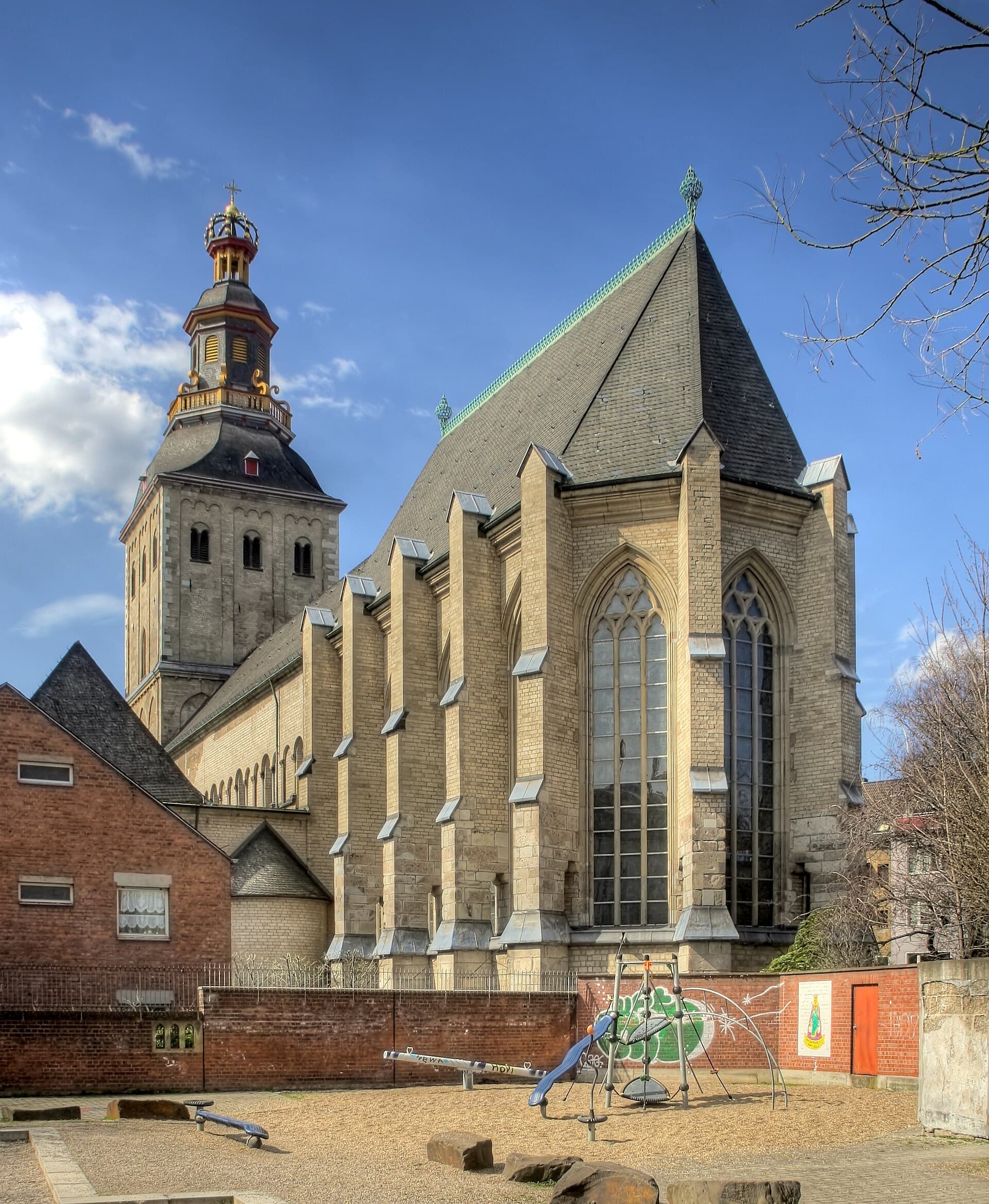 Basilica of St. UrsulaSt. Ursula is one of Cologne's twelve great Romanesque churches and home to the 8 minutes walk4.7
Because it did not start as a church. The thirteenth-century builders inherited a Roman oval funerary hall that had already stood for some nine hundred years, and rather than demolish it they reinforced its walls, worked the oval plan into a ten-sided figure and raised a dome on top. The odd shape is a practical decision, not an architectural whim.