
The black-figure amphorae
Myth scenes by painters known by name.
Burkhard Mücke — CC BY-SA 4.0 · Diego Delso — CC BY-SA 4.0 · Christoph Braun — CC0 · Burkhard Mücke — CC BY-SA 4.0
On the south side of Koenigsplatz stands a Corinthian-columned building put up by Georg Friedrich Ziebland between 1838 and 1848, which was not originally an antiquities museum at all but a hall for exhibitions of art and industry. Since 1967 it has held the state collections of classical antiquities: Greek, Roman and Etruscan art on the smaller scale, as a counterpart to the Glyptothek across the square, which keeps the large sculpture. The real strength here is painted Greek pottery. The collection ranks among the best in the world for it: cups, jars and amphorae in the black-figure and red-figure styles, carrying scenes of myth, drinking parties and athletic contests, some by painters whose names survive on their signatures. Add to that finely worked Etruscan gold jewellery, small bronze and terracotta figures, and Roman glass — material spanning from the third millennium before Christ to the fifth century after. The visit is quiet and fairly short: the galleries occupy the basement and ground floor, an hour to ninety minutes is enough, and the museum is rarely crowded even in summer. The building is old and not adapted for limited mobility, and the cafe is closed. Entry is six euros, one euro on Sundays, and a combined ticket with the Glyptothek opposite makes seeing both in a day cheaper.
Myth scenes by painters known by name.
Granulated jewellery hard to reproduce even now.
Koenigsplatz 1, 80333 Munich
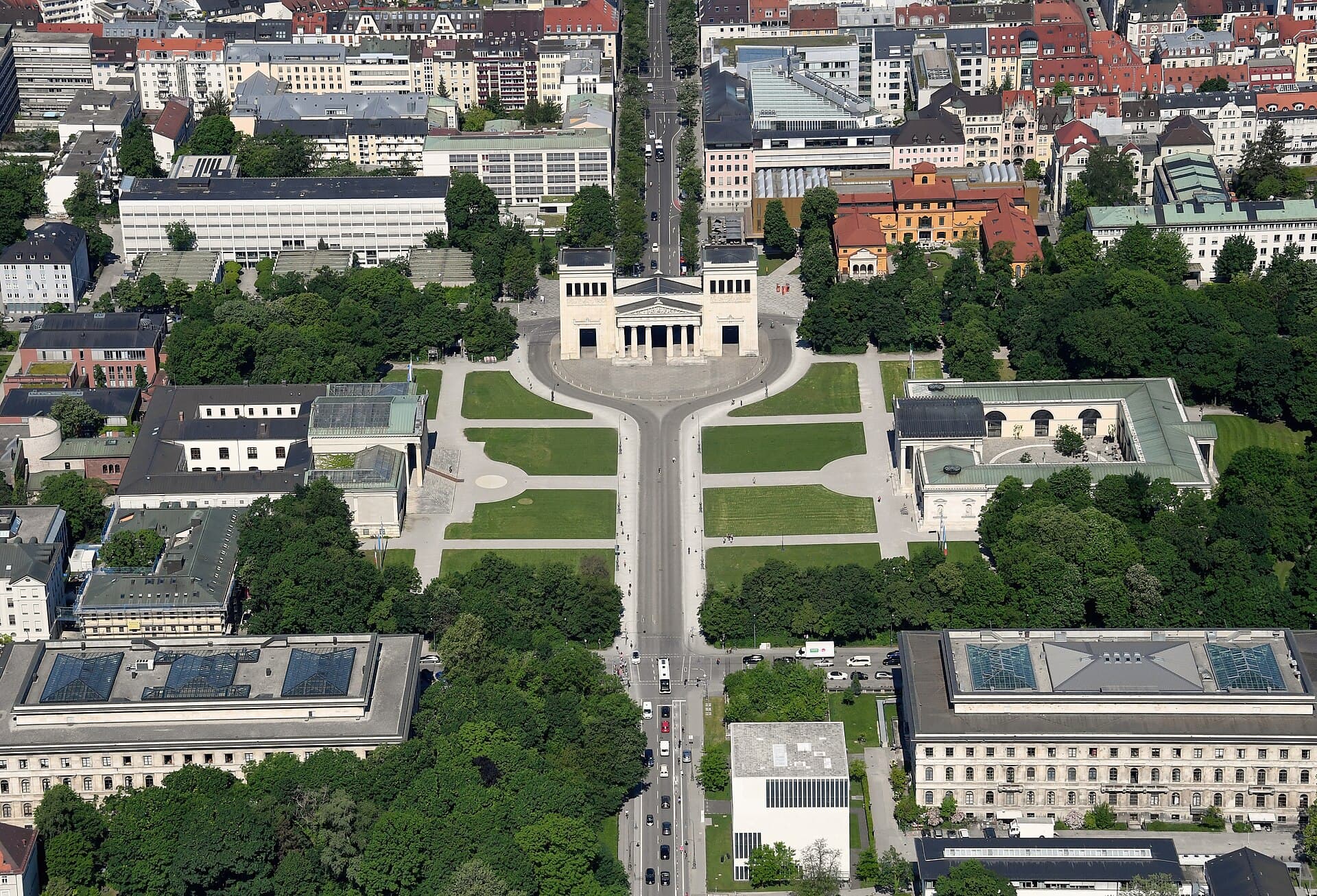 KönigsplatzKönigsplatz is a large open square in Munich, built in the nineteenth century in1 minute walk4.5
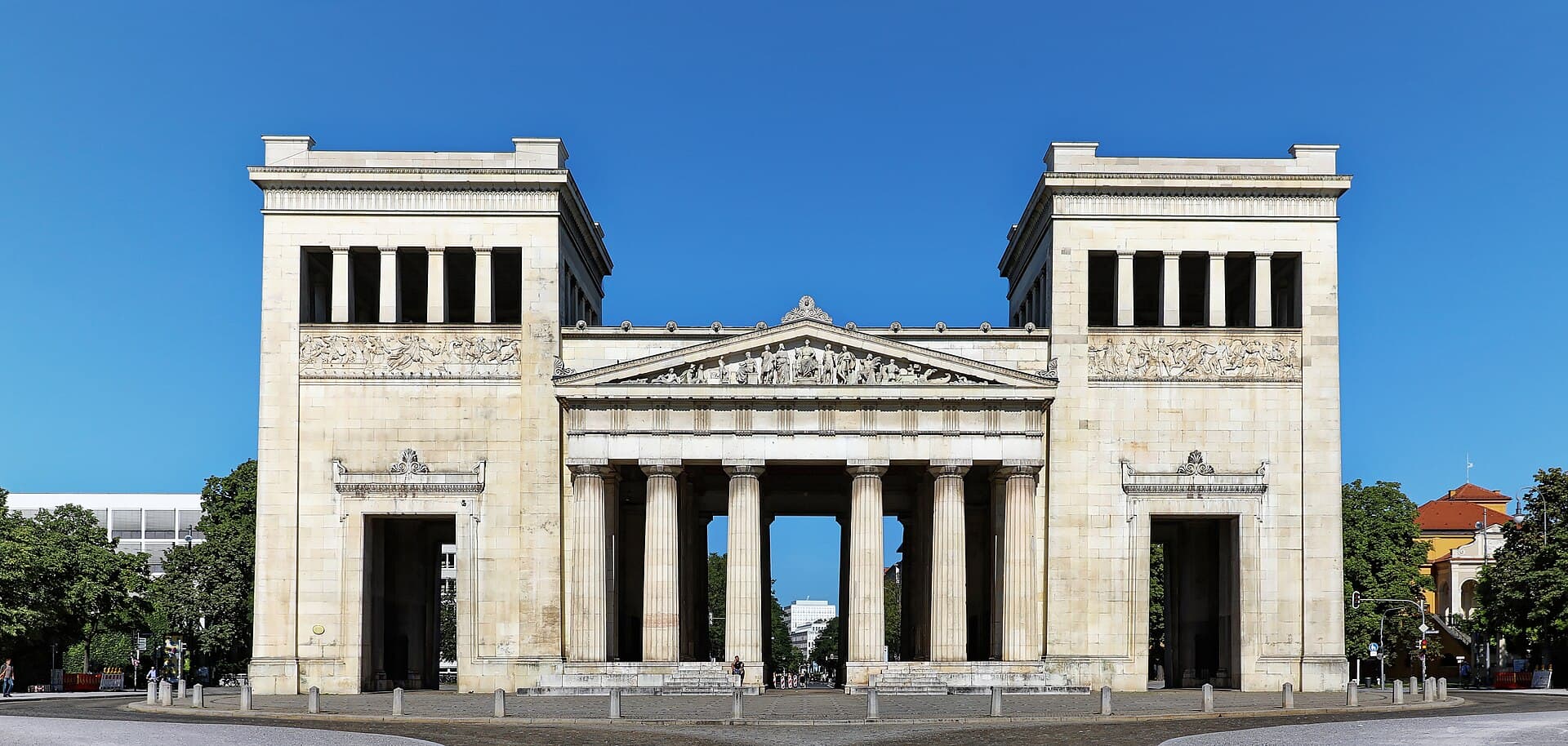 PropylaeaThe Propylaea is a massive Doric gateway closing the western end of Koenigsplatz1 minute walk4.8
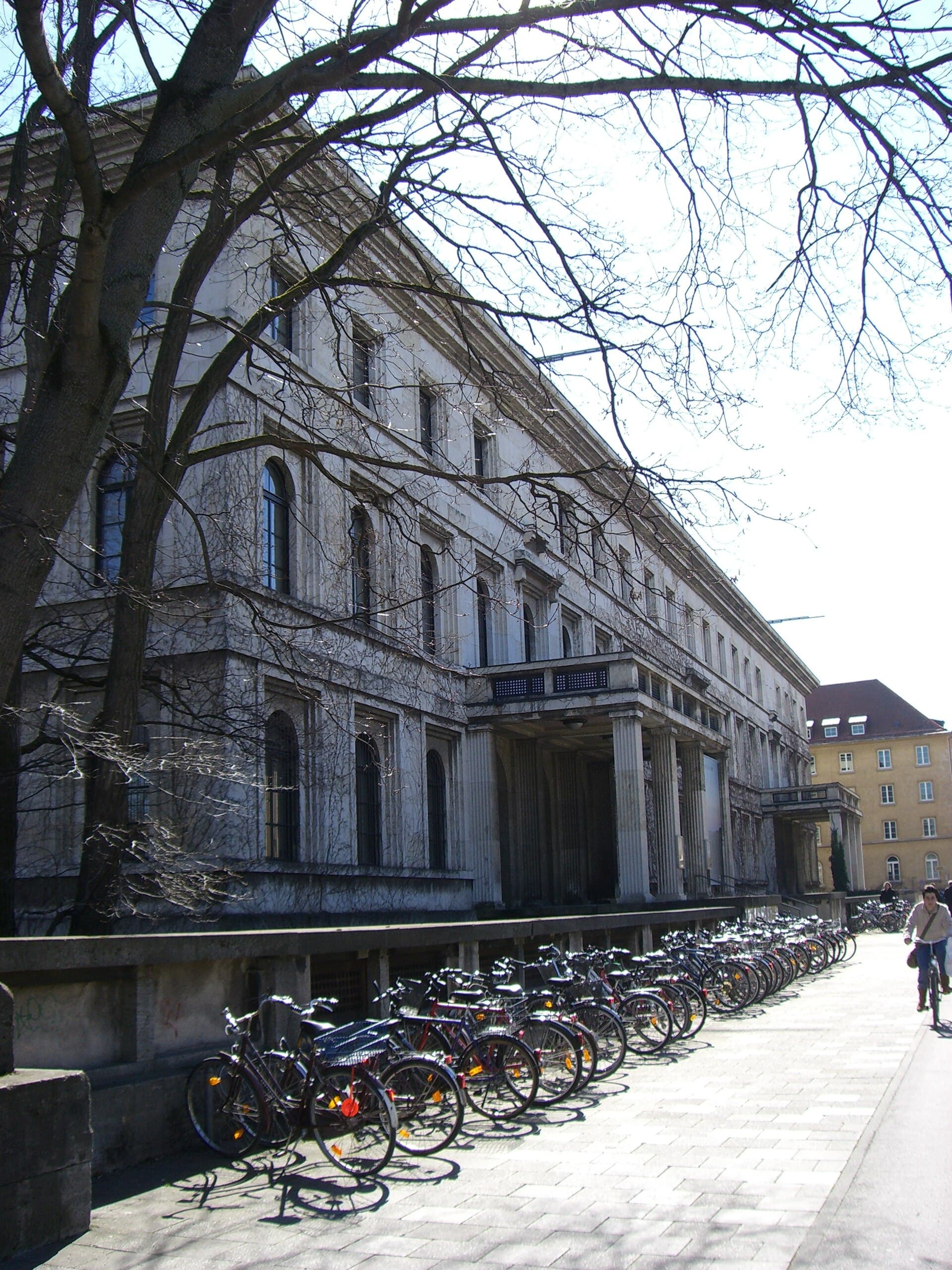 Museum of Classical CastsThe Museum für Abgüsse displays plaster casts of Greek and Roman sculpture — not2 minutes walk4.8
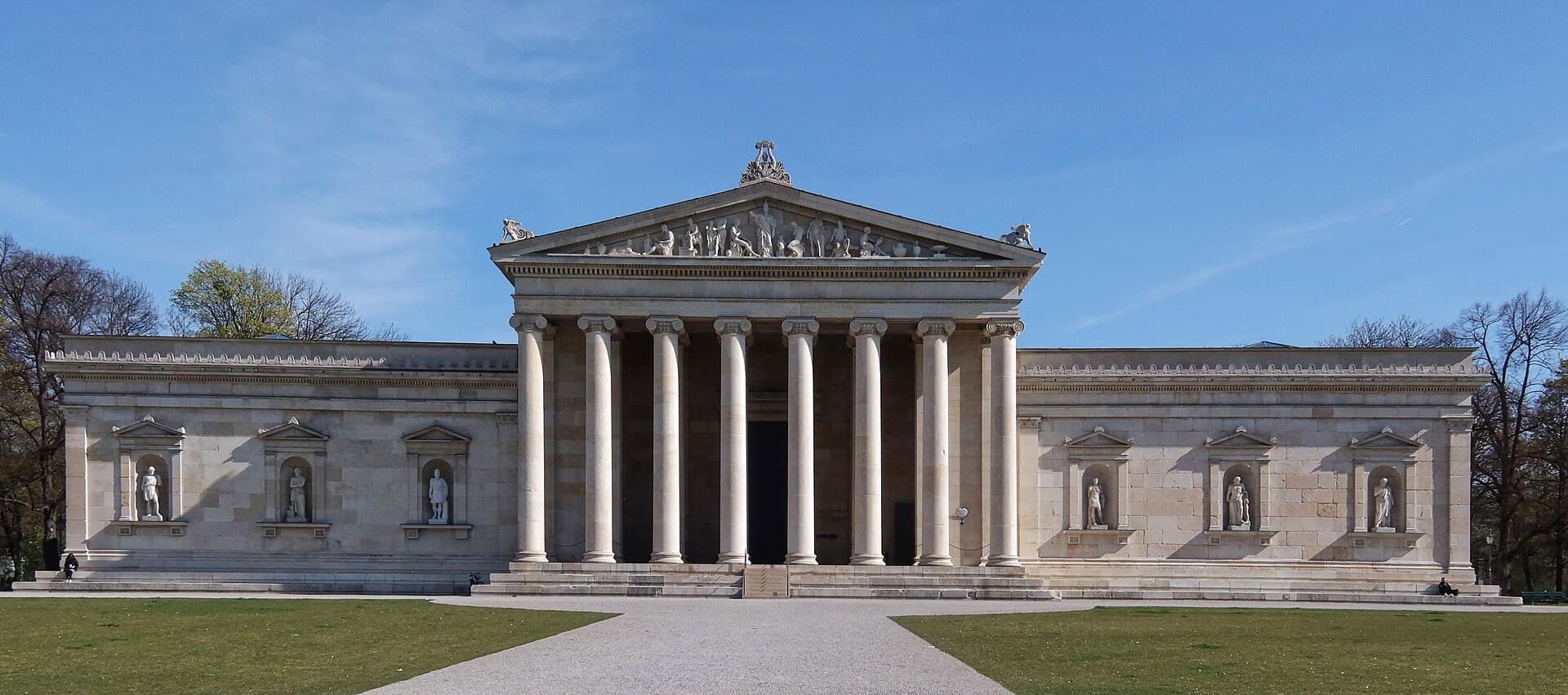 GlyptothekThe Glyptothek is Munich's oldest public museum, built by King Ludwig I and open2 minutes walk4.8
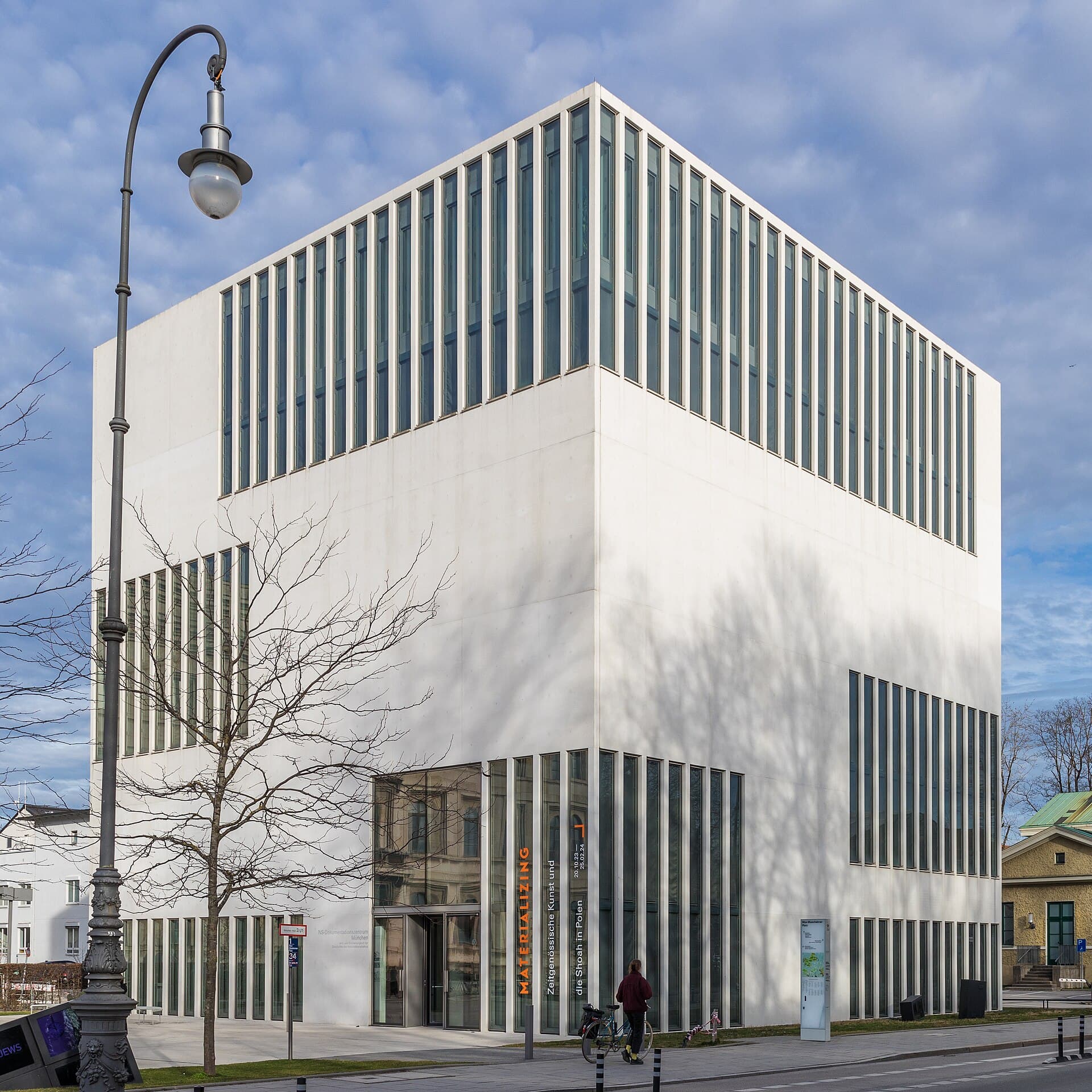 Munich Documentation Centre for the History of National SocialismA stark white cube standing deliberately on the most charged ground there is: th2 minutes walk4.8
One administration runs both, and they split ancient art by scale and material: the Glyptothek takes the large marble sculpture — statues, reliefs, the Aegina temple figures — while this building takes vases, jewellery, bronze and glass. For a single visit the Glyptothek is the more immediately striking; this one is richer in detail. The combined ticket settles the question.