
The circular courtyard
An open-air rotunda with the rising public path wrapped around it — the heart of Stirling's design, and free to anyone just passing through.
Leutnant Wittenstein — CC BY 4.0 · Walt.cleanhard — CC BY-SA 4.0 · Walt.cleanhard — CC BY-SA 4.0 · Fred Romero from Paris, France — CC BY 2.0
The Staatsgalerie Stuttgart is two adjoining museums rather than one: the neoclassical old building of 1843, and the new one the British architect James Stirling completed in 1984, which became among the most famous works of postmodernism in Europe. The new wing is faced in sandstone and travertine in the classical manner, yet its window frames are a violent green and its handrails pink and blue — a deliberate architectural joke at the expense of museum solemnity. Its most important feature is that Stirling cut a public path through it, winding upward through an open-air circular courtyard, which any passer-by may walk to cross the museum without a ticket and without entering the galleries. That was an explicit architectural argument: a museum is part of its city, not a sealed box within it. The collection is strong and wide: European work from the fourteenth century onward, with Rembrandt, Rubens and Memling in the older section, then an excellent twentieth-century holding — a great deal of Picasso, along with Beckmann, Kirchner, Klee and Dalí. Among its most enjoyable possessions are the costumes for the Triadic Ballet designed by Oskar Schlemmer at the Bauhaus — geometry made wearable, and an icon of modern German design.
An open-air rotunda with the rising public path wrapped around it — the heart of Stirling's design, and free to anyone just passing through.
Geometric costumes designed by Oskar Schlemmer at the Bauhaus — among the school's best-known output, and rarely shown in the original.
A broad holding spanning different phases of his work — among the strongest in any German museum outside Berlin and Munich.
The 1843 neoclassical wing with the Old Masters — Rembrandt, Rubens, Memling — and a calm that answers the new building's noise.
Konrad-Adenauer-Straße 30-32, 70173 Stuttgart
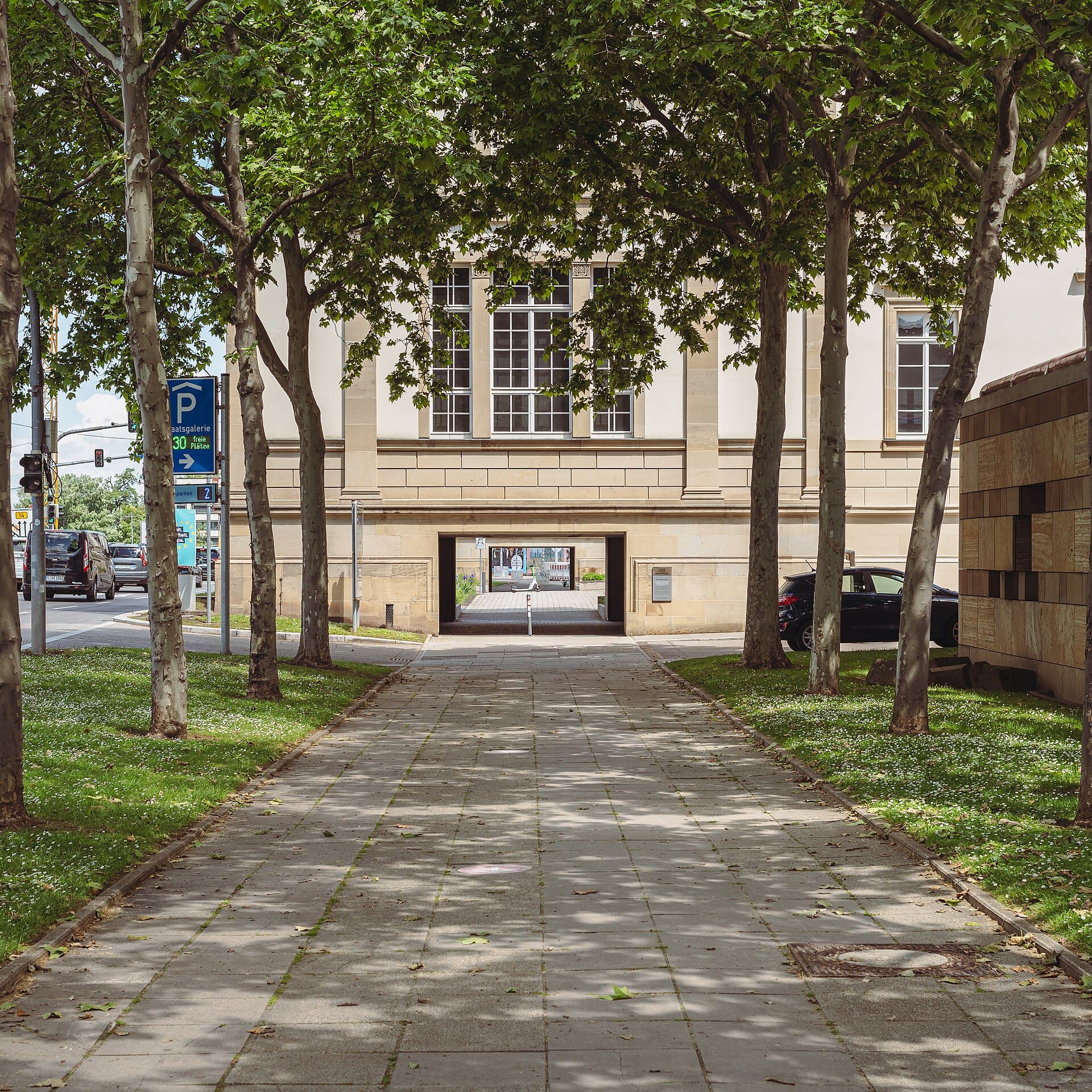 The Alte StaatsgalerieThe original building of the Baden-Württemberg state art gallery, completed in t1 minute walk4.8
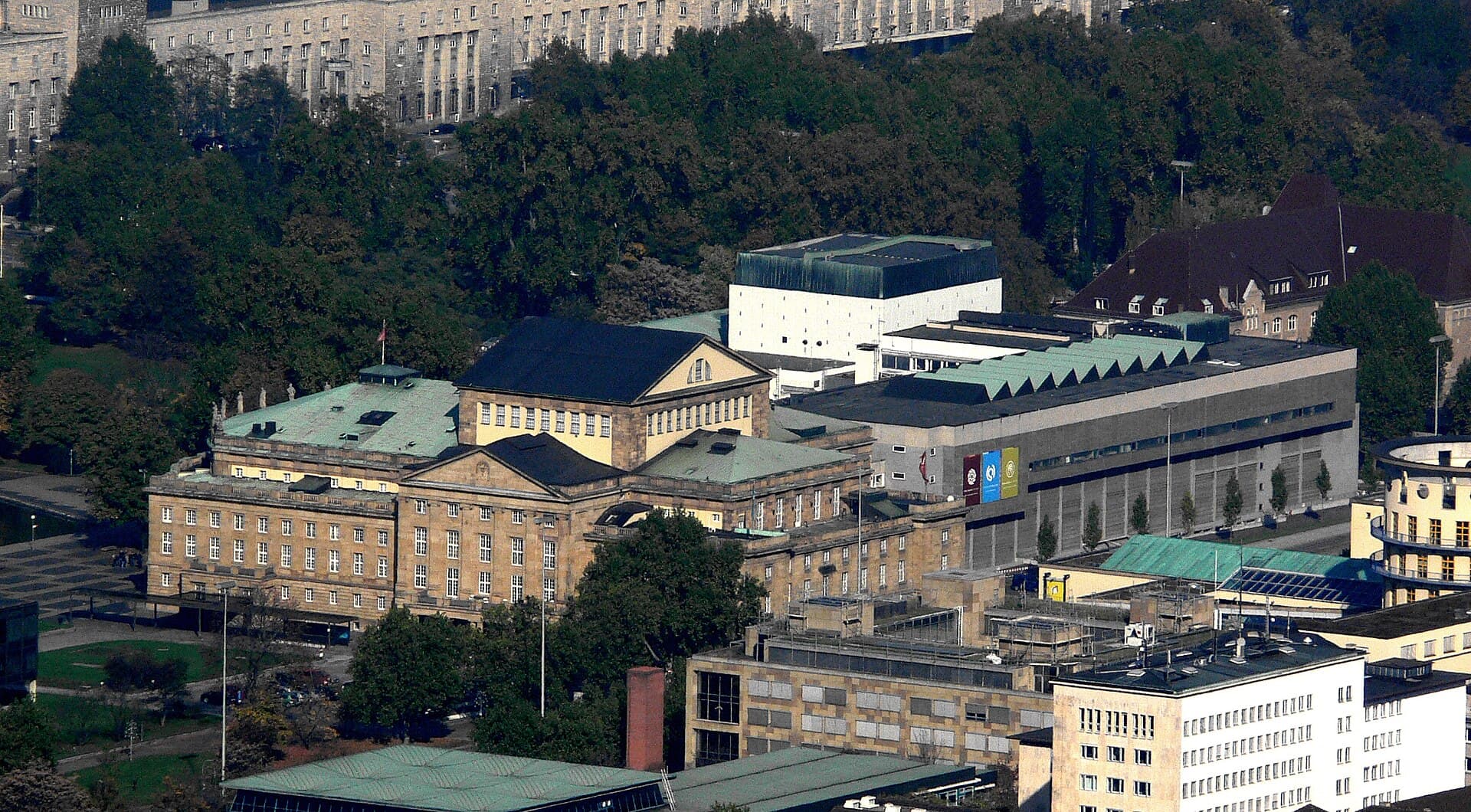 Staatstheater StuttgartThe Wuerttemberg State Theatres form the largest three-branch theatre in the wor2 minutes walk4.8
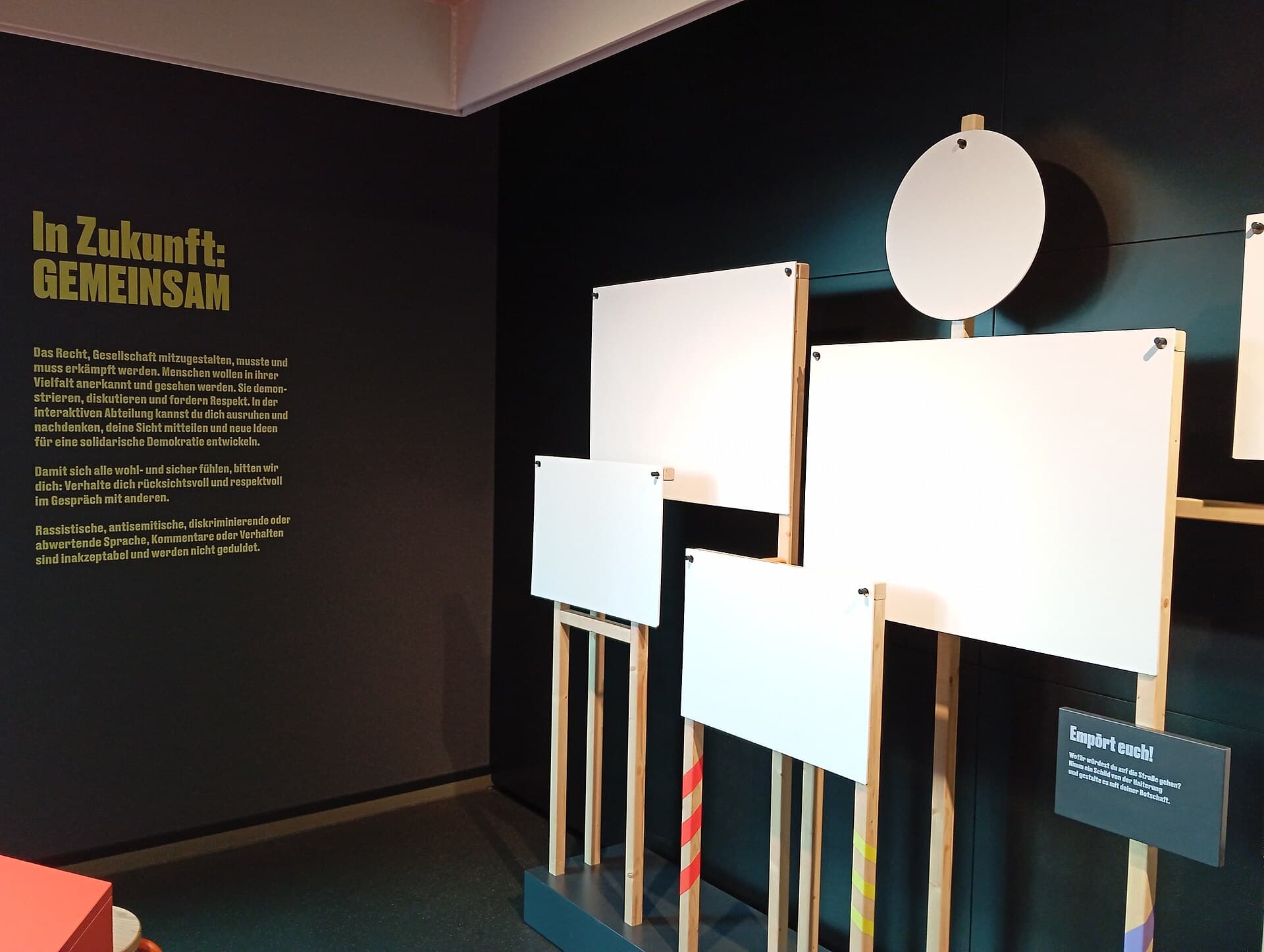 House of History Baden-WürttembergThe House of History of Baden-Württemberg explains the past two hundred years of2 minutes walk4.5
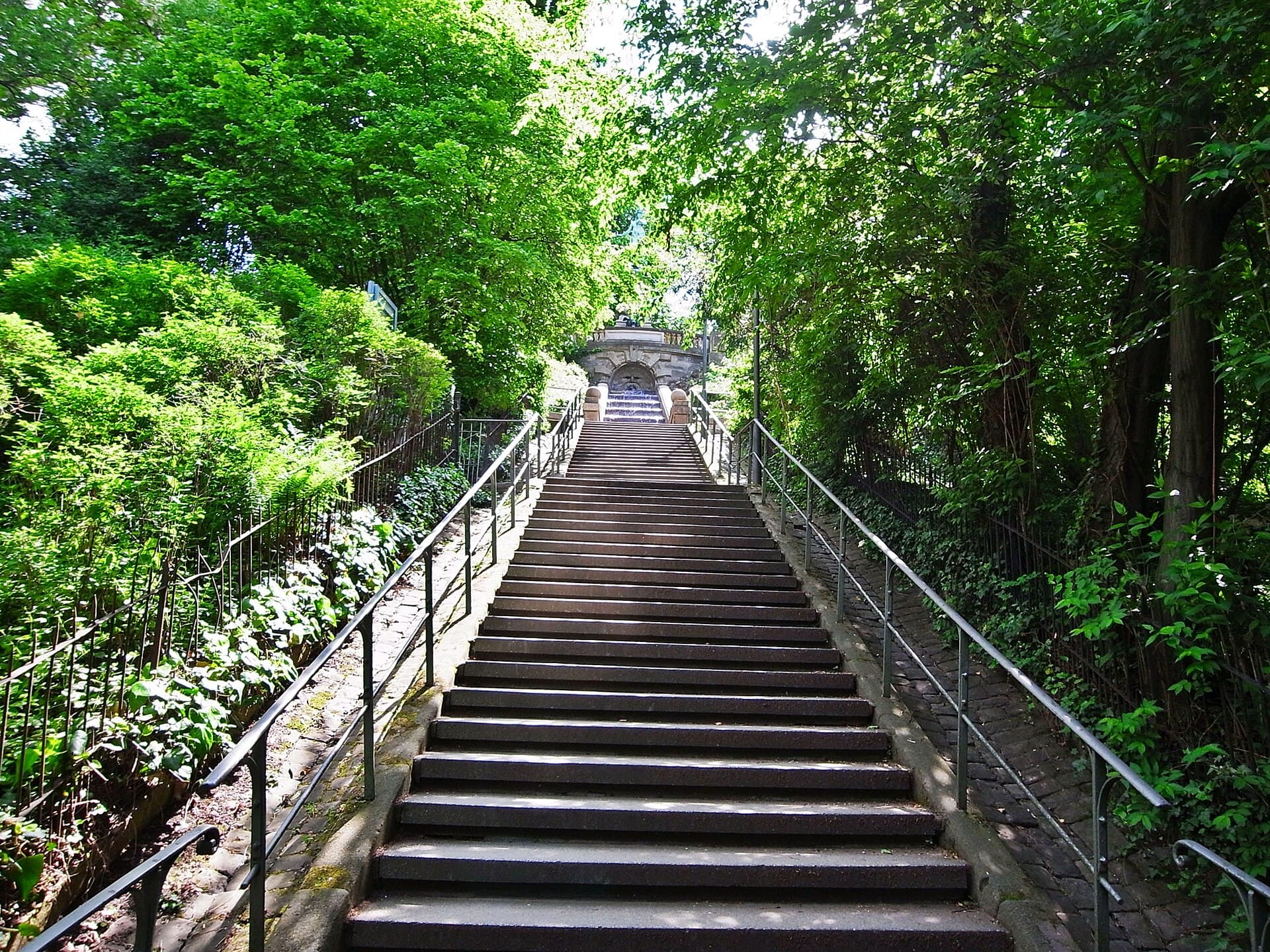 The EugenstaffelThe Eugenstaffel is Stuttgart's best-known Stäffele — a local word for a public 4 minutes walk4.6
 Carl Zeiss PlanetariumThe Carl Zeiss Planetarium in Stuttgart is among the most important in Germany, 4 minutes walk4.4
The building alone is, and it is free: the public path and the rotunda can be walked without a ticket, and they are a lesson in architecture more than an exhibition. The galleries themselves need an interest in modern art — though the ticket is cheap against comparable European museums.
The old dates from 1843 and holds European art to the nineteenth century; the new, from 1984, holds the twentieth. One ticket covers both and they connect internally, so there is no need to leave and re-enter.
The Mercedes-Benz and Porsche museums are the city's headline sights for most visitors; both sit outside the centre and need half a day each. Around the gallery, the palace gardens and Schlossplatz are minutes away on foot and are the finest open space in the city.