
The four saints
Around the base stand four Bohemian patrons, among them St Ludmila, Wenceslas's grandmother — each with a story.
Витольд Муратов — Public domain · RobbieIanMorrison — CC BY 4.0 · Ben Skála, Benfoto — CC BY-SA 3.0 · Ввласенко — CC BY-SA 3.0
At the head of Wenceslas Square, directly in front of the National Museum, St Wenceslas sits on his bronze horse surrounded by four Czech patron saints. Wenceslas — Václav in Czech — was a 10th-century duke of Bohemia, murdered by his brother in 935, who became a martyr and then the country's foremost patron saint. The monument is by the sculptor Josef Myslbek and took more than thirty years to complete, unveiled in 1913. This is less a tourist sight than the national gathering point of the Czechs. People assembled here in 1918 at the declaration of independence, in 1968 when Warsaw Pact tanks rolled in, and in 1989 in the demonstrations that brought down communist rule. Even now, when something significant happens in the country, this is where people come. "Meet me at the horse" is a well-understood local way to fix a rendezvous. A few metres below the statue, a modest memorial set into the ground honours Jan Palach and Jan Zajíc, the students who burned themselves in protest at the Soviet occupation in 1969. A small detail that many walk past, and the most affecting thing in the square.
Around the base stand four Bohemian patrons, among them St Ludmila, Wenceslas's grandmother — each with a story.
A plain bronze plate in the pavement for two students who burned themselves in protest in 1969 — the square's most affecting point.
From the statue, Wenceslas Square runs 750 metres ahead of you to Můstek — the best angle for photographing the whole square.
Statue and museum behind it are lit together after sunset — the night picture here is far stronger than the daytime one.
Top of Wenceslas Square, in front of the National Museum, Prague 1
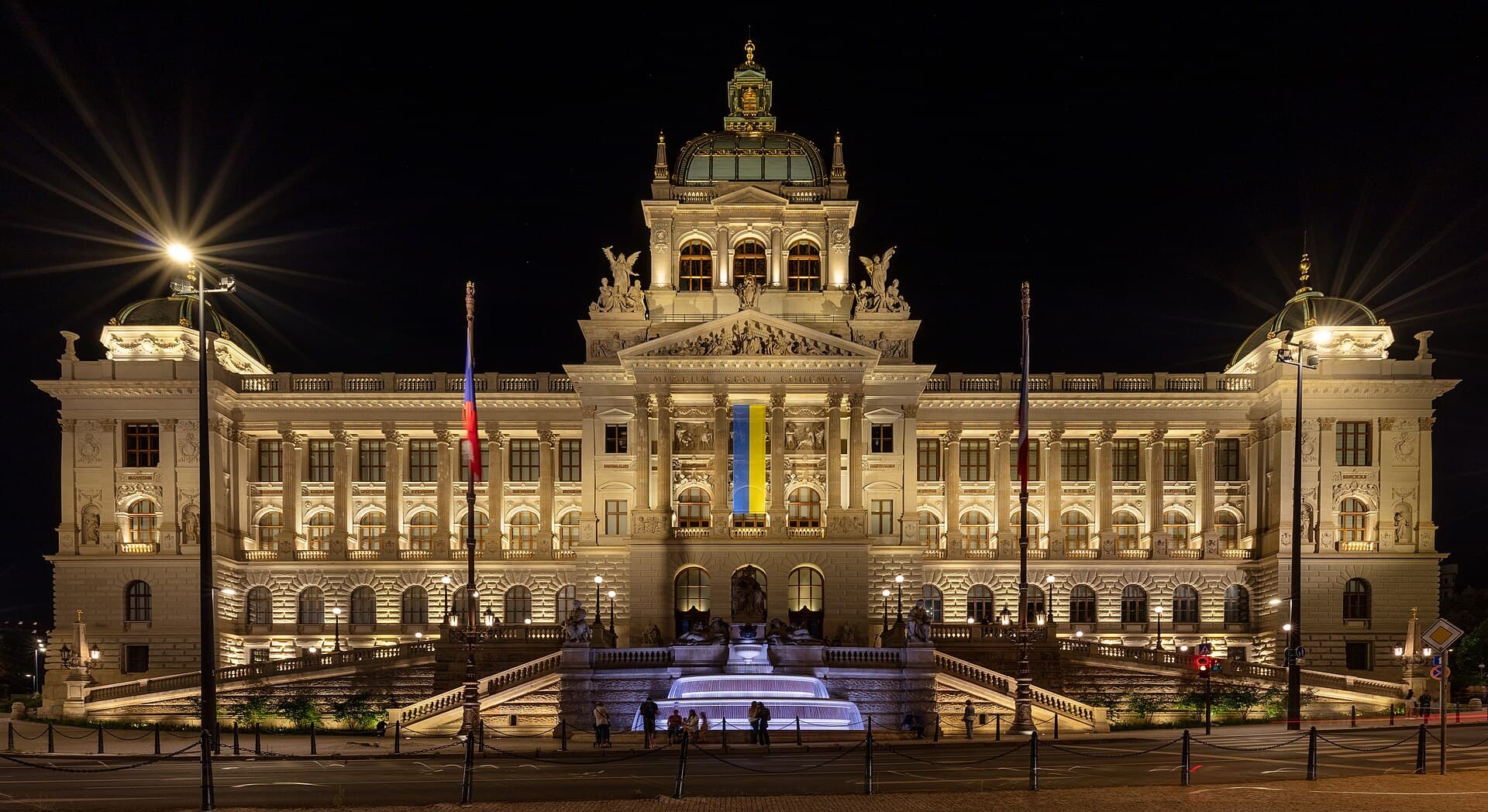 National Museum in PragueThe vast building closing the top of Wenceslas Square is the Czech National Muse1 minute walk4.5
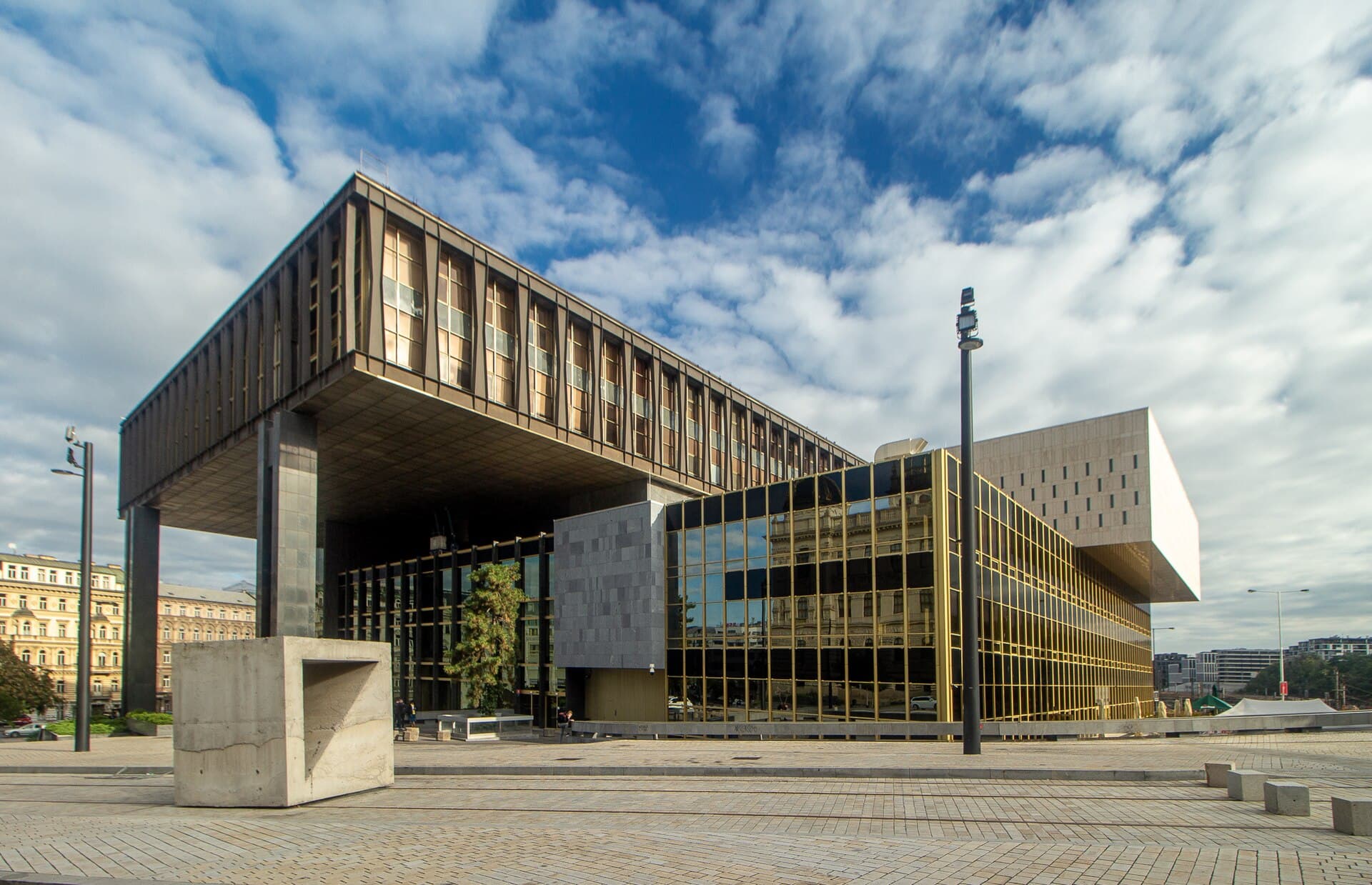 The New Building of the National MuseumThe National Museum's second building in Prague, standing directly beside the hi2 minutes walk4.3
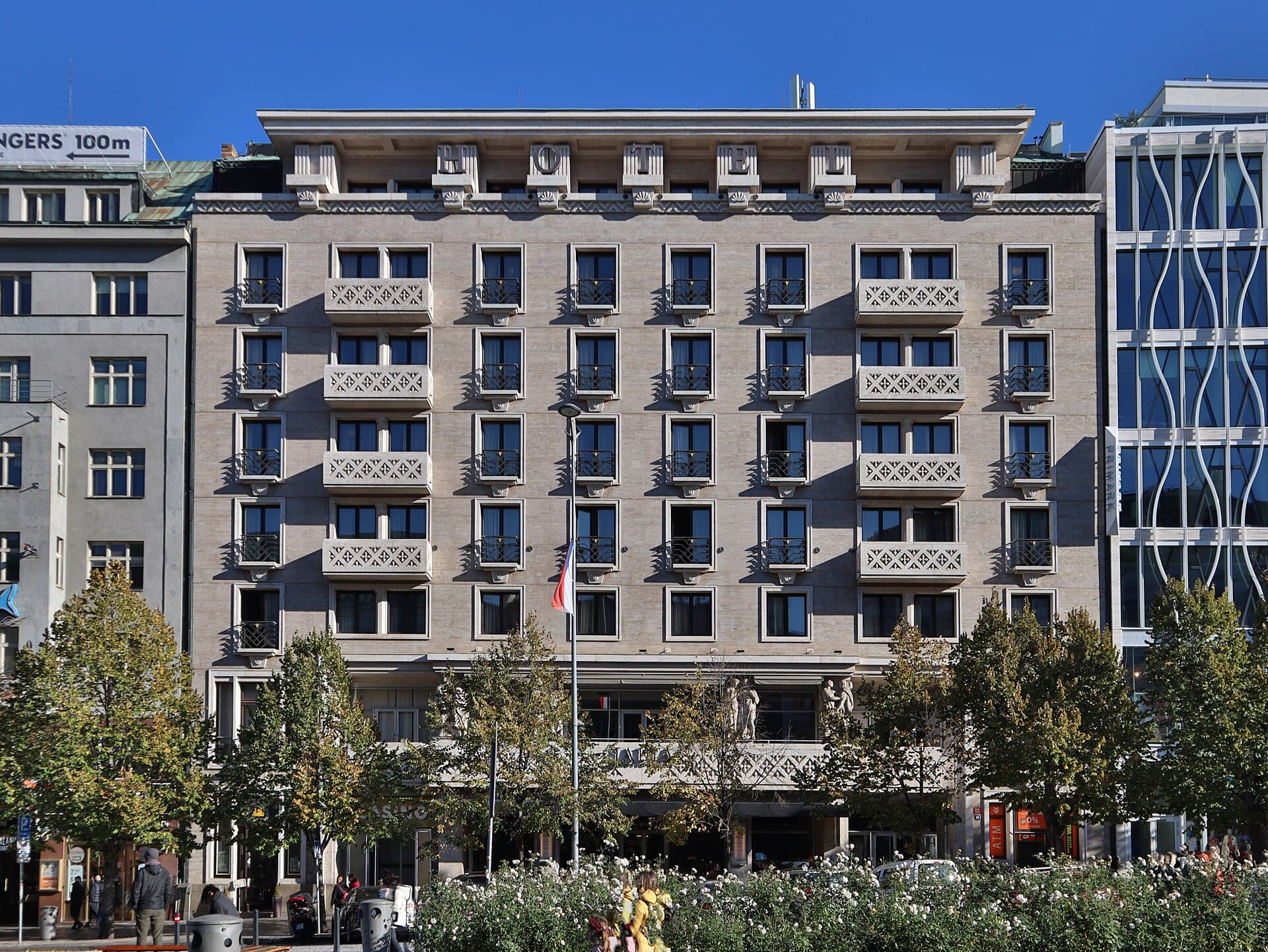 Cold War Museum, Hotel JaltaA secret nuclear shelter beneath the Hotel Jalta on Wenceslas Square, opened to 2 minutes walk4.6
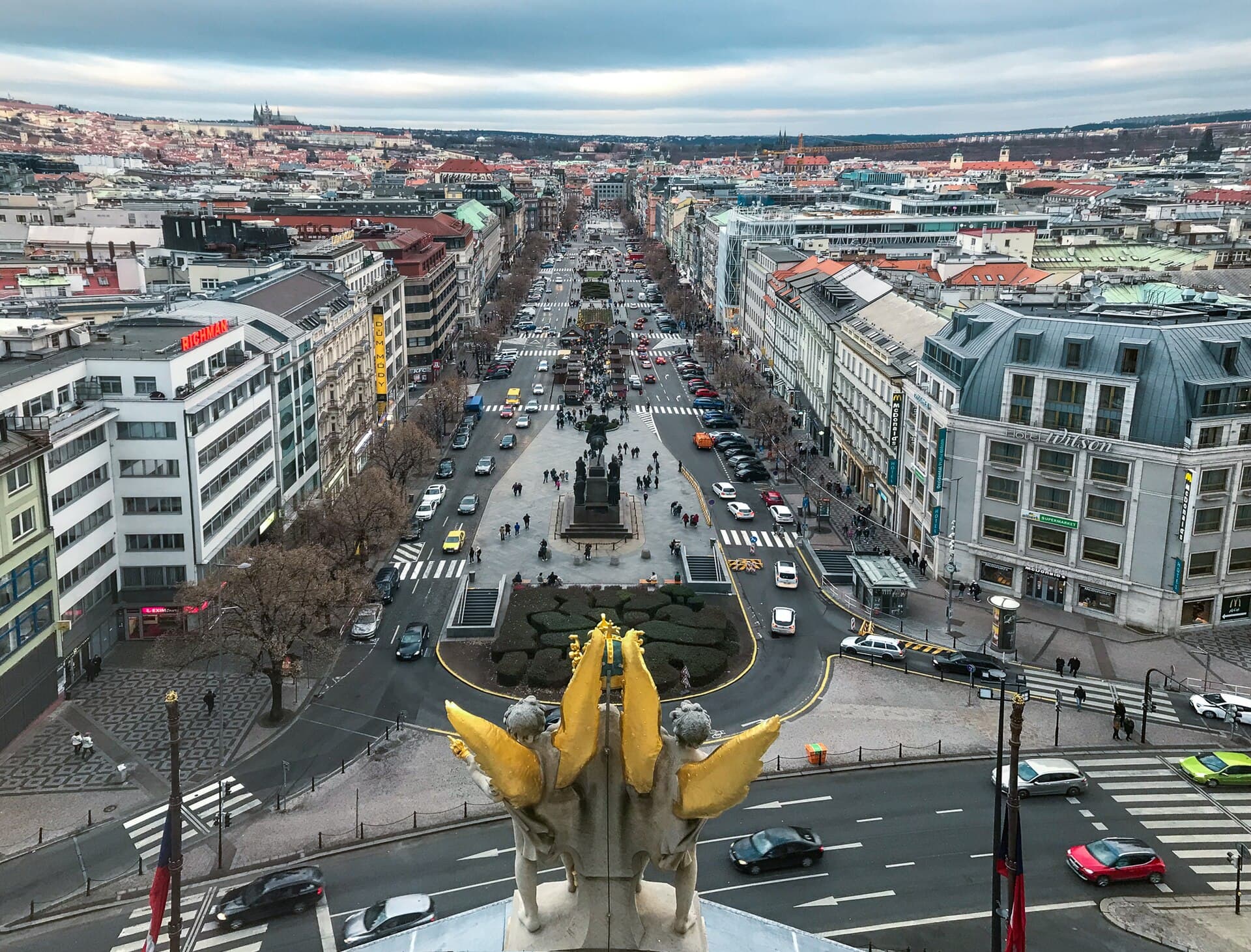 Wenceslas SquareWenceslas Square is not a square in the usual sense but a broad boulevard some 75 minutes walk
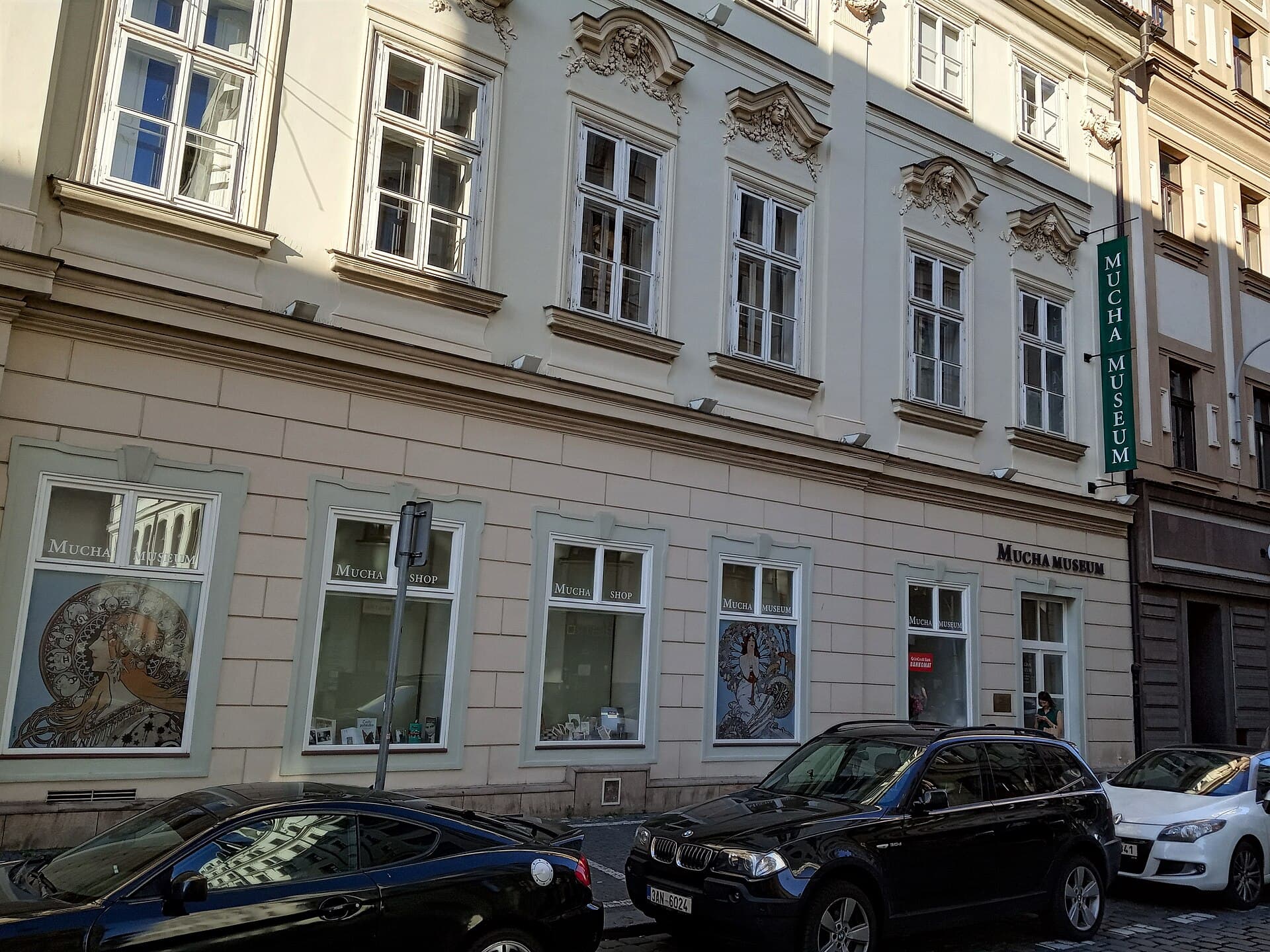 Mucha MuseumAlphonse Mucha is the artist who gave Art Nouveau its visual face, and you have 7 minutes walk4.2
A 10th-century duke of Bohemia known for piety and justice, murdered by his brother Boleslav in 935. He became the country's patron saint and national symbol, and the day of his death, 28 September, is still a Czech public holiday.
Because for a century the statue has stood for Czech identity itself. Every pivotal moment — 1918, 1968, 1989 — passed through this spot, so it remains the natural gathering place in both celebration and crisis.
The upper end by the statue is lit, busy and generally safe, but the lower end and some side streets fill with bars at night and can bring hassle. Stay on the main axes and avoid the side lanes after midnight.
Yes — in the nearby Lucerna passage, David Černý's satirical version has Wenceslas riding a dead horse hung upside down. It is five minutes' walk and worth the detour if his work appeals to you.