
A planning history
Denmark was among the first to pedestrianise city centres in the 1960s.
The main pedestrian street in Aarhus, running through the city centre north from the railway station. The name is common in Denmark — Strøget simply means the street you stroll along — and the best-known is in Copenhagen. This is Aarhus's equivalent: shops, cafés and open space with no cars. Denmark was among the first countries to turn its city-centre streets into pedestrian zones in the 1960s, and the idea was controversial at the time — traders feared losing customers with no parking. The result was the opposite, and the model was copied across Europe. This street is part of that planning history, and today it is the city's axis of pedestrian movement. What you find on it is chain shops above all, and it is Aarhus's commercial rather than historic face. The lanes branching off it — particularly towards the Latin Quarter — are more distinctive, with independent shops and small cafés. Free and always open, and walking it is the use.
Denmark was among the first to pedestrianise city centres in the 1960s.
Traders feared losing customers without parking — the result was the opposite.
Those branching towards the Latin Quarter hold independent shops and small cafés.
Central Aarhus
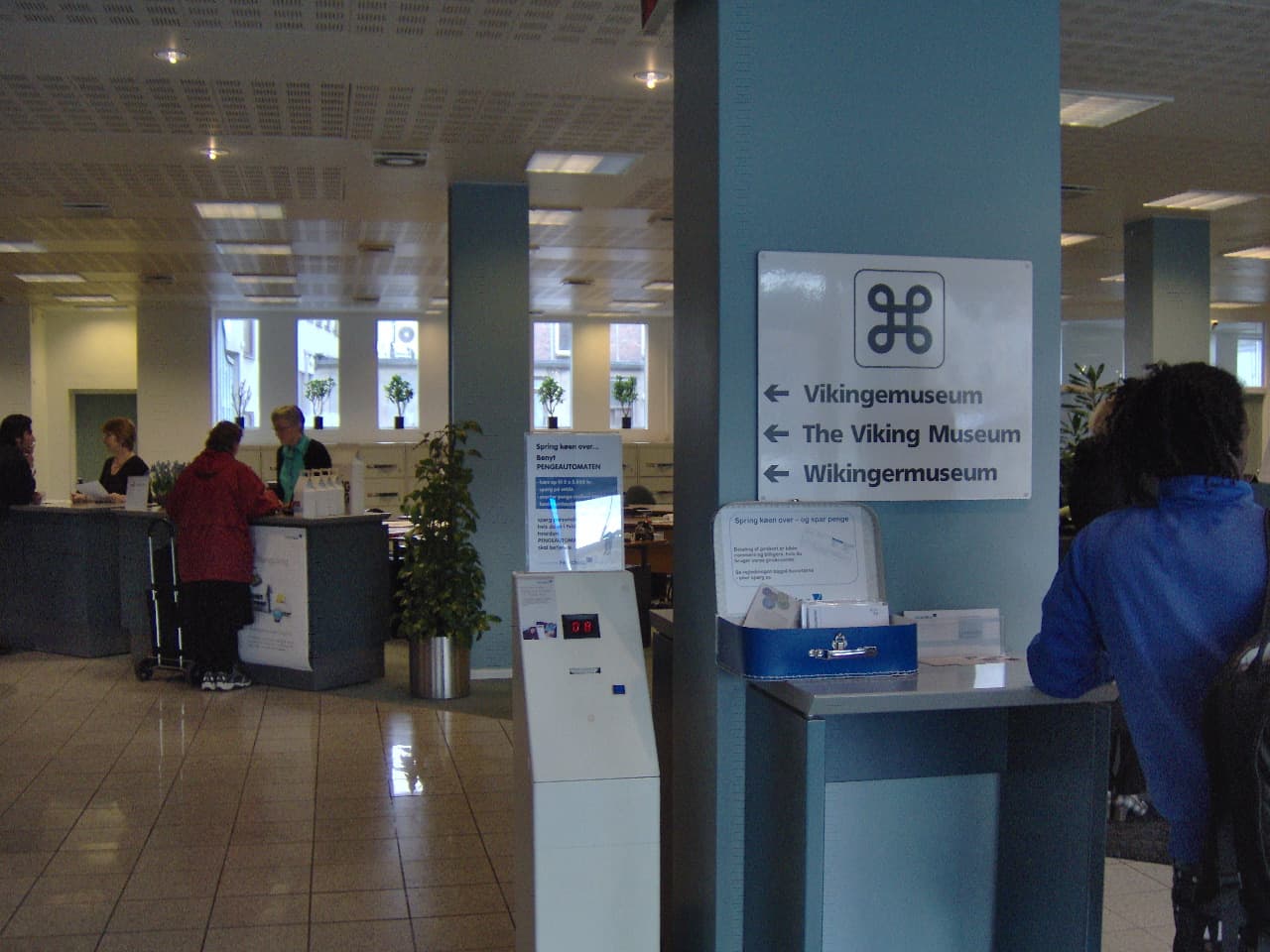 The Viking MuseumThe strangest-sited museum in Denmark: it is in the **basement of a working bank4 minutes walk3.7
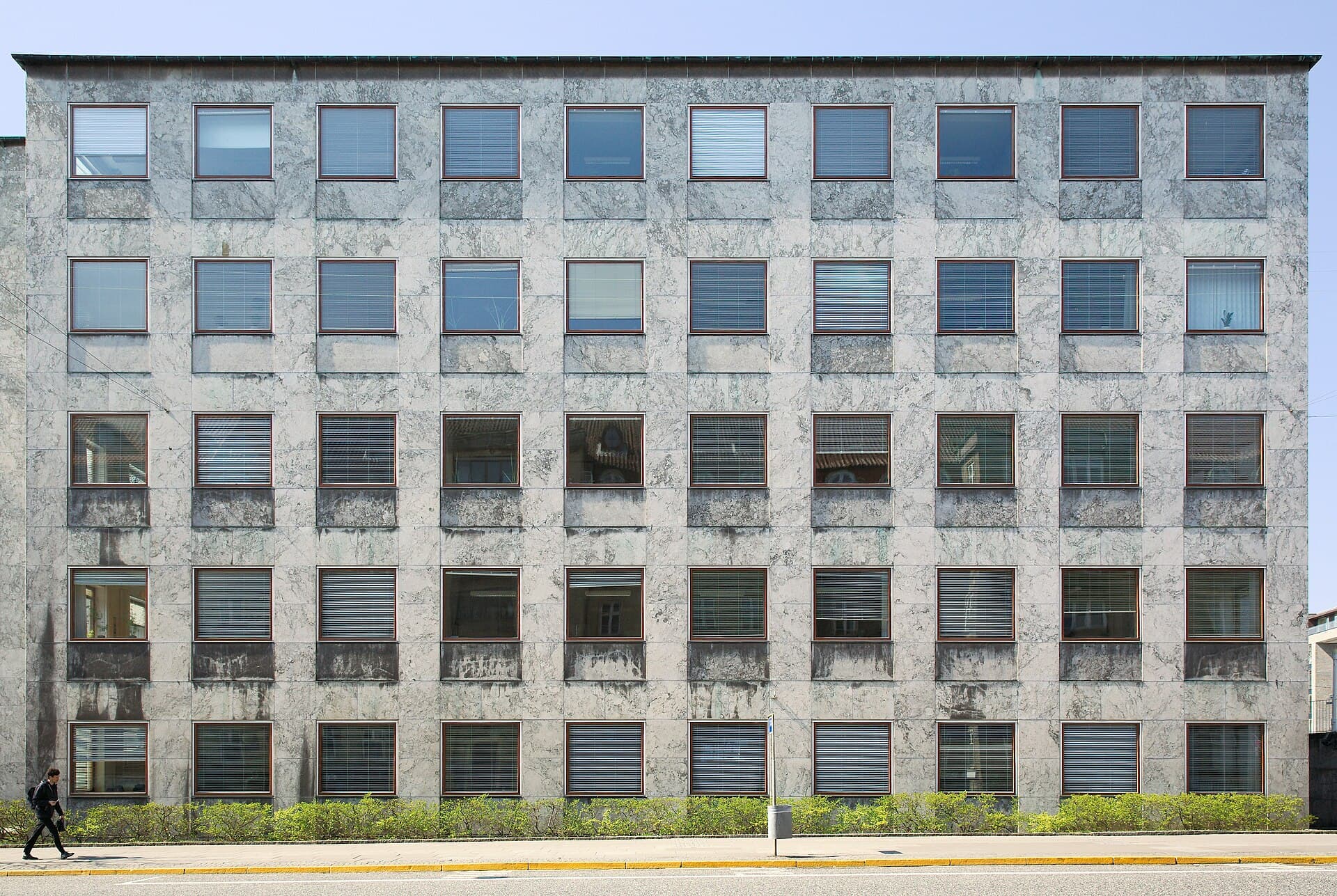 Aarhus City HallA building that divided its city when it opened in 1942, and eighty years later 4 minutes walk4.3
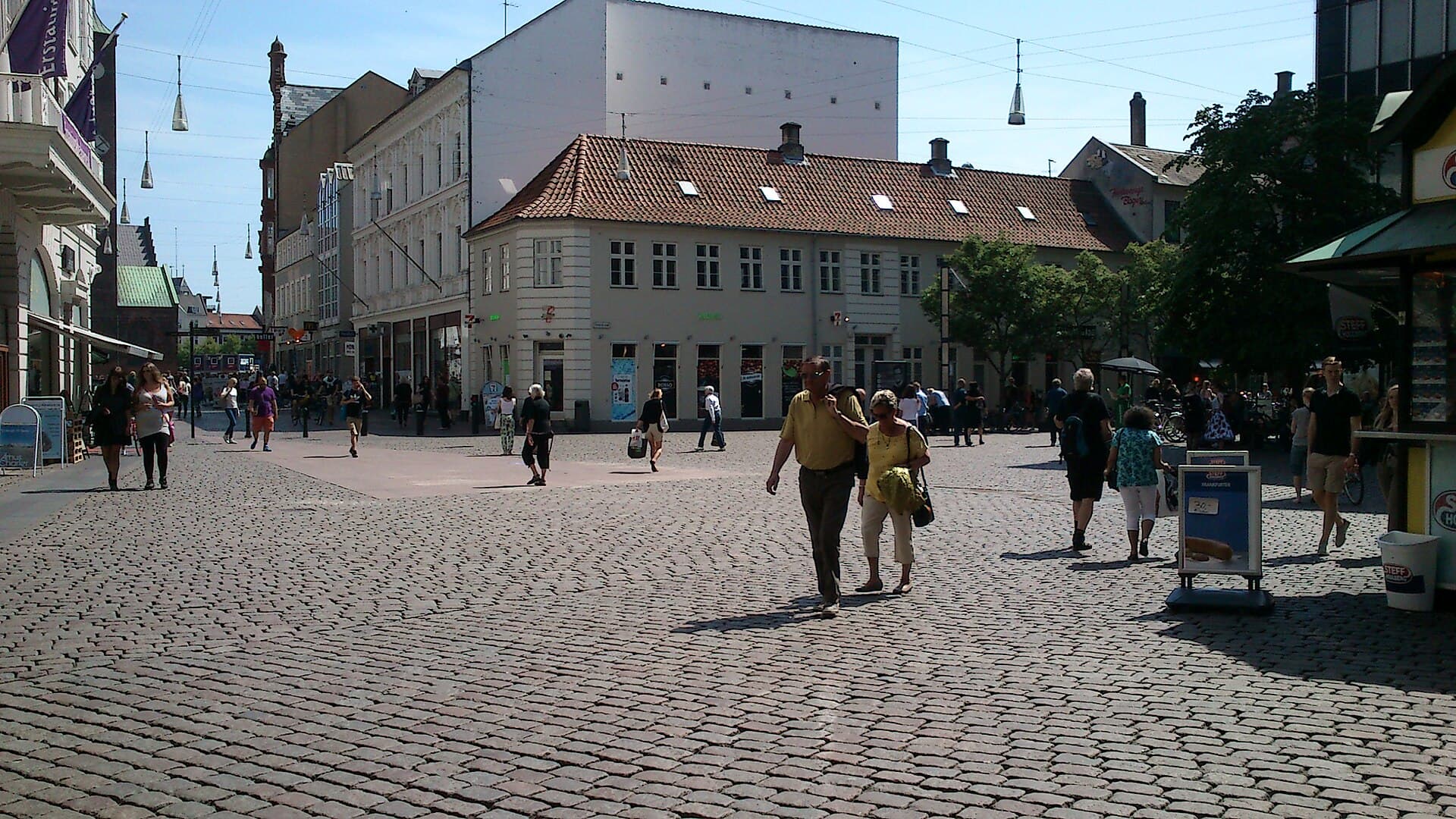 Lille TorvA small square in the heart of old Aarhus, its name meaning the little square, d5 minutes walk4.4
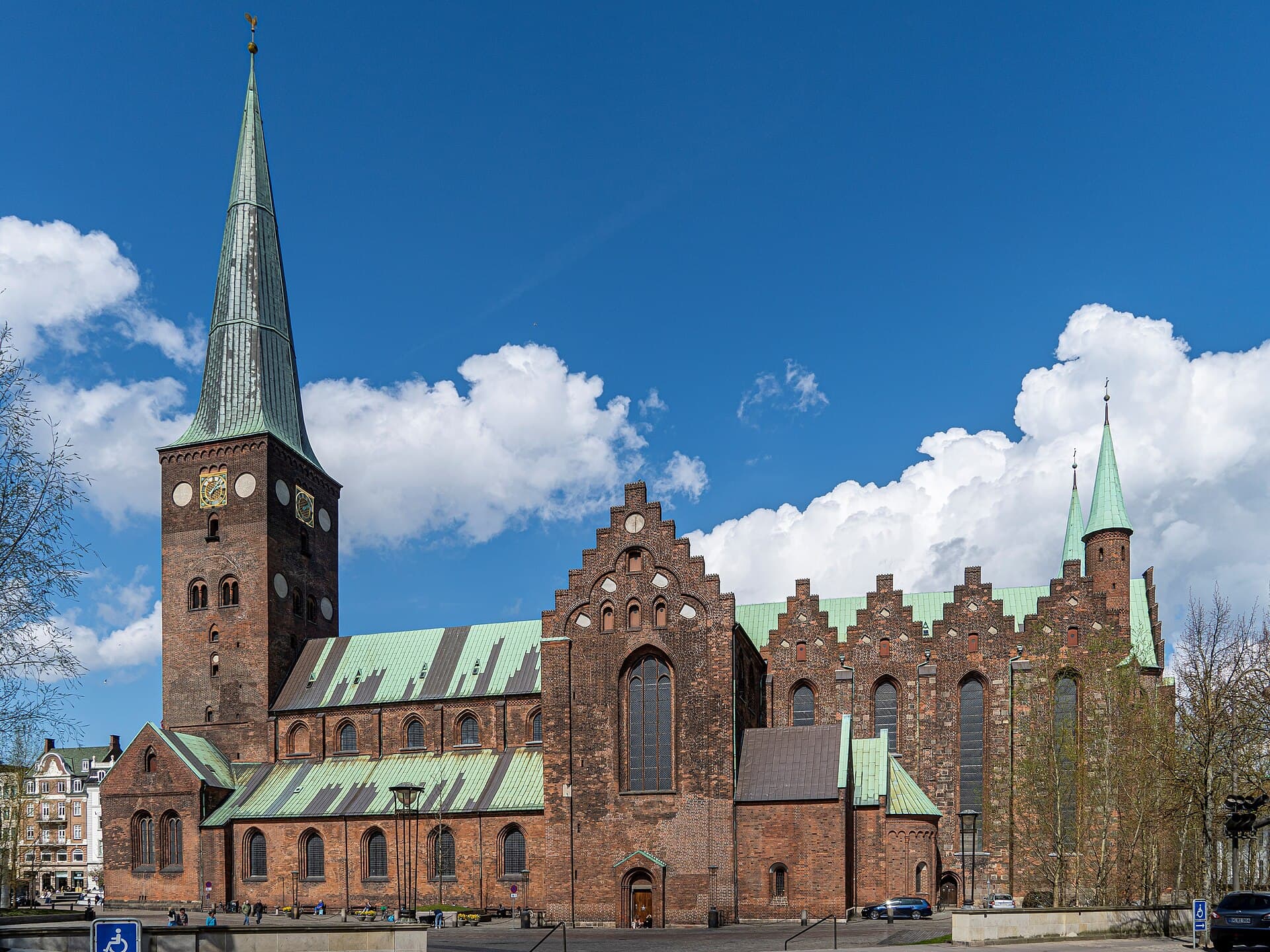 Aarhus CathedralAarhus Cathedral is Denmark's longest church (93 metres) and its tallest tower (5 minutes walk4.4
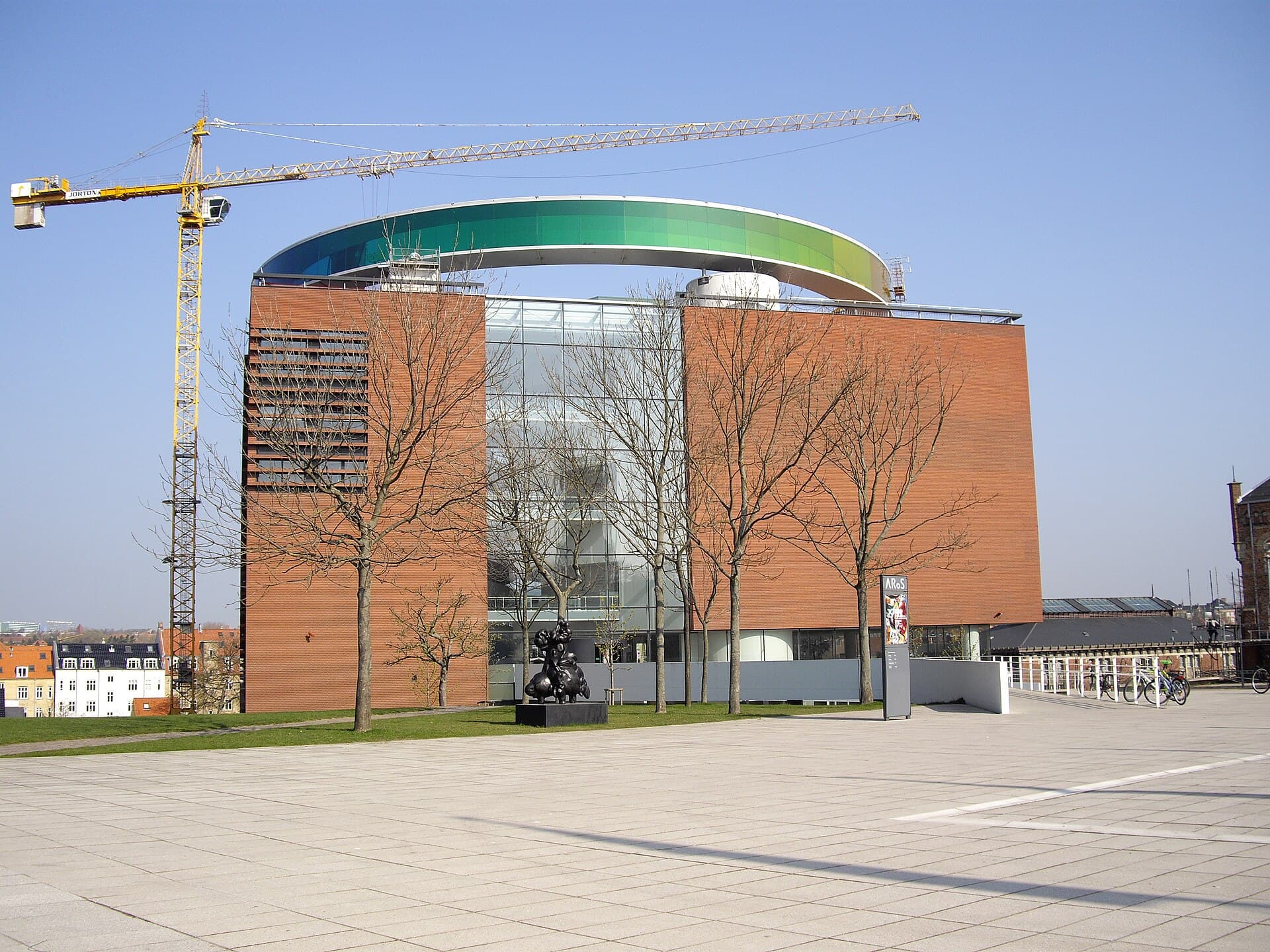 ARoS & its Rainbow PanoramaARoS is the museum known for its roof before its collection: Your Rainbow Panora5 minutes walk4.6
It is your natural route from the station to the centre so it costs you nothing, but do not set aside time for it as a destination: the shops are chains found in every European city. The lanes branching off it towards the Latin Quarter are what genuinely merits the detour.
The city's oldest district, immediately northeast of Strøget: narrow lanes, coloured eighteenth- and nineteenth-century houses, independent shops, small cafés and second-hand bookshops. It is the finest walking in Aarhus and far less commercial than the main street.