
The see-through tower
A frame you can look through — Jacobsen's answer to the argument.
Villy Fink Isaksen — CC BY-SA 3.0 · Villy Fink Isaksen — CC BY-SA 3.0 · Colin — CC BY-SA 4.0 · RhinoMind — CC BY-SA 4.0
A building that divided its city when it opened in 1942, and eighty years later is its foremost architectural symbol. **Arne Jacobsen** and **Erik Møller** won the competition with a design that had **no tower at all** — a clean functionalist volume with no ornament. The public objected: a town hall without a tower is not a town hall. A **60-metre tower** was added, but Jacobsen refused to make it conventional, and built it as an exposed frame covered in a thin grid — a tower you can see through. The argument ran for years. The whole building is clad in **grey Norwegian marble**, an odd choice for a functionalist structure, and it gives it a quiet weight nothing else in the city has. Inside, Jacobsen's small details are the reward: **clocks, door handles, lamps and chairs** all designed for this specific building, many of which later became products sold worldwide. Note: **this is a working government building**, and its public parts open on weekdays only.
A frame you can look through — Jacobsen's answer to the argument.
Clocks, handles and lamps designed for this building alone.
A cladding that gives a functionalist building unmatched weight.
Rådhuspladsen 2, Aarhus
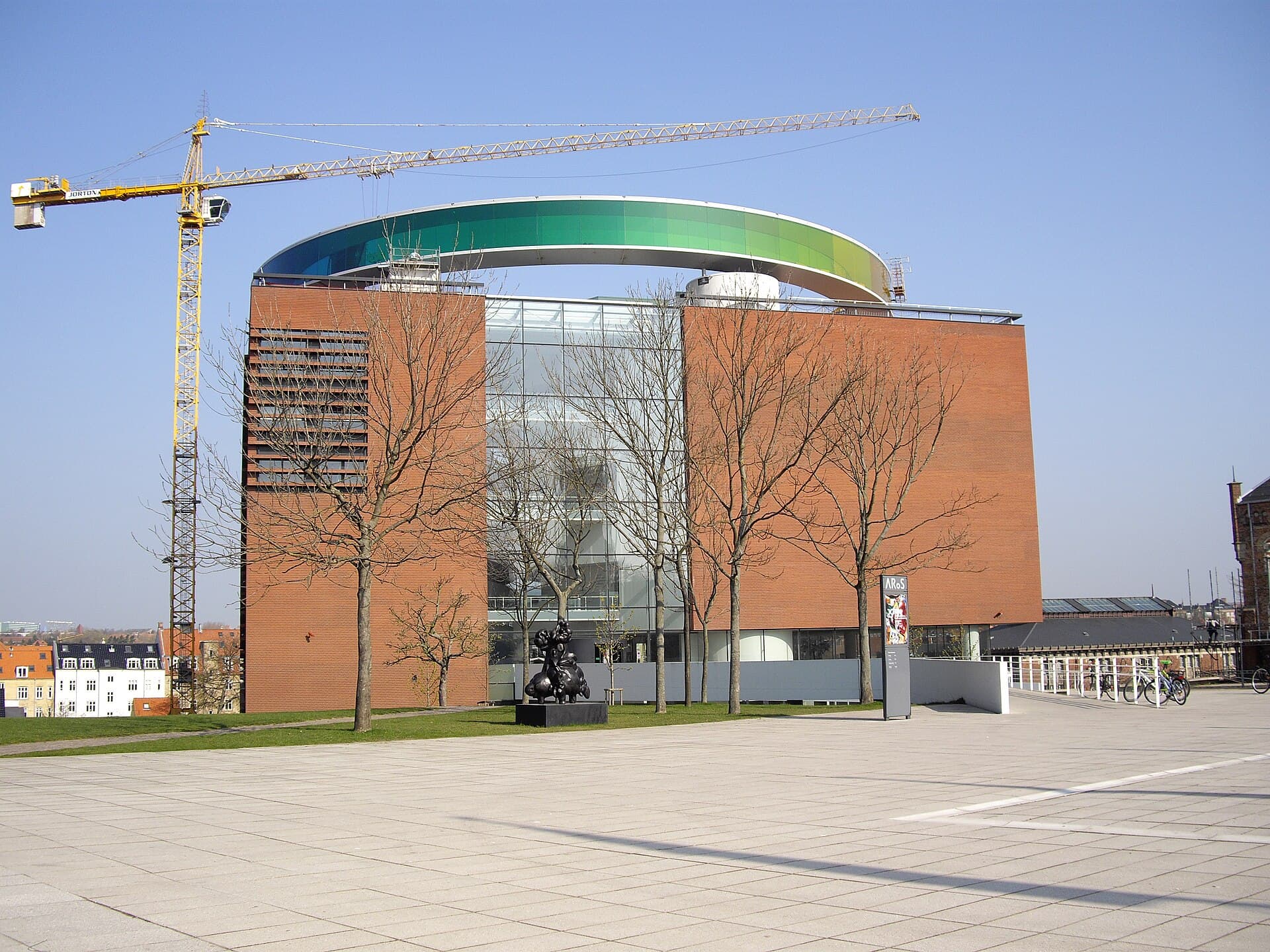 ARoS & its Rainbow PanoramaARoS is the museum known for its roof before its collection: Your Rainbow Panora4 minutes walk4.6
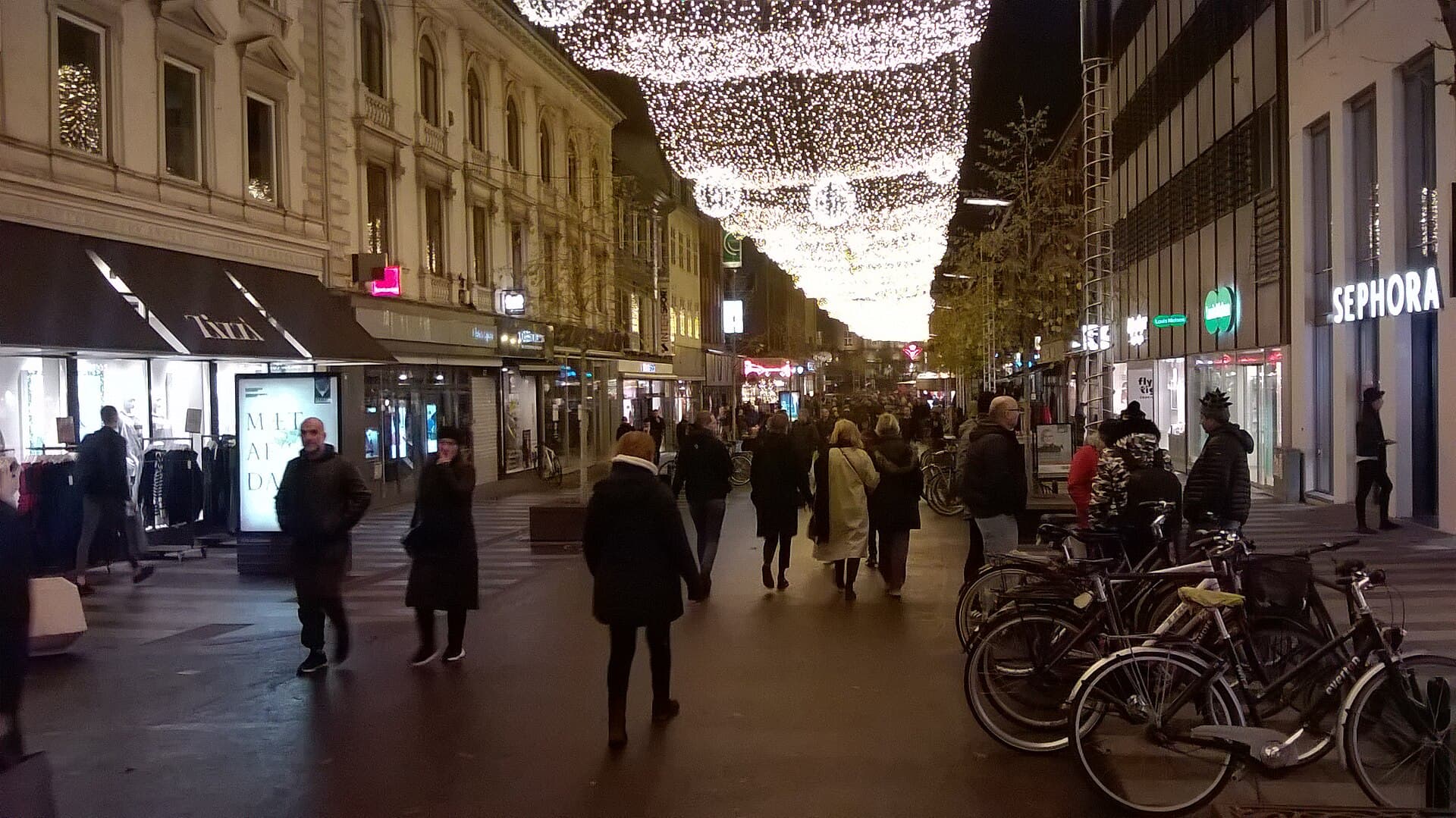 StrøgetThe main pedestrian street in Aarhus, running through the city centre north from4 minutes walk4.3
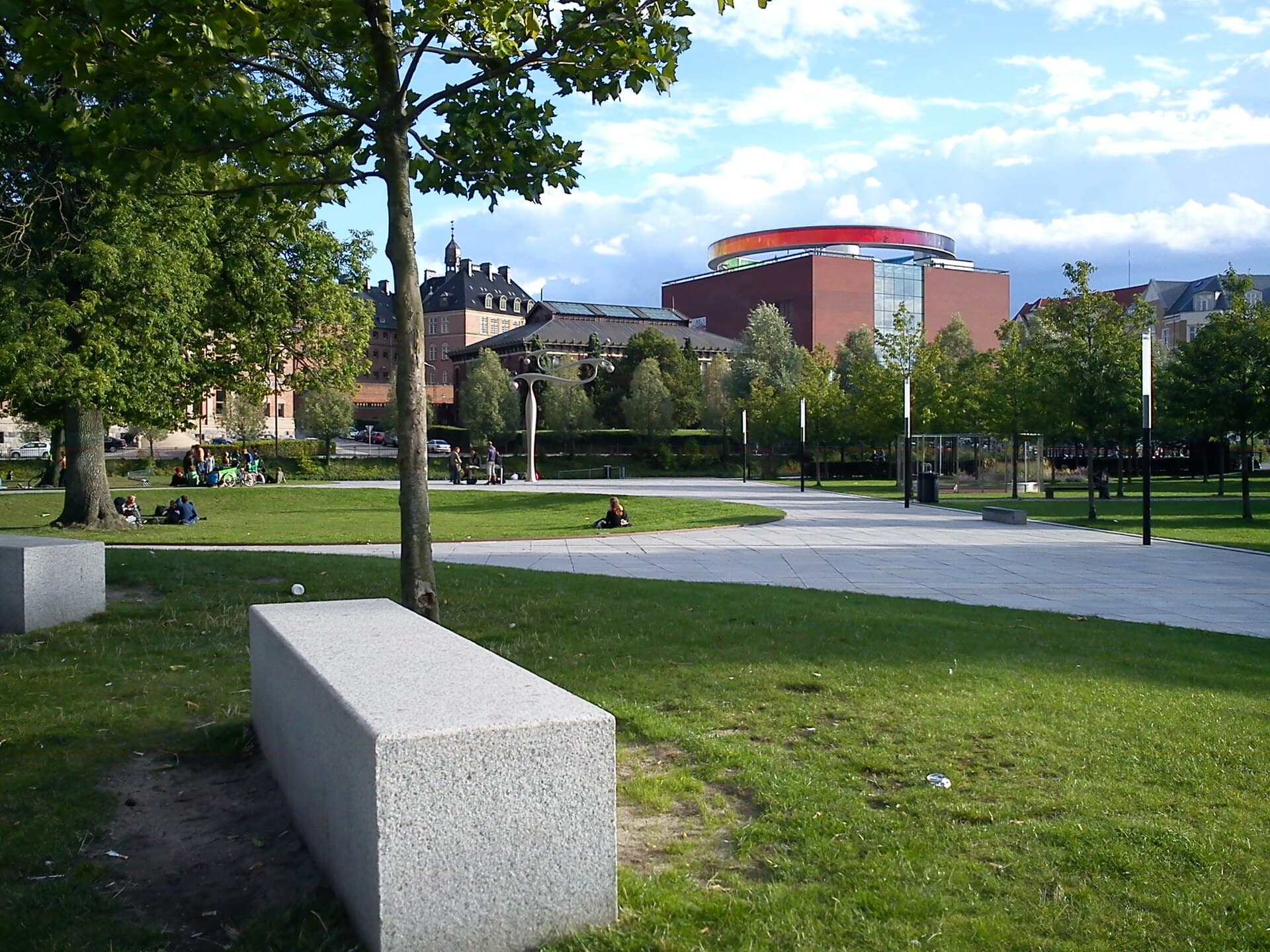 MølleparkenThe oldest public park in Aarhus, and its smallest and most used — on the river 6 minutes walk4.5
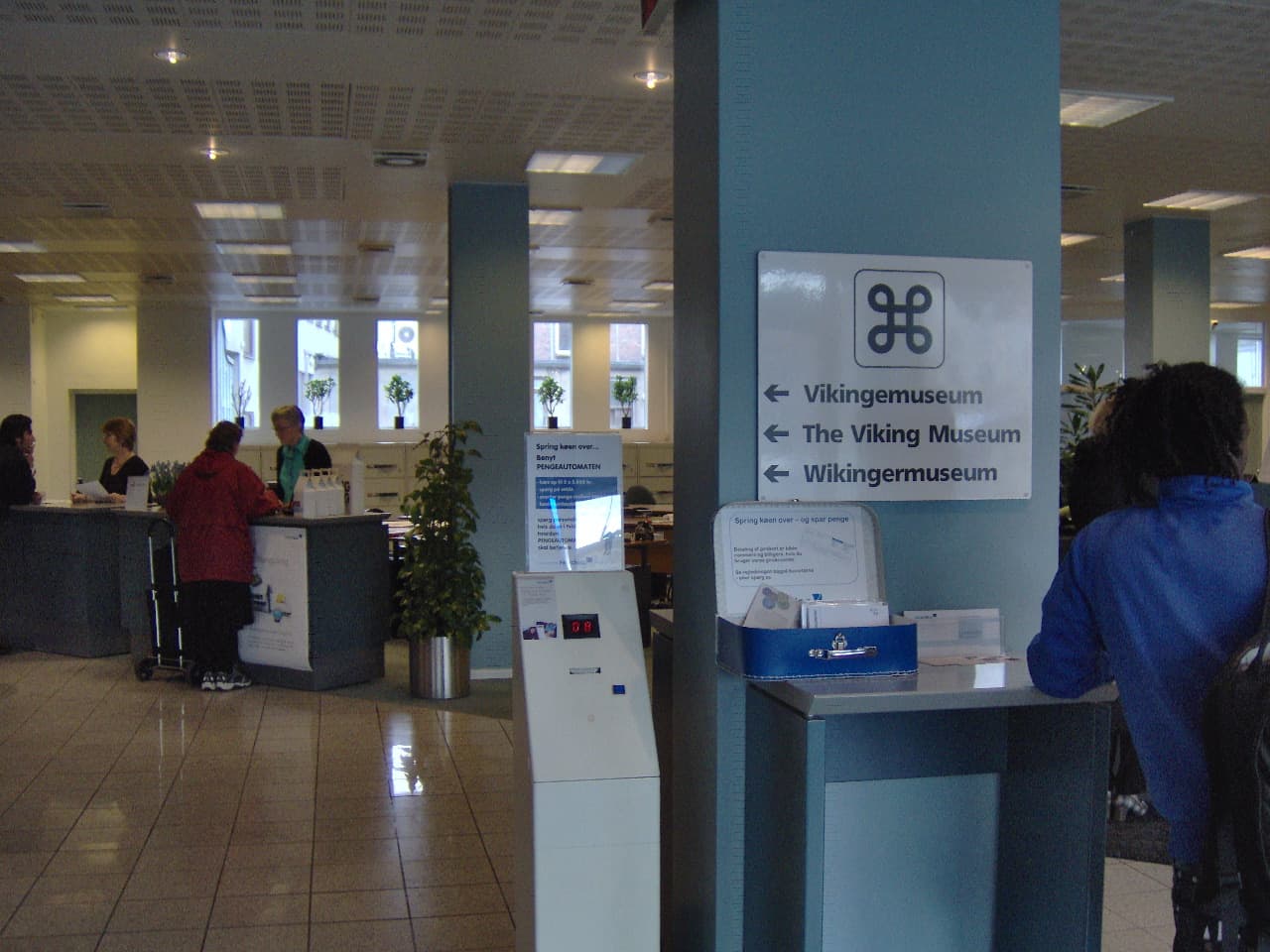 The Viking MuseumThe strangest-sited museum in Denmark: it is in the **basement of a working bank8 minutes walk3.7
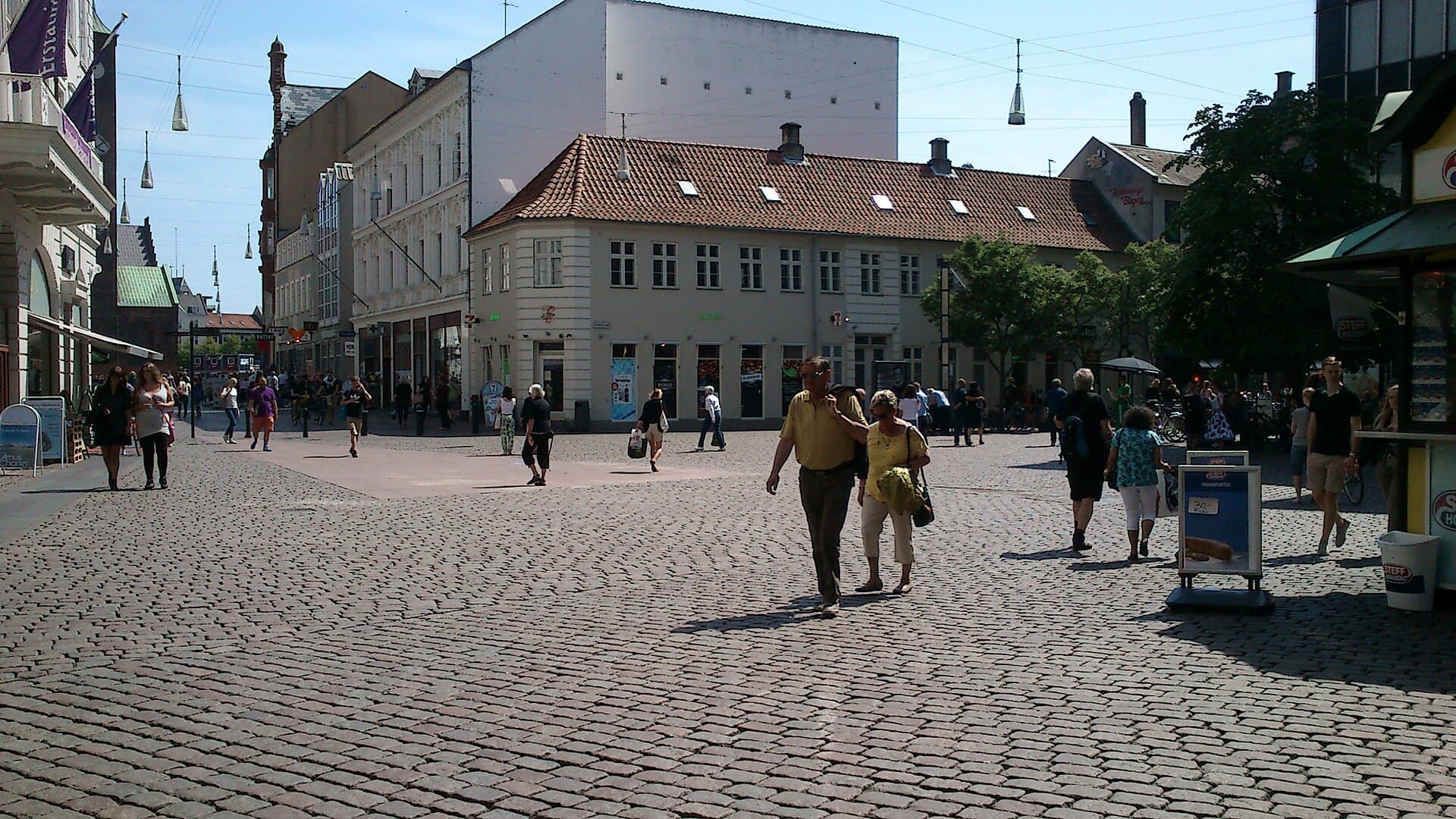 Lille TorvA small square in the heart of old Aarhus, its name meaning the little square, d9 minutes walk4.4
A Danish architect and designer (1902-1971), and the closest thing to a **single face for Danish design**. What set him apart is that he designed the building and everything inside it: the chair, the lamp, the spoon, the door handle, even the lettering on the sign. This city hall produced details that became global products, and Copenhagen's **SAS Royal Hotel** produced the **Swan** and the **Egg** chairs. His **Ant** and **Series 7** chairs have sold in the tens of millions and have never gone out of production. His manner: simple curved lines, no ornament, and everything designed to be used daily.