
The white stucco
An interior with no colour at all, only carving and light.
Wilfredor — CC0 · Achim Lammerts (Syntaxys) — CC BY-SA 4.0 · Strubbl — CC BY-SA 4.0 · Strubbl — CC BY-SA 4.0
The church of St Cajetan, universally called the Theatinerkirche, is the yellow mass that closes the western side of Odeonsplatz, and nobody misses it in a city built mostly in grey. It exists because of a vow: Princess Henriette Adelaide of Savoy and her husband, the Elector Ferdinand Maria, promised a church if they were granted an heir. Max Emanuel was born in 1662 and building began the following year. The princess brought an architect from home, Agostino Barelli of Bologna, and Enrico Zuccalli finished the work. The result is the first Italian high baroque church in Bavaria, taking its cue from Sant'Andrea della Valle in Rome, with a dome around seventy-one metres high and twin towers. The rococo facade came much later, added between 1765 and 1768 by Francois de Cuvillies the elder and his son. The ochre-yellow colour is also an Italian import, which is exactly why it looks so strange and so good in Munich. Inside is a surprise of a different kind: everything is white. No gilding, no coloured marble, just stucco carved with tremendous density — foliage, angels, garlands — leaving the light alone to draw the shadows. Below lies the Wittelsbach crypt, where forty-nine members of the ruling house and their spouses rest, Max Emanuel among them. The church is free and open daily, but the crypt is seasonal and keeps narrow hours.
An interior with no colour at all, only carving and light.
Added by Cuvillies a century after the church.
Theatinerstrasse 22, 80333 Munich
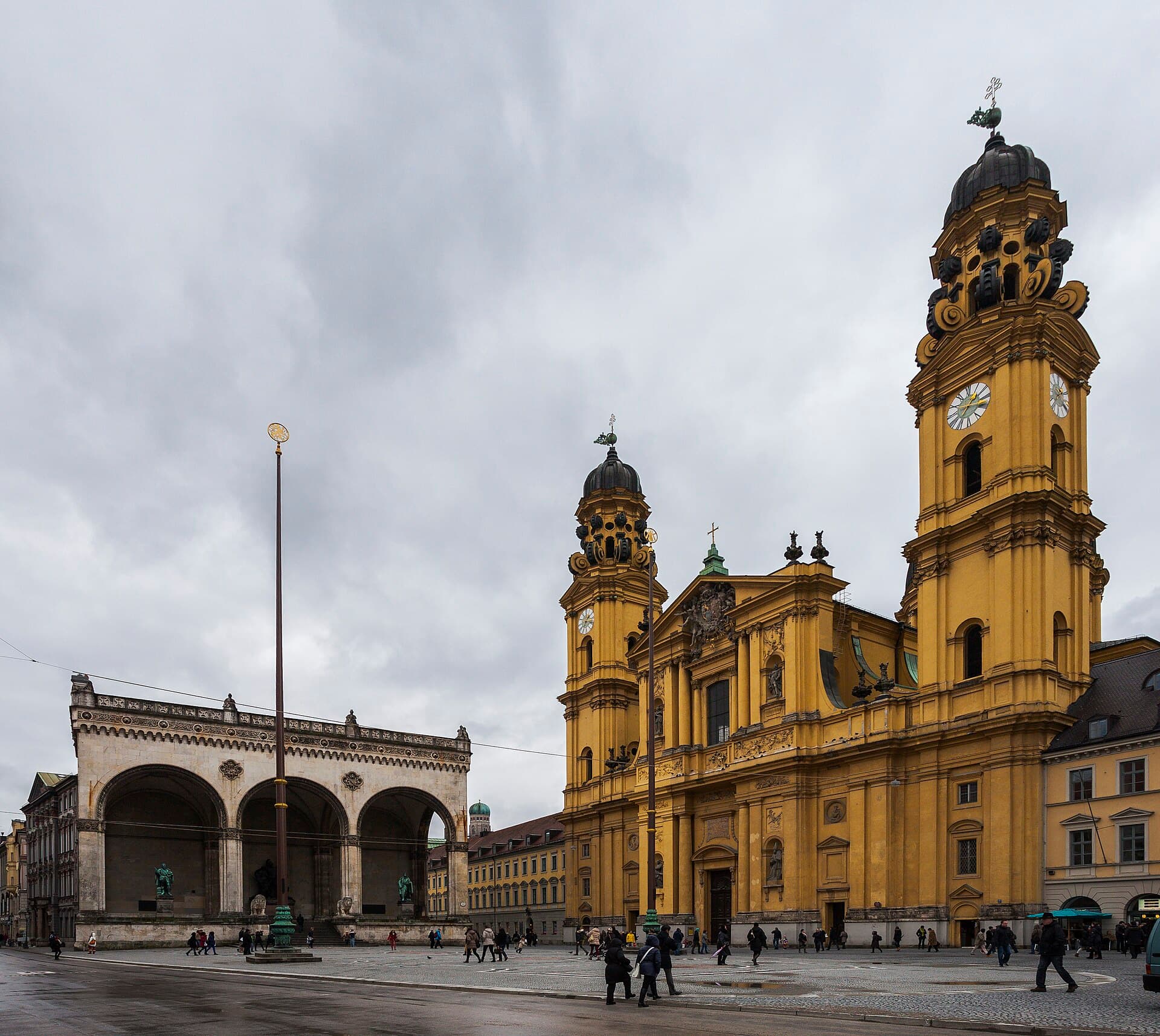 OdeonsplatzOdeonsplatz is a wide square north of central Munich, where the old town meets t1 minute walk4.5
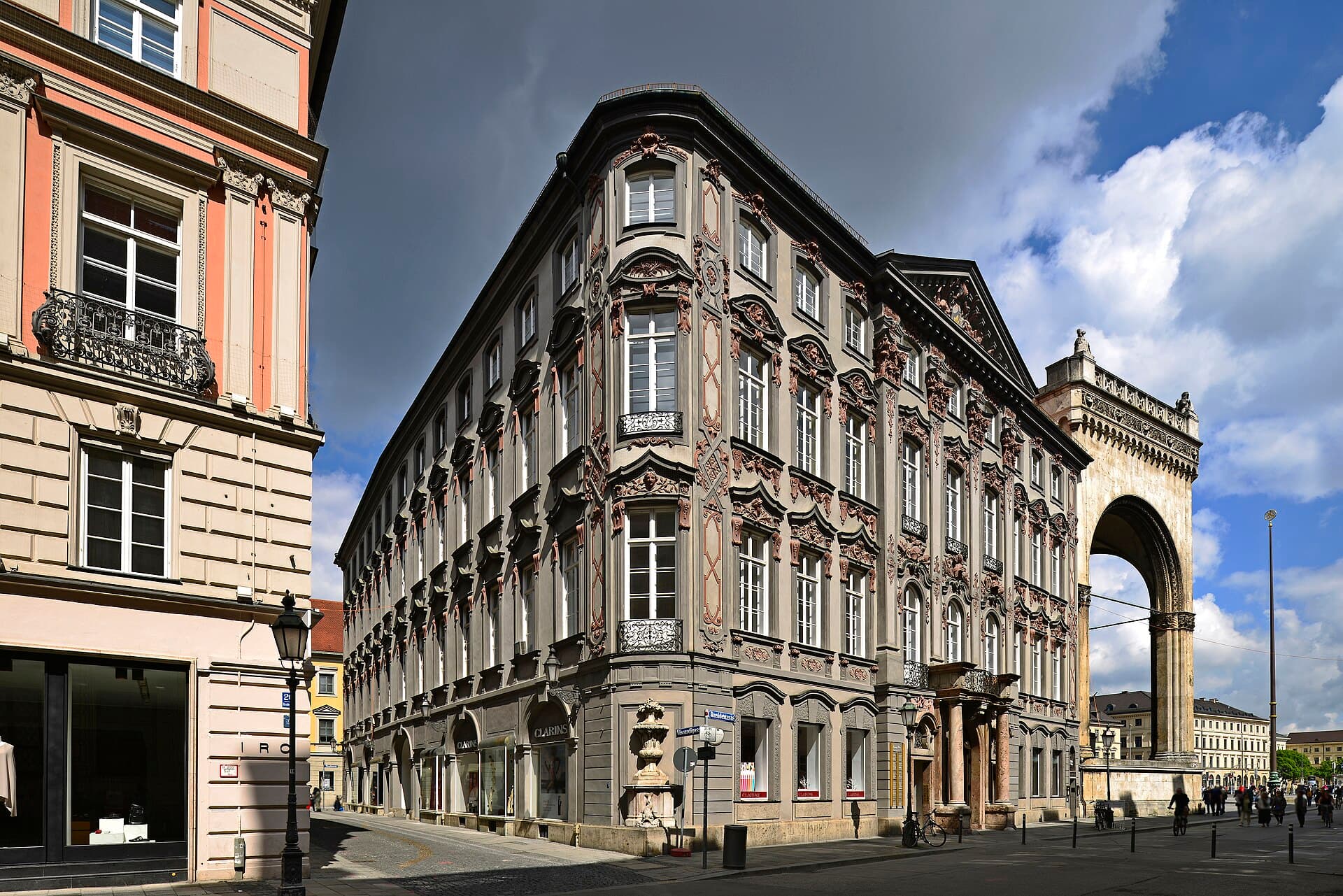 Palais PreysingAn early eighteenth-century town palace on Theatinerstraße in central Munich, an1 minute walk4.7
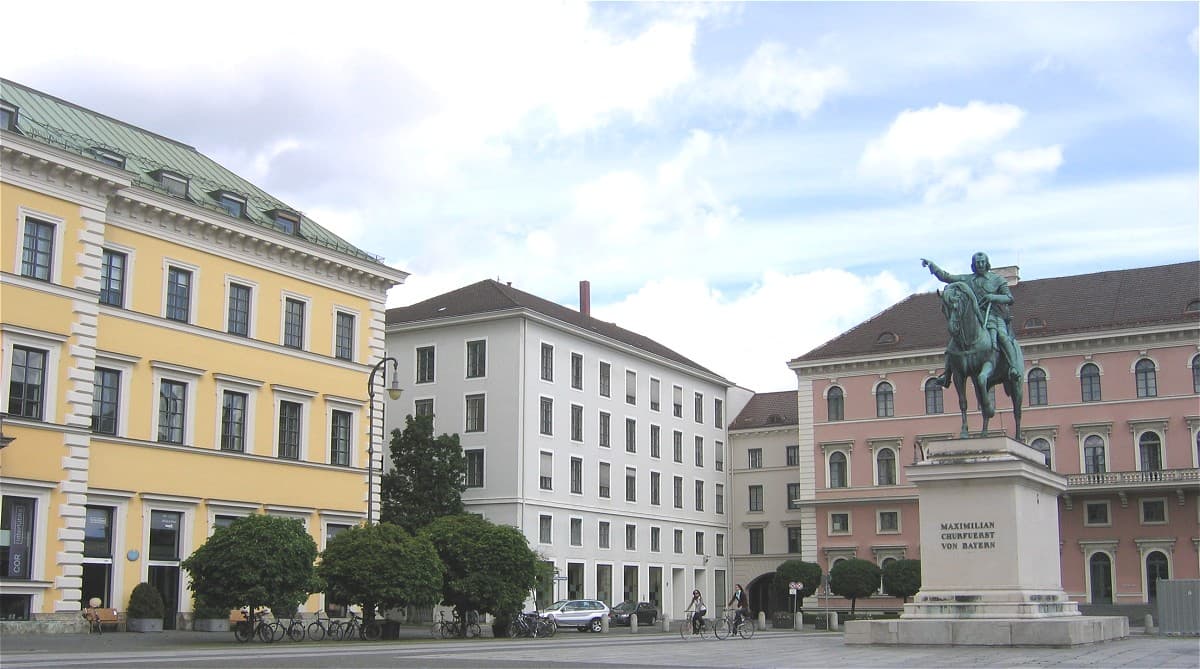 WittelsbacherplatzA classical square in central Munich on Brienner Straße, ringed by early ninetee2 minutes walk4.4
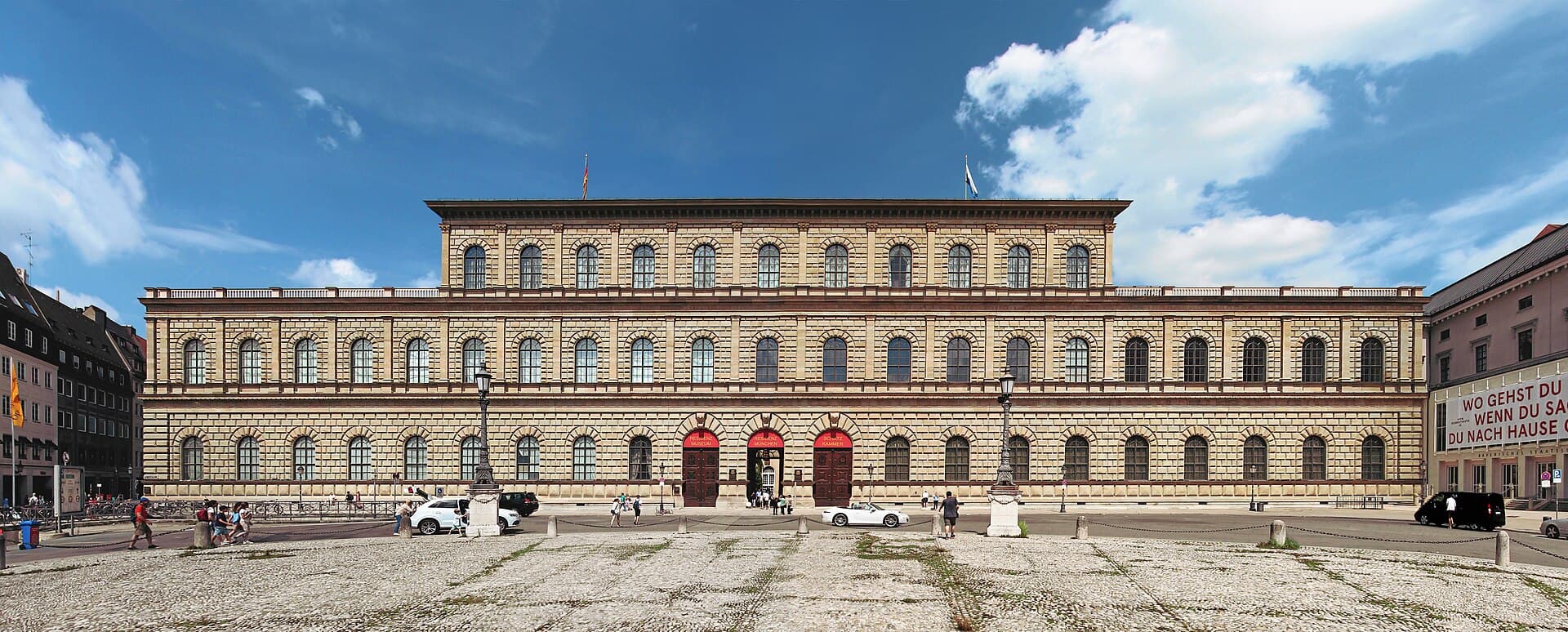 Munich ResidenceThe Residence was the seat of the rulers of Bavaria for more than four hundred y3 minutes walk4.5
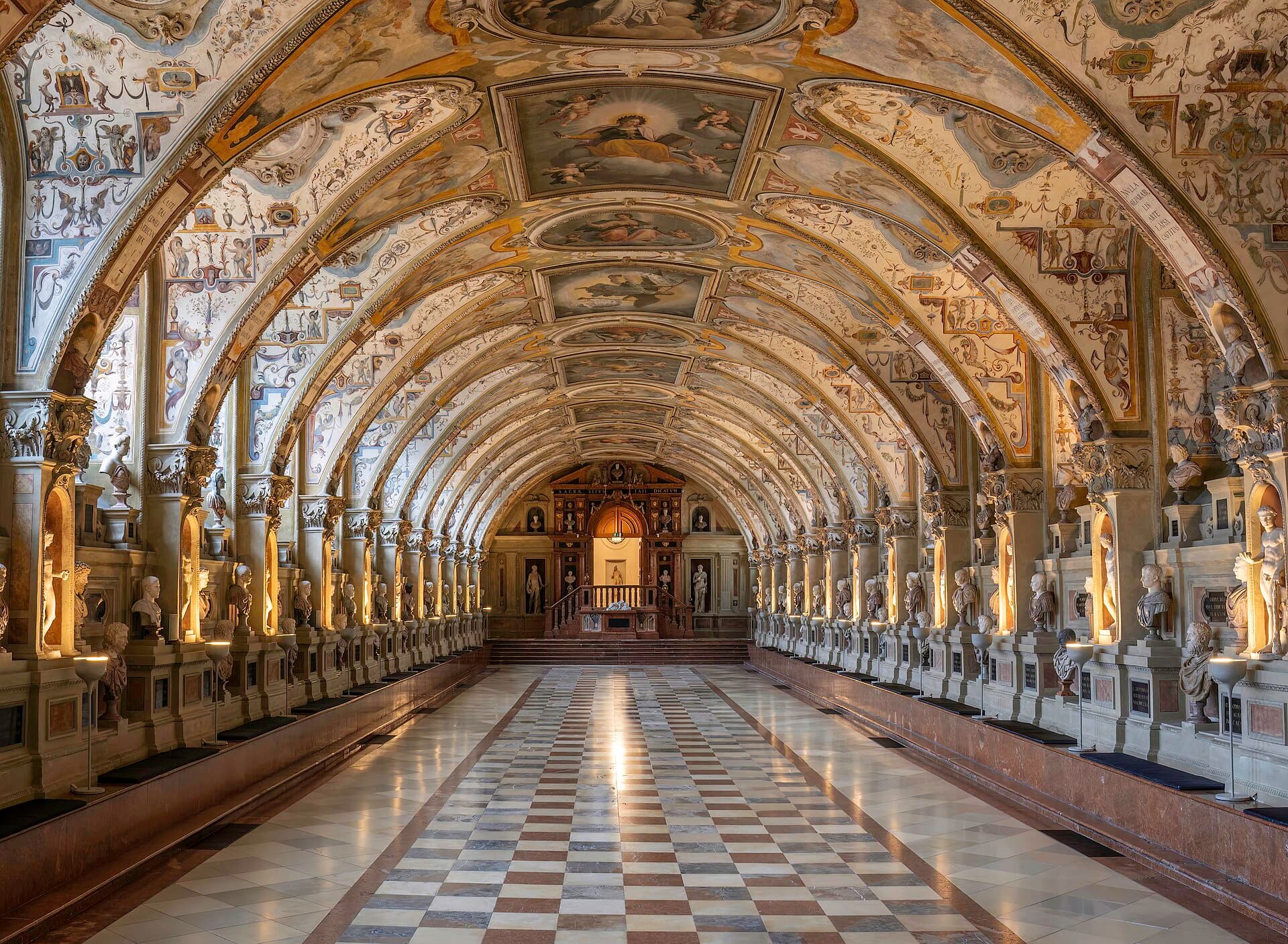 AntiquariumThe Antiquarium is the longest Renaissance hall north of the Alps, inside Munich3 minutes walk4.8
They are five minutes apart and completely different. The Frauenkirche is Munich's emblem, with its two onion-domed towers; it is vast, Gothic and comparatively bare inside. The Theatinerkirche is smaller and far richer within: dense white stucco under a high dome. If you want the famous picture, go to the Frauenkirche; if you want an interior worth sitting down in, come here.