
A Christmas market with fires
Smaller and quieter than the Marienplatz market, ringed by open fires.
Rufus46 — CC BY-SA 3.0 · Alexander-93 — CC BY-SA 4.0 · Rijksmuseum — CC0 · Matti Blume — CC BY-SA 4.0
A classical square in central Munich on Brienner Straße, ringed by early nineteenth-century palaces with an equestrian statue of Elector Maximilian I at its centre. The square was laid out as part of Ludwig I's project to turn Munich into a classical city — the street itself, Brienner Straße, was among the first planned streets in the city, linking Odeonsplatz to Königsplatz. What distinguishes the square visually is that it is among the few spaces in Munich to keep a complete architectural unity: matching classical facades on every side with no modern buildings breaking them. It is used for filming period pieces for that reason. In December a small Christmas market is held here, different from the large ones: it is ringed by open fires, and is quieter and less crowded than the Marienplatz market. The square is open public space, free, and lies on the natural walking route through the centre.
Smaller and quieter than the Marienplatz market, ringed by open fires.
Its architectural unity means it is used for period films.
Part of turning Munich into a classical city in the nineteenth century.
Brienner Straße, central Munich
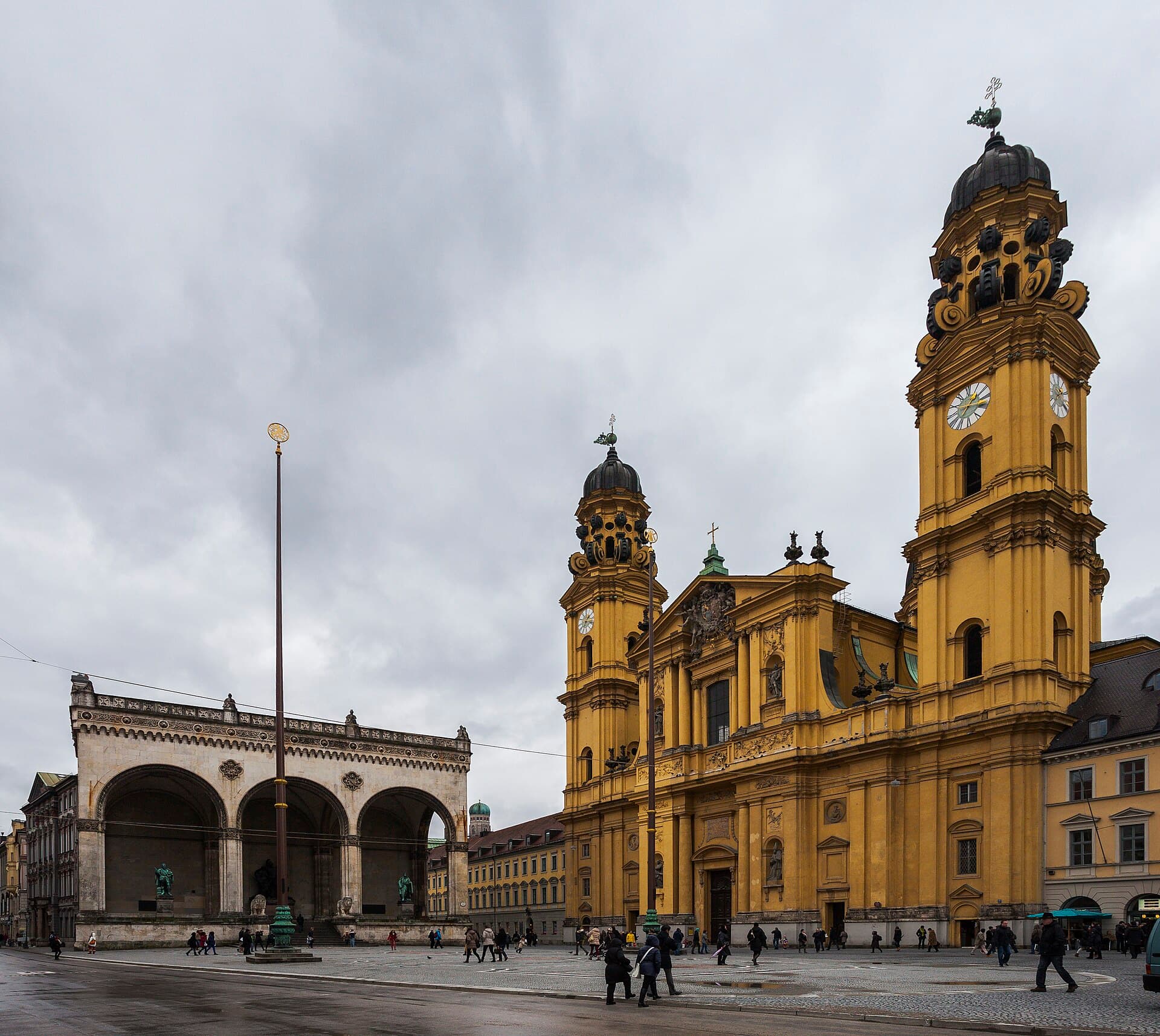 OdeonsplatzOdeonsplatz is a wide square north of central Munich, where the old town meets t2 minutes walk4.5
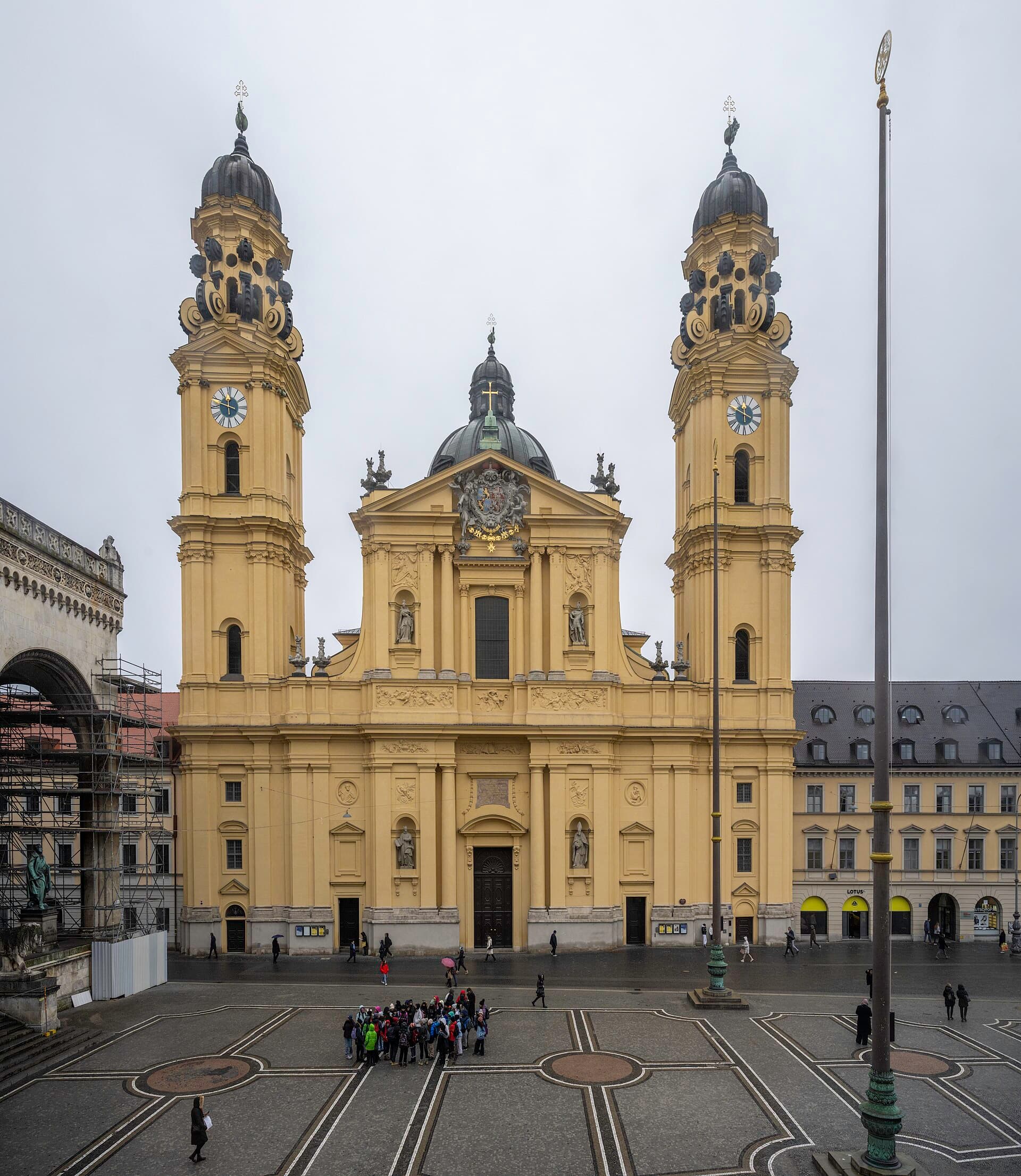 Theatine ChurchThe church of St Cajetan, universally called the Theatinerkirche, is the yellow 2 minutes walk4.9
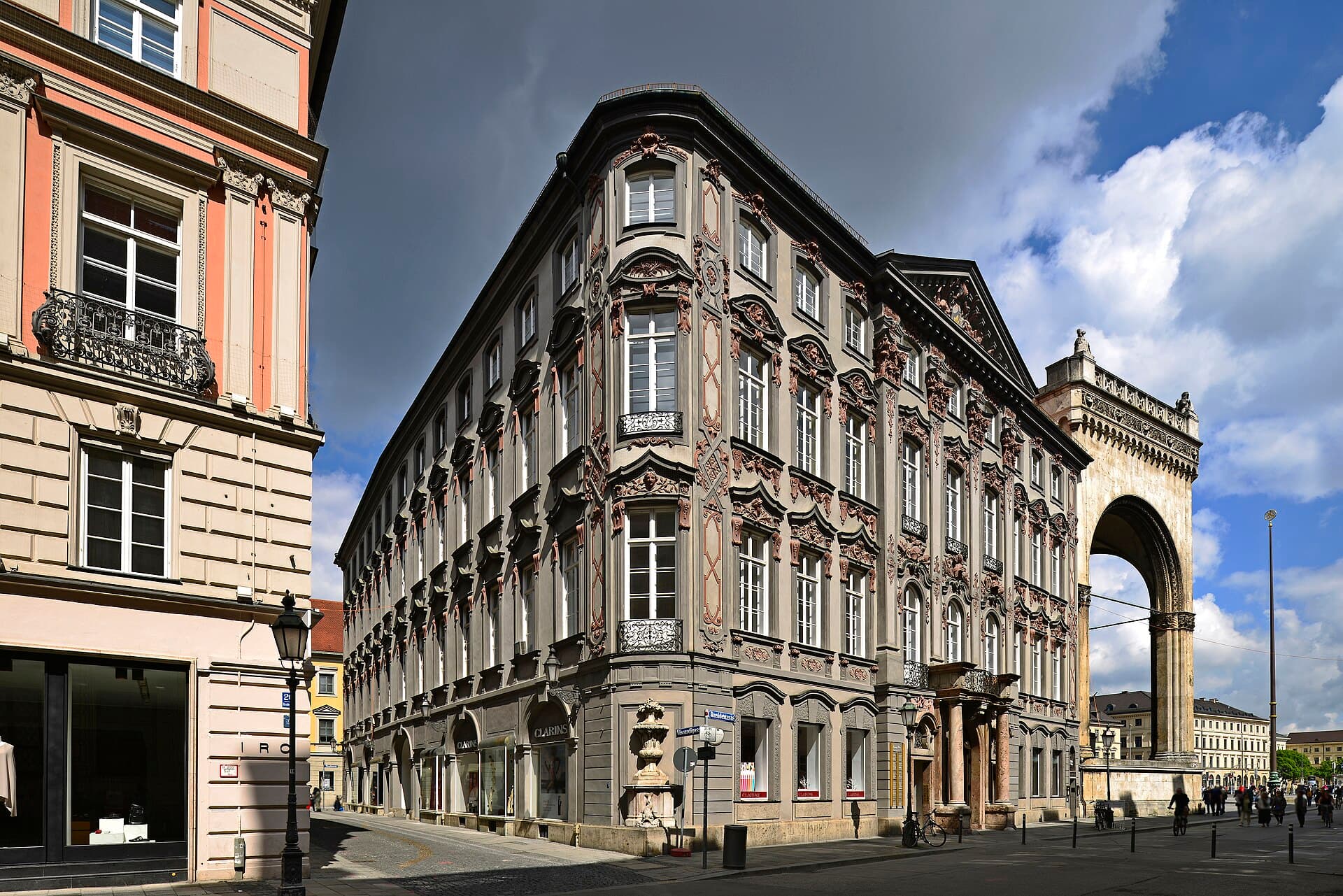 Palais PreysingAn early eighteenth-century town palace on Theatinerstraße in central Munich, an3 minutes walk4.7
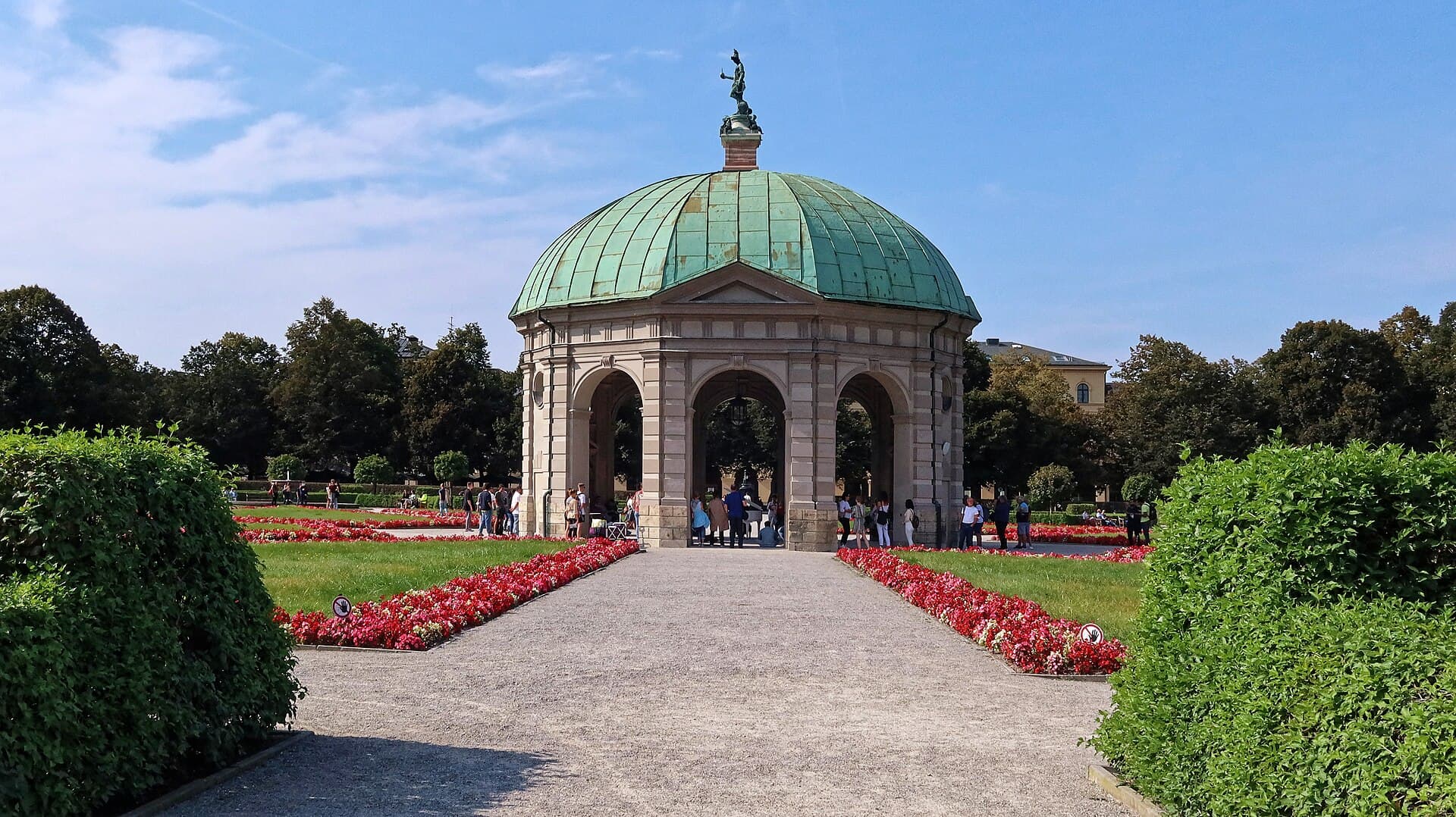 The Diana TempleAn octagonal stone pavilion at the centre of Munich's Hofgarten, built in 1615 a4 minutes walk4.8
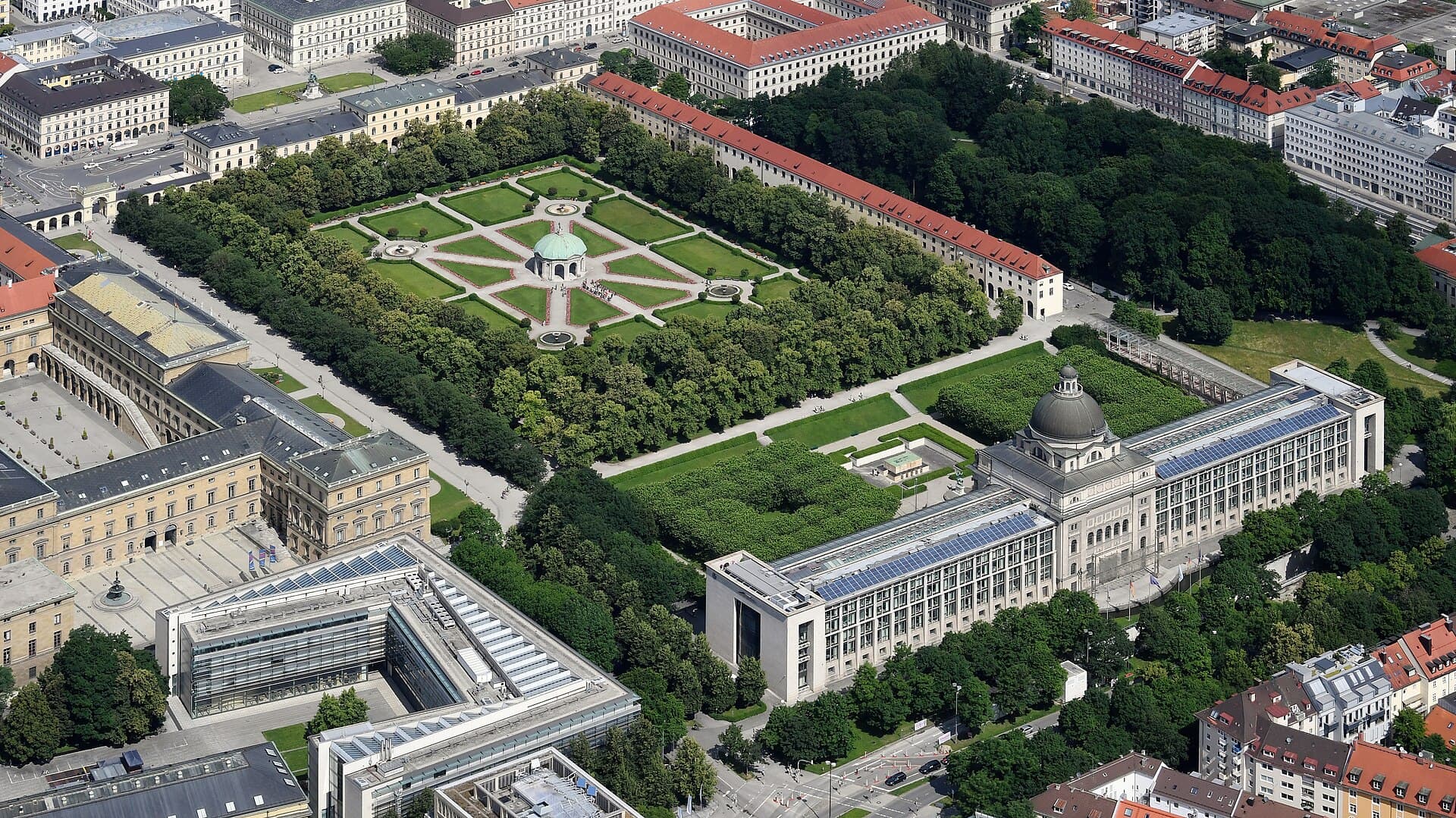 HofgartenThe Hofgarten is the palace garden: a seventeenth-century Italianate square betw4 minutes walk4.8
They run through December until Christmas Eve. The largest and best known is on Marienplatz and is very crowded. Around it are dozens of smaller markets each with its own character: the Wittelsbacherplatz market with open fires, one in the medical quarter, and a medieval market near the Viktualienmarkt. The smaller ones are usually more enjoyable and less crowded.
The family that ruled Bavaria from 1180 to 1918 — more than seven and a half centuries, among the longest-reigning dynasties in European history. They ruled as dukes, then electors, then kings. Among them were Ludwig I, who built Munich's museums, and Ludwig II, who built Neuschwanstein. Their rule ended in the November revolution of 1918.