
The two faces
Joy to the south, mourning to the north.
Simon Legner (User:simon04) — CC BY-SA 4.0 · Dinastiainc — CC BY-SA 4.0 · Rijksmuseum — CC0 · Rijksmuseum — CC0
The Triumphal Arch closes the southern end of Maria-Theresien-Strasse, Innsbruck's principal street, and it is among the strangest commemorative arches in Europe because it carries two contradictory messages on its two faces. It was built in 1765 to celebrate the marriage of Archduke Leopold, son of the Empress Maria Theresa, to the Spanish princess Maria Luisa, and Innsbruck was preparing for weeks of festivities. But during those festivities Emperor Francis I, Maria Theresa's husband and the bridegroom's father, died suddenly in the city. Rather than demolish the arch or ignore the event, it was completed with two different programmes: the southern face, towards the road from Italy, carries symbols of joy and marriage, while the northern face, towards the city, carries symbols of mourning and death. Walking under it takes you from a celebration to a funeral in a few steps. It is free and always open, and behind it the whole street frames the Nordkette mountains.
Joy to the south, mourning to the north.
Maria-Theresien-Strasse framing the Nordkette.
Southern end of Maria-Theresien-Strasse, 6020 Innsbruck
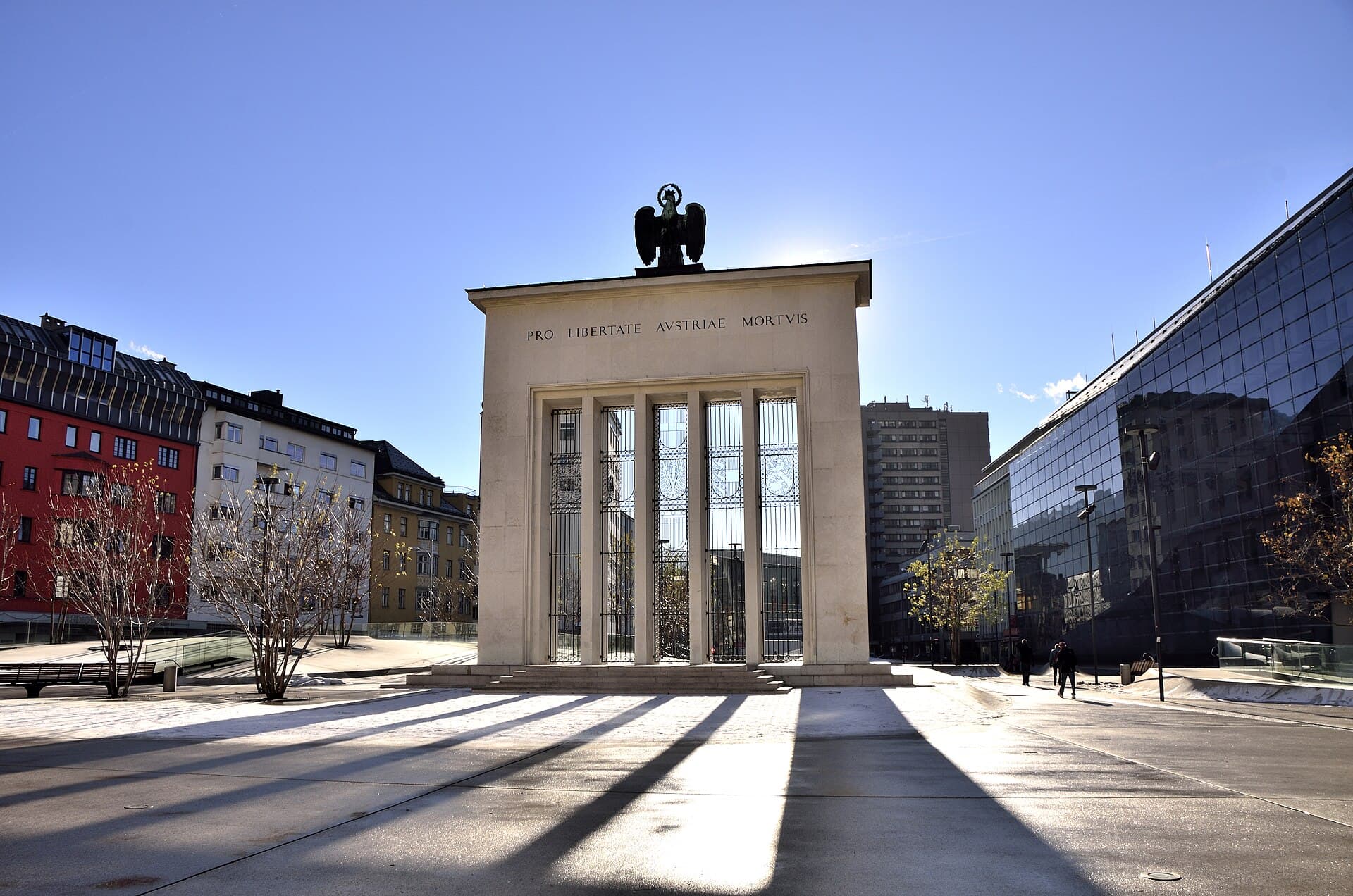 Eduard-Wallnöfer-PlatzA large square south of the old town, known locally as Landhausplatz, redesigned2 minutes walk4.2
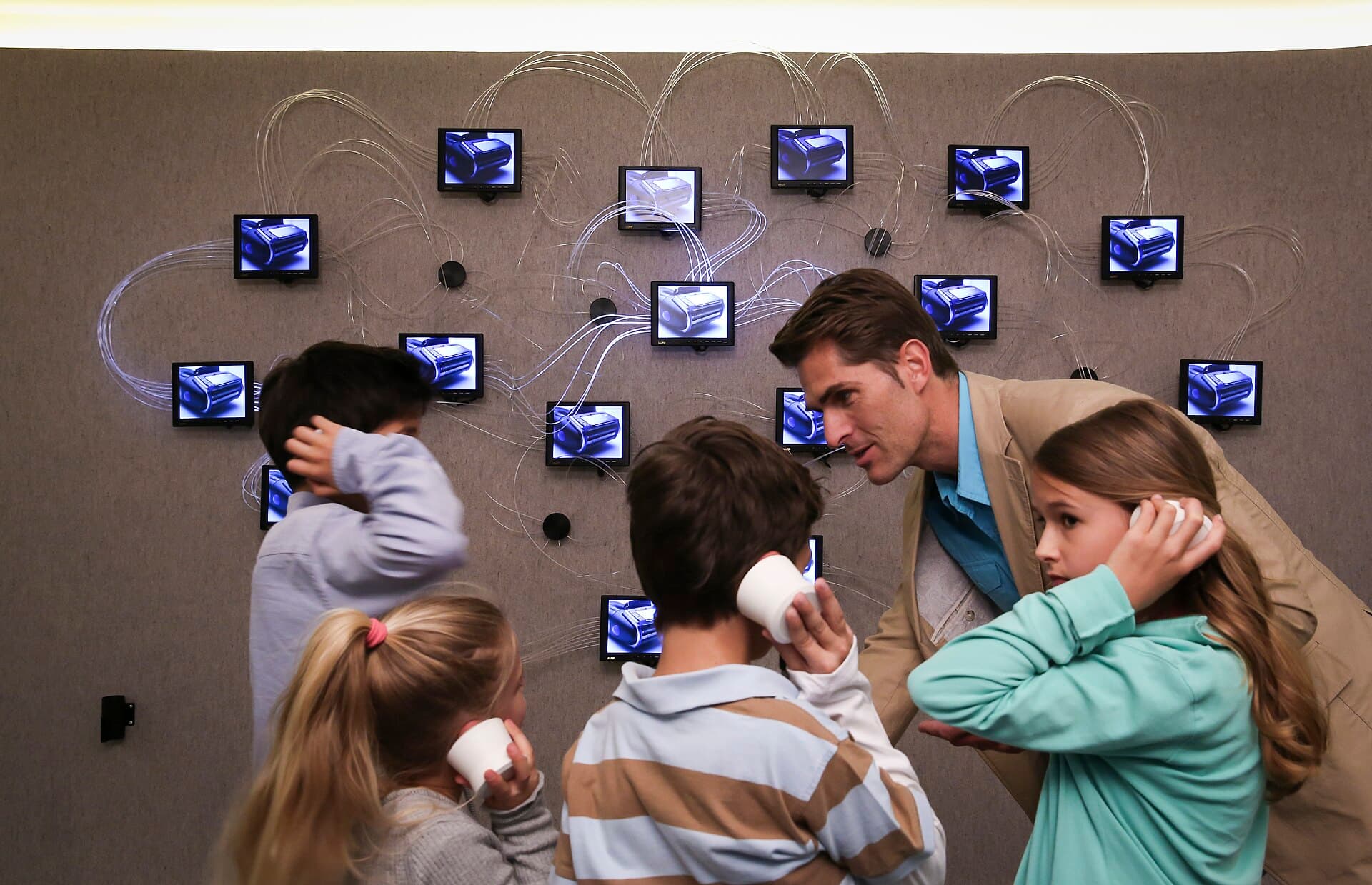 AUDIOVERSUMAUDIOVERSUM is a science centre devoted to a single subject: hearing. Not a gene2 minutes walk4.5
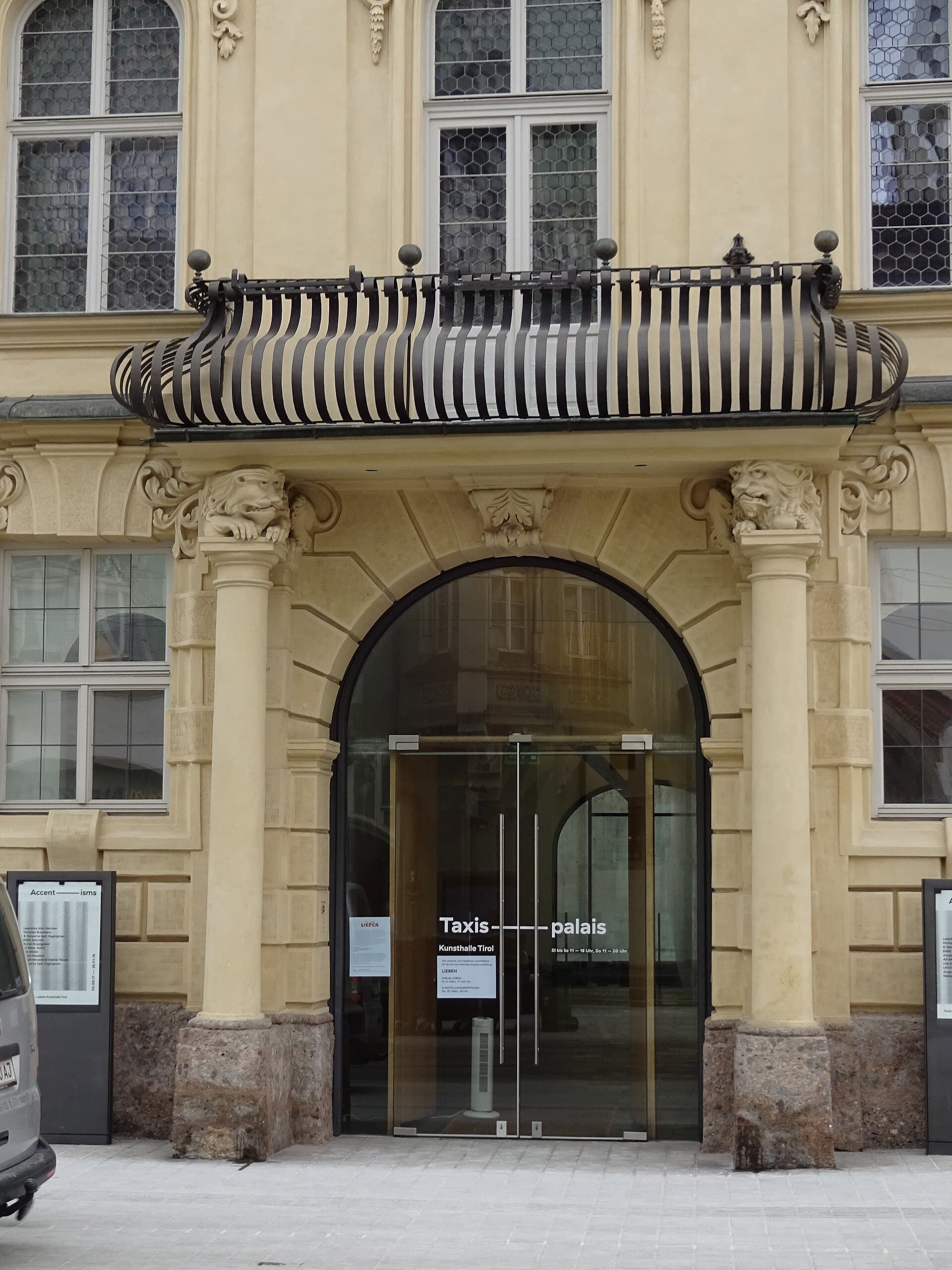 Taxispalais — Kunsthalle TirolA Baroque palace on Maria-Theresien-Straße, Innsbruck's main street, working tod2 minutes walk4.2
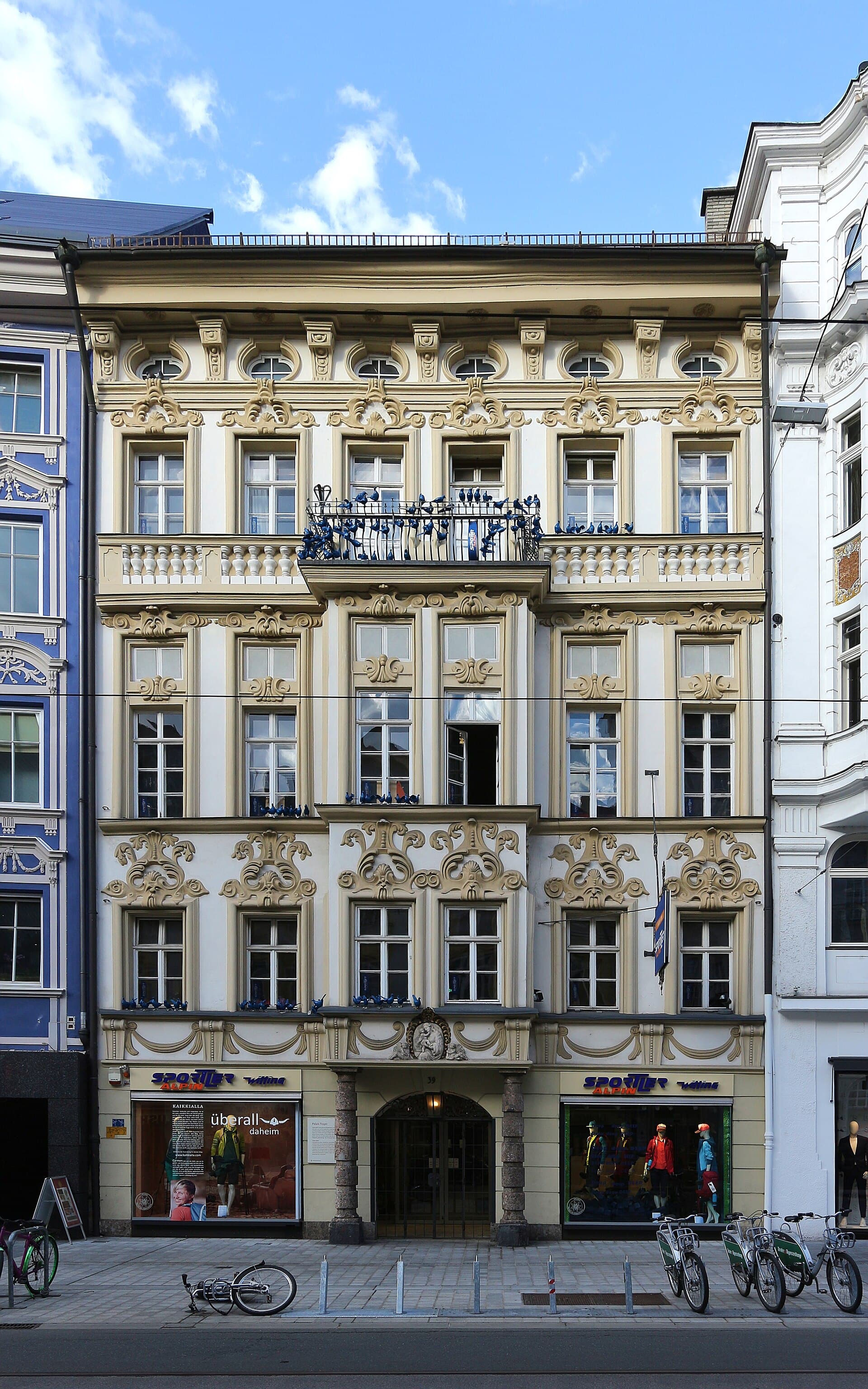 Palais Troyer-SpaurA Baroque town palace near Maria-Theresien-Straße, carrying the names of two Tyr3 minutes walk4.4
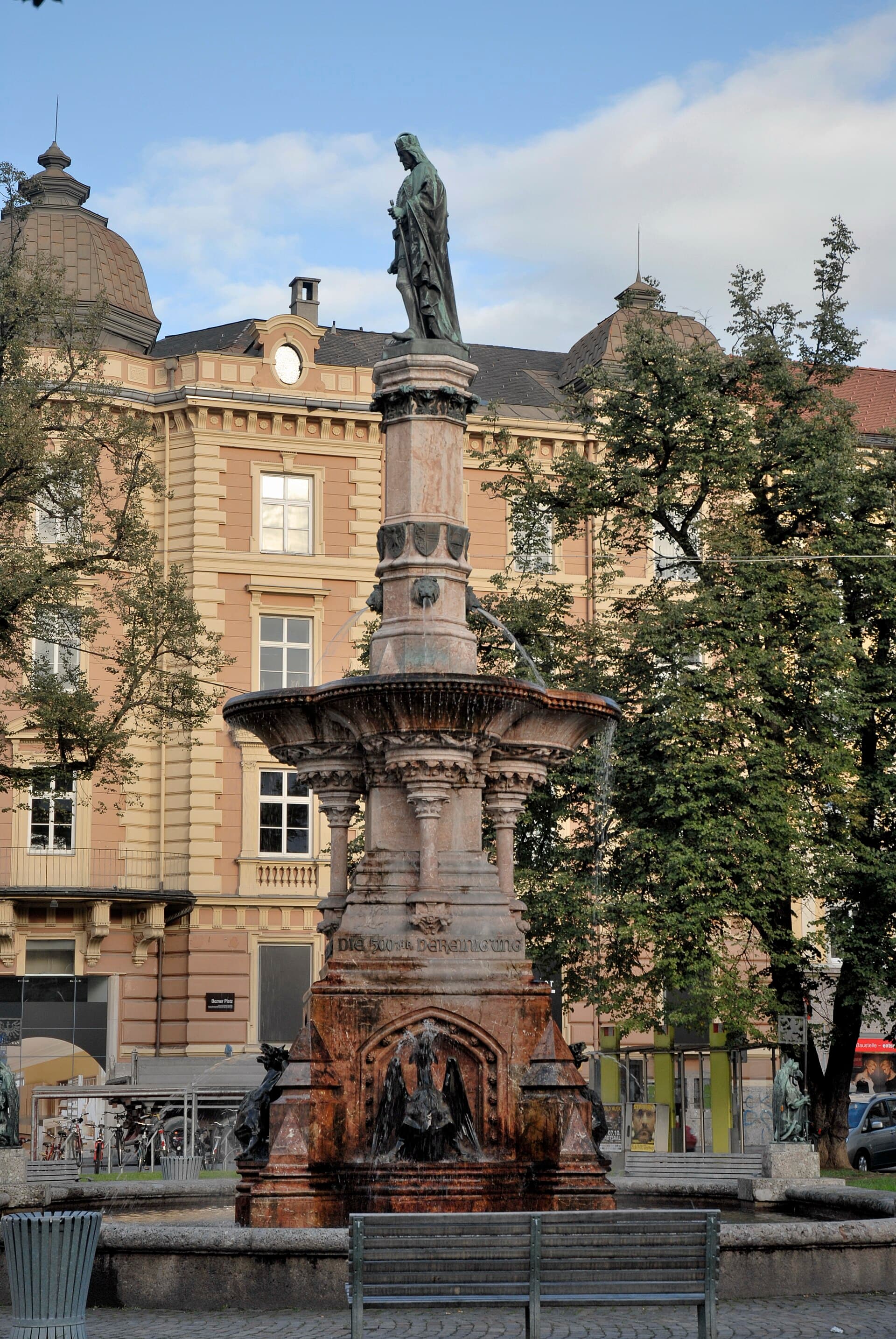 The Rudolf FountainA commemorative fountain on Bozner Platz near the railway station, raised in the4 minutes walk4.5
In the middle of Maria-Theresien-Strasse looking north: the street runs straight between its coloured facades and ends against the rock wall of the Nordkette rising directly behind the city. That compression — an elegant city street with a 2,200-metre mountain immediately behind it and nothing in between — is what sets Innsbruck apart from any other European city. The light is best in the morning.