
The Greek mausoleum
A Doric temple inside the walls of a medieval castle.
Berthold Werner — CC BY-SA 3.0 · Berthold Werner — CC BY-SA 3.0 · Berthold Werner — CC BY-SA 3.0 · Berthold Werner — CC BY-SA 3.0
A castle on the lip of a rock about **138 metres** above the mouth of the Rječina, commanding the landward approach to Rijeka — which is why it is there. The site has been fortified since **Roman times**, as part of a defensive system guarding the road to Pannonia. The present castle was built by the **Frankopans**, the most powerful Croatian noble family, in the thirteenth century. Then comes the strange chapter: in **1826** it was bought by an Austrian general of Irish descent named **Laval Nugent**, who rebuilt it in the **Romantic style** as his residence — and added a **mausoleum shaped like a Greek temple**, with Doric columns, to bury his family in. The temple still stands inside the walls of a medieval castle, an entirely unexpected combination. From the walls you see the whole city, the Kvarner gulf and the island of Krk. Beside the castle is **Trsat Sanctuary**, a Marian shrine and one of the oldest pilgrimage sites in Croatia. Note: the climb from the city is by the **Petar Kružić stairway** — about 561 steps.
A Doric temple inside the walls of a medieval castle.
The city, the gulf and the island of Krk from the rock''s edge.
A Marian shrine beside it, one of Croatia''s oldest pilgrimage sites.
Petra Zrinskog, Trsat, Rijeka
 Natural History Museum, RijekaA natural history museum in a nineteenth-century villa in the city of Rijeka, sp12 minutes walk4.6
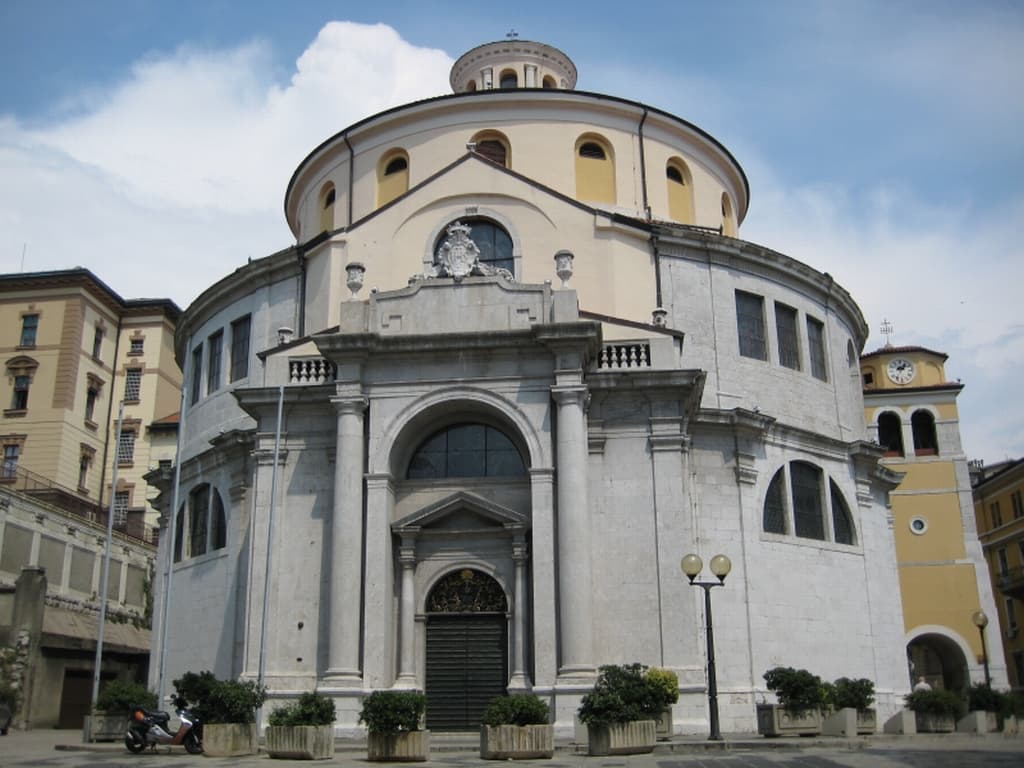 St Vitus'' CathedralRijeka''s cathedral, and the **only round church** of its kind in Croatia — a ci13 minutes walk4.6
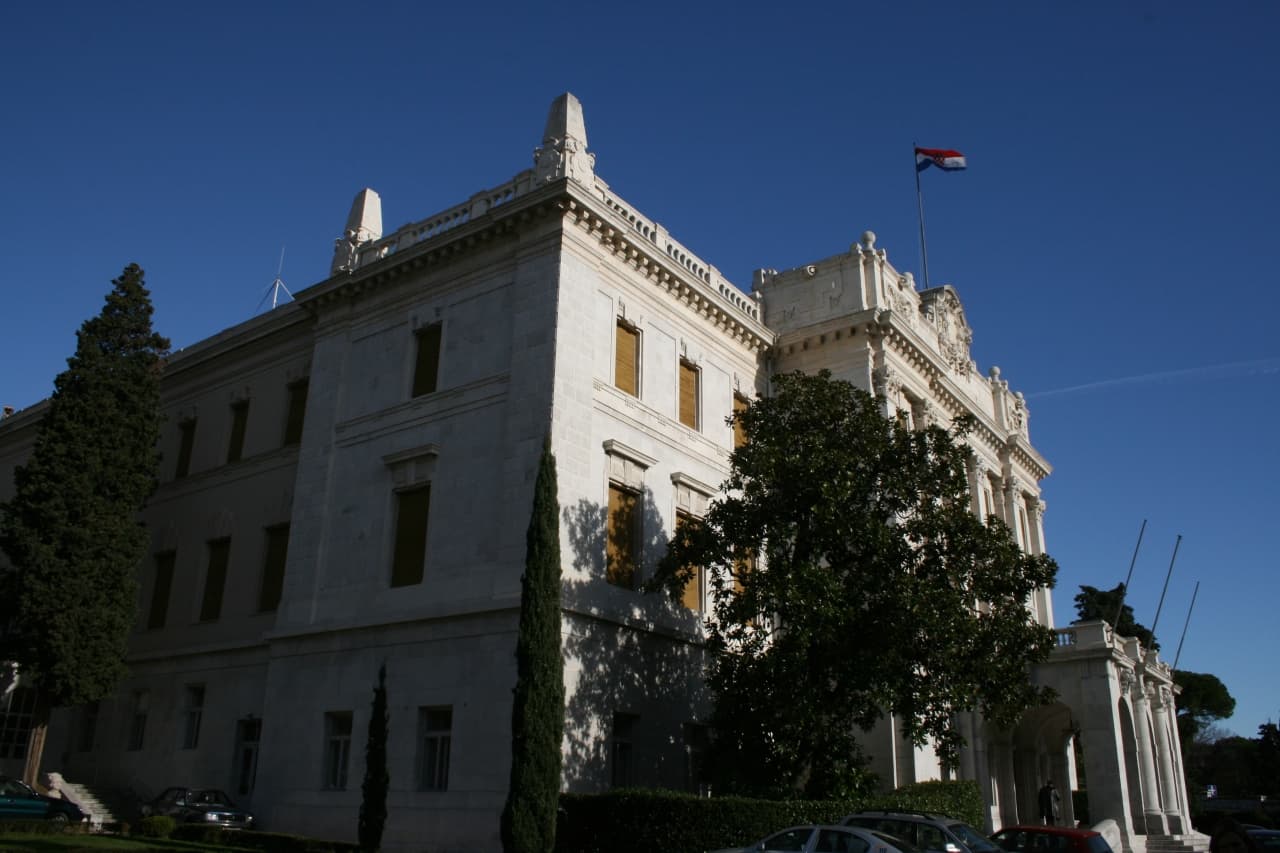 Maritime and History Museum of the Croatian LittoralRijeka''s maritime museum, occupying the **Governor''s Palace** — which is half 13 minutes walk4.7
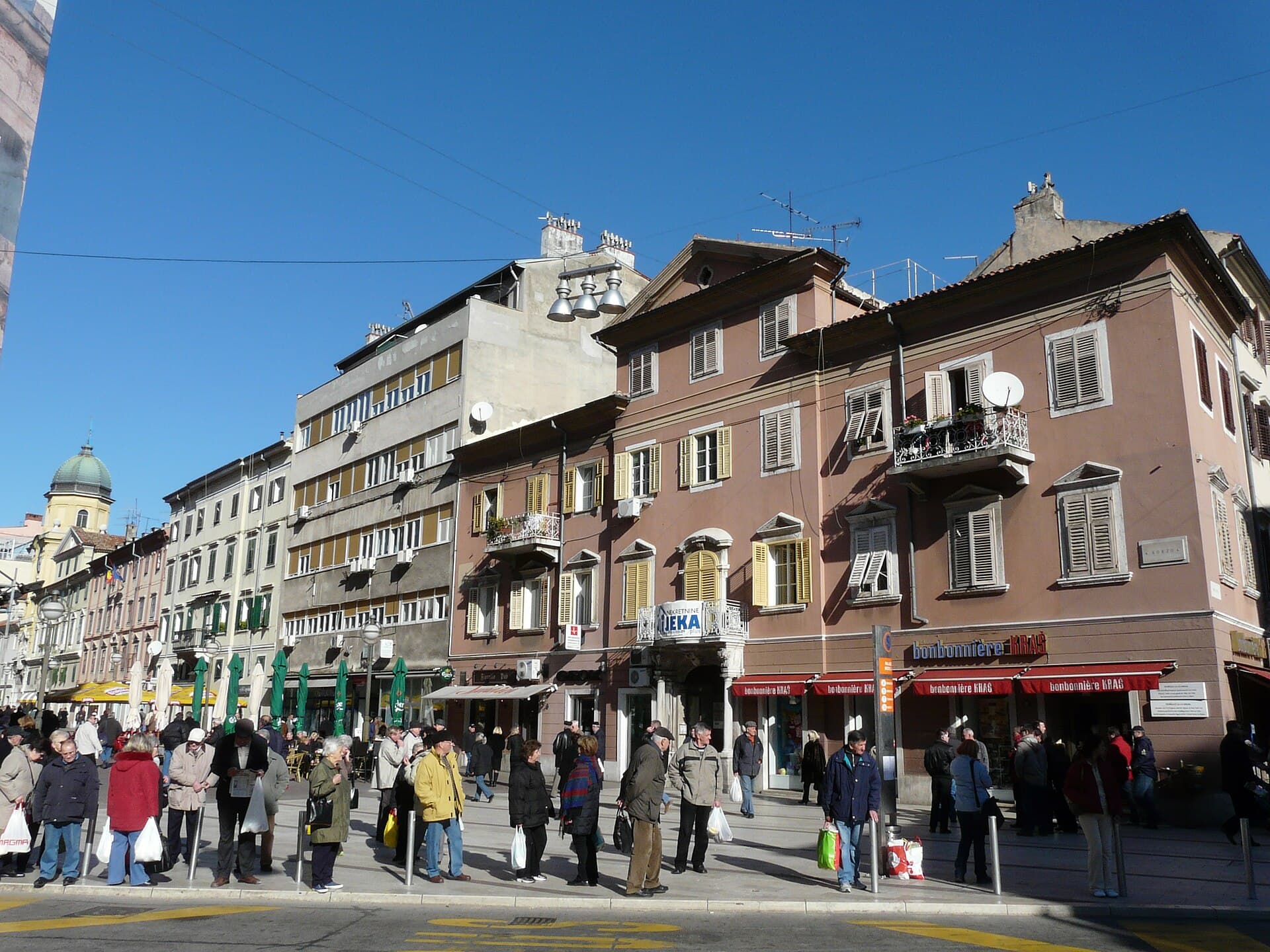 The KorzoRijeka''s main street and central promenade, and the city''s social axis more th15 minutes walk4.7
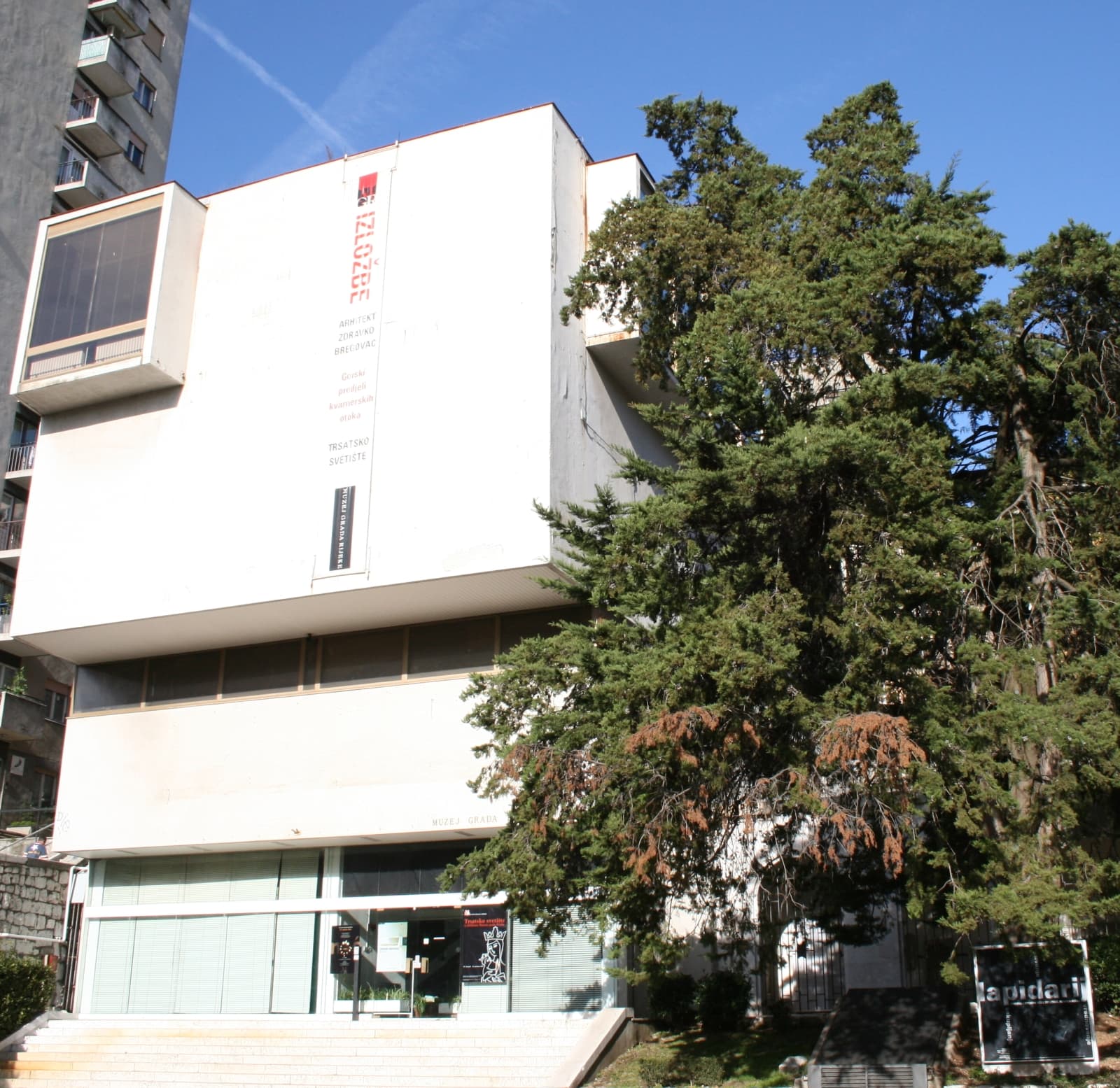 City Museum of RijekaThe city museum, which moved in **2020** into a building that explains Rijeka be24 minutes walk4.6
A stone stair climbing from city level up to Trsat, built by the captain **Petar Kružić** in **1531** — not as a monument but as a road for **pilgrims** going up to the Marian sanctuary at Trsat. In his day there was no other way. Parts of it are covered by arches, with small chapels along the sides where pilgrims stopped on the way up. The step count is usually given as **561**, though tallies differ slightly depending on who counts. ⚠ Practically: the climb is hard and takes about twenty minutes without stopping, and the steps are uneven and slippery in rain. Anyone who would rather not can take a **city bus** straight to Trsat, and walking down afterwards is far easier than walking up.