
A tower that changed function
It stood on the outer wall and became an inner gate as the city grew.
Andrei Stroe — CC BY-SA 4.0 · Chainwit. — CC BY 4.0 · Asurnipal — CC BY-SA 4.0 · Asurnipal — CC BY-SA 4.0
A stone tower standing between Sibiu's large and small squares, working as a gateway linking them and as a viewing platform over the city. Its origin is thirteenth-century, as one of the towers of the town's first wall, and when Sibiu expanded it became an internal gate between two quarters rather than a tower on the outer boundary. This is a common pattern in cities that grew through successive walls: the tower is not demolished, its function changes. It is called the Council Tower because the town council house stood beside it. It partly collapsed and was repaired repeatedly across the centuries, and its present form with the pointed roof is nineteenth-century. The climb to the top gives the best view over Sibiu: the two squares, the roofs of the Upper Town with their eyes, and the Făgăraș mountains on the horizon on clear days. Practical points: entry is inexpensive. The internal stair is narrow, spiral and very steep — unsuitable for anyone with limited mobility or a fear of confined spaces. Passing under the gateway is free.
It stood on the outer wall and became an inner gate as the city grew.
From above you see the ventilation windows that are Sibiu's mark.
On clear days they appear on the horizon from the top.
Between Piața Mare and Piața Mică, Sibiu
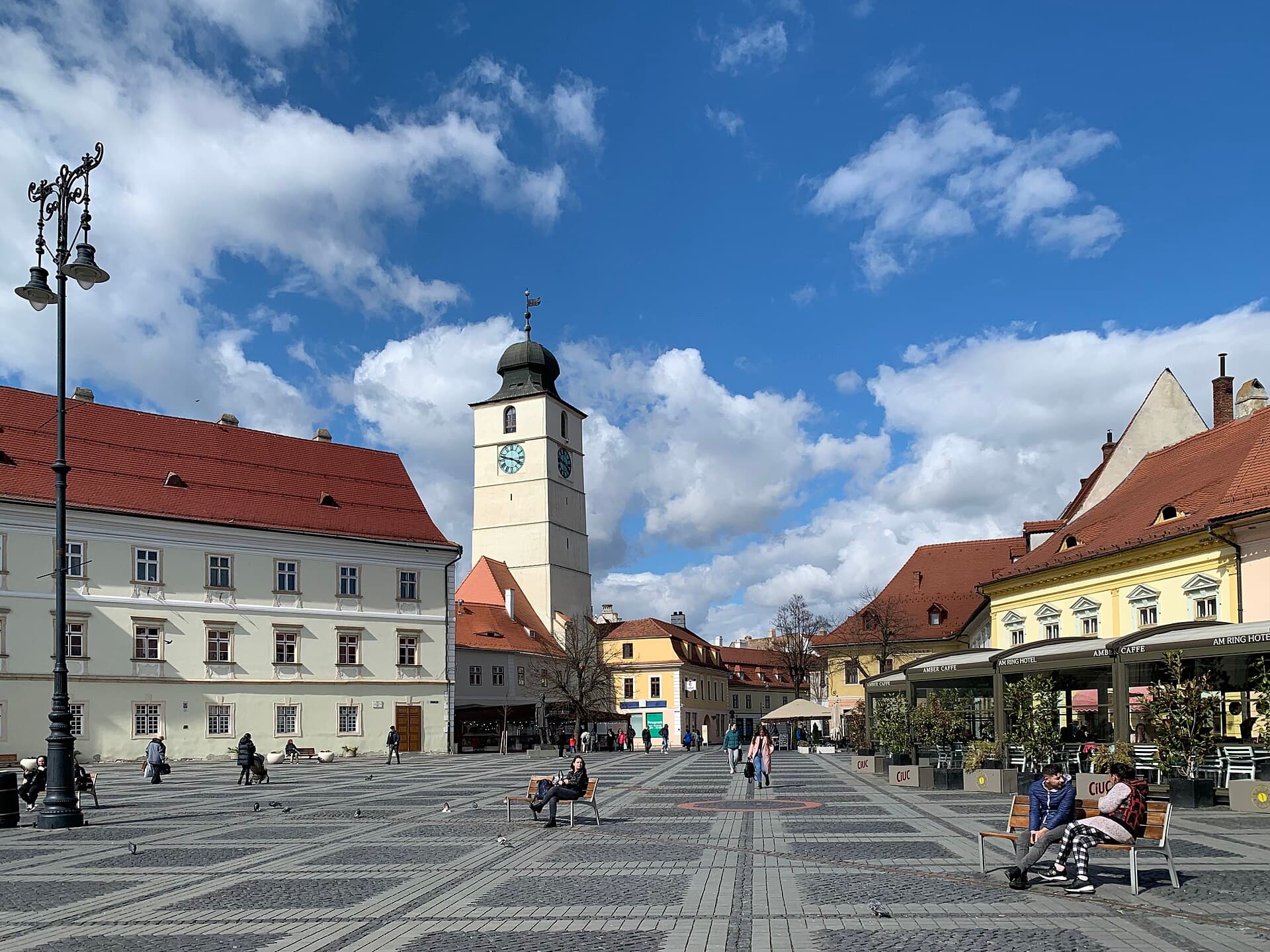 The Large SquareThe city with eyes: Sibiu's Large Square is ringed by pastel Saxon houses that w1 minute walk4.9
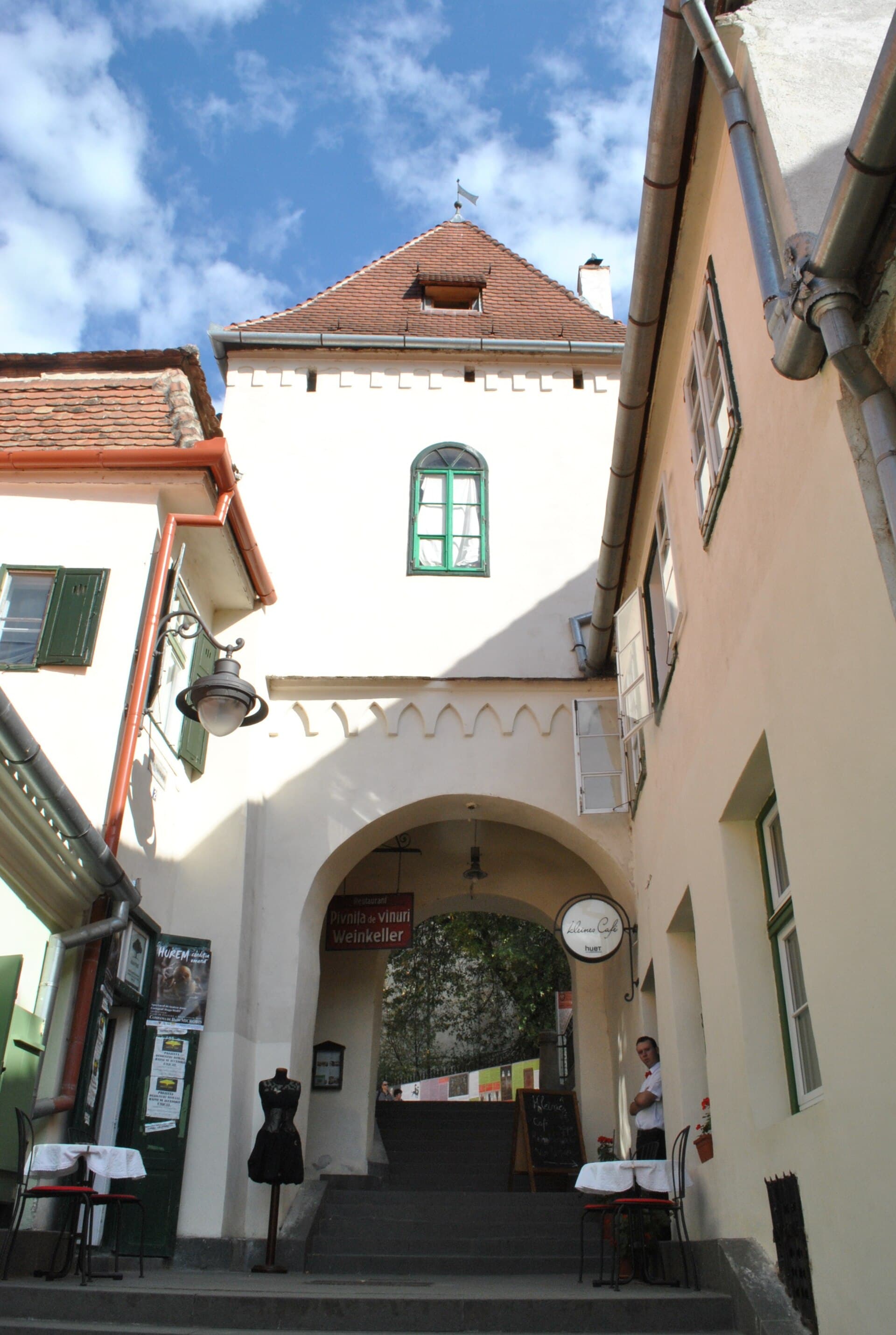 The Stairway TowerA thirteenth-century tower and vaulted passage linking Sibiu's upper town to its1 minute walk4.8
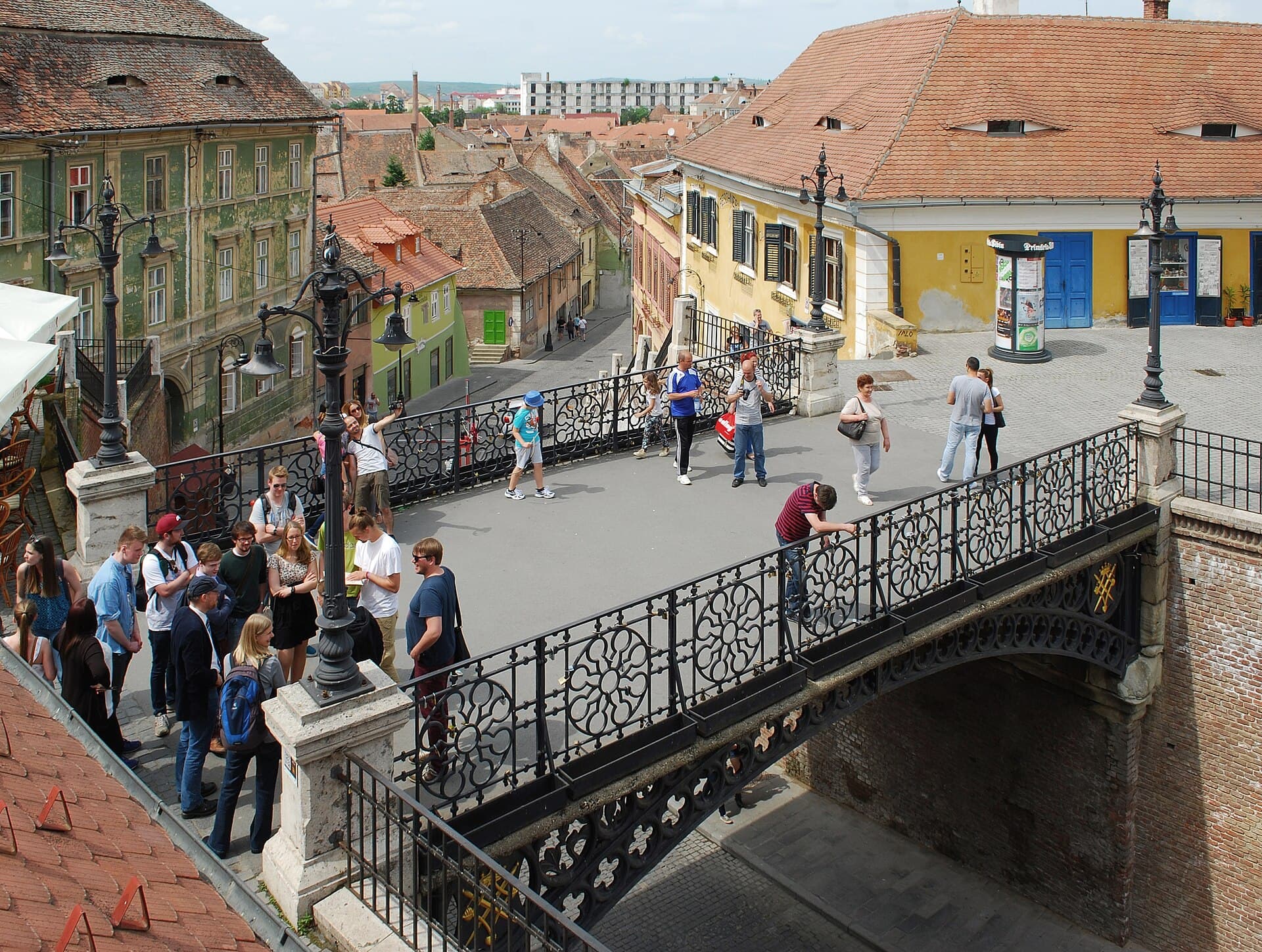 The Bridge of LiesRomania's first cast-iron bridge and its most famous urban legend: built in 18592 minutes walk4.6
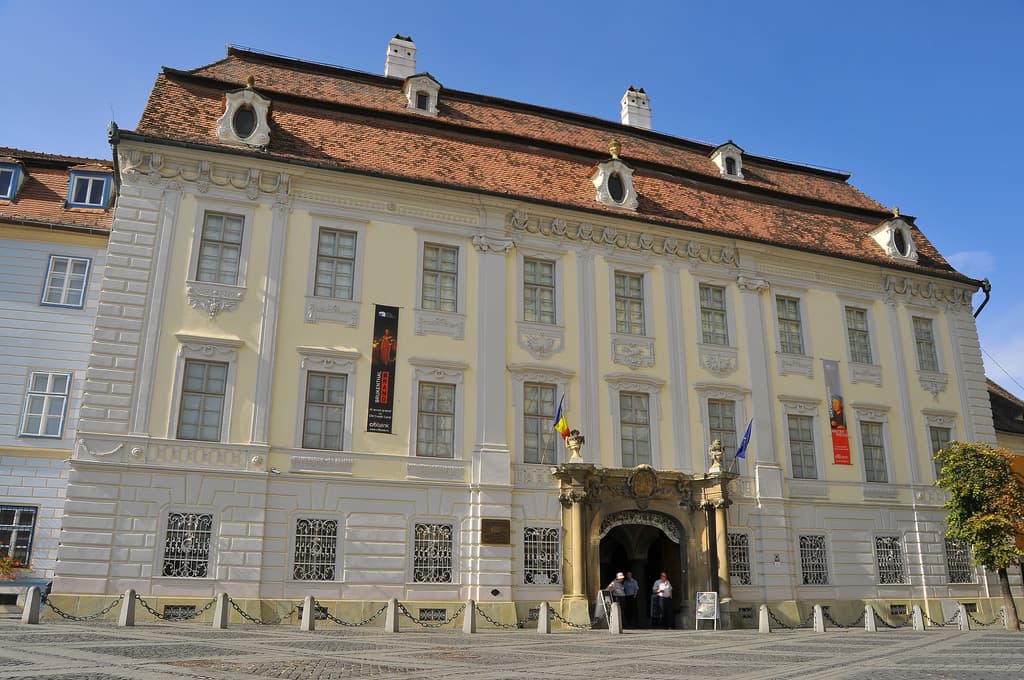 Brukenthal National MuseumRomania's first museum and among Europe's oldest: Baron Samuel von Brukenthal, g2 minutes walk4.5
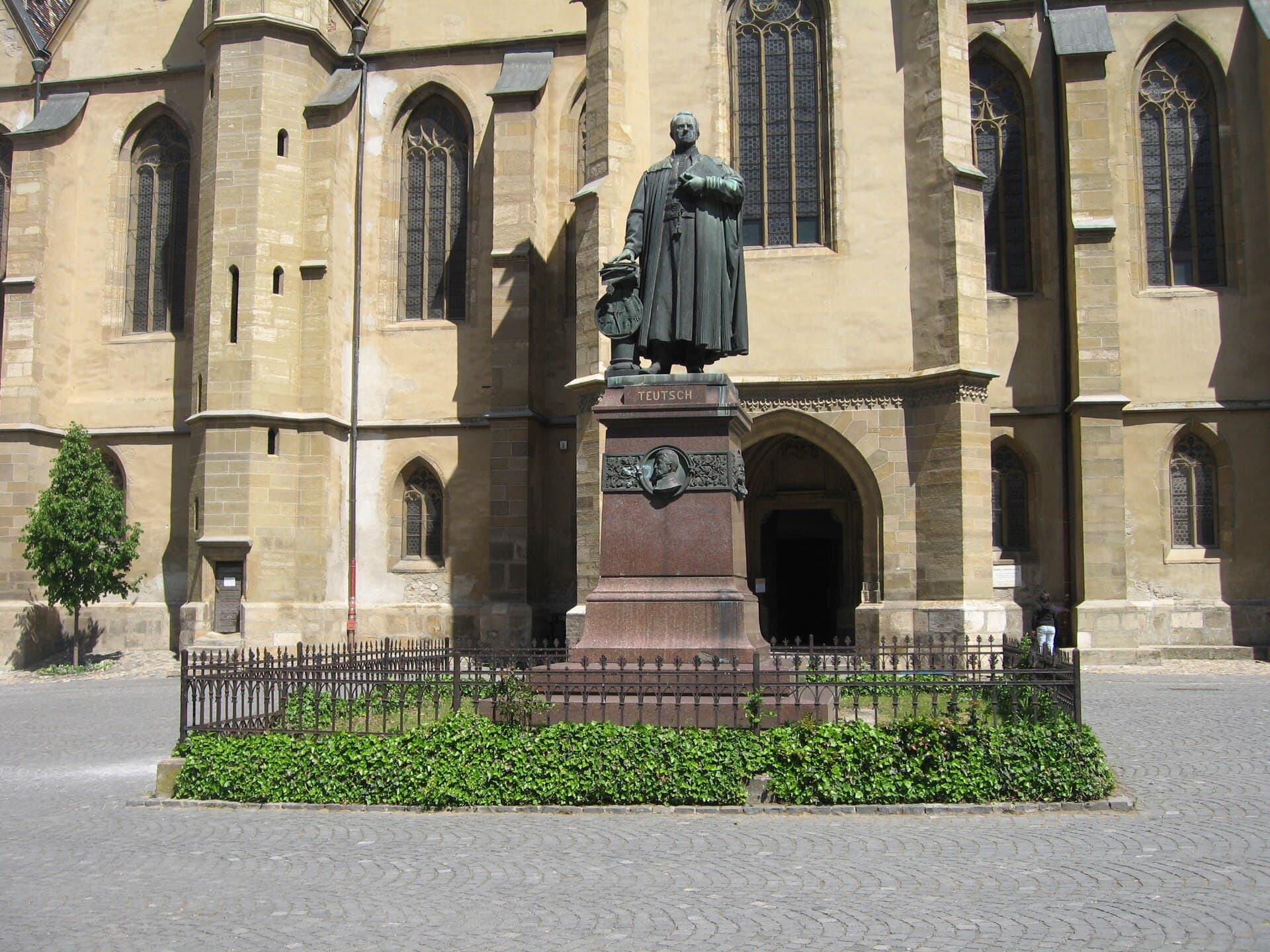 The Georg Daniel Teutsch MonumentA statue in Huet Square before the Evangelical Cathedral in Sibiu, to the bishop2 minutes walk4.5
The stair is spiral, narrow and very steep with uneven treads, and it tightens as you go up. It is not especially long but it is uncomfortable for anyone afraid of confined spaces or with tired knees. There is no lift. If unsure, the Evangelical church tower is an alternative — higher, but with a similar stair.
The Brukenthal Museum, Romania's oldest, whose European painting collection is among the most important in the region; the Liars' Bridge, Romania's first iron bridge; and the ASTRA open-air museum of folk civilisation south of the city. Sibiu is small and two days cover it without rushing.