
Provençal Romanesque
Plain stone, round arches and an octagonal dome.
Guiguilacagouille — CC BY-SA 3.0 · Carl Ha — CC BY-SA 4.0 · Carl Ha — CC BY-SA 4.0 · Ludushka — CC BY-SA 3.0
Marseille's twelfth-century old cathedral, standing beside the enormous new one and looking small next to it — while being seven centuries older. Its story shows how antiquities were treated in the nineteenth century: when a colossal new cathedral was decided on in the 1850s, more than half the old church was demolished to make room. What remained was saved after protests, and only part of it survives. What survived is pure Provençal Romanesque: plain stone, round arches, an octagonal dome and little ornament. The style is entirely unlike its Byzantine-Romanesque neighbour, striped in white and green stone. The comparison between the two adjoining buildings is the point of the visit: a modest twelfth century and a nineteenth century that wanted to be seen from the sea. Hours are very limited and it may be closed — check.
Plain stone, round arches and an octagonal dome.
It would have gone entirely without the objections.
Modesty beside a building meant to be seen from the sea.
Beside the La Major cathedral, La Joliette
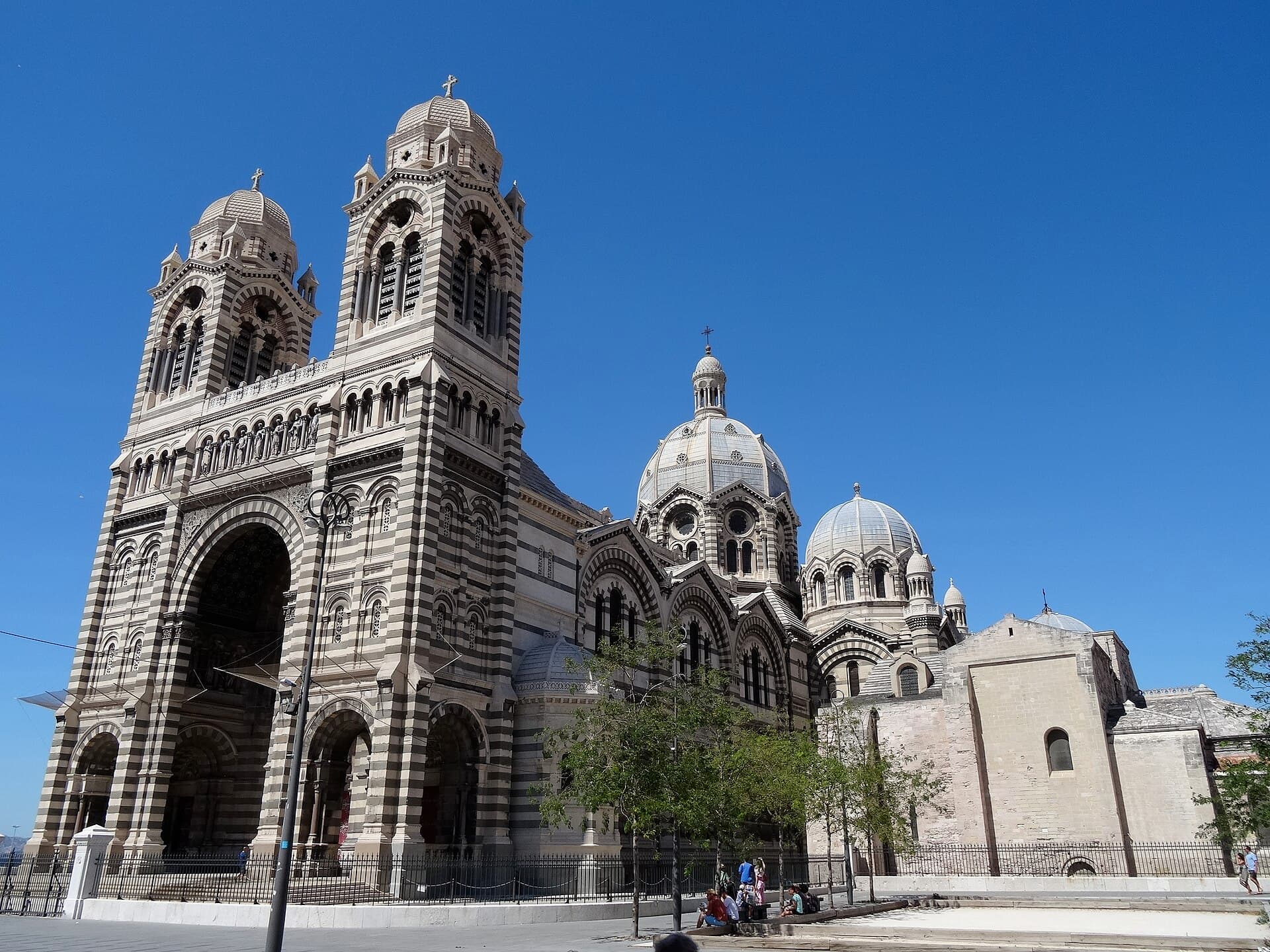 Marseille Cathedral (La Major)Marseille's cathedral — "La Major" — is among the biggest churches built in Fran1 minute walk4.6
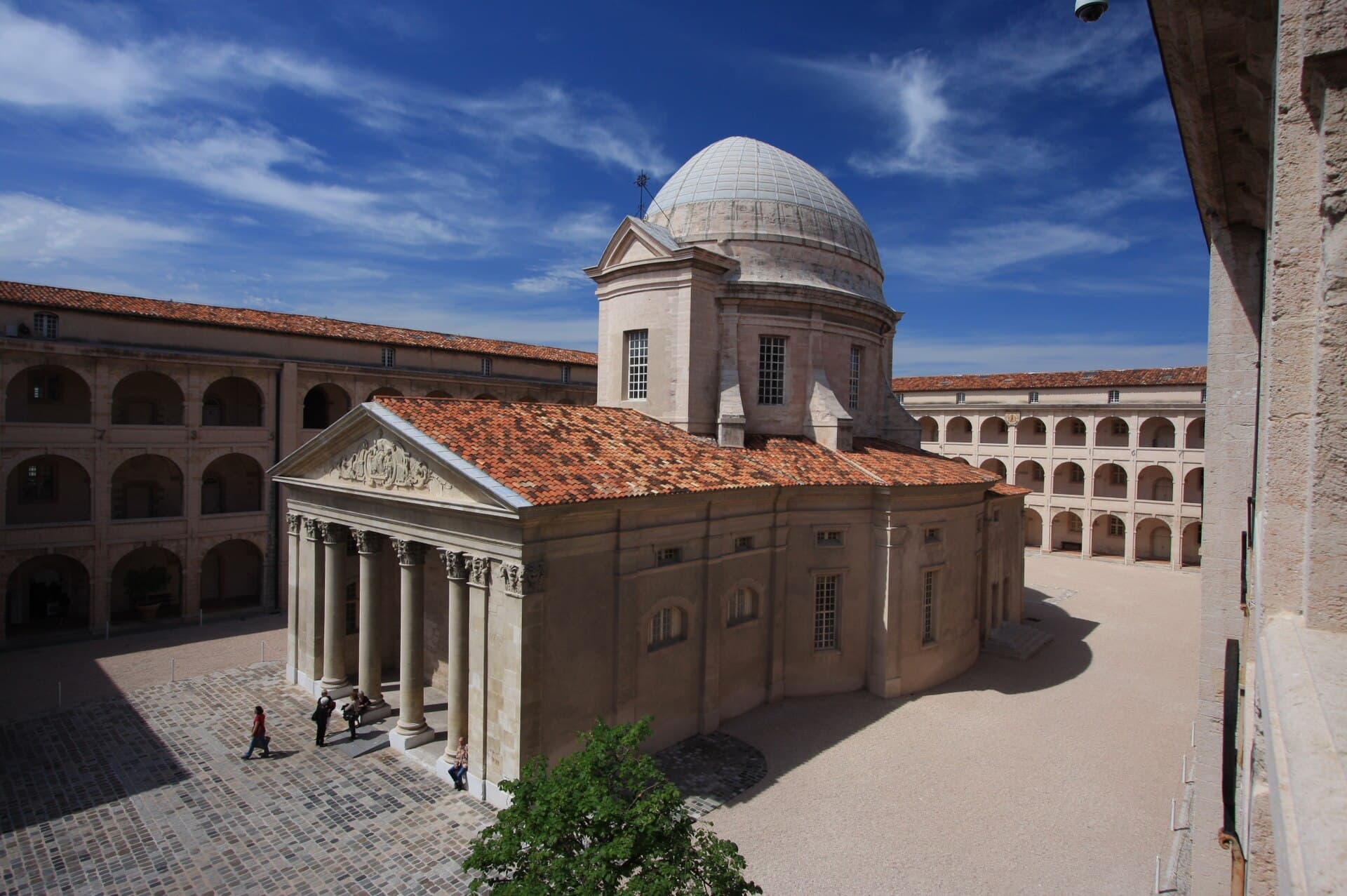 Vieille CharitéHidden in the heart of the old Panier quarter is Marseille's finest Baroque buil3 minutes walk4.4
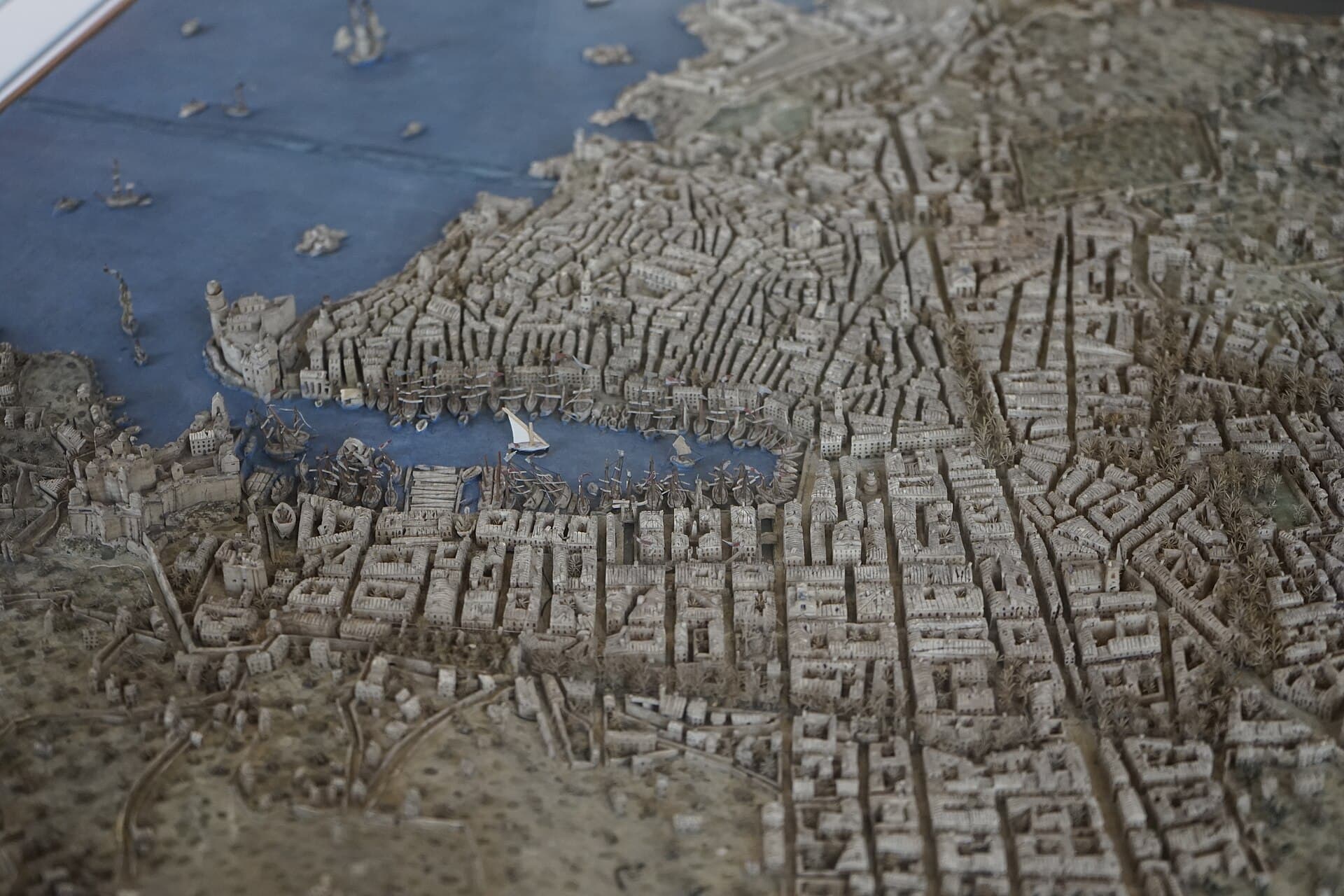 Museum of Mediterranean ArchaeologyAn archaeology museum inside the Vieille Charité building in the Le Panier quart3 minutes walk4.4
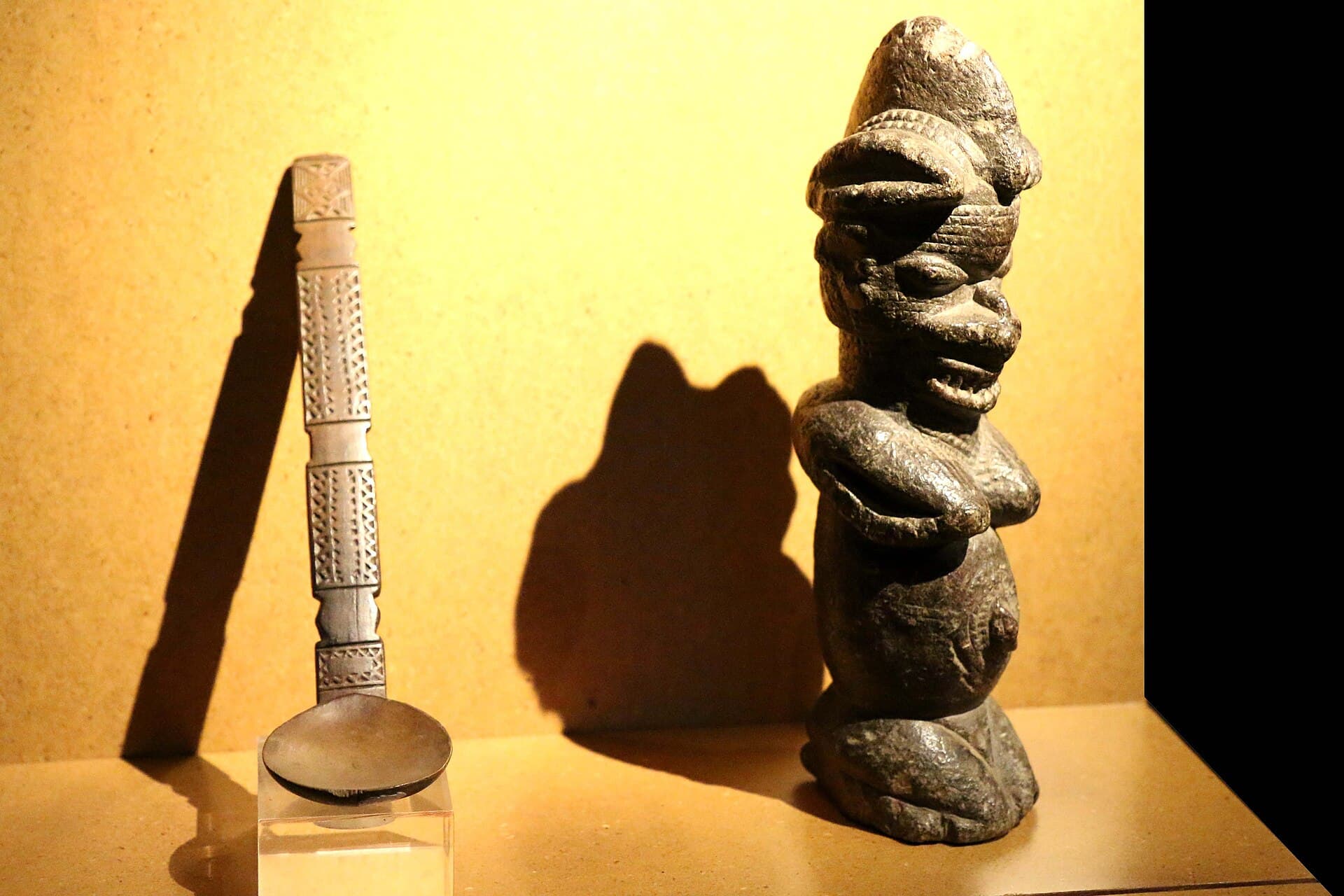 Museum of African, Oceanian and Amerindian ArtsA museum on the second floor of the Vieille Charité showing the arts of Africa, 3 minutes walk4.0
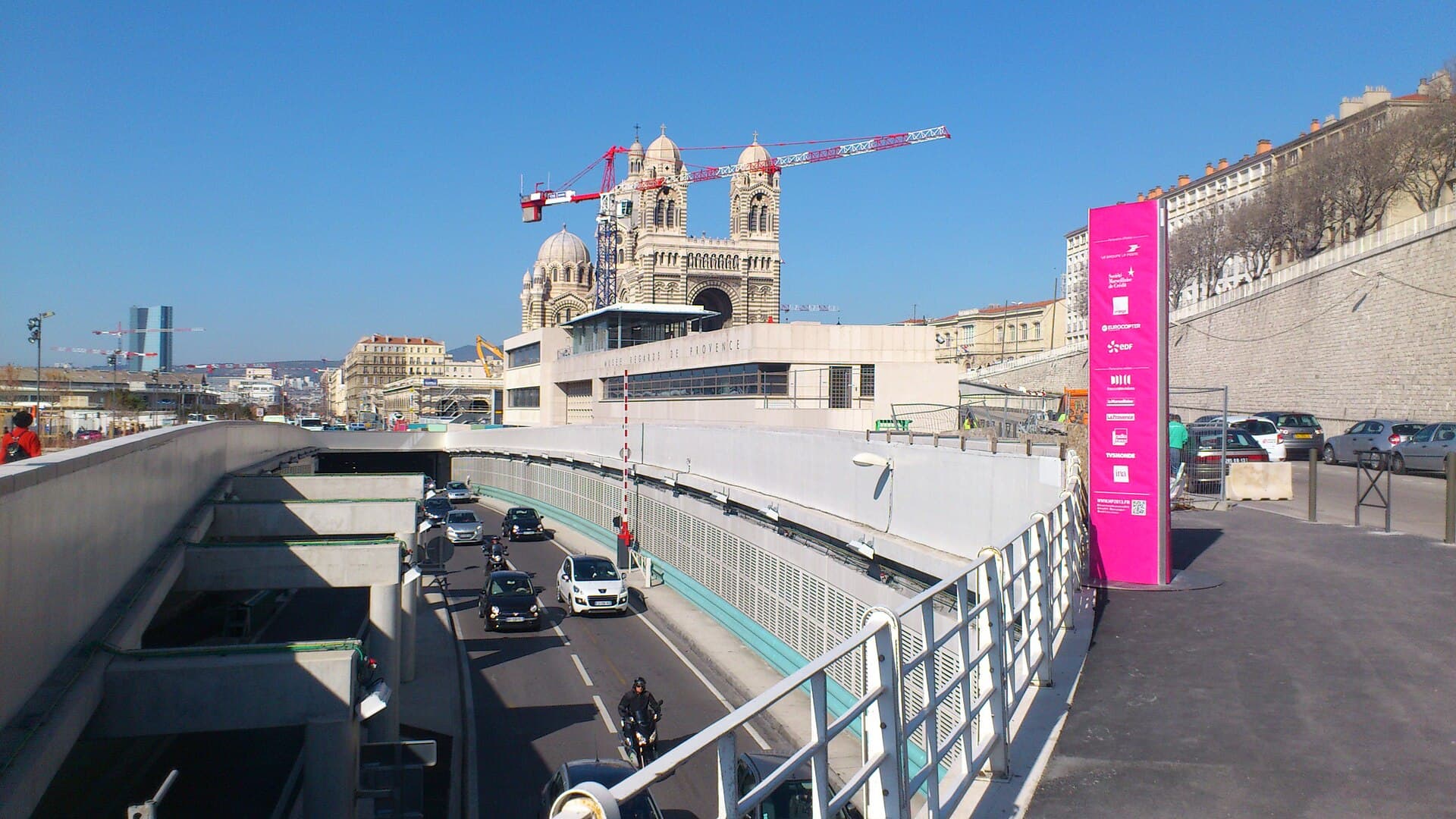 Musée Regards de ProvenceA small, elegant museum right beside the La Major cathedral, and the story of it3 minutes walk4.2
Built between 1852 and 1893, it is among the largest cathedrals erected in France in the nineteenth century. Its style is Byzantine-Romanesque with domes and striped white and green stone. The purpose was as political as religious: the Second Empire wanted to declare its presence in Marseille — the port city then expanding rapidly with colonial expansion in Algeria. Its position on the waterfront was chosen to be seen from arriving ships.
The area has changed completely over the last two decades under the Euroméditerranée project. It holds the MuCEM museum of Mediterranean civilisations with its distinctive latticed building, reached by a footbridge from the cathedral; the Villa Méditerranée; and Les Docks shopping centre in restored old port warehouses. The district gathers the industrial port, contemporary architecture and the two cathedrals in a small space.