
The Palazzina frescoes
Homer, Virgil and Ariosto by the father's hand.
Marcok di it:wikipedia — CC BY 2.5 · Palickap — CC BY-SA 4.0 · Palickap — CC BY-SA 4.0 · Palickap — CC BY-SA 4.0
**A villa frescoed throughout by Tiepolo father and son in a single summer — with seventeen stone dwarfs along its wall** — a short walk from La Rotonda. ⚠ **The name comes from the statues**: **"ai Nani", "of the dwarfs"** — **a row of stone figures on the wall**, ⚠ **with a local legend about the owner's daughter**, **though they are most likely simply Baroque garden ornament** of a then-common kind. ✅ **The real value is the frescoes**: **painted in 1757 by Giambattista Tiepolo** — the greatest Venetian painter of the 18th century — **and his son Giandomenico**. ⚠ **The difference between father and son is the lesson**: **the father painted epic scenes in the *Palazzina*** from Homer, Virgil and Ariosto; ✅ **the son painted daily life in the *Foresteria*** — peasants, harlequins, carnival and a Chinese idyll. ✅ **And the garden has a view over the city.**
Homer, Virgil and Ariosto by the father's hand.
Daily life, carnival and a Chinese idyll by the son.
Seventeen figures on the wall that gave the villa its name.
Stradella dei Nani 8, 36100 Vicenza, Italy
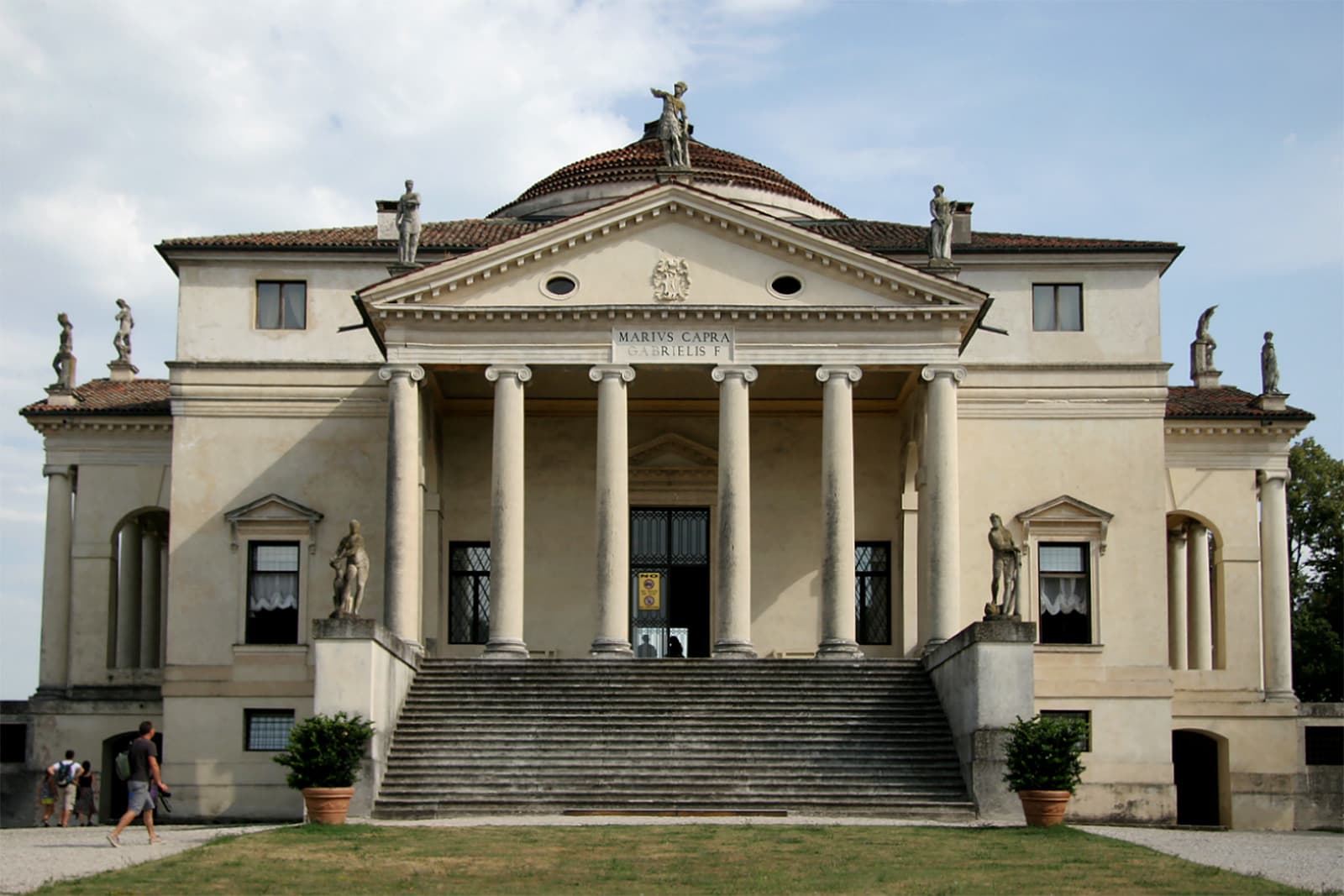 Villa La Rotonda**A square house with four identical fronts, each a temple portico with its own 6 minutes walk4.7
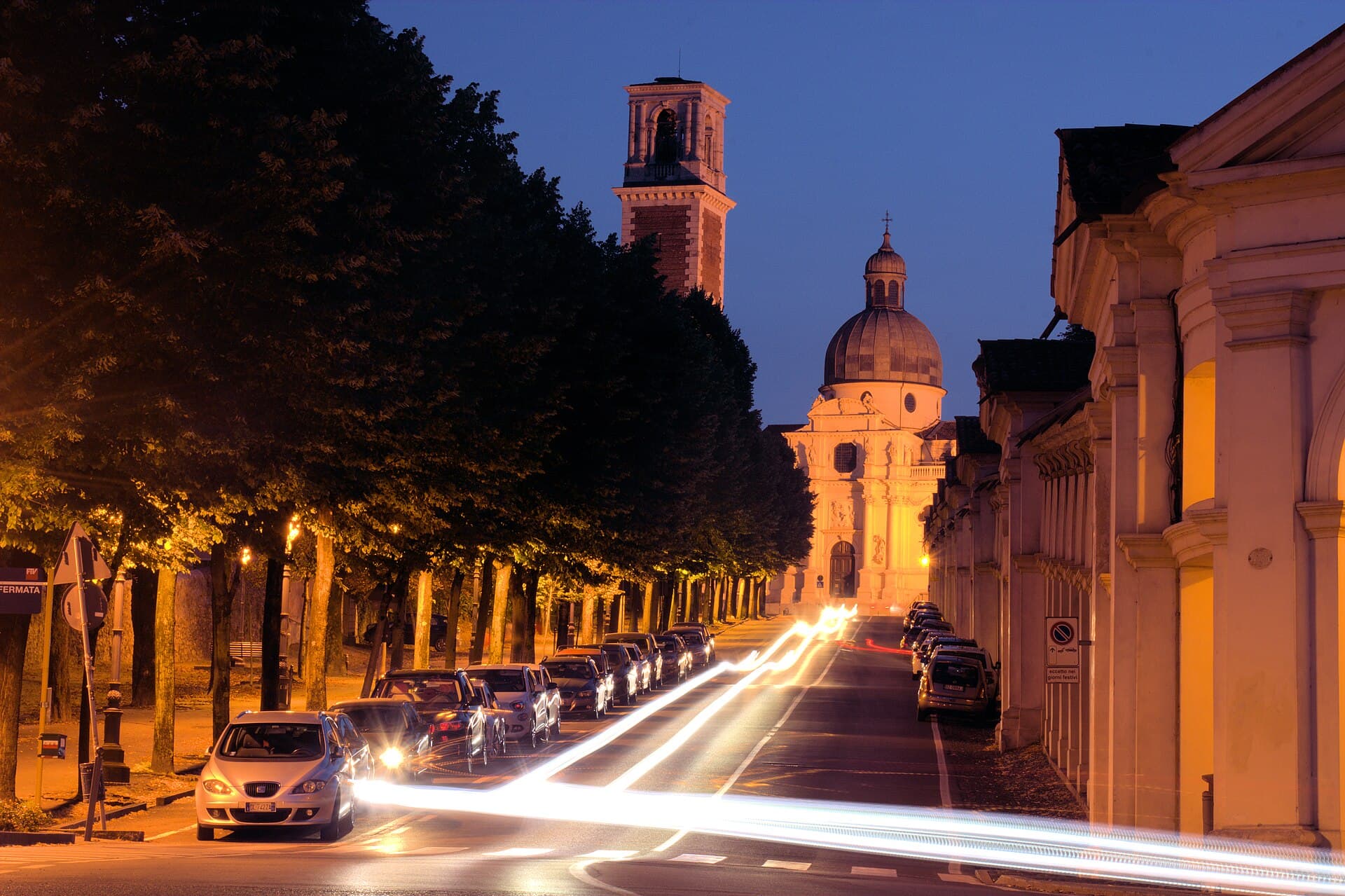 Sanctuary of Monte Berico**A pilgrimage church on a hilltop reached by a roofed arcade of a hundred and f11 minutes walk4.6
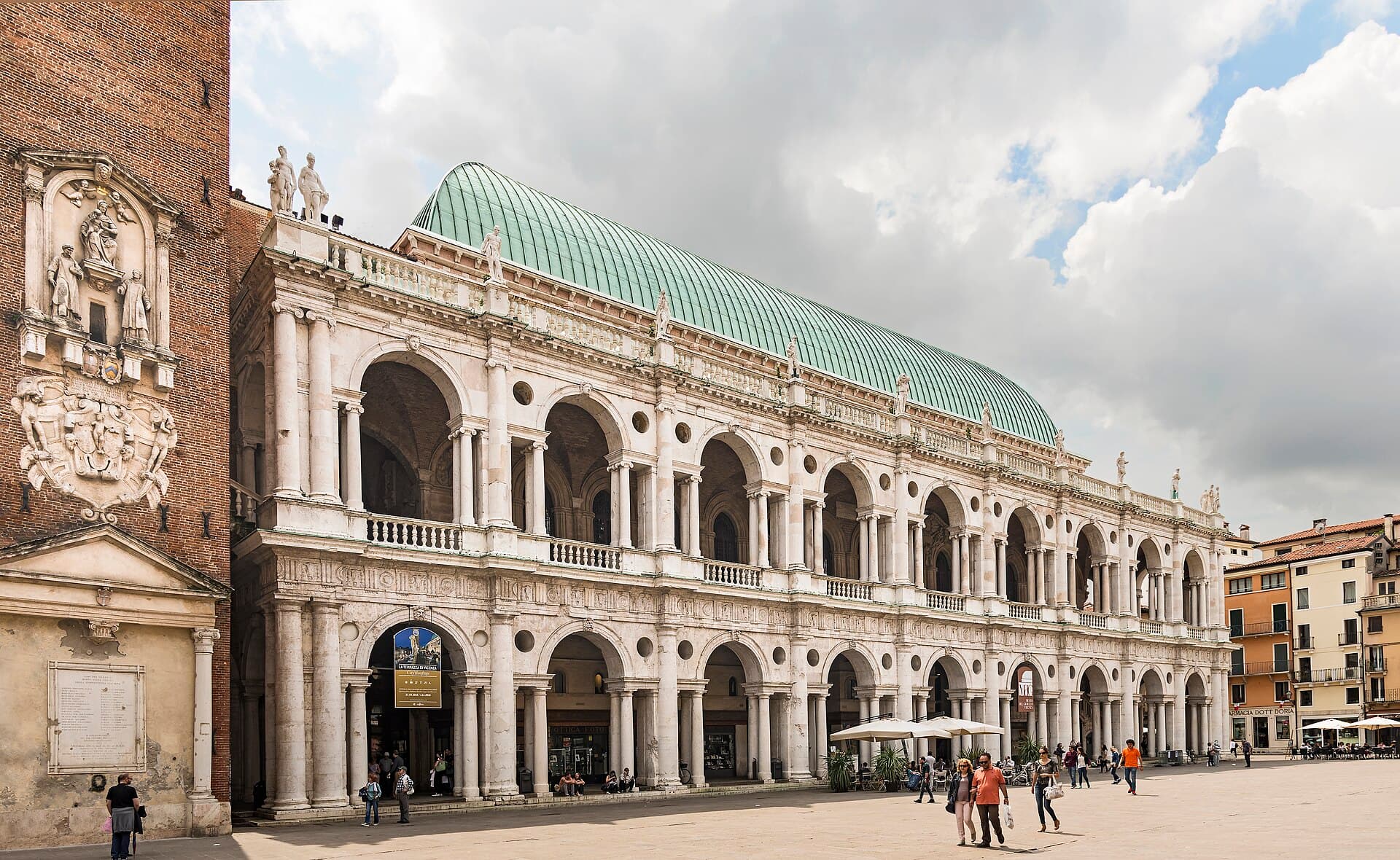 The Basilica Palladiana**A medieval town hall that was collapsing, which Palladio wrapped in a shell of19 minutes walk4.8
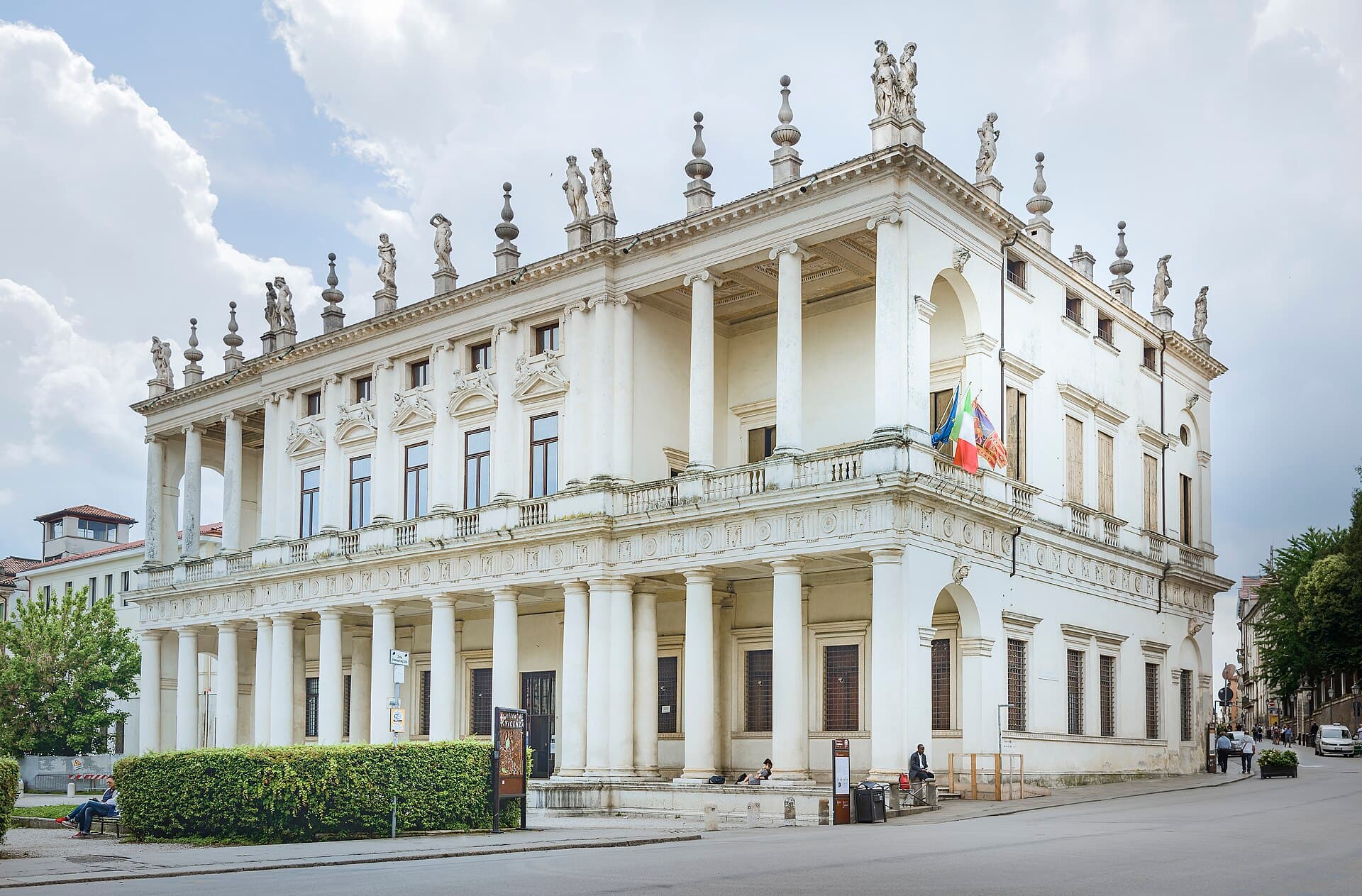 The Palazzo ChiericatiA palace designed by Andrea Palladio in 1550 in Vicenza, today holding the city'21 minutes walk4.6
 The Teatro Olimpico**The oldest surviving indoor theatre in the world — its wooden stage set a four22 minutes walk4.7
**The father paints an ideal world looked up at; the son paints a real one you stand inside — and that is an epochal shift.** ✅ **Giambattista (the father)**: **the last of the great Venetian Baroque painters**. **His subjects are epic and mythological** — **the sacrifice of Iphigenia**, and scenes from the **Iliad**, the **Aeneid** and **Orlando Furioso**. ⚠ **His manner is celestial**: **figures raised up, open skies, pale colour, and a low viewpoint** that sets the scene soaring above you. **The aim is grandeur.** ✅ **Giandomenico (the son)**: **in the guest house he painted quite different subjects** — **peasants eating, harlequins, a carnival scene, a Chinese idyll, and people watching**. ⚠ **His manner is earthbound**: **figures at your eye level**, **sometimes with their backs to you** as though you stood among them; **calmer colour and slower movement**. **The aim is observation.** ✅ **Why it matters**: **this shift — from elevated myth to observed life — is what happened to European art as a whole** in the following decades. ⚠ **And you see it here within one family, in one summer**, **in two adjacent buildings**. ✅ **Which is why you should not skip the guest house.**