
The Thebes set
Wooden streets a few metres deep that read as long.
Didier Descouens — CC BY-SA 4.0 · Annika_of_Nine — CC BY-SA 4.0 · Annika_of_Nine — CC BY-SA 4.0 · Annika_of_Nine — CC BY-SA 4.0
**The oldest surviving indoor theatre in the world — its wooden stage set a four-century-old optical illusion** — Palladio's last work. **Andrea Palladio** designed it in **1580** as his final design; **he died before it was finished** and his pupil Scamozzi completed it, **opening in 1585**. ⚠ **It is the first permanent indoor theatre of the modern age** — before it, performances were held in temporary halls. ✅ **The set behind the stage is a trick**: **the streets of "Thebes" built in wood and plaster** running back through five archways — ⚠ **and they are in fact only a few metres deep**, **but the floor rises and the buildings shrink by degrees**, so they read as long streets. ⚠ **These sets were built in 1585 for a single performance** — **and never removed**. ✅ **And the ceiling is painted as sky.**
Wooden streets a few metres deep that read as long.
A columned, statue-filled architectural front behind the stage.
Semi-elliptical wooden rows beneath a painted sky.
Piazza Matteotti 11, 36100 Vicenza, Italy
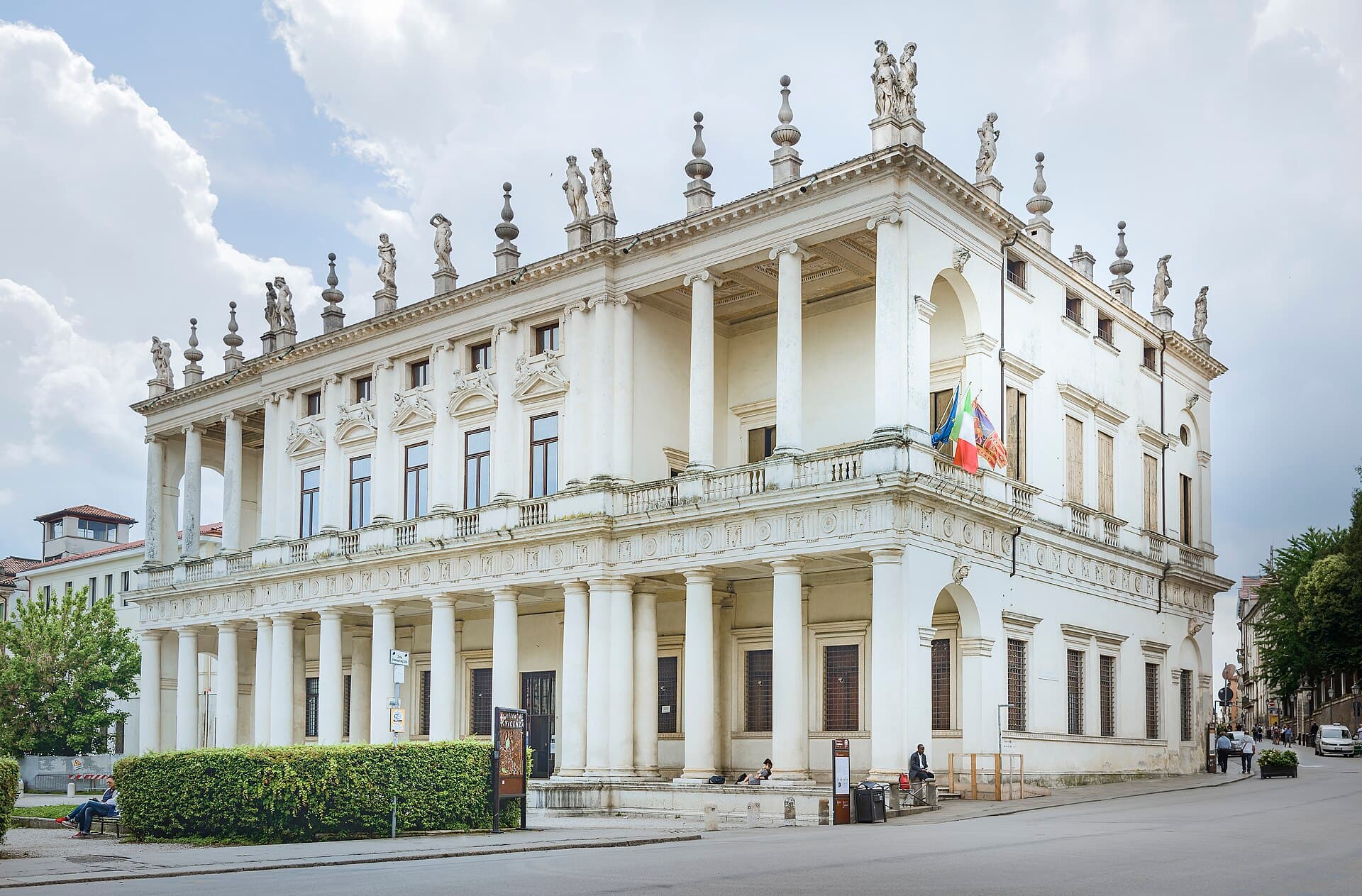 The Palazzo ChiericatiA palace designed by Andrea Palladio in 1550 in Vicenza, today holding the city'1 minute walk4.6
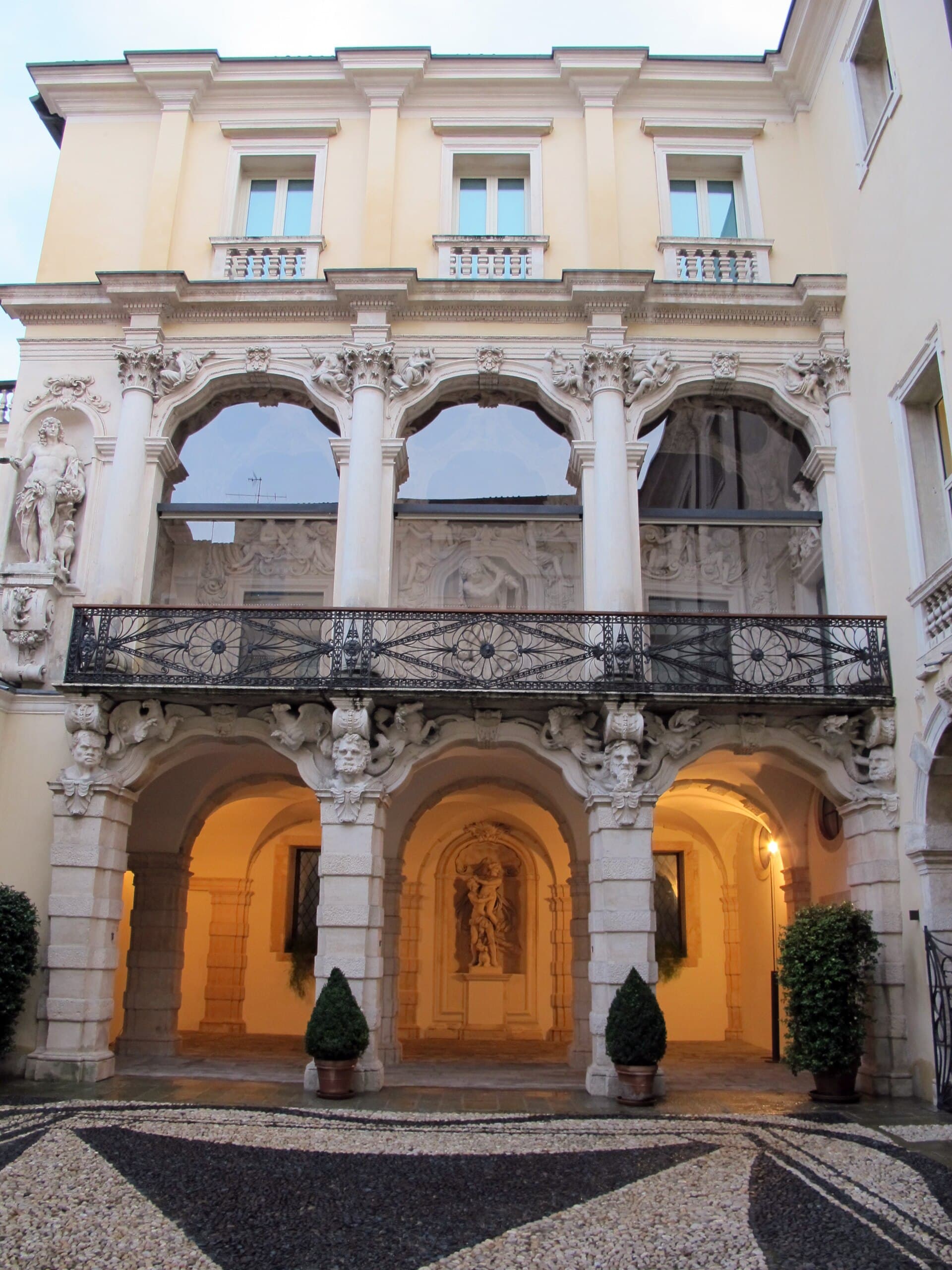 The Palazzo Leoni MontanariA late seventeenth-century baroque palace in Vicenza holding three art collectio2 minutes walk4.6
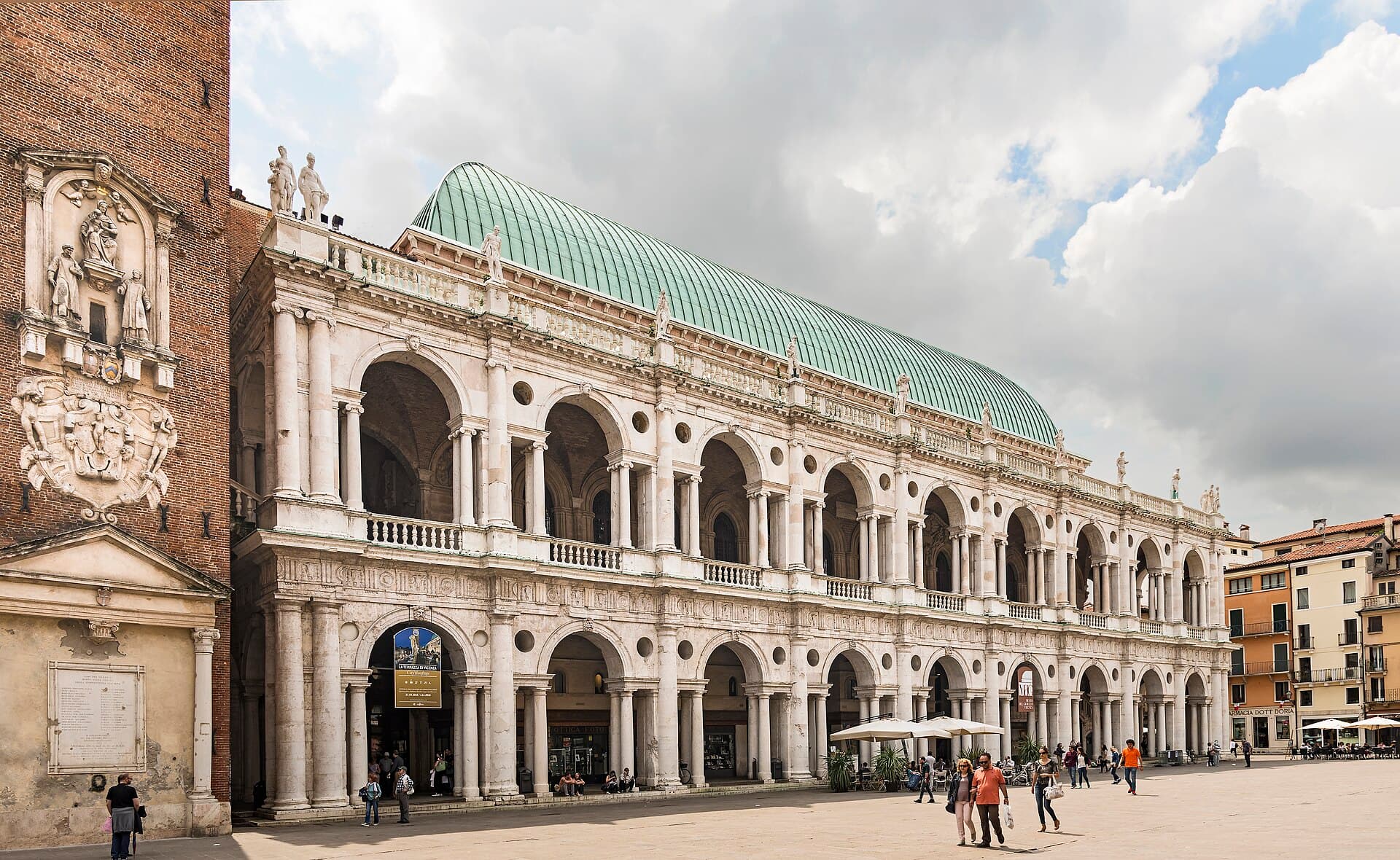 The Basilica Palladiana**A medieval town hall that was collapsing, which Palladio wrapped in a shell of5 minutes walk4.8
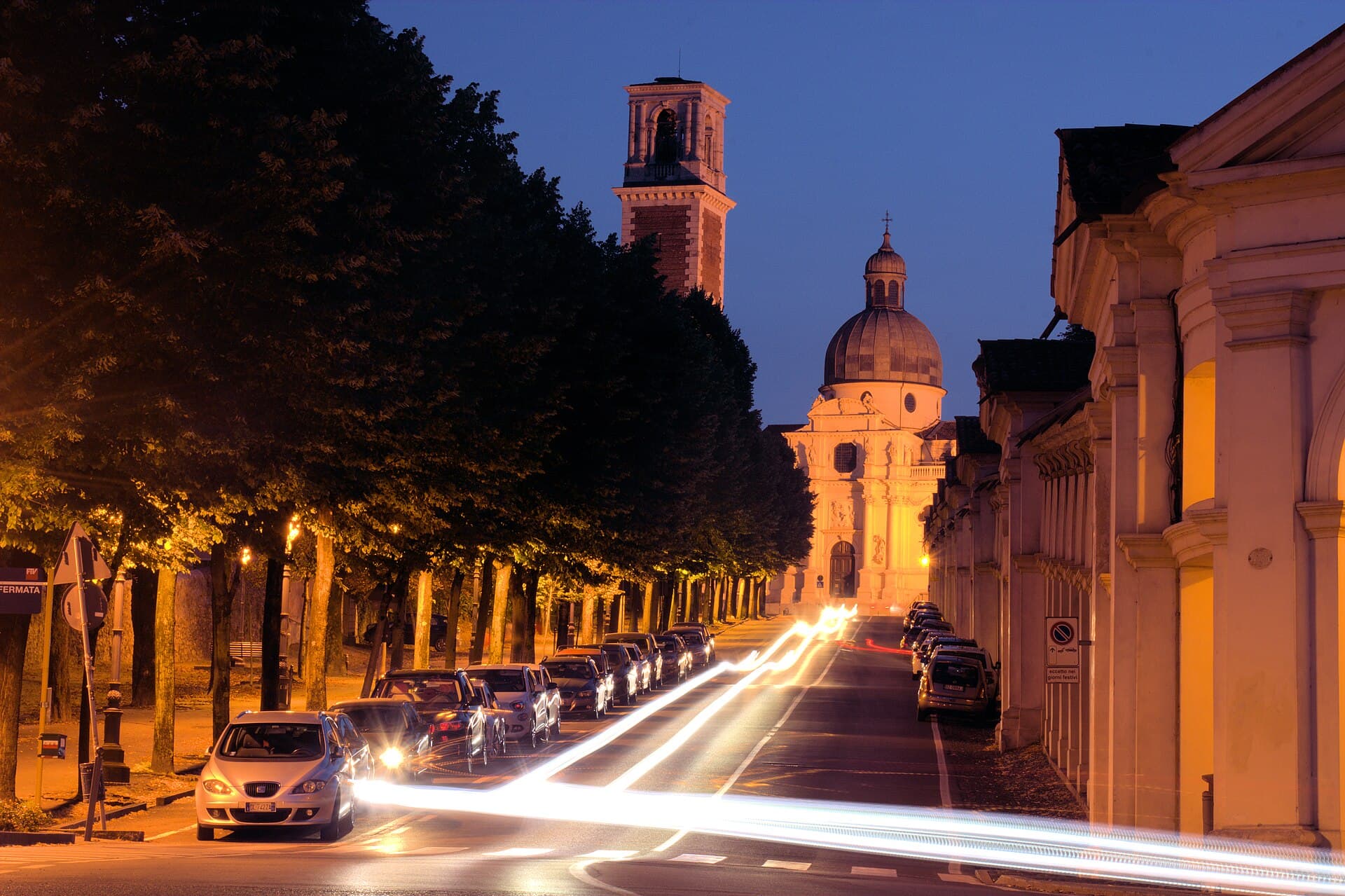 Sanctuary of Monte Berico**A pilgrimage church on a hilltop reached by a roofed arcade of a hundred and f21 minutes walk4.6
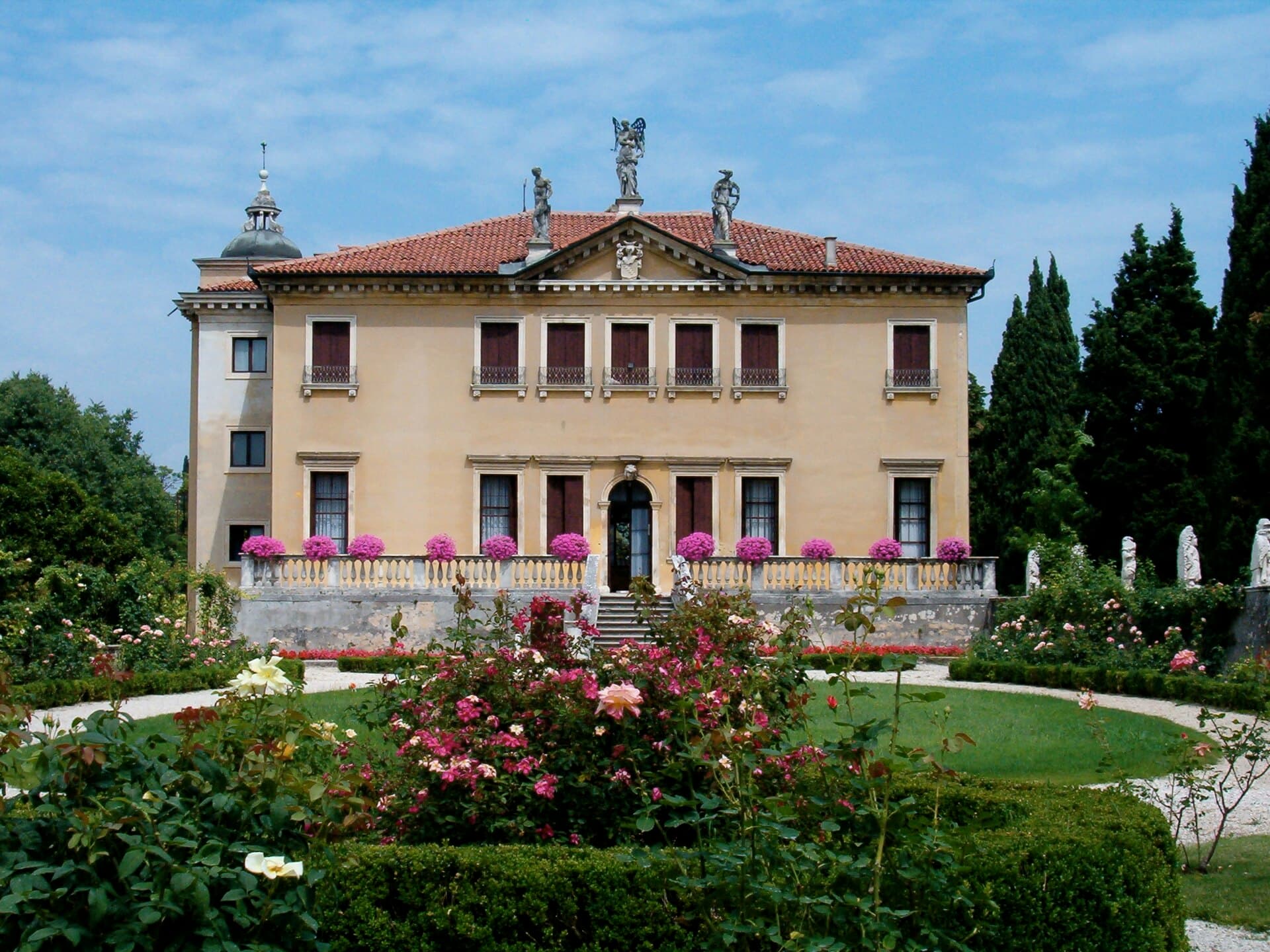 Villa Valmarana ai Nani**A villa frescoed throughout by Tiepolo father and son in a single summer — wit22 minutes walk4.4
**Three devices at once: a rising floor, shrinking dimensions and converging lines — and the eye believes them.** ✅ **First — the floor**: **the streets behind the arches are not level but rise steeply** with distance. ⚠ **And the eye reads rising as receding**, because distant things in the real world sit higher in the field of view. ✅ **Second — scale**: **the buildings, doors and windows shrink progressively** the further in they go — **so the last «house» in the street may be the height of a man**. ⚠ **And the eye reads small as far, not as actually small.** ✅ **Third — the lines**: **the edges of buildings and floor are angled to converge on a single vanishing point** — **exactly what linear perspective does in painting**, ✅ **but here built in three dimensions**. ⚠ **The cost**: **the illusion is calibrated for one eye in one position** — **the seat of honour at the centre of the tiers**; ✅ **and anyone sitting to the side watches it collapse** into short, skewed streets. ⚠ **Which is why actors never entered those streets** — **a full-size actor at the far end betrays the scale instantly**.