
The marble loggias
Two tiers of white arches wrapping the older building.
Didier Descouens — CC BY-SA 4.0 · Marcok / it.wikipedia.org — CC BY 2.5 · Justinawind — CC BY-SA 4.0 · FrDr — CC BY-SA 4.0
**A medieval town hall that was collapsing, which Palladio wrapped in a shell of arches that saved it and made his name** — on Piazza dei Signori. ⚠ **It is not a church despite the name**: **"basilica" in the Roman sense** — **a public building for courts and assemblies**. ⚠ **The story is structural**: the existing Gothic building **was suffering partial collapse in its loggias**, **and architects before him had failed to solve it**. ✅ **The young Palladio won the commission in 1549** — **and solved it by wrapping the old building on the outside in two tiers of marble loggias** that both support and conceal it. ✅ **For it he devised the "Palladian window"**: **a central arch between two flat openings** — ⚠ **whose virtue is that it absorbs the irregular spacings** of the old building's piers; **and the element went on to be copied worldwide**. ✅ **Its roof terrace is open, with a view.**
Two tiers of white arches wrapping the older building.
An arch between two flat openings, repeated along the front.
The square before it with the Torre Bissara and its columns.
Piazza dei Signori, 36100 Vicenza, Italy
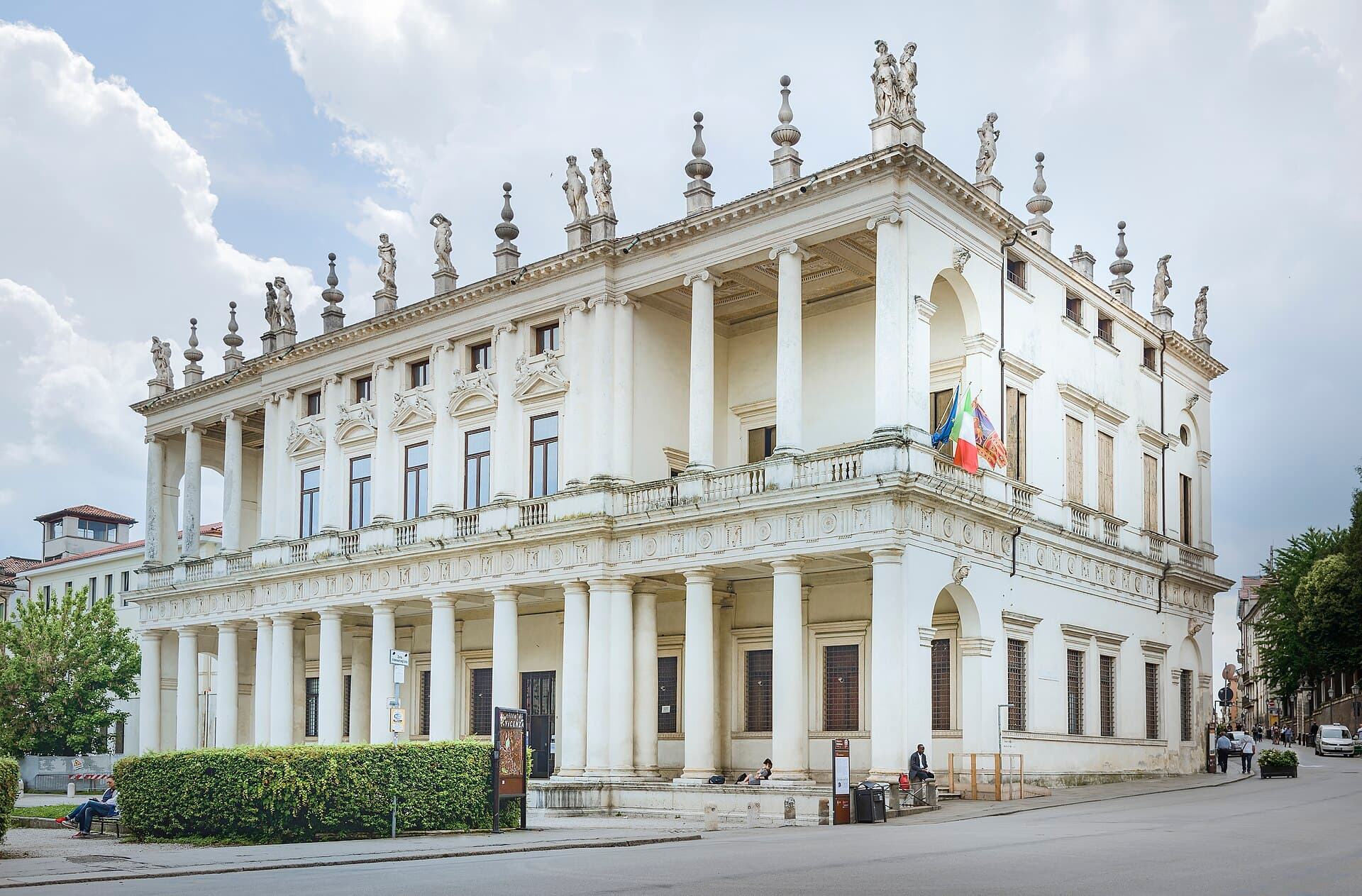 The Palazzo ChiericatiA palace designed by Andrea Palladio in 1550 in Vicenza, today holding the city'4 minutes walk4.6
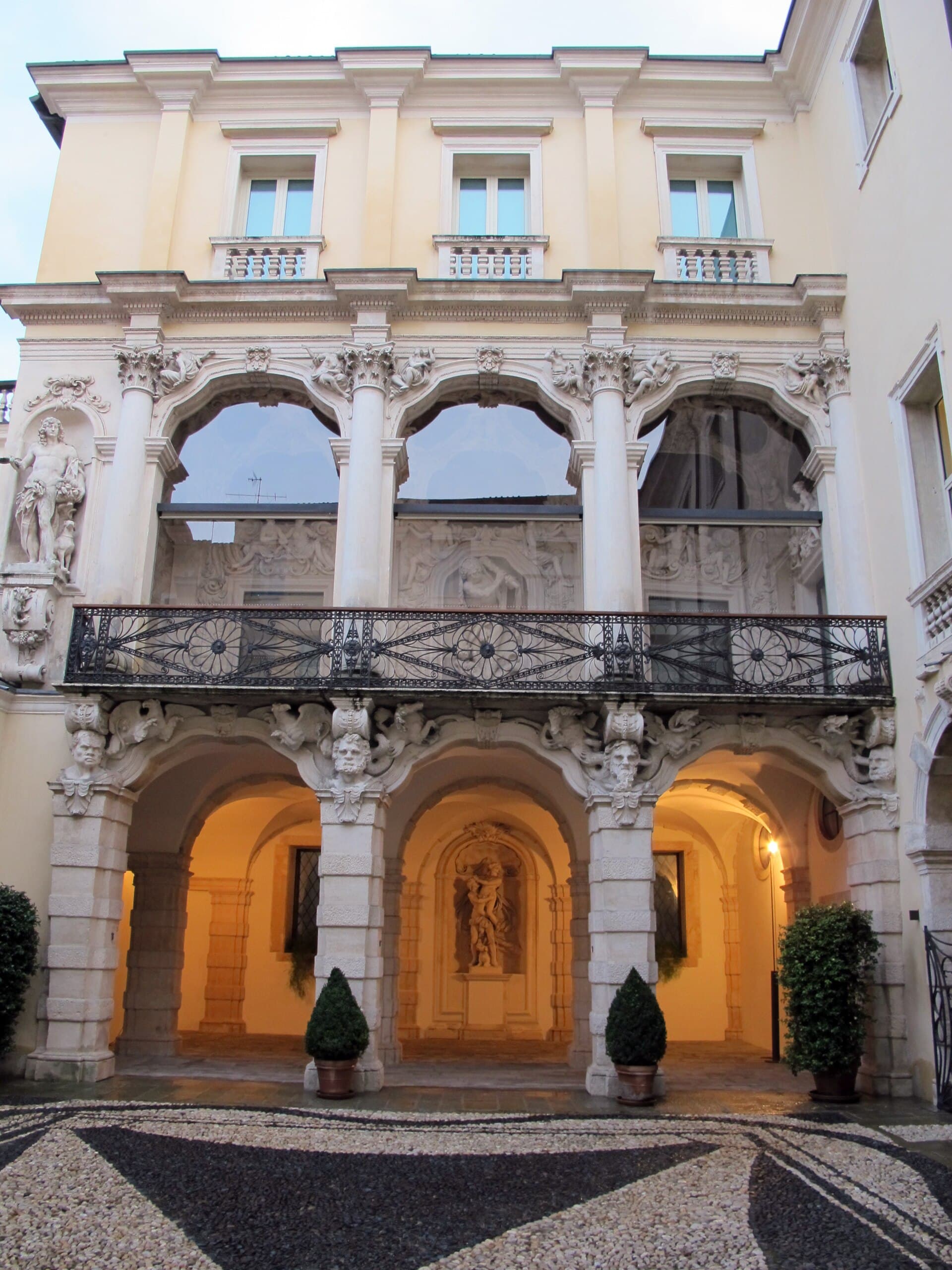 The Palazzo Leoni MontanariA late seventeenth-century baroque palace in Vicenza holding three art collectio5 minutes walk4.6
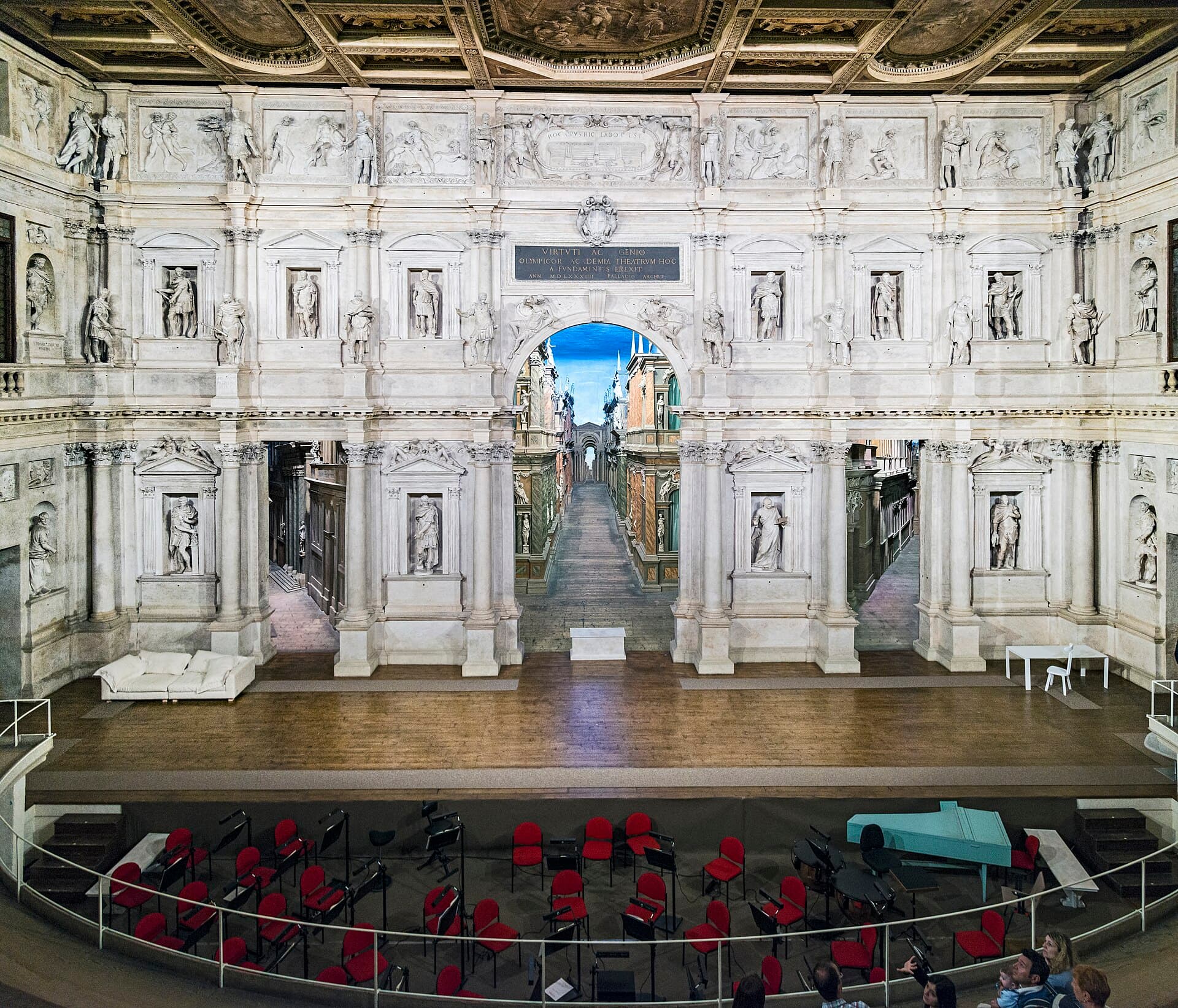 The Teatro Olimpico**The oldest surviving indoor theatre in the world — its wooden stage set a four5 minutes walk4.7
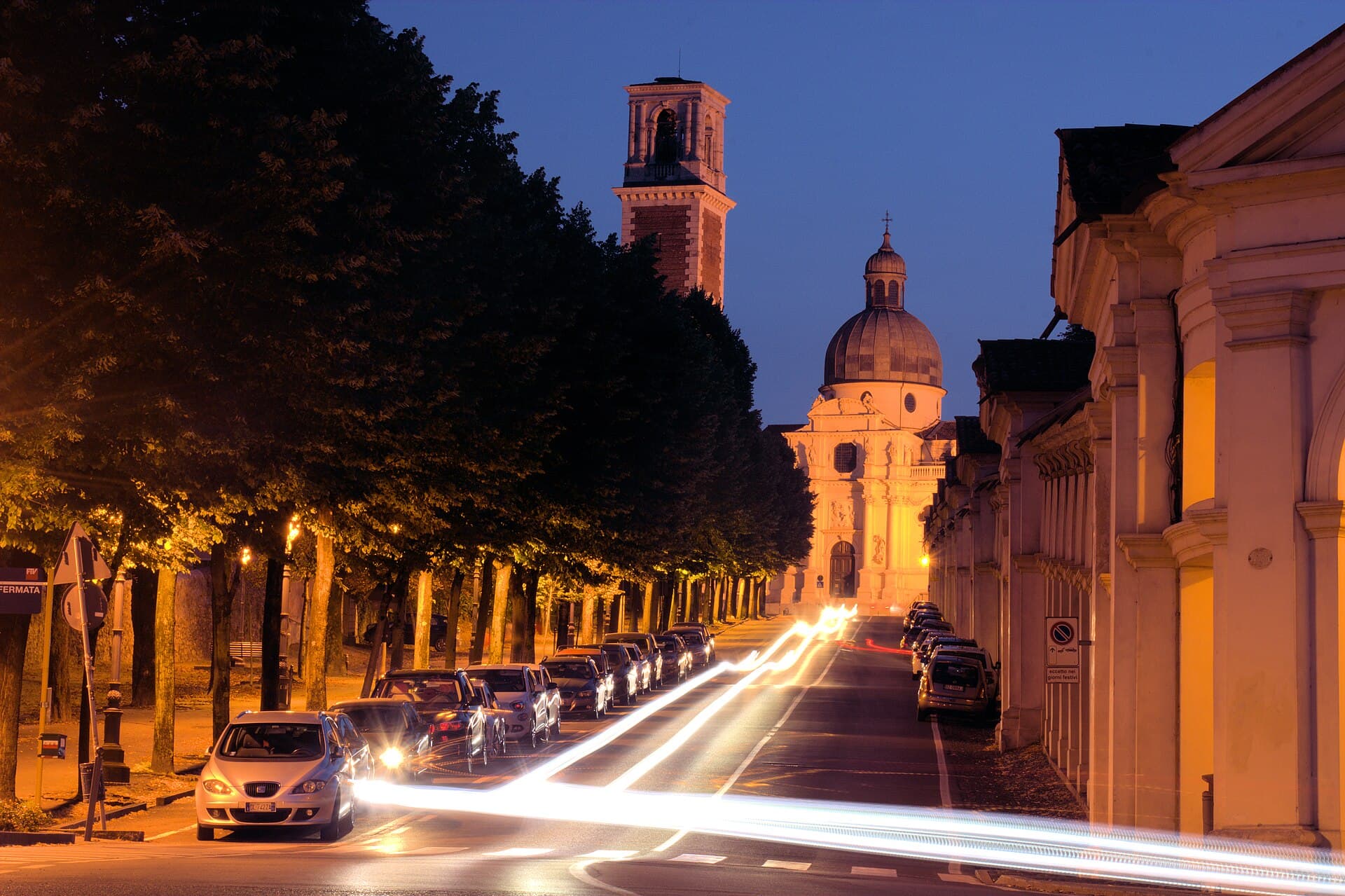 Sanctuary of Monte Berico**A pilgrimage church on a hilltop reached by a roofed arcade of a hundred and f17 minutes walk4.6
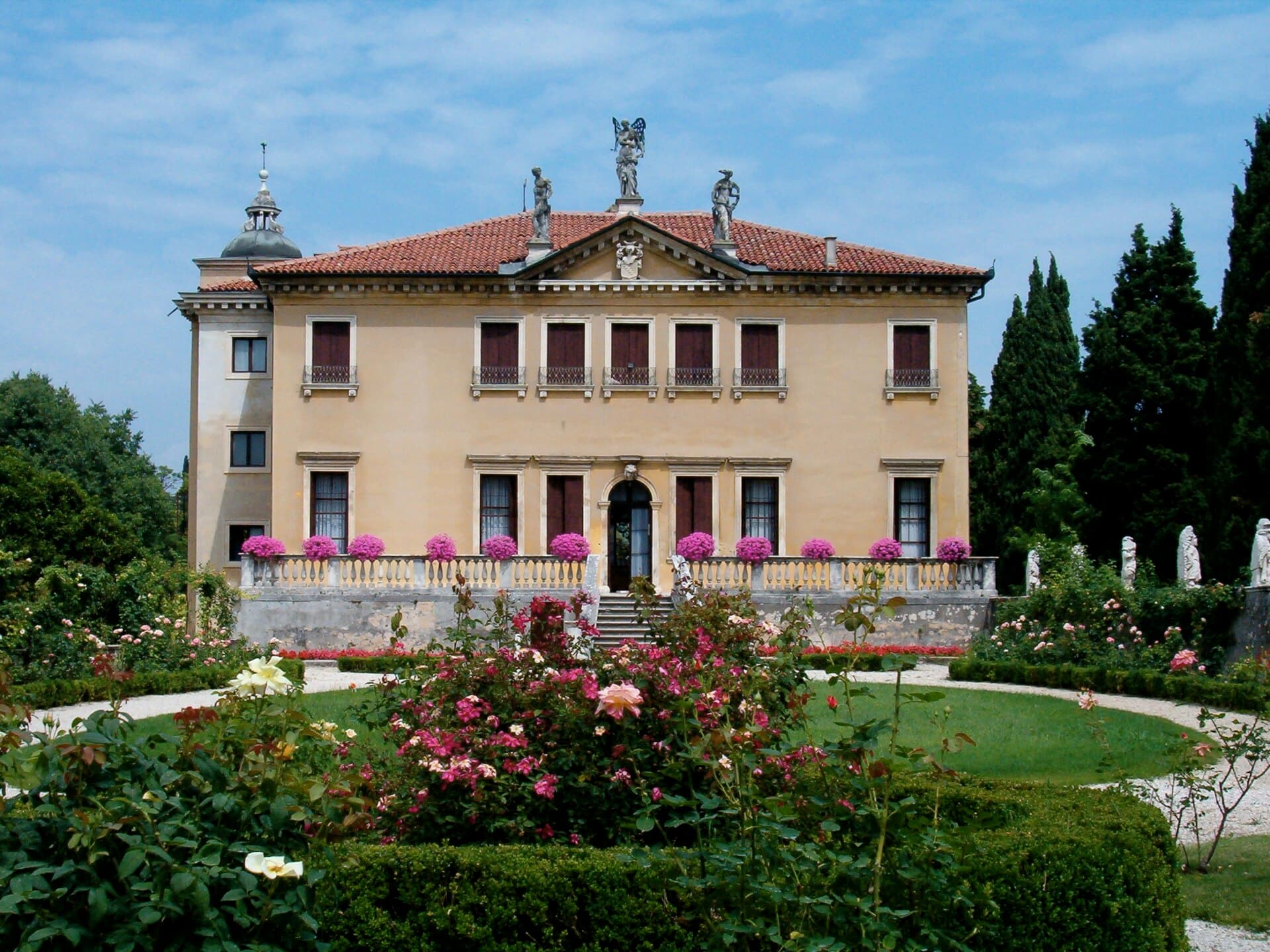 Villa Valmarana ai Nani**A villa frescoed throughout by Tiepolo father and son in a single summer — wit19 minutes walk4.4
**An architectural element that solves a practical problem and looks well — a rare combination.** ✅ **The form**: a **three-part opening** — **a wide central arch** on two columns, **flanked by two narrower flat-topped openings**. **It is also called the Serlian or Venetian window.** ✅ **The problem it solves**: **the spacings between the old Vicenza building's piers were irregular** — ⚠ **so any row of equal arches would have exposed the discrepancy** and looked distorted. ✅ **Palladio's solution**: **the central arch stays a constant width**, **while the two side openings widen or narrow** to absorb the difference — **so every unit looks identical although the spacings genuinely differ**. **A visual solution to a structural problem.** ✅ **Why it spread**: **because it is flexible, handsome and relatively cheap**; **and Palladio's book, the *Four Books of Architecture*, carried it across Europe**. ⚠ **You see it today in**: **English country houses**, **American colonial architecture**, ✅ **in the White House and Monticello** — **and in countless façades** around the world.