
A facade given to the city
Open colonnades serving passers-by instead of a closed private front.
Didier Descouens — CC BY-SA 4.0 · Ottavio Bertotti Scamozzi — Public domain · maurizio martinelli — CC BY-SA 4.0 · Palickap — CC BY-SA 4.0
A palace designed by Andrea Palladio in 1550 in Vicenza, today holding the city's civic art gallery. What makes it unusual among Palladio's palaces is the facade: two tiers of open colonnades running the full width of the building, so it looks like a public building rather than a private house. The reason is practical: it stood on the market square near the river, and Palladio wanted a covered walkway serving passers-by — that is, he gave up part of his client's own frontage to the city. Palladio is the most influential architect in the history of western architecture after the Romans: his Four Books of Architecture spread through Europe and America, and from them came the columned, pedimented fronts of English country houses and American government buildings — the White House and the Capitol are his direct descendants. Palladio's buildings in Vicenza are on the World Heritage list. The gallery holds works by Tintoretto and Van Dyck.
Open colonnades serving passers-by instead of a closed private front.
The Four Books produced American government architecture.
The civic gallery on the upper floors.
Piazza Matteotti, Vicenza
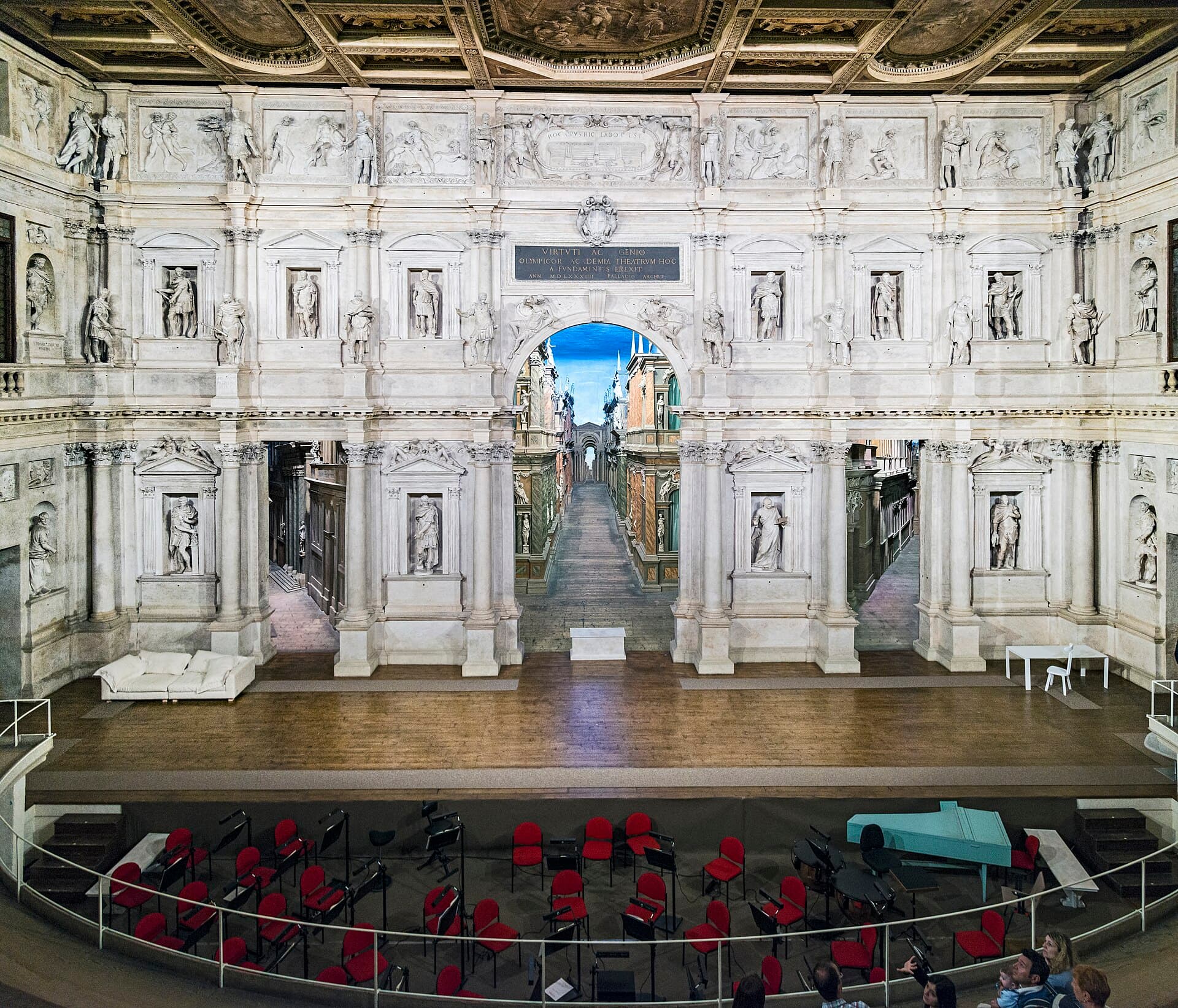 The Teatro Olimpico**The oldest surviving indoor theatre in the world — its wooden stage set a four1 minute walk4.7
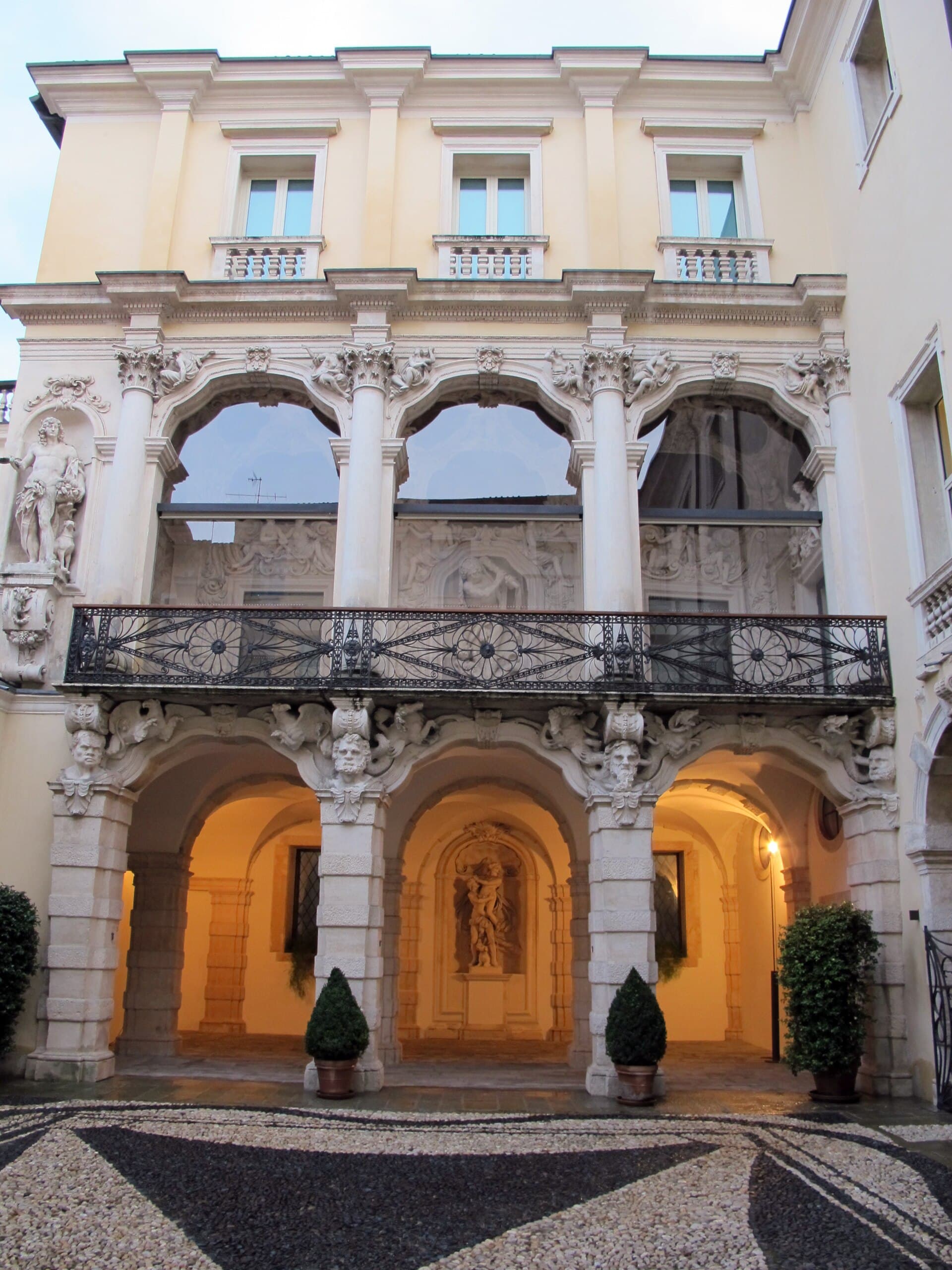 The Palazzo Leoni MontanariA late seventeenth-century baroque palace in Vicenza holding three art collectio3 minutes walk4.6
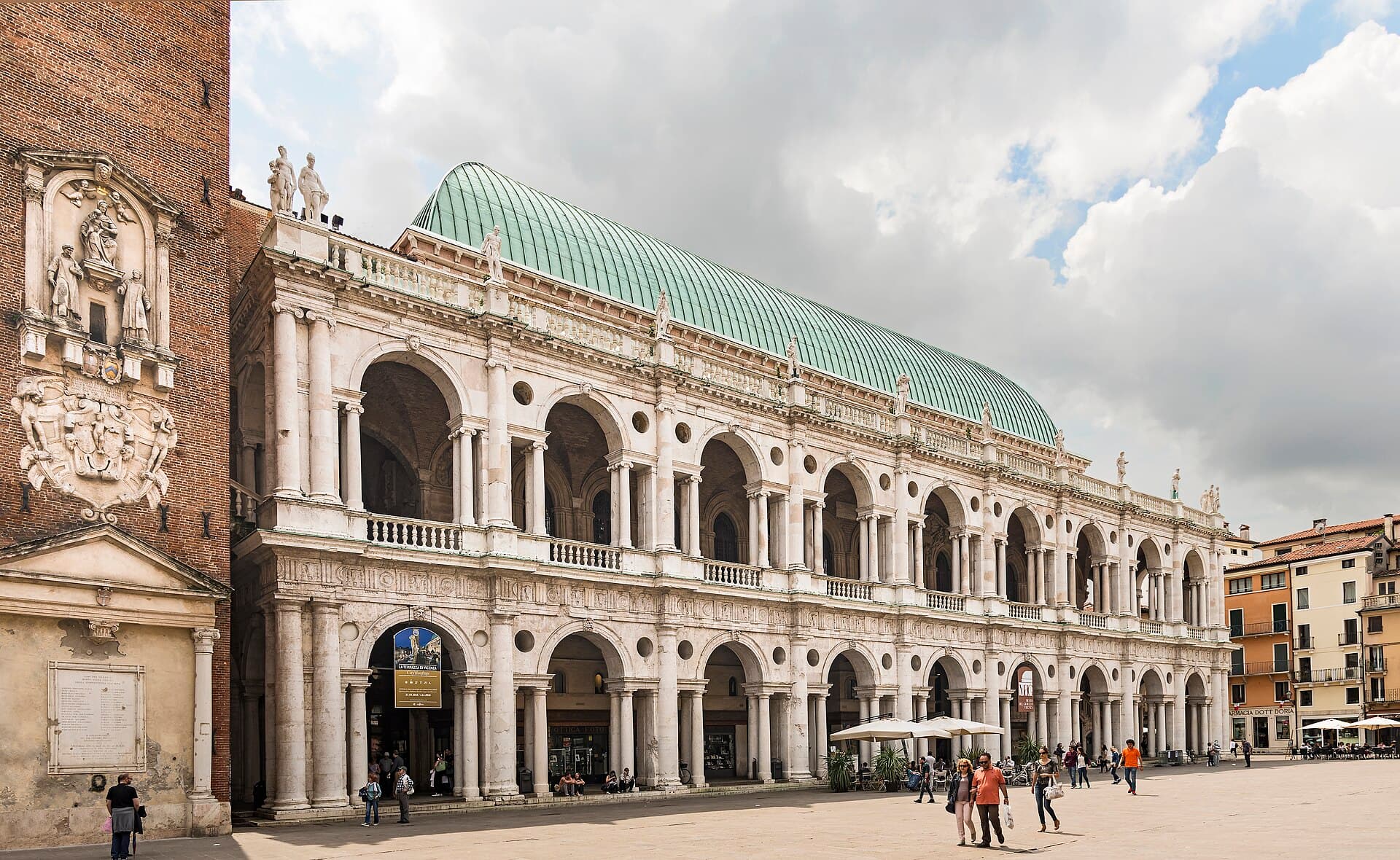 The Basilica Palladiana**A medieval town hall that was collapsing, which Palladio wrapped in a shell of4 minutes walk4.8
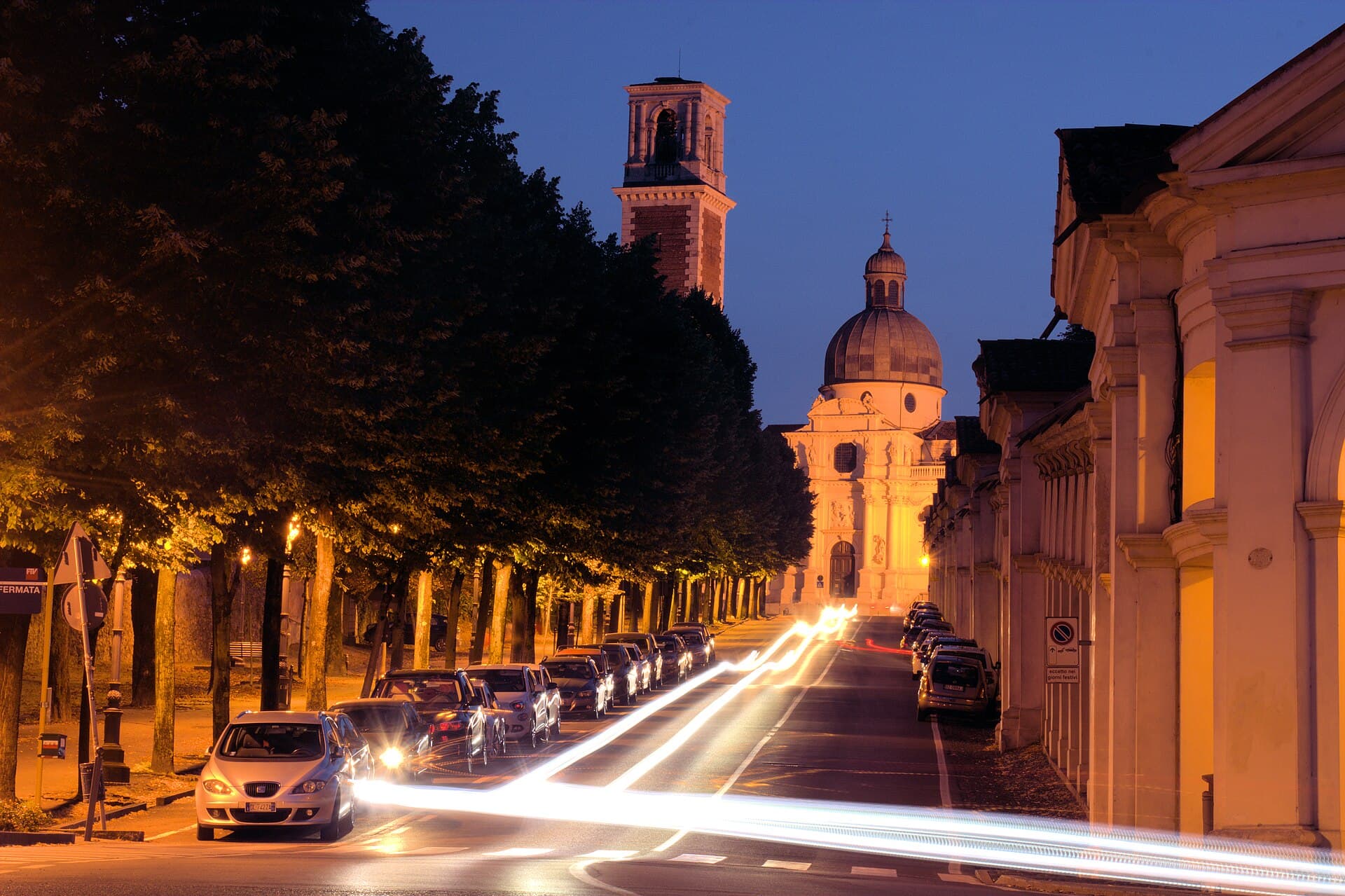 Sanctuary of Monte Berico**A pilgrimage church on a hilltop reached by a roofed arcade of a hundred and f20 minutes walk4.6
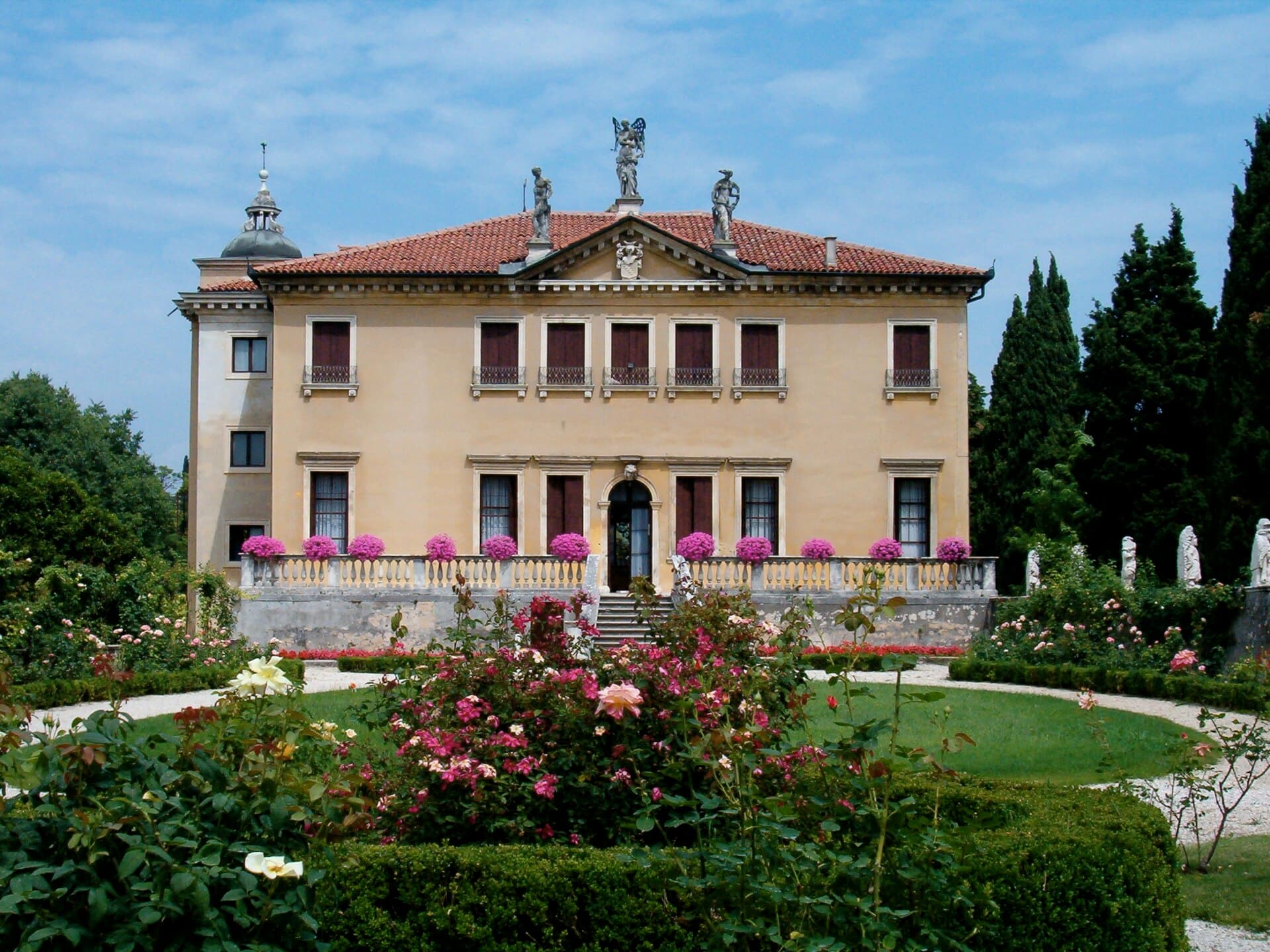 Villa Valmarana ai Nani**A villa frescoed throughout by Tiepolo father and son in a single summer — wit21 minutes walk4.4
A sixteenth-century Italian architect who worked mainly in Vicenza, Venice and the Veneto countryside. He studied ancient Roman architecture closely, measuring the ruins himself, and formulated from it a clear system of proportion and symmetry that could be taught and applied. That is what made him influential: he left not only fine buildings but a written method. The country villas he designed for Venetian nobles — among them La Rotonda — are his best-known work.
The Teatro Olimpico is the most important: Palladio's last work and the oldest surviving indoor theatre in the world, its stage carrying a permanent wooden set in astonishing forced perspective. Then La Rotonda on a hill outside the city — the square, four-porticoed villa imitated across the world. And the Corso Palladio with its palaces. The city is small and a day is enough.