
The gilded angel
A figure at the upper corner most passers-by miss — look up.
Thomas Ledl — CC BY 4.0 · Thomas Ledl — CC BY 4.0 · Herbert Heim — CC BY-SA 4.0 · Thomas Ledl — CC BY-SA 3.0 at
An early twentieth-century residential and commercial building in central Vienna by the Slovene architect Jože Plečnik, among his most important early works and one of the clearest examples of the shift from Jugendstil to modernism. The facade is what distinguishes it: clad in slabs of dark polished granite fixed with visible bolts, with almost no carved ornament. On a street lined with Baroque and neoclassical fronts, this building reads as silent, heavy and entirely different — which was the intention. The detail visitors look for is the gilded angel figure at the upper corner, and a group of stone figures above. From the street you have to look up to see them, and most passers-by do not notice. The building is private housing and cannot be visited inside, though the lobby and spiral staircase are sometimes visible from the entrance. The location is central, minutes from the cathedral, so it is a short stop on an architectural walk rather than a destination.
A figure at the upper corner most passers-by miss — look up.
Among the Slovene architect's most important works before his major projects in Ljubljana and Prague.
Among the clearest examples of the shift from Jugendstil to modernism.
Brandstätte, central Vienna
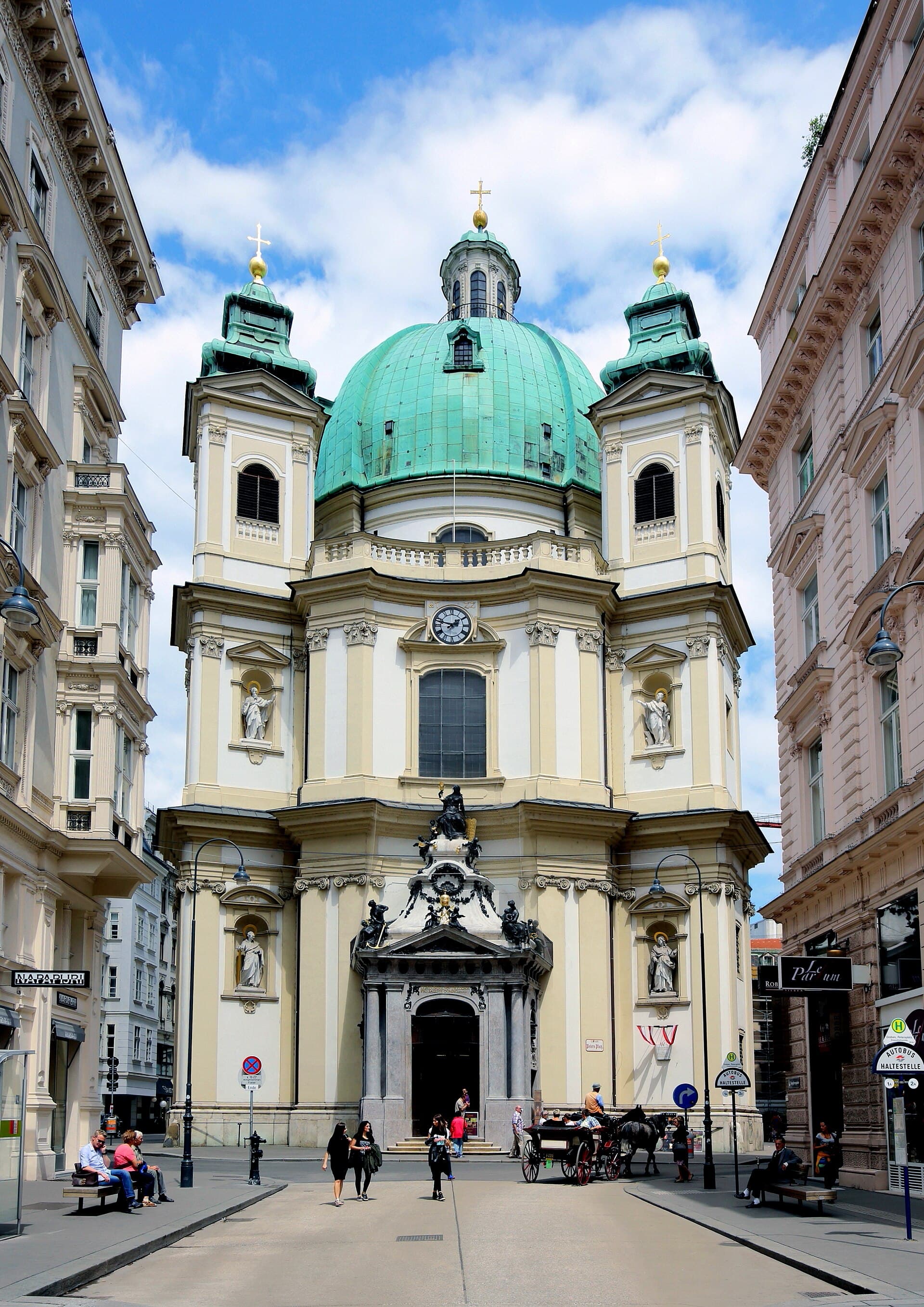 St. Peter's ChurchThe Peterskirche is the Graben's hidden surprise: you turn off Vienna's grandest2 minutes walk4.6
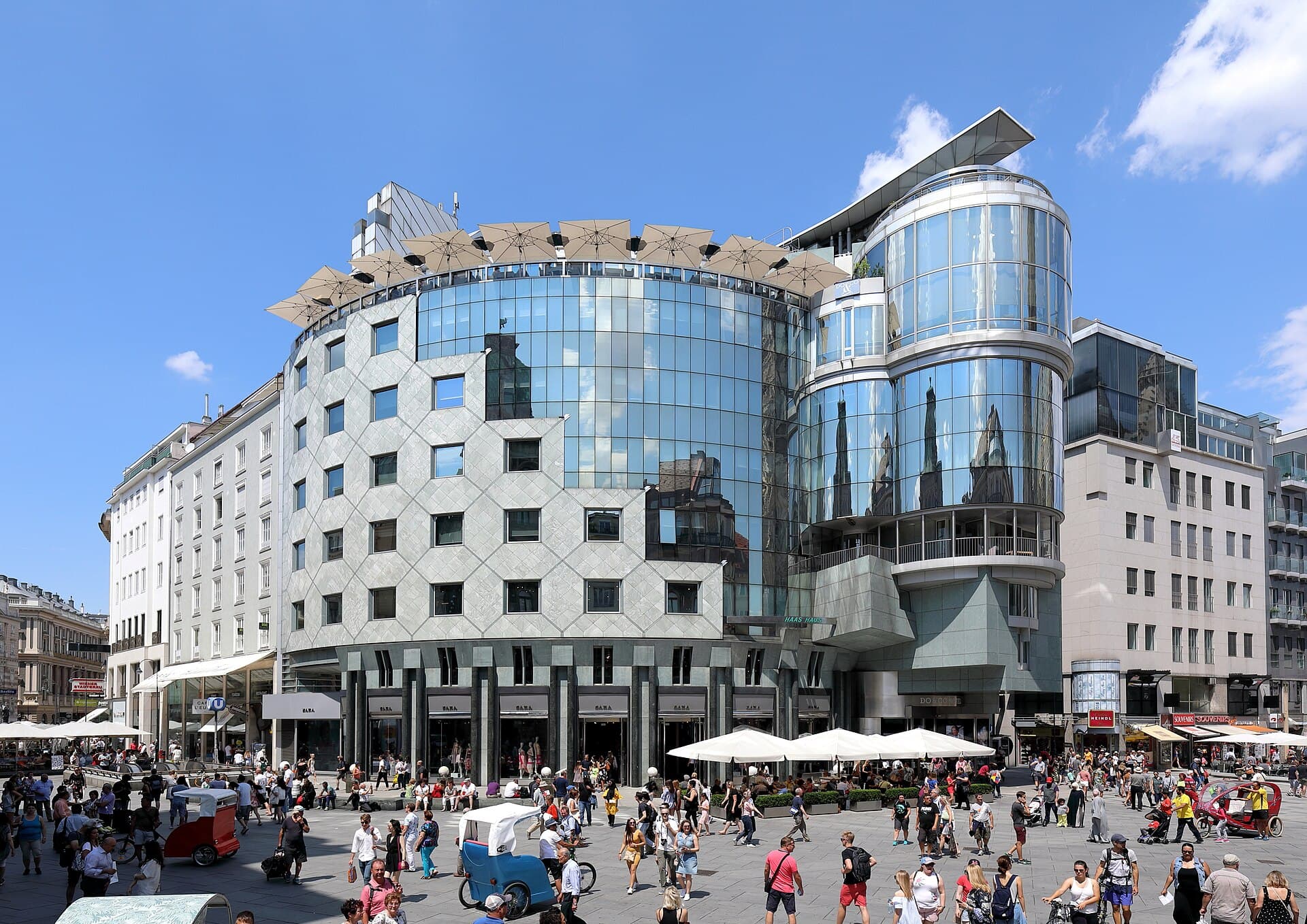 Haas HouseA commercial building of 1990 designed by the architect Hans Hollein, standing d2 minutes walk4.4
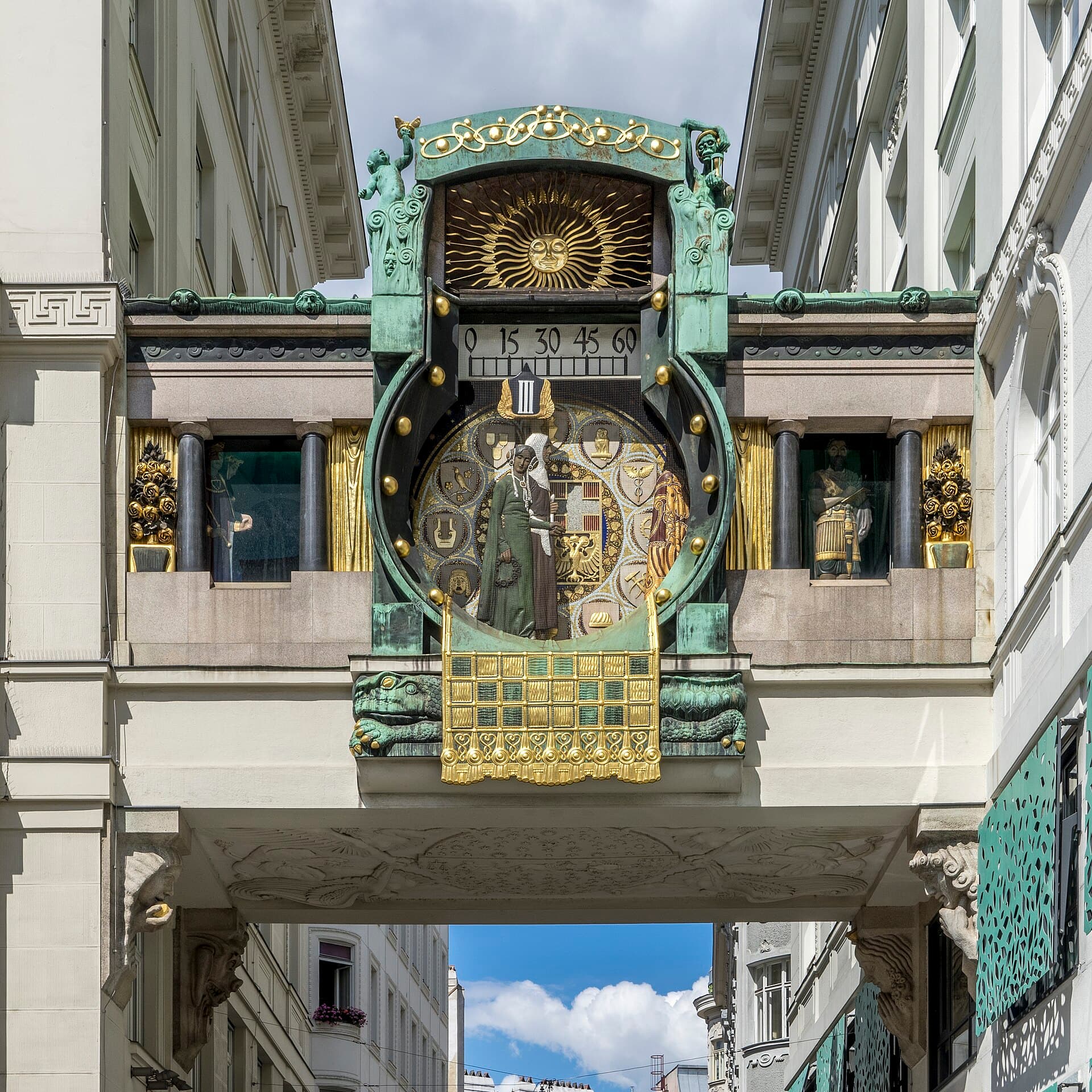 AnkeruhrA gilded metal clock bridging two buildings on Hoher Markt, designed by the pain2 minutes walk4.3
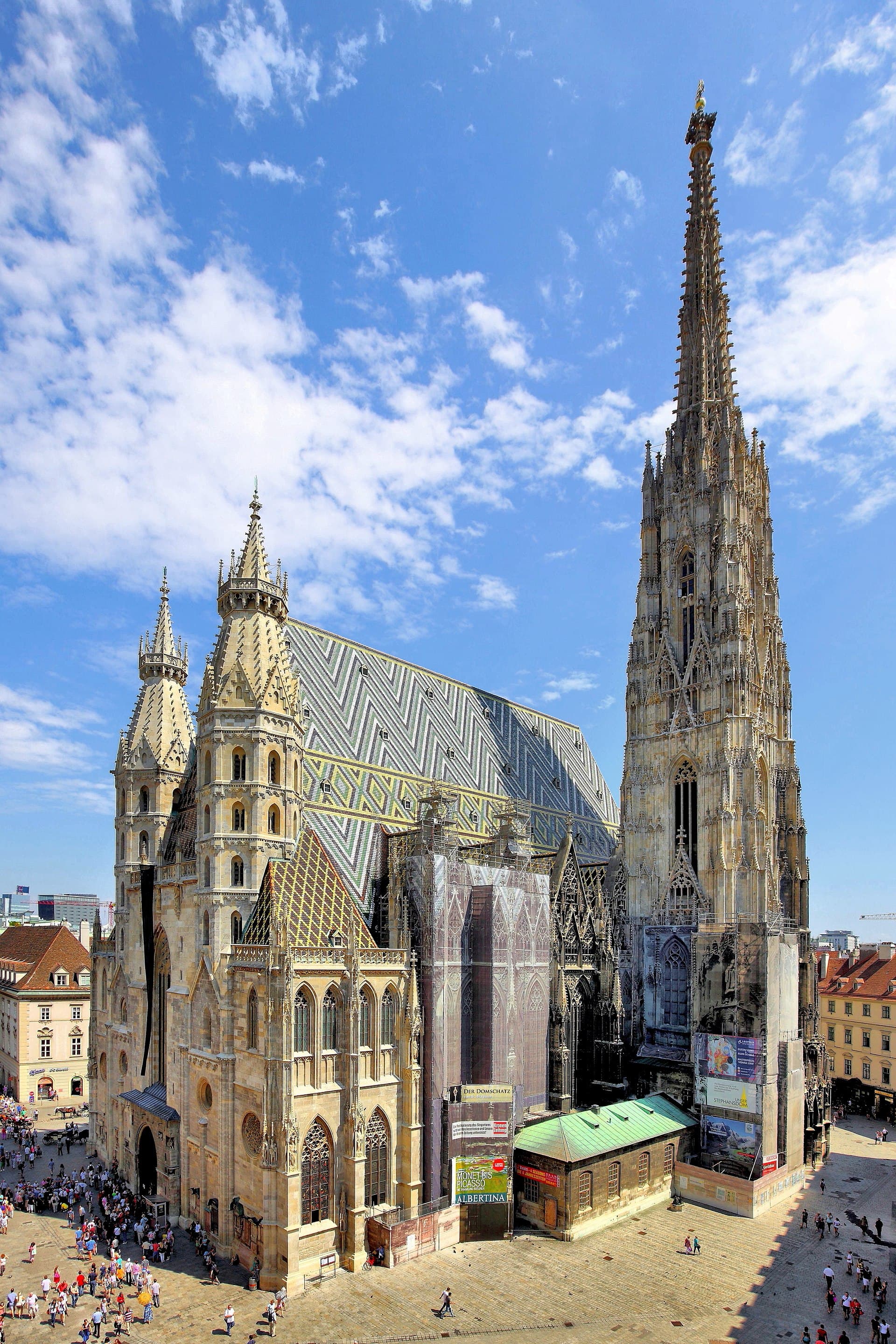 St. Stephen's CathedralVienna's geographic and symbolic heart at once: a Gothic cathedral whose oldest 3 minutes walk4.6
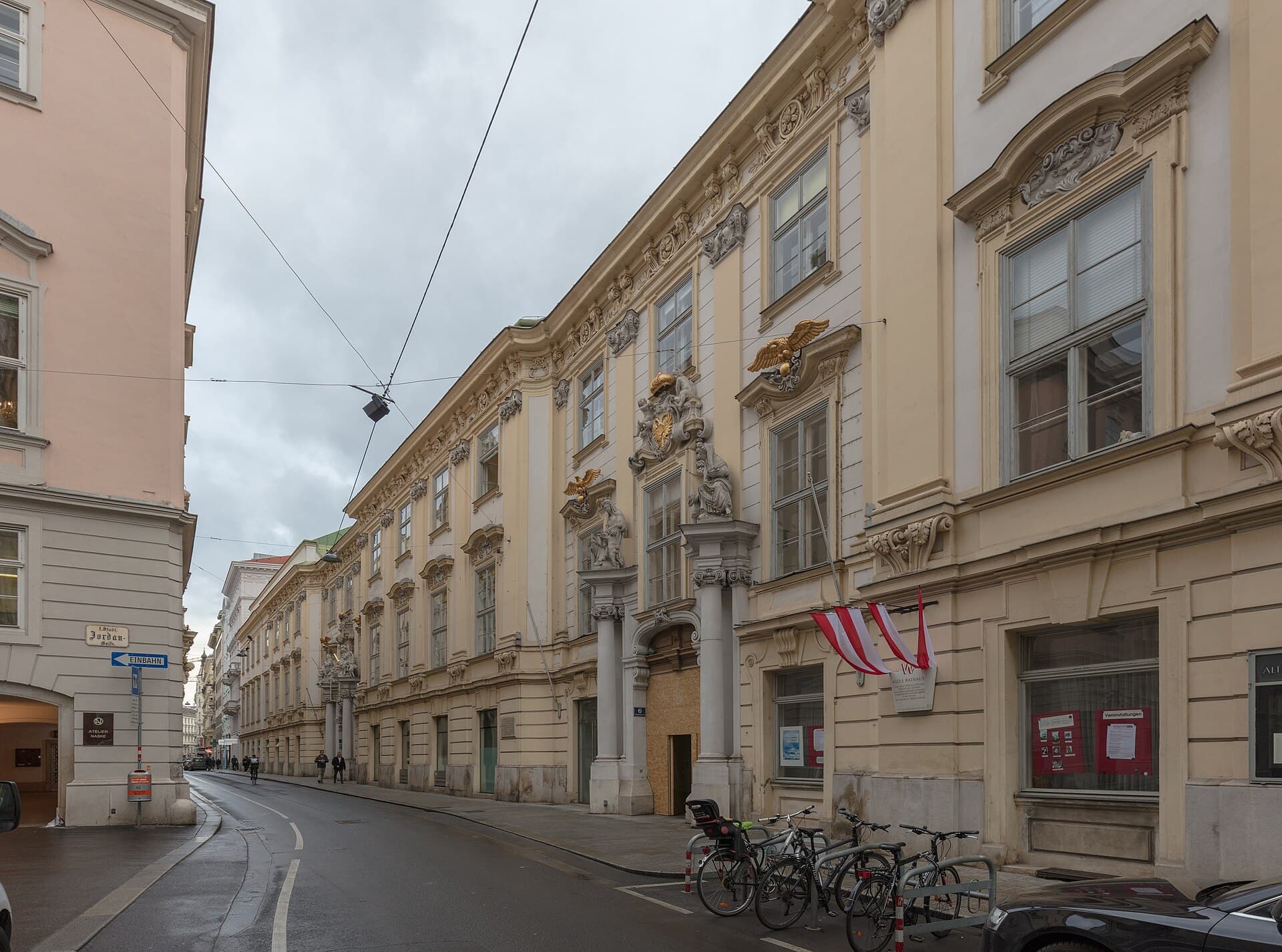 Altes Rathaus, ViennaVienna's old city hall, before the municipality moved to the vast Gothic buildin3 minutes walk4.7
No. The building is private housing. The lobby and staircase may be visible from the entrance, but do not go beyond that: this is where people live rather than a monument. The facade and the upper corner are what you come for, and both are free.
The Looshaus on Michaelerplatz is nearby, and both rejected ornament at around the same time in different ways. Seeing them in one walk with St Stephen's Cathedral and the Haas House gives you four centuries of architectural argument in half an hour.