
The large basin
With rounded buttresses.
Neil Rickards — CC BY 2.0 · Bernard Gagnon — CC BY-SA 3.0 · Habib M'henni — CC BY 4.0 · Habib M'henni — CC BY 4.0
Two great circular reservoirs built by the Aghlabids in the ninth century to supply Kairouan with water, a city set in dry steppe far from any river. The emir Abu Ibrahim Ahmad ordered them, and they were finished between 860 and 862 under the supervision of Khalaf al-Fata, who is linked to other works of the period too. Water arrived from the riverbed and along an aqueduct from distant hills into the smaller basin first, where the mud settled, then flowed clear into the large basin that stored it for the city. Rows of rounded stone buttresses brace the walls of both basins and give them their distinctive scalloped look. At the centre of the large basin stands a base that once carried a small pavilion where, accounts say, the emir took his ease. The roof of the tourist office next door gives the best view down onto both basins, and the clearest sense of their size and system. The visit is short and makes a good start to a day in Kairouan: the tourist office is beside the basins, and from there it is an easy walk to the medina and the Great Mosque.
With rounded buttresses.
Clears the water first.
From the tourist office.
North of the medina, Kairouan, beside the tourist office
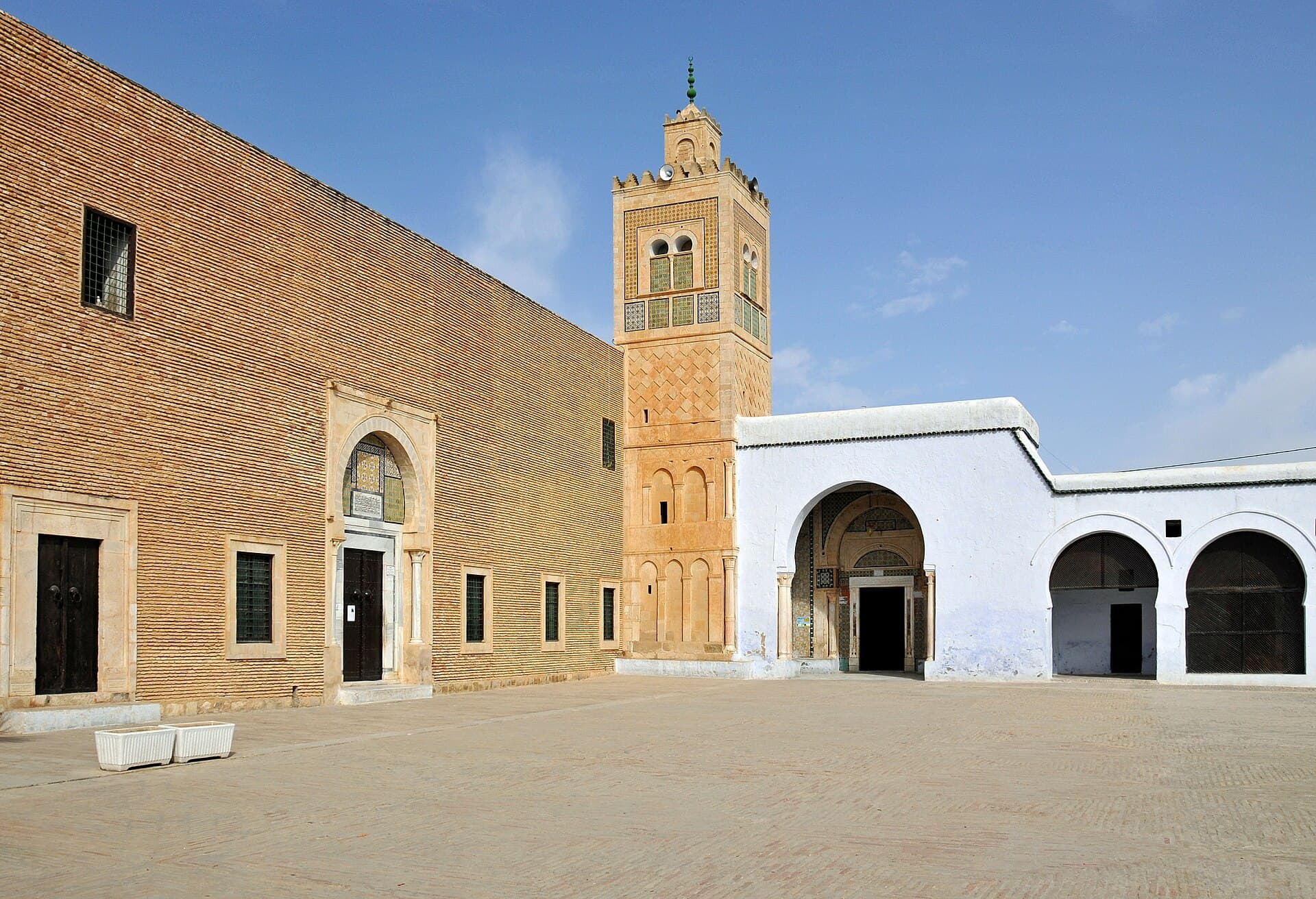 Zawiya of Sidi Sahbi (Mosque of the Barber)One of Kairouan's most important shrines, holding by tradition the grave of Abu 9 minutes walk4.4
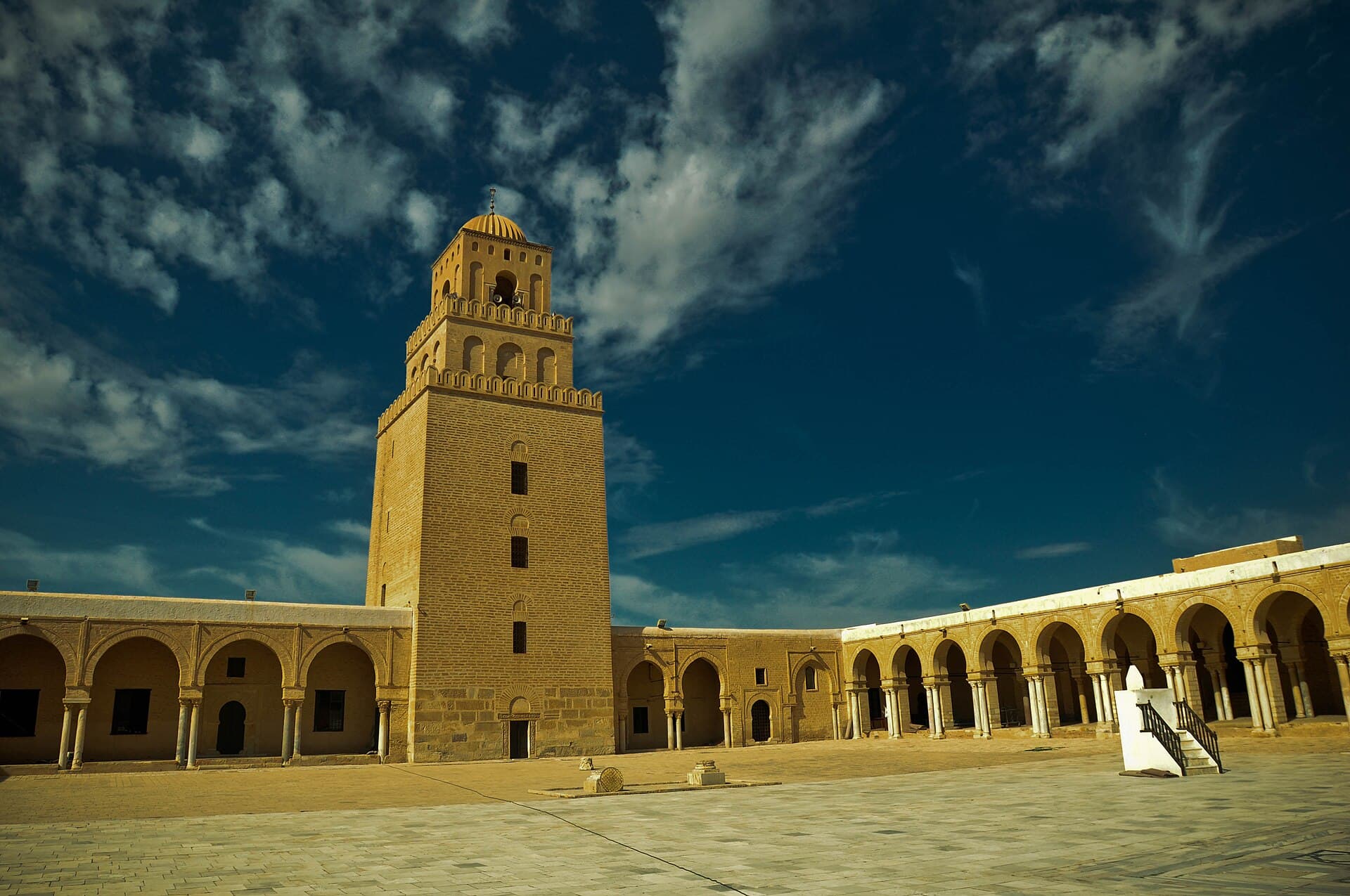 Great Mosque of Kairouan (Mosque of Uqba)The oldest and most influential mosque of the Islamic West, founded by the gener13 minutes walk4.7
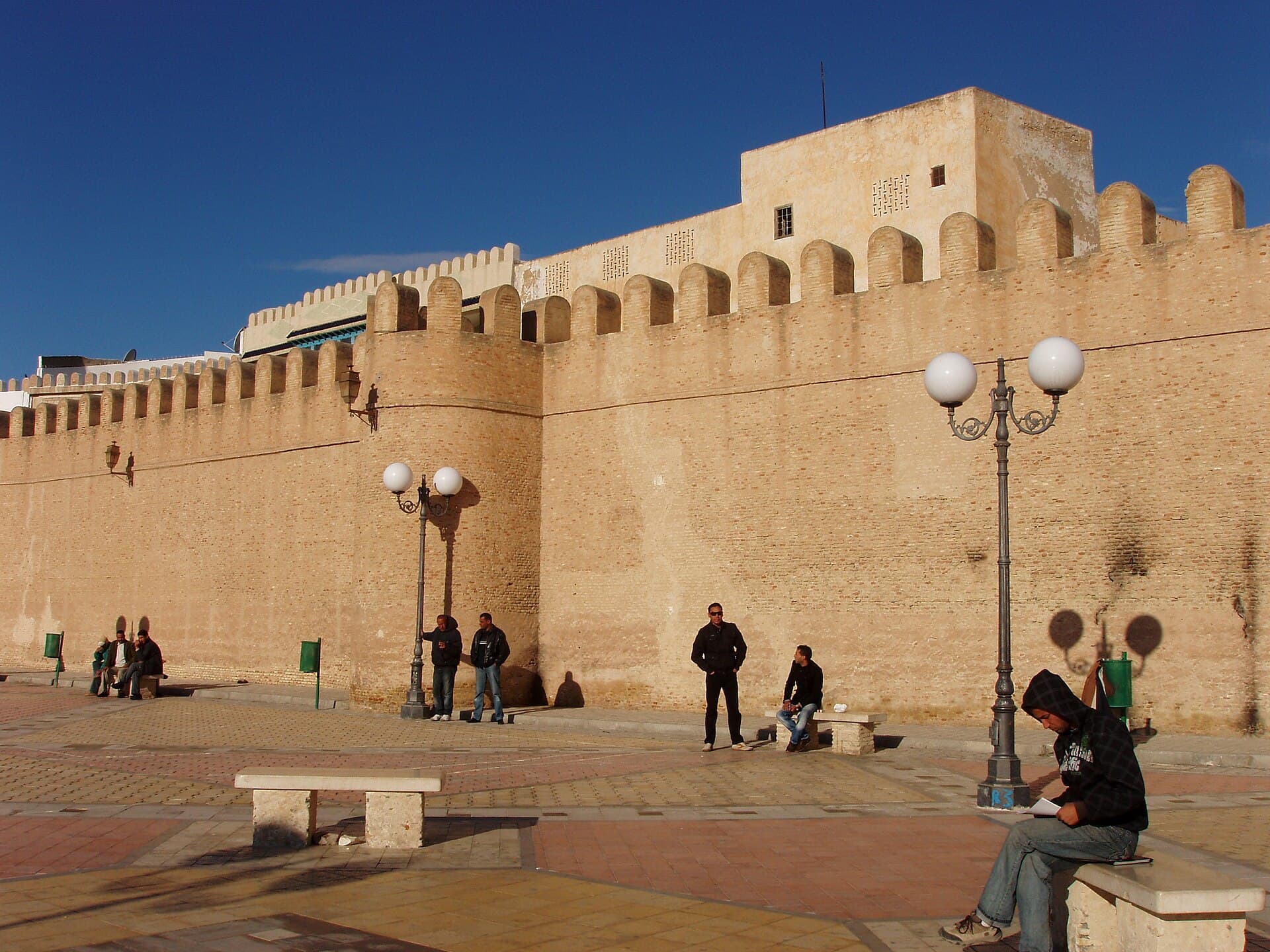 Medina of KairouanThe historic heart of Kairouan, the first city the Muslims founded in the Maghre15 minutes walk
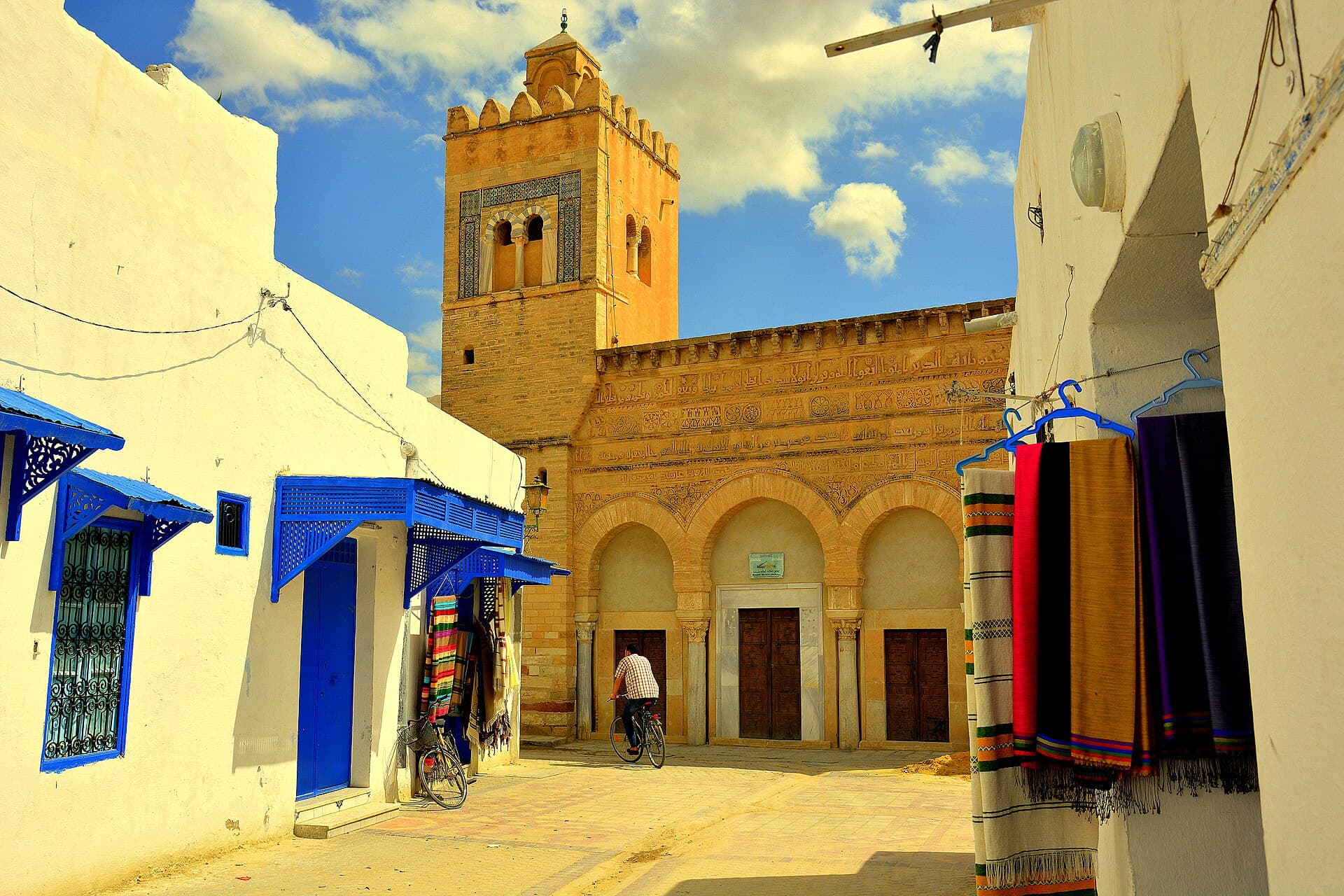 Mosque of the Three DoorsA small mosque in the lanes of Kairouan's medina, famous entirely for its facade16 minutes walk4.4
They stored Kairouan's drinking water: water entered the small basin, where the mud settled, then flowed clear into the large one.