
Three doorways
An Aghlabid facade.
IssamBarhoumi — CC BY-SA 4.0 · Habib M'henni — CC BY-SA 4.0 · Habib M'henni — CC BY-SA 4.0 · Habib M'henni — CC BY-SA 4.0
A small mosque in the lanes of Kairouan's medina, famous entirely for its facade. It was built in 866 (252 AH), in the Aghlabid era, by Muhammad ibn Khayrun al-Ma'afiri al-Andalusi, a local patron, and its facade is one of the earliest richly decorated exterior facades in Islamic architecture. Three arched doorways give the mosque its name. Above them run bands of Kufic inscriptions carved into the stone, including the foundation text naming its builder, with finely carved floral and geometric ornament between them. The facade is the only part left from the original building; the minaret was added in 1440, under the Hafsids, when the mosque was restored. That is why visitors see it from outside, and why the facade is the whole point. Standing in front of it is free at any hour and takes a few minutes. Make it a stop on your walk through the medina's souks, and look at the Kufic bands in morning light, when the carving stands out most sharply.
An Aghlabid facade.
And the foundation text.
Added in 1440.
In the lanes of the medina, Kairouan
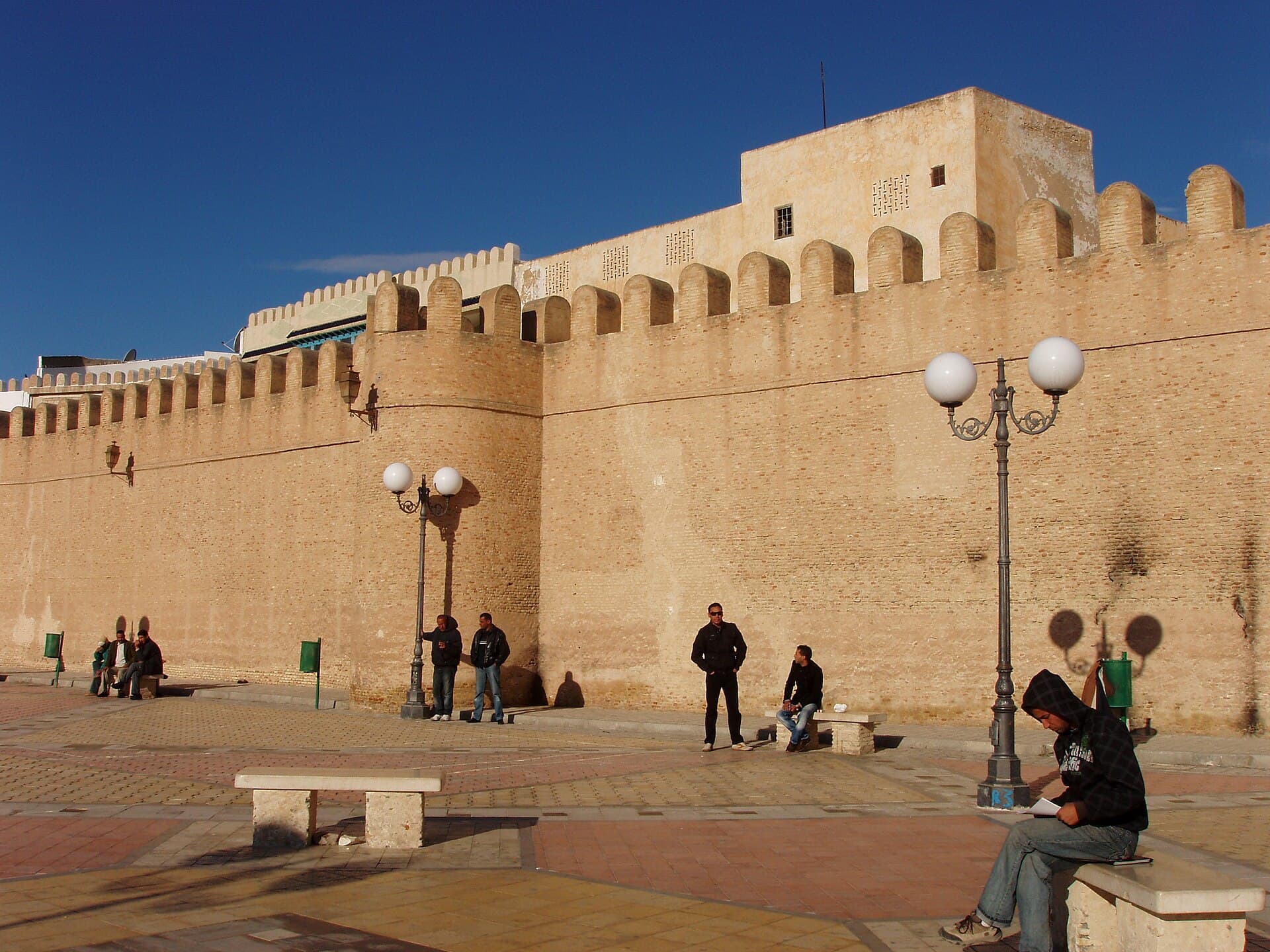 Medina of KairouanThe historic heart of Kairouan, the first city the Muslims founded in the Maghre4 minutes walk
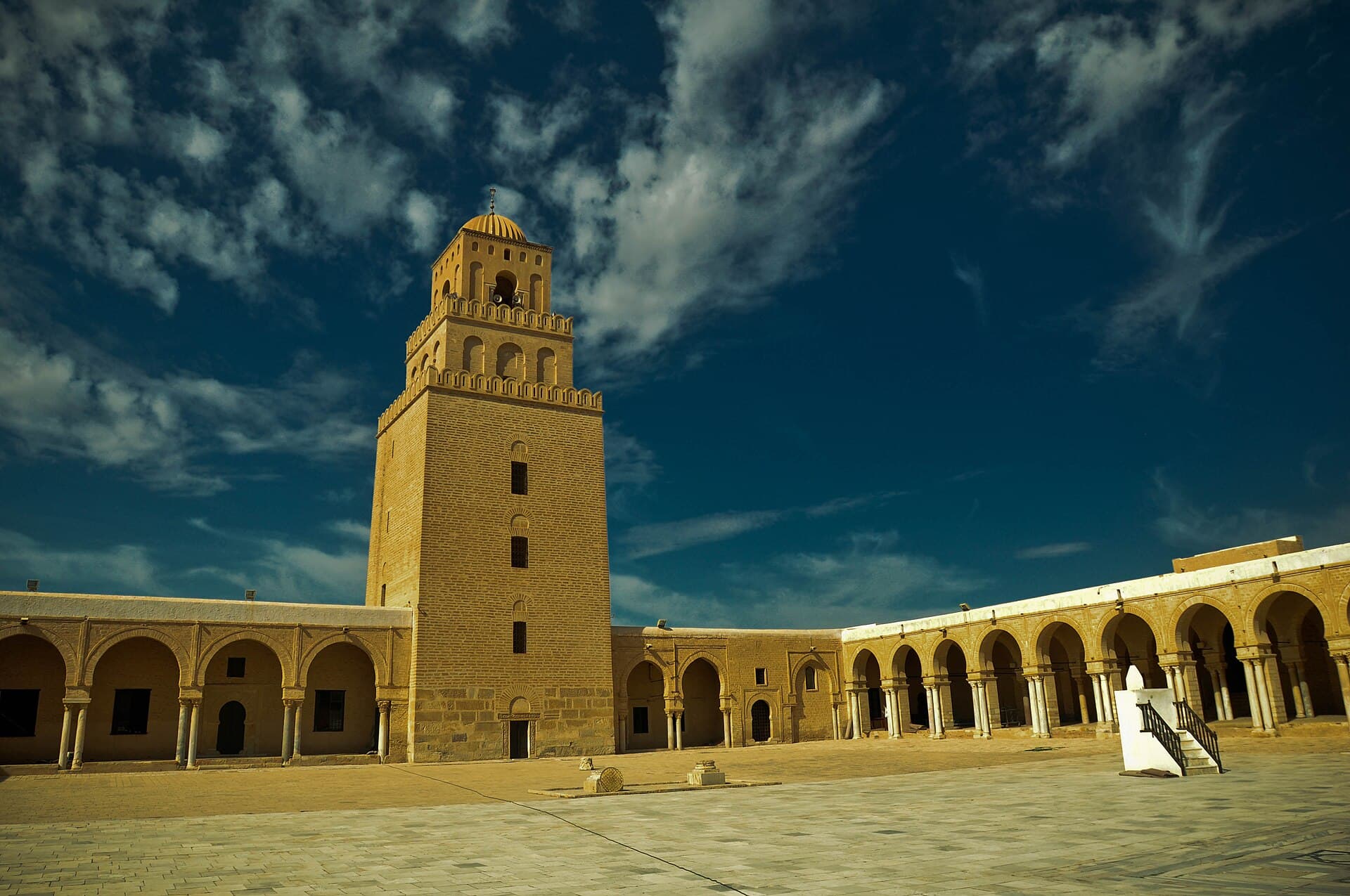 Great Mosque of Kairouan (Mosque of Uqba)The oldest and most influential mosque of the Islamic West, founded by the gener6 minutes walk4.7
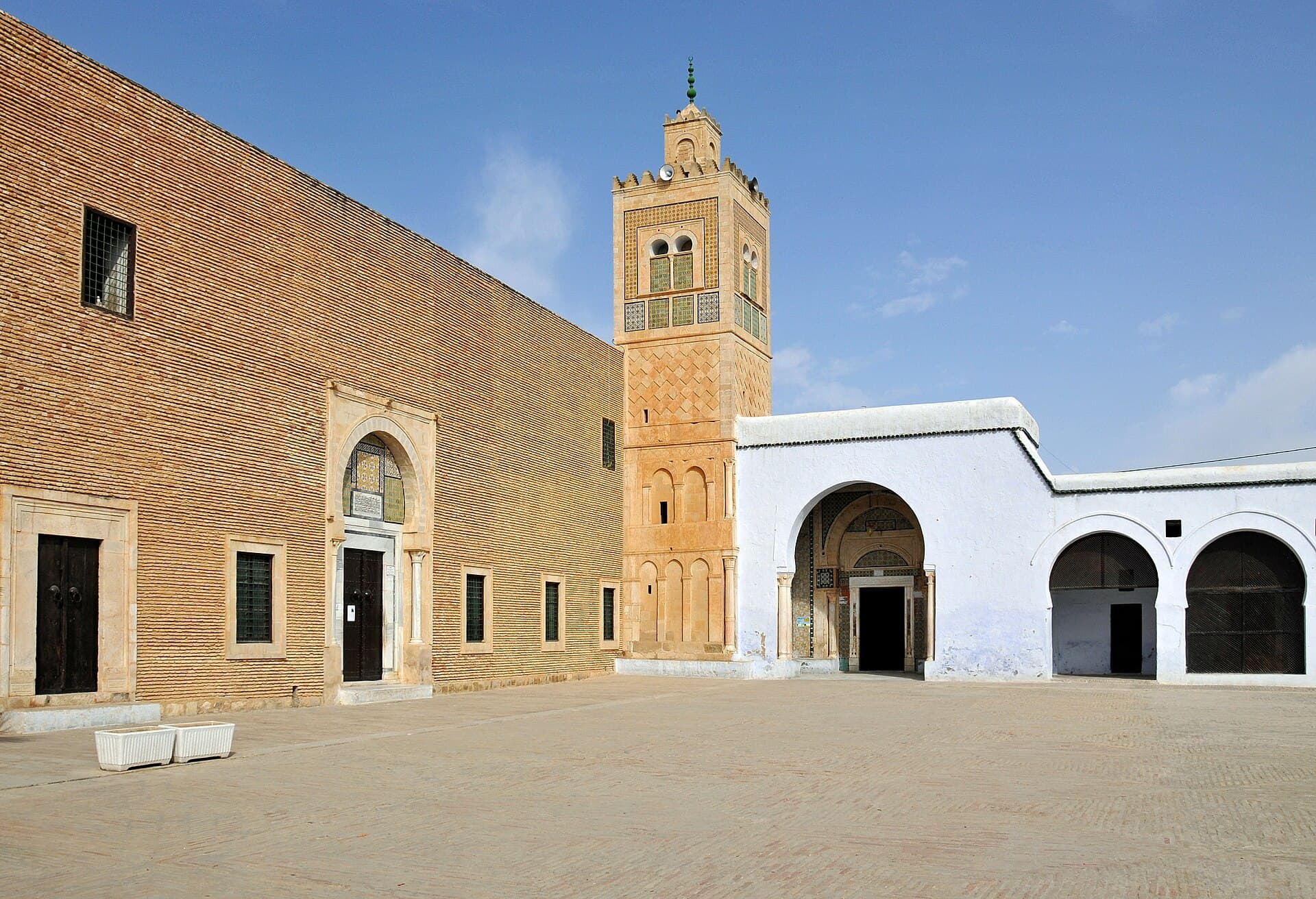 Zawiya of Sidi Sahbi (Mosque of the Barber)One of Kairouan's most important shrines, holding by tradition the grave of Abu 16 minutes walk4.4
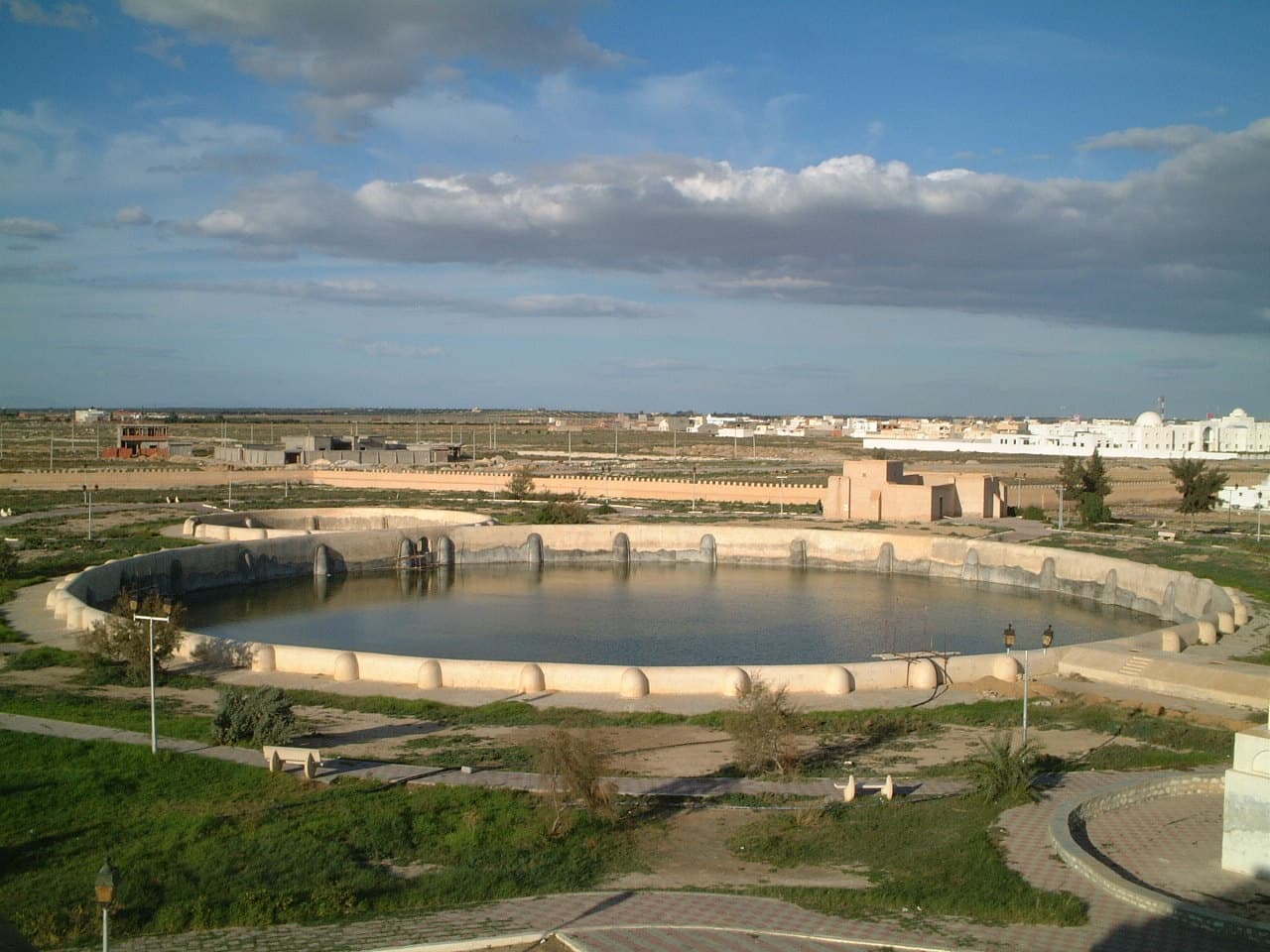 Aghlabid BasinsTwo great circular reservoirs built by the Aghlabids in the ninth century to sup16 minutes walk4.2
It is usually seen from outside: the facade is the surviving original part, and viewing it is free at any time.