
Walls and gates
About three kilometres.
damian entwistle — CC BY-SA 2.0 · Bobulous — CC BY-SA 4.0 · damian entwistle — CC BY-SA 2.0 · No machine-readable author provided. Greudin assumed (based on copyright claims). — CC BY-SA 2.5
The historic heart of Kairouan, the first city the Muslims founded in the Maghreb, in 670, and for centuries the capital of Ifriqiya. Brick walls about three kilometres long, broken by great gates, ring the old town, and Kairouan has been a UNESCO World Heritage Site since 1988. A main street runs from Bab ech-Chouhada in the south to Bab Tounes in the north, with lanes branching off between white houses with studded blue and green doors, latticed wooden windows, and small mosques and zawiyas in every quarter. Kairouan is the capital of the Tunisian carpet, and its shops sell hand-knotted rugs in muted colours, many bearing the official quality stamp. Do not leave without trying makroudh, semolina pastries filled with dates and fried in oil, from one of the old pastry shops. Inside the walls you will also find Bir Barouta, where a camel turns an old wheel to draw water, and the Mosque of the Three Doors. Wandering is free, and mornings are best, before the heat.
About three kilometres.
A camel turns the wheel.
Kairouan's pastry.
Central Kairouan; main entrances through Bab ech-Chouhada or Bab el-Jalladine
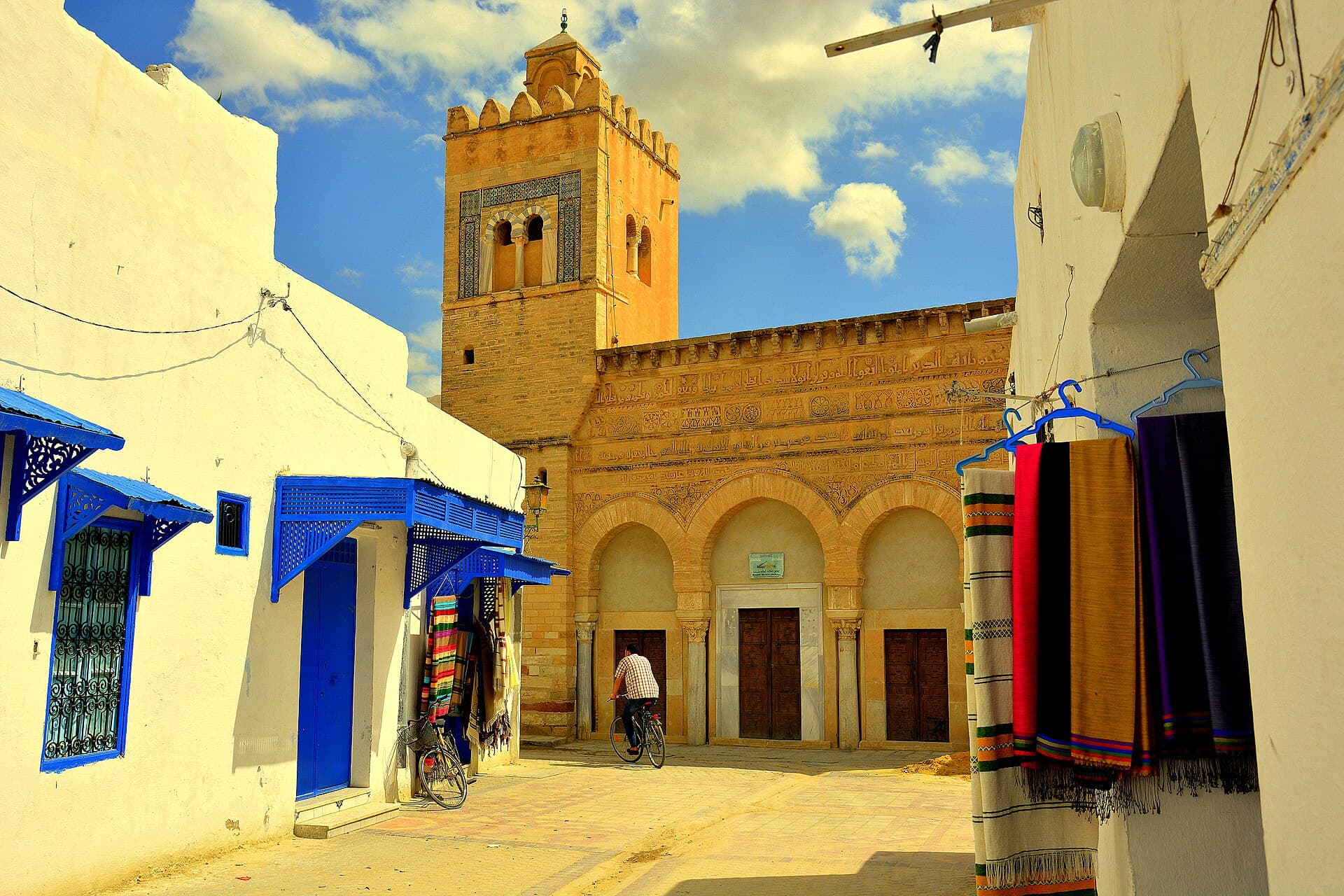 Mosque of the Three DoorsA small mosque in the lanes of Kairouan's medina, famous entirely for its facade4 minutes walk4.4
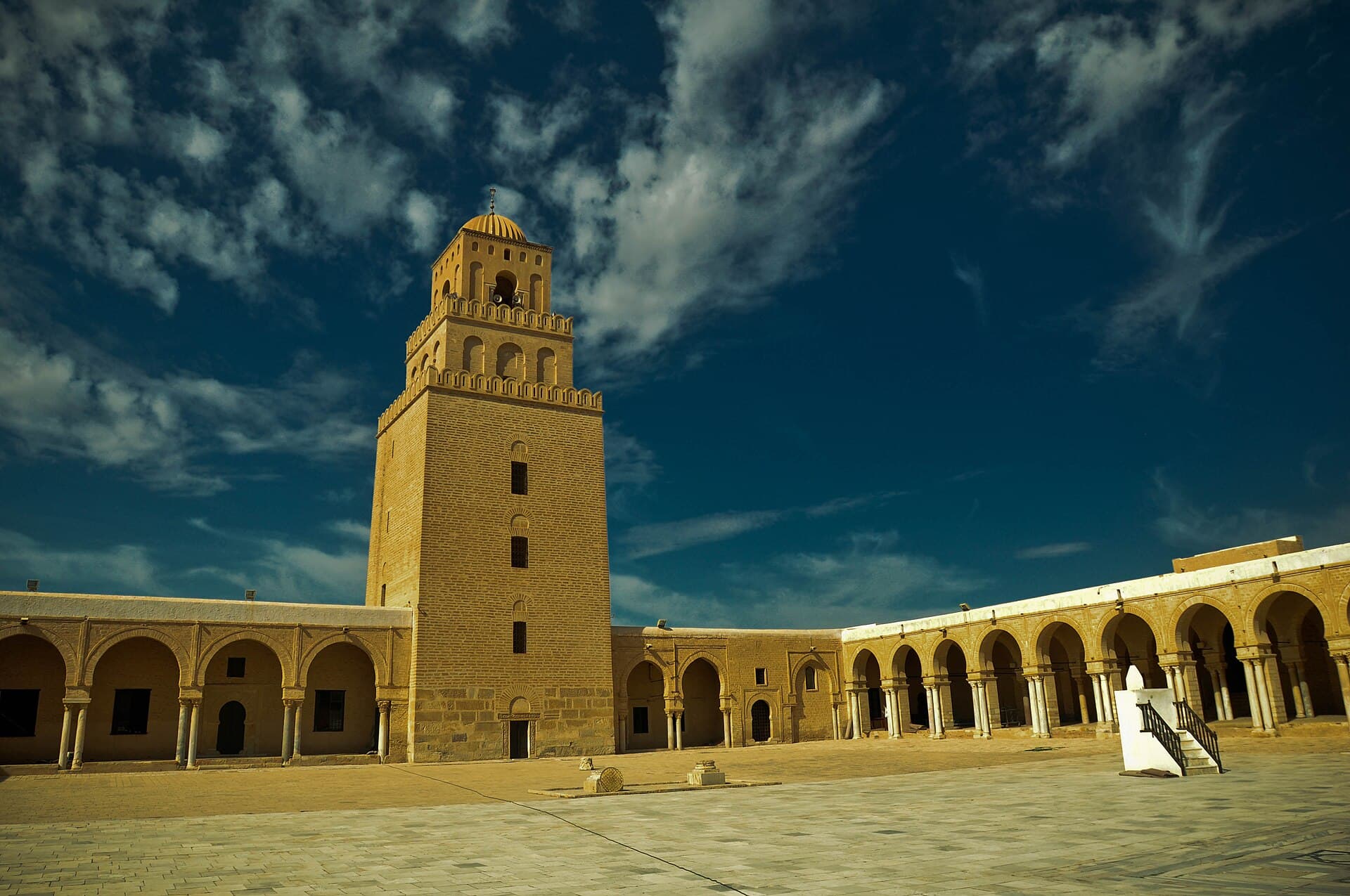 Great Mosque of Kairouan (Mosque of Uqba)The oldest and most influential mosque of the Islamic West, founded by the gener9 minutes walk4.7
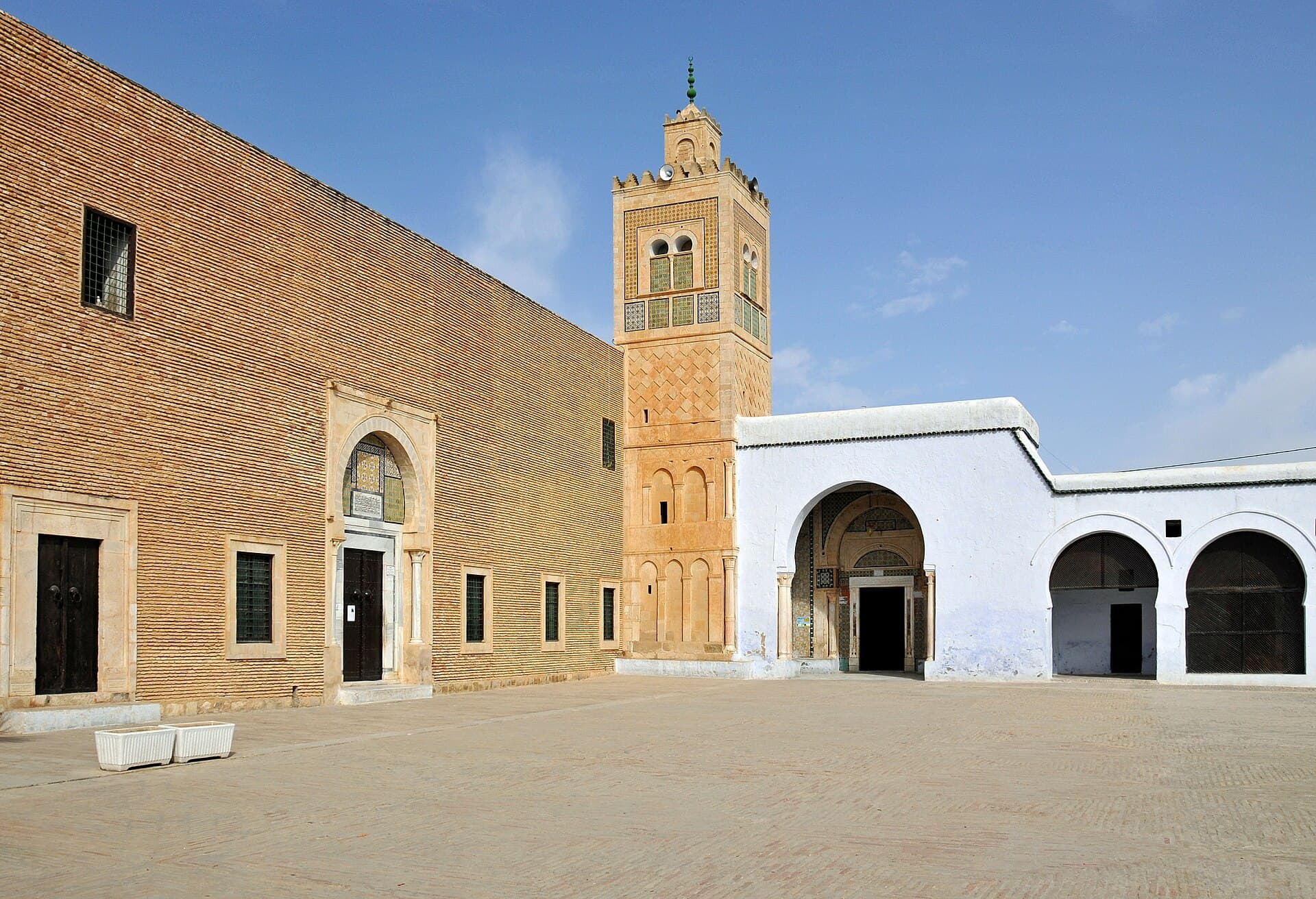 Zawiya of Sidi Sahbi (Mosque of the Barber)One of Kairouan's most important shrines, holding by tradition the grave of Abu 13 minutes walk4.4
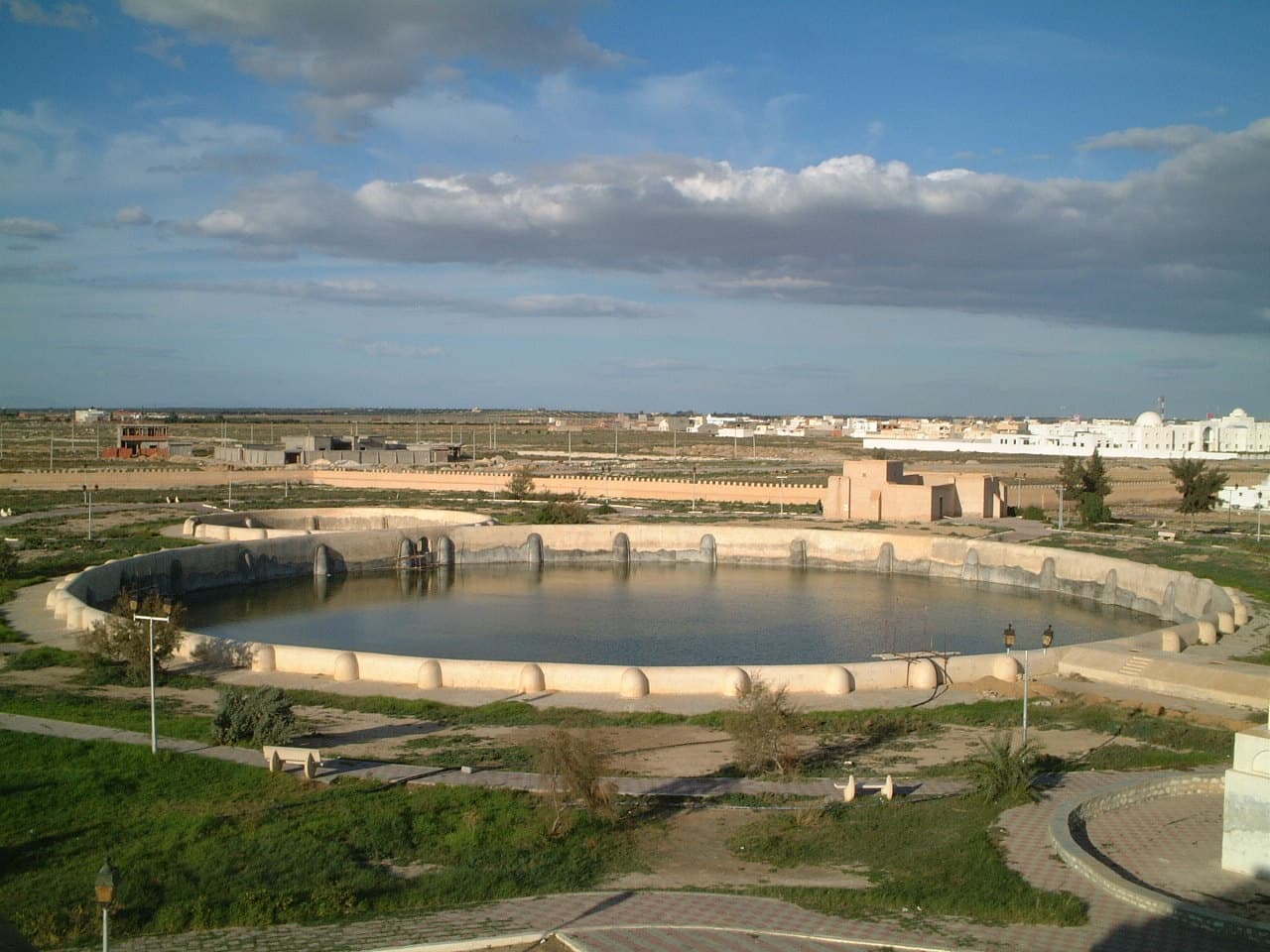 Aghlabid BasinsTwo great circular reservoirs built by the Aghlabids in the ninth century to sup15 minutes walk4.2
A hand-knotted carpet, ideally with the official quality stamp, and makroudh, the city's famous date pastry.