
The marble courtyard
Black-and-white strapwork from the 17th century.
Skander zarrad — CC BY-SA 4.0 · Fehmi bouguezzi — CC BY-SA 4.0 · Skander zarrad — CC BY-SA 4.0 · IssamBarhoumi — CC BY-SA 4.0 · Ayman Chermiti — CC BY-SA 4.0
The Zawiya of Sidi Abid el Ghariani is a 14th-century shrine and former religious school in the medina of Kairouan. On two floors around three courtyards, it holds the tomb of the scholar it is named after and that of a Hafsid sultan, and has been a protected monument since 1912. The Kairouan jurist Muhammad al-Jadidi founded it but died on pilgrimage to Mecca in 1384. His disciple Abu Samir Abid el Ghariani, from Jebel Gharyan in Libya, carried on the work, taught here for some twenty years and was buried here in 1402. Enlarged several times and remodelled mainly in the 17th century, the building was restored in the 1970s. The Hafsid sultan al-Hasan, known as Mulay Hasan, lies beside the saint. A bent entrance under a wooden ceiling with Hispano-Maghrebi motifs leads to the main courtyard, paved in black-and-white marble strapwork and ringed by porticoes with glazed tiles below carved stucco. The tomb chamber has a stepped painted wooden ceiling under a green-tiled pyramid roof, and alternating black and white marble voussoirs frame the mihrab of the prayer hall. A second courtyard reuses columns with Byzantine and Zirid capitals, some perhaps taken from Sabra al-Mansuriyya, the Fatimid capital beside Kairouan. It stands on Rue Sidi el Ghariani, about 120 m from Bir Barouta and 250 m from the Mosque of the Three Doors; the Great Mosque is some 700 m away as the crow flies. It also houses the medina's preservation association. Per the heritage agency it opens Monday to Friday only, so come on a weekday.
Black-and-white strapwork from the 17th century.
A painted ceiling under a green-tiled roof.
Columns with Byzantine and Zirid capitals.
Rue Sidi el Ghariani, near Bir Barouta, medina of Kairouan
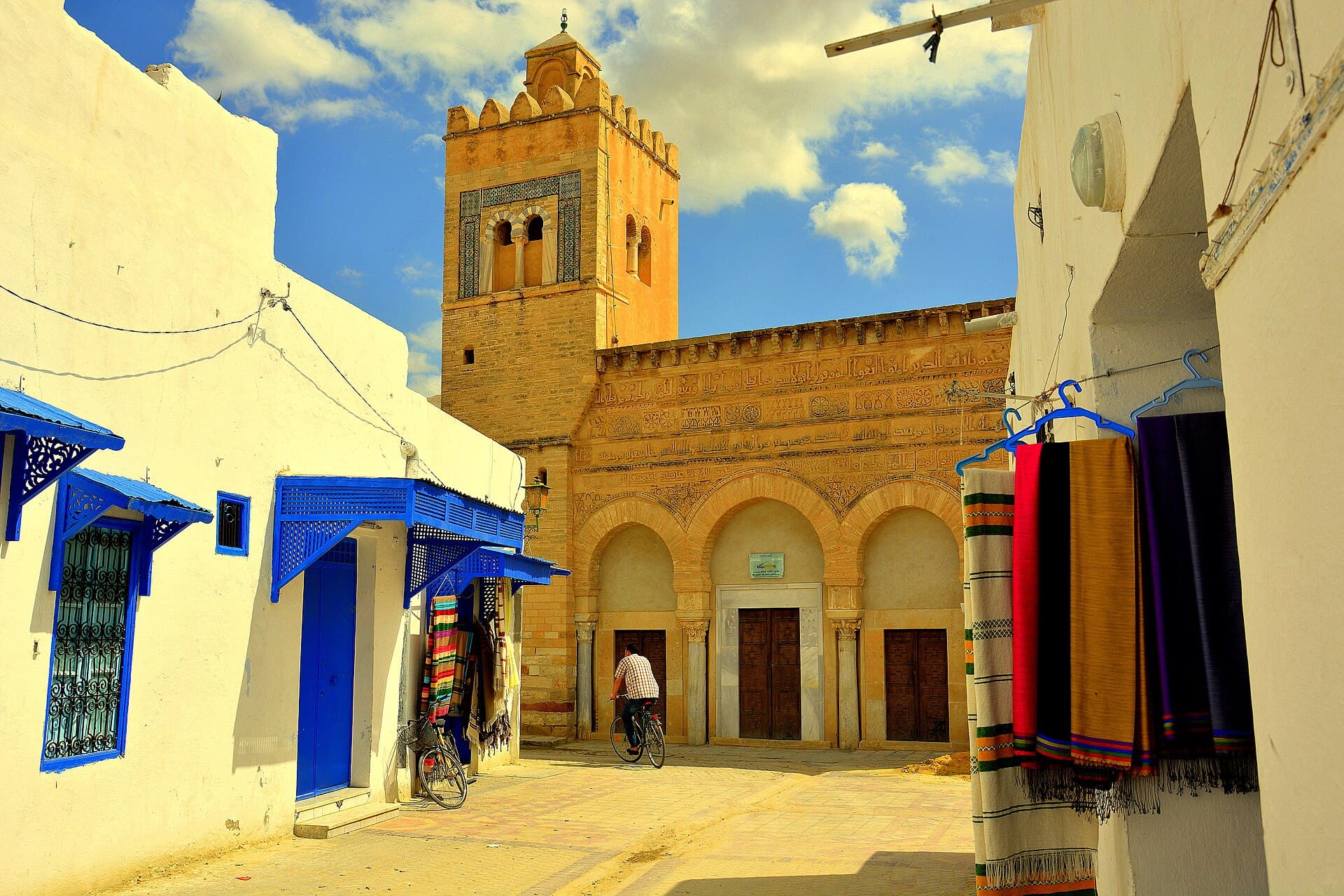 Mosque of the Three DoorsA small mosque in the lanes of Kairouan's medina, famous entirely for its facade3 minutes walk4.4
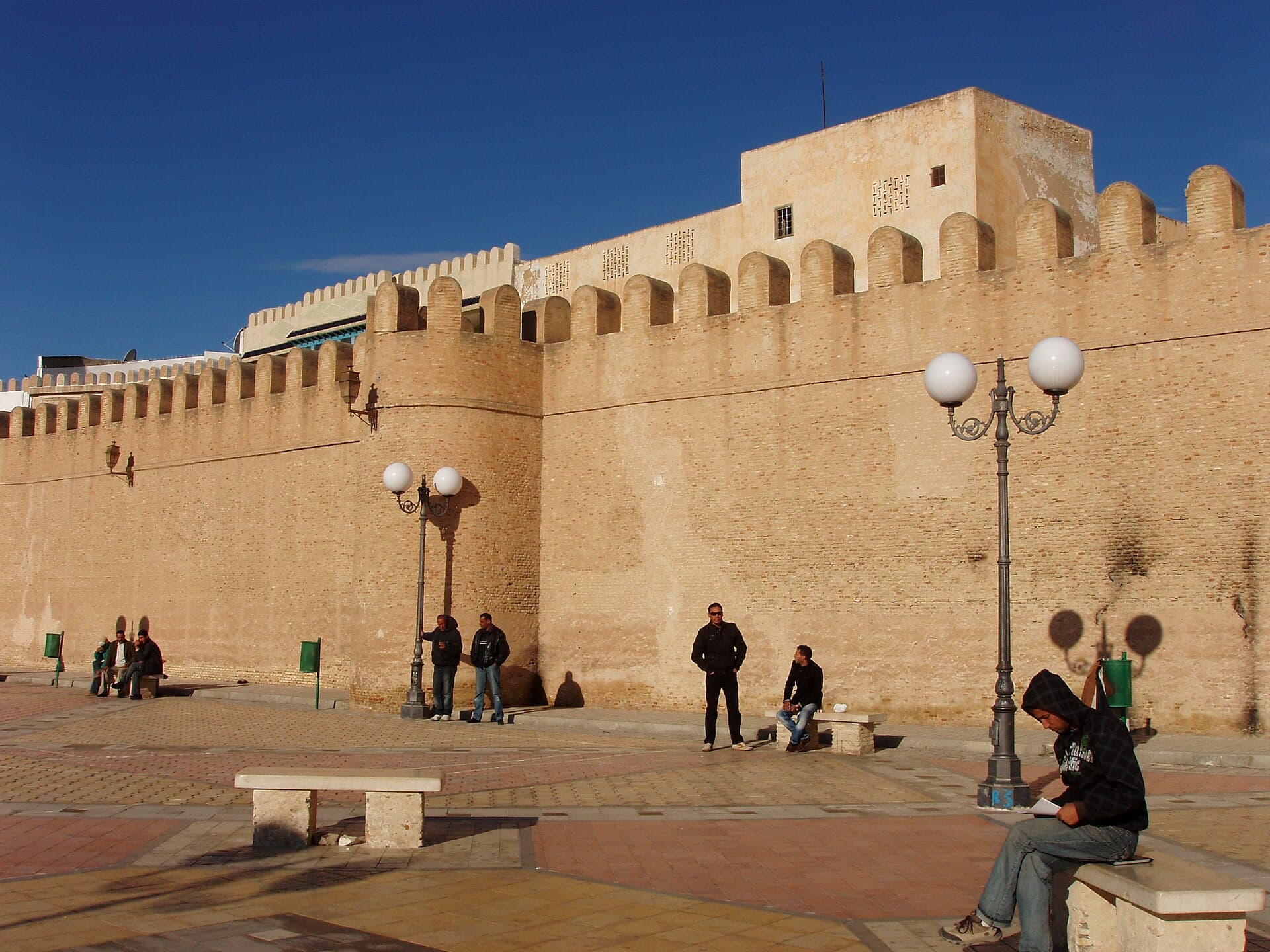 Medina of KairouanThe historic heart of Kairouan, the first city the Muslims founded in the Maghre4 minutes walk
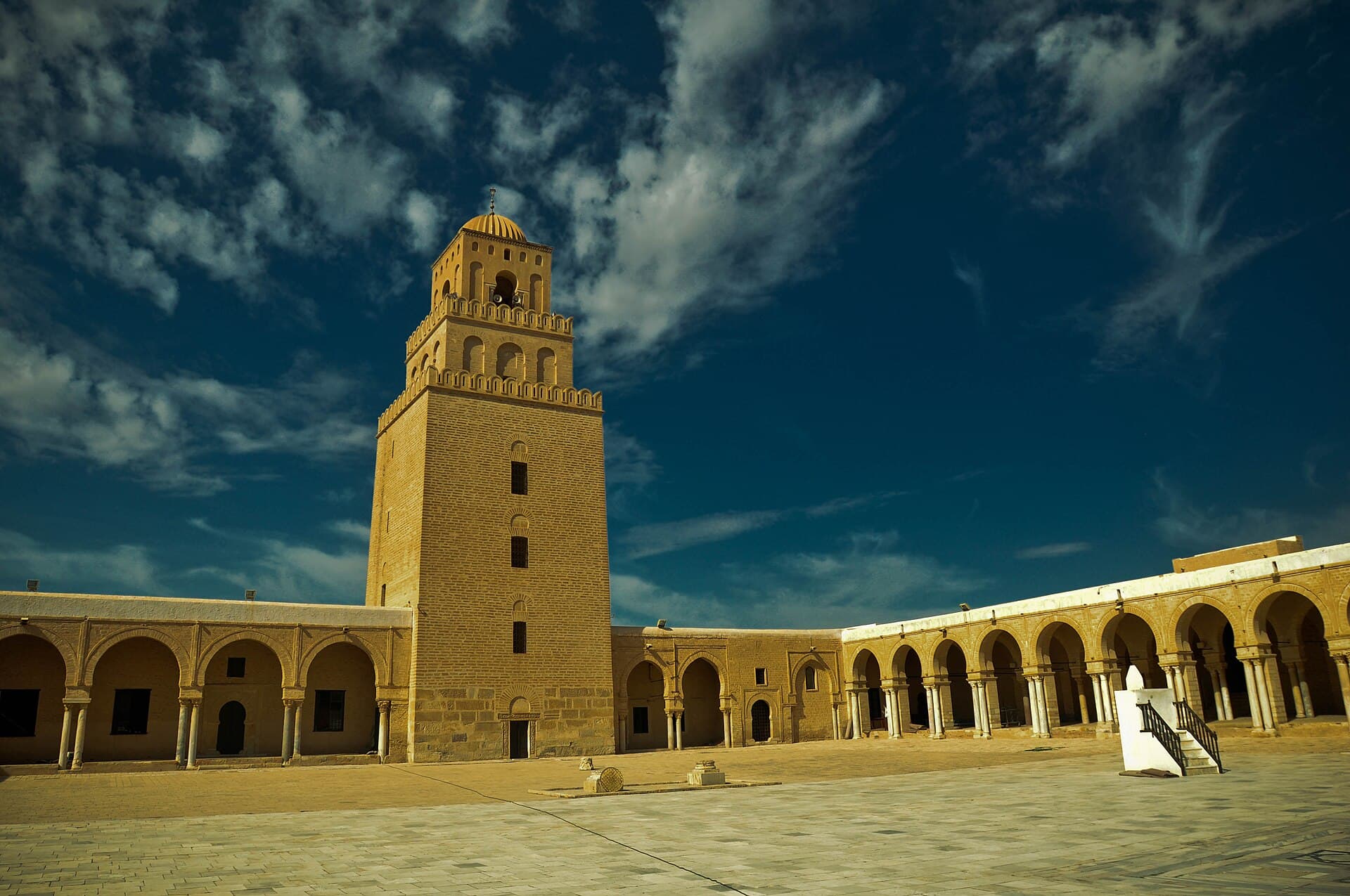 Great Mosque of Kairouan (Mosque of Uqba)The oldest and most influential mosque of the Islamic West, founded by the gener9 minutes walk4.7
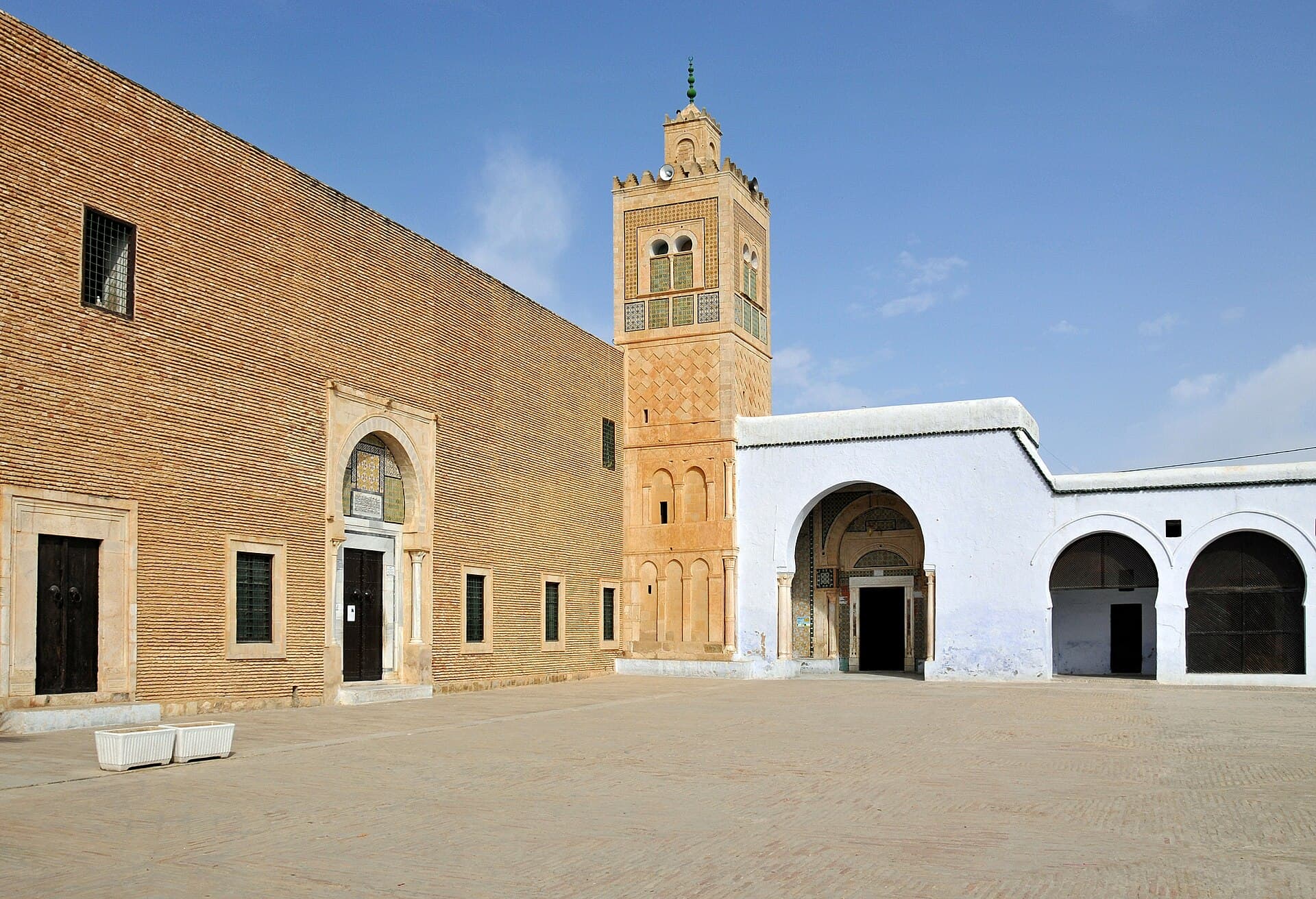 Zawiya of Sidi Sahbi (Mosque of the Barber)One of Kairouan's most important shrines, holding by tradition the grave of Abu 16 minutes walk4.4
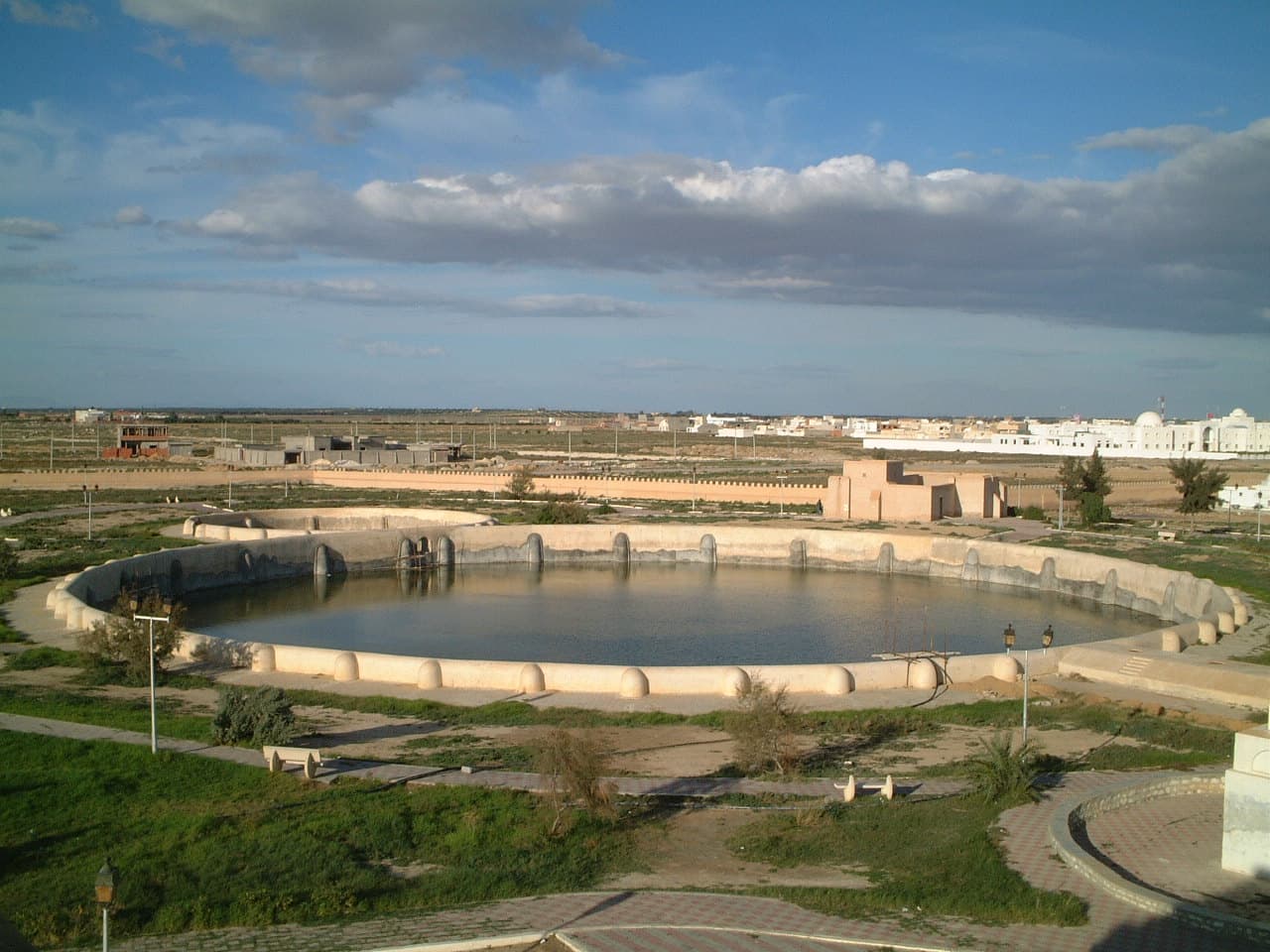 Aghlabid BasinsTwo great circular reservoirs built by the Aghlabids in the ninth century to sup18 minutes walk4.2
Abu Abdallah al-Hasan, known as Mulay Hasan, who ruled Tunis from 1526 to 1543 and regained his throne in 1535 with the help of Emperor Charles V. His son Ahmad later overthrew him, and he was blinded.
The national heritage agency lists it as open Monday to Friday from 08:00, until 15:00 in winter and 14:00 in summer and Ramadan, and until 13:00 on Fridays; it is closed on Saturdays and Sundays.