
Coloured tiles
Lining the walls.
Dennis G. Jarvis — CC BY-SA 2.0 · Habib M'henni — CC BY-SA 4.0 · Habib M'henni — CC BY-SA 4.0 · Habib M'henni — CC BY-SA 4.0
One of Kairouan's most important shrines, holding by tradition the grave of Abu Zama'a al-Balawi, a Companion of the Prophet known locally as Sidi Sahbi and regarded as the city's patron saint. Tradition says he died in battle in 654 and was buried here with three hairs from the Prophet's beard, which is why Europeans call it the Mosque of the Barber. The grave was a place of pilgrimage by the eleventh century and gained its first mausoleum in the fourteenth, but the present complex dates mostly from a large expansion in the seventeenth century. You enter through a long passage to an arcaded courtyard, then to the tomb chamber. The walls are faced with colourful Tunisian qallalin tiles below fine carved plaster in geometric and floral patterns, under decorated ceilings and domes, making the interior one of the loveliest in Kairouan. The shrine is still visited by local people, especially on religious occasions. Dress modestly and behave respectfully near the tomb chamber.
Lining the walls.
Fine geometric work.
Ringed by arcades.
North-west of the medina, Kairouan
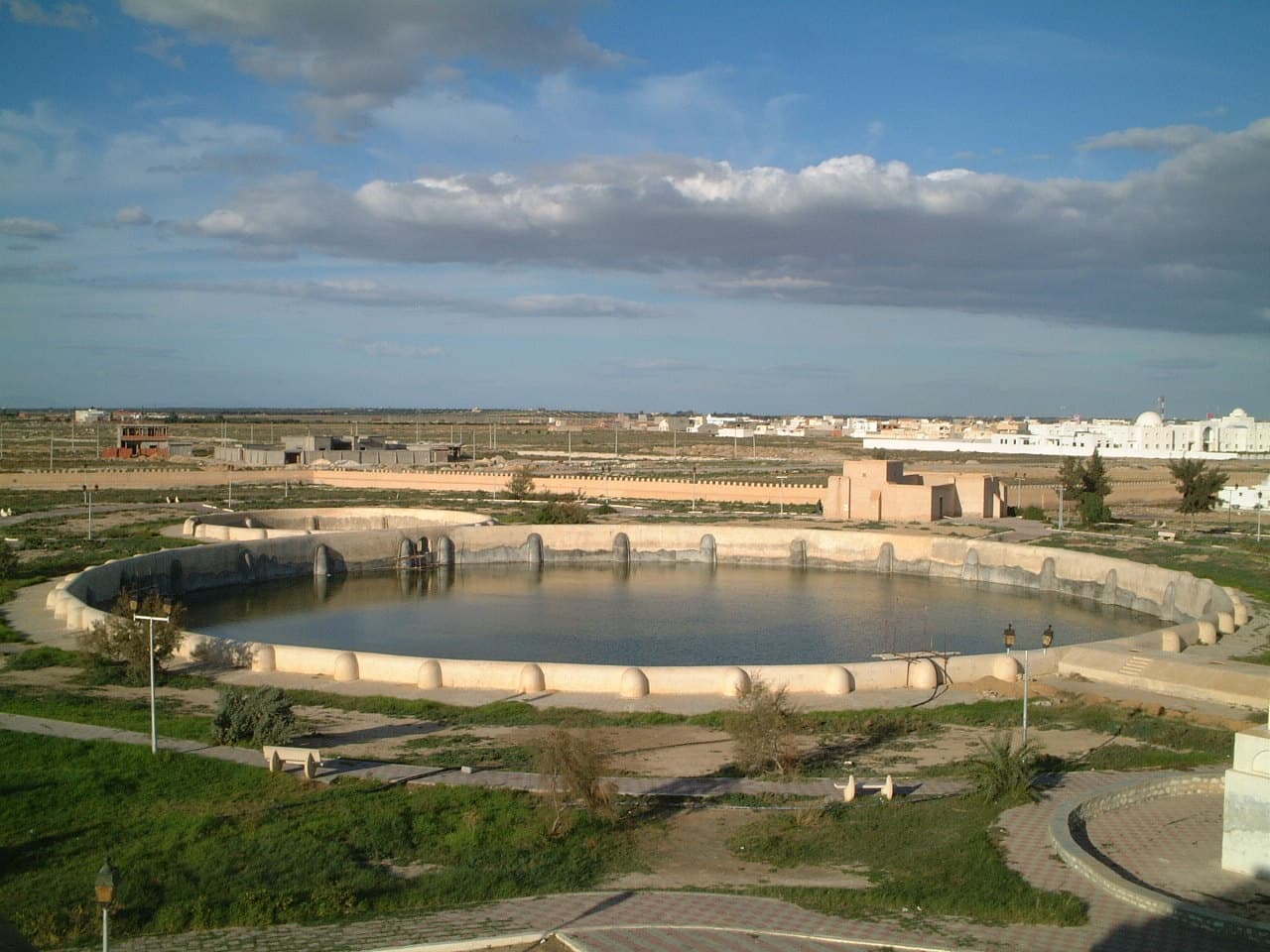 Aghlabid BasinsTwo great circular reservoirs built by the Aghlabids in the ninth century to sup9 minutes walk4.2
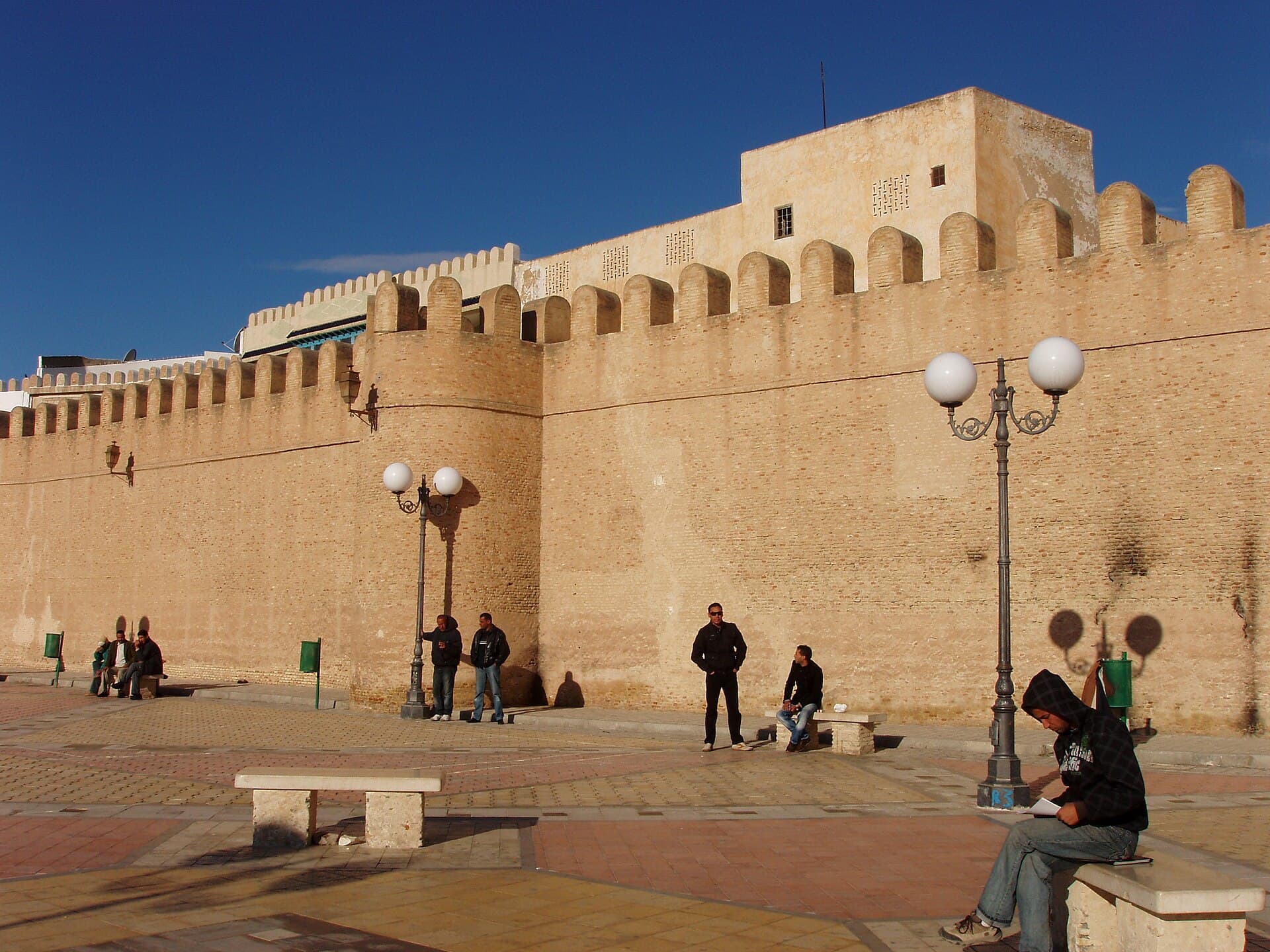 Medina of KairouanThe historic heart of Kairouan, the first city the Muslims founded in the Maghre13 minutes walk
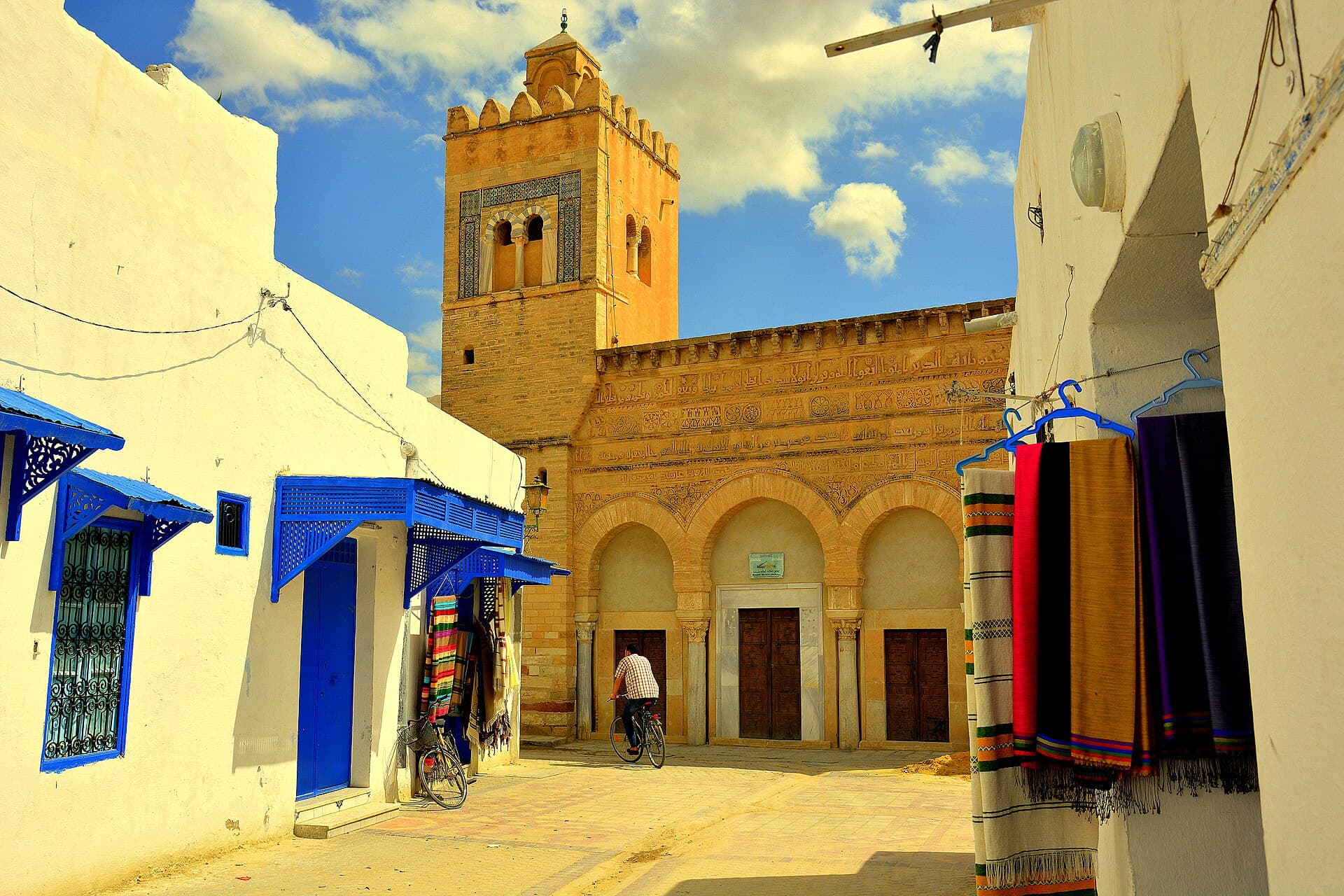 Mosque of the Three DoorsA small mosque in the lanes of Kairouan's medina, famous entirely for its facade16 minutes walk4.4
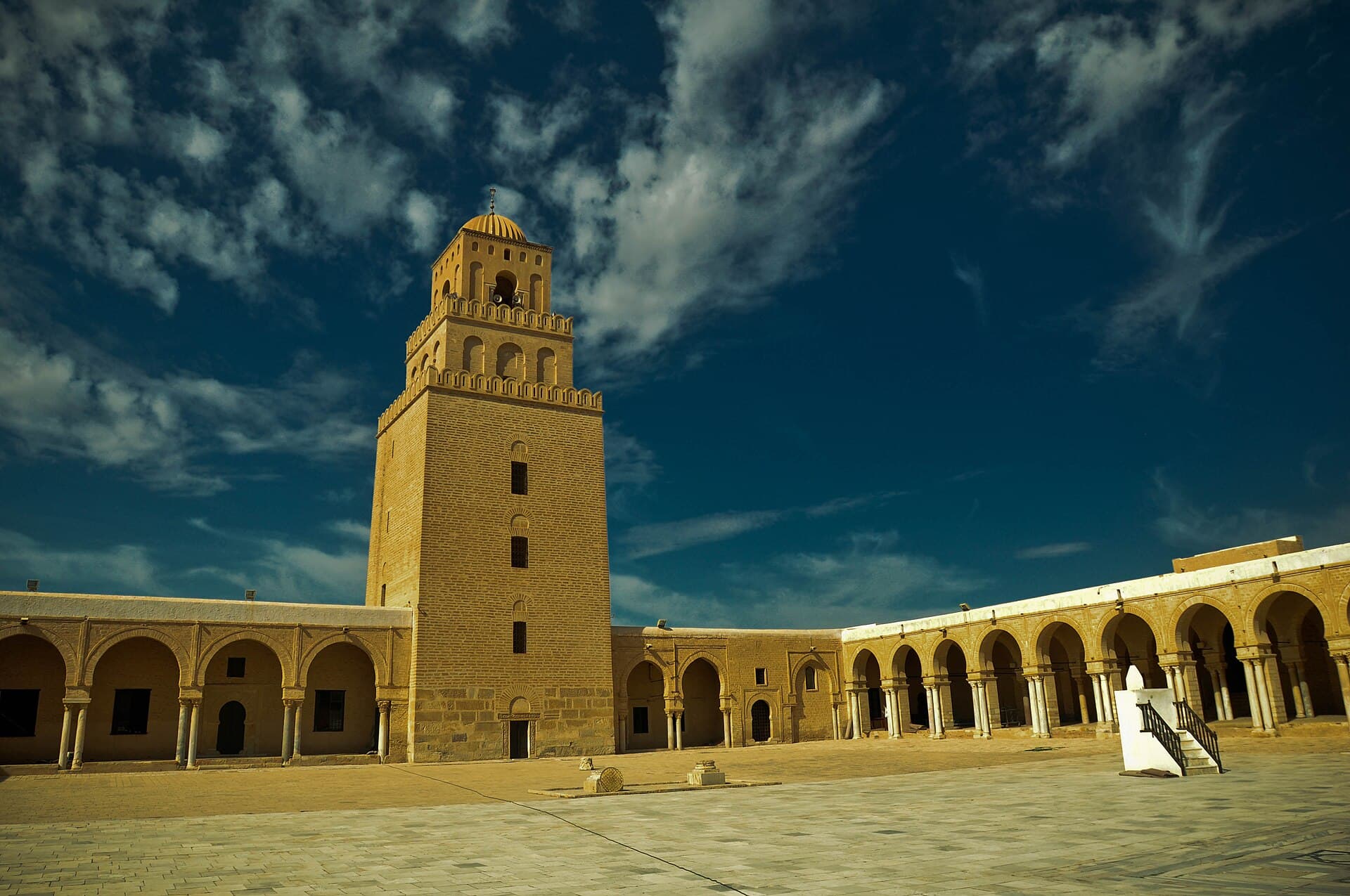 Great Mosque of Kairouan (Mosque of Uqba)The oldest and most influential mosque of the Islamic West, founded by the gener16 minutes walk4.7
Because tradition says the Companion Abu Zama'a al-Balawi was buried with three hairs from the Prophet's beard.