
The forest of columns
Some forty Roman and Byzantine columns inside the mosque, salvaged from the ancient city, no two capitals the same.
Murat Feyzifar — CC BY 3.0 · Satirdan kahraman — CC BY-SA 4.0 · Satirdan kahraman — CC BY-SA 4.0 · Carl Campbell from Querétaro, Mexico — CC BY-SA 2.0
Konya's tram loops around a hill, and the hill is not really a hill at all: it is five thousand years of settlement piled up layer on layer, from the Early Bronze Age to the present. Twenty metres high and an oval of roughly 450 by 350 metres, it is now a tree-shaded park where locals sit on benches with tea. From the tram it looks like an ordinary municipal garden; climb it and you are standing on what was once the citadel of Roman Iconium and then the capital of the Seljuk sultans. The real reason to go up is the Alaaddin Mosque on the summit, the largest surviving Seljuk mosque in Konya and its oldest. Building started in the mid-twelfth century and the mosque was finished in 1220 under Sultan Alaaddin Keykubad I, whose name it carries. The exterior is austere stone with barely any decoration, which makes the interior a surprise: a forest of some forty Roman and Byzantine columns salvaged from the ruins of the ancient city, no two capitals alike. The carved wooden minbar is dated 1155 and is considered the earliest dated Seljuk work in Anatolia; the mihrab is clad in turquoise and aubergine tiles in the classic Seljuk palette. A restoration that began in 2014 and dragged on for years finished in the early 2020s, and the mosque is a working one: free outside the five prayers, headscarf and covered legs assumed. In the courtyard a ten-sided tomb holds eight Seljuk sultans, among them Keykubad himself and Kılıç Arslan II who built it, and beside it stands a second tomb that was never finished, one of those details that makes the place feel more human than the history books. On the north slope are the foundations of the Seljuk palace pavilion, the Alaaddin Köşkü, pulled down on the orders of the provincial governor between 1905 and 1908; what survives is a stump of mud-brick core under a concrete shelter put up in 1961, seen from the path with no ticket. Do not expect much of it. The mosque is the point. Allow about an hour. It is an easy stop with children: paths are paved, a pushchair can be wheeled up from more than one side, and the municipal tea gardens at the foot are cheap. In August the shade keeps it bearable, but go in the morning rather than at midday. The two famous madrasas, Karatay and İnce Minareli, sit right at the base of the hill, and the Mevlana Museum is about twenty minutes' walk along one straight street, so make the hill the first or last stop of a single walking loop.
Some forty Roman and Byzantine columns inside the mosque, salvaged from the ancient city, no two capitals the same.
A carved wooden minbar that is the earliest dated Seljuk work in Anatolia, beside a mihrab of turquoise and aubergine tile.
A ten-sided tomb in the courtyard holds eight Seljuk sultans, with an unfinished second tomb beside it.
Alaaddin Tepesi, Alaaddin Caddesi, central Konya
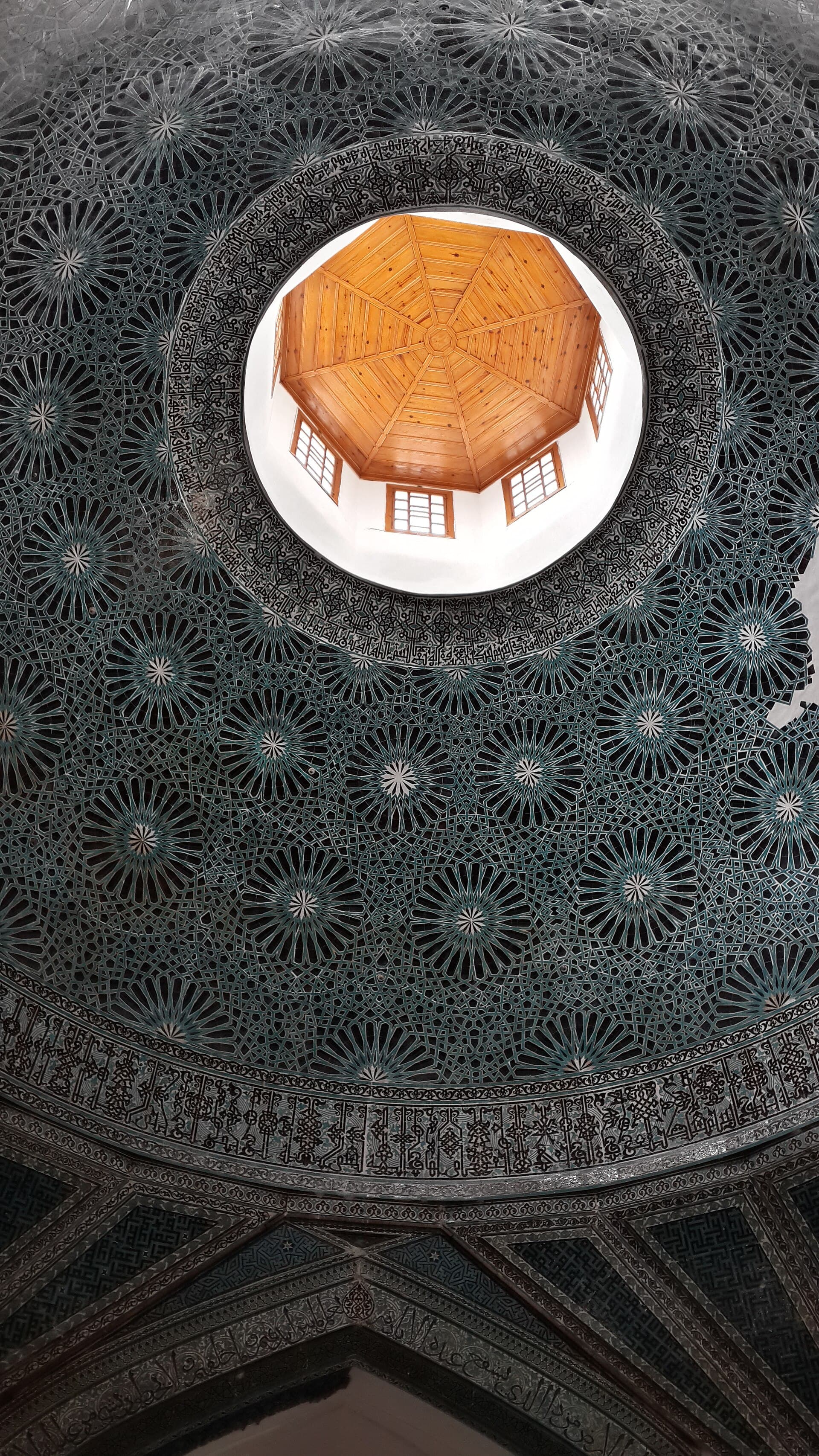 Karatay MadrasaLook up the moment you step into the main hall, because the dome is the whole po4 min walk4.5
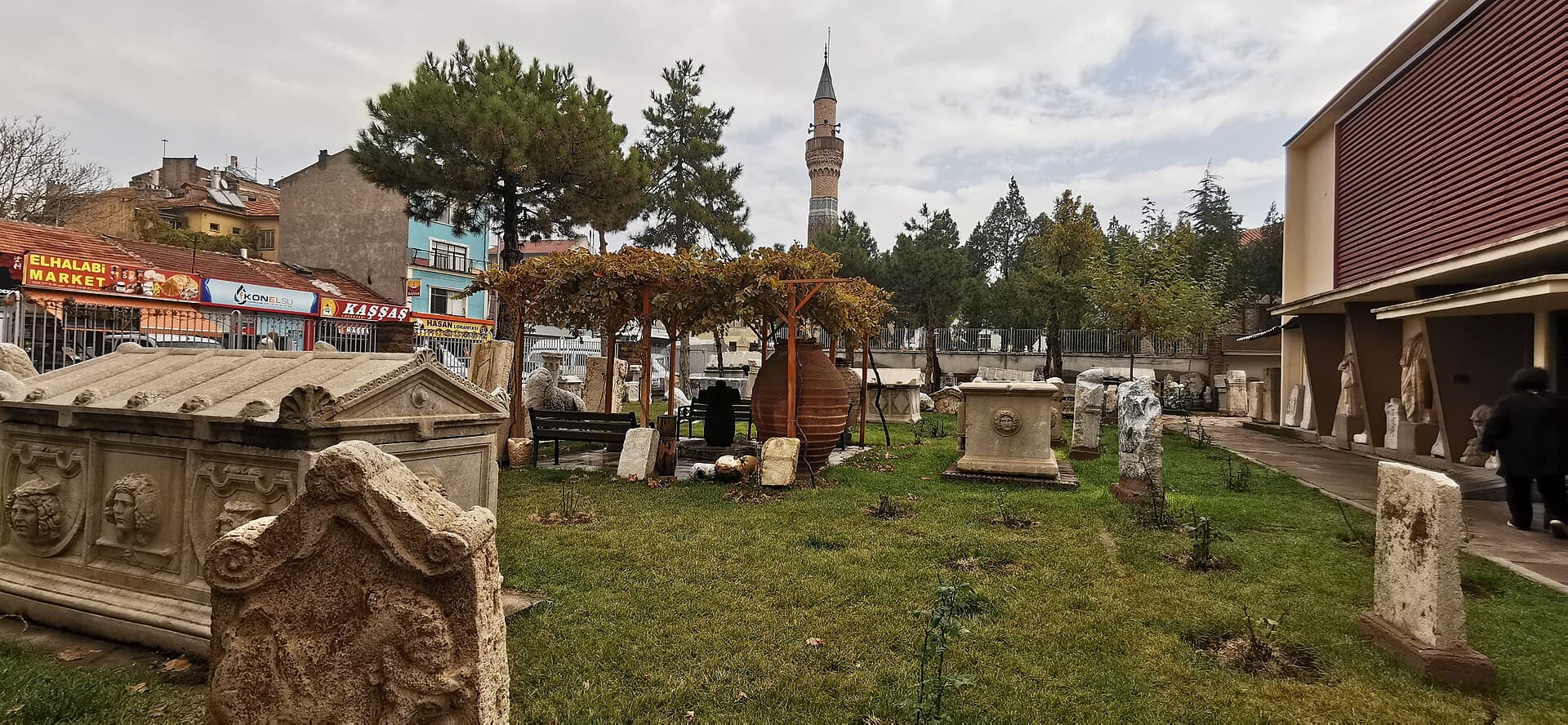 Konya Archaeological MuseumIn the summer of 1958 a farmer ploughing his field at Yunuslar, out on the Beyşe7 min walk4.4
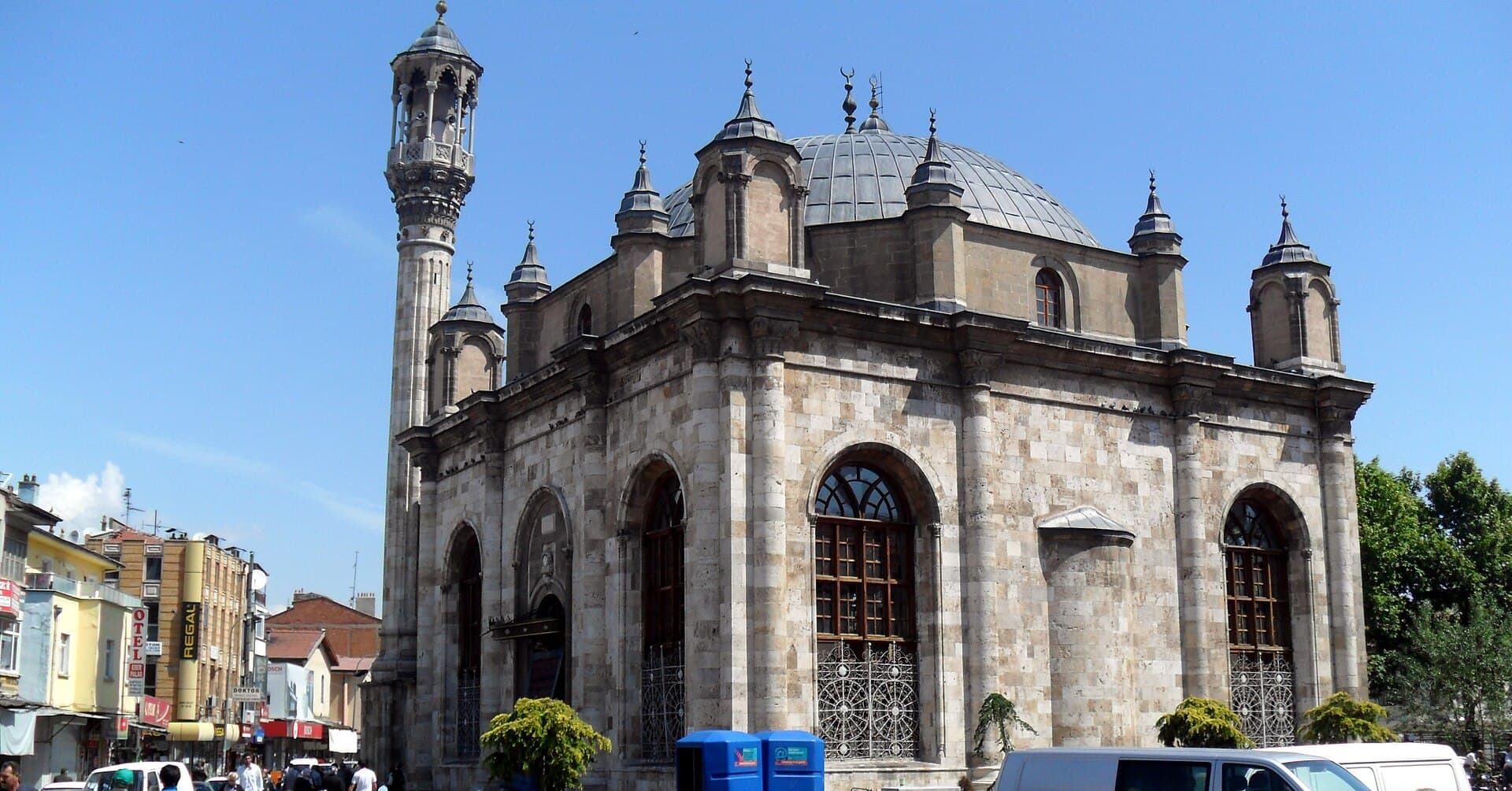 Aziziye MosqueTwo minarets that end in open balconies carried on slender columns, more palace 10 min walk4.8
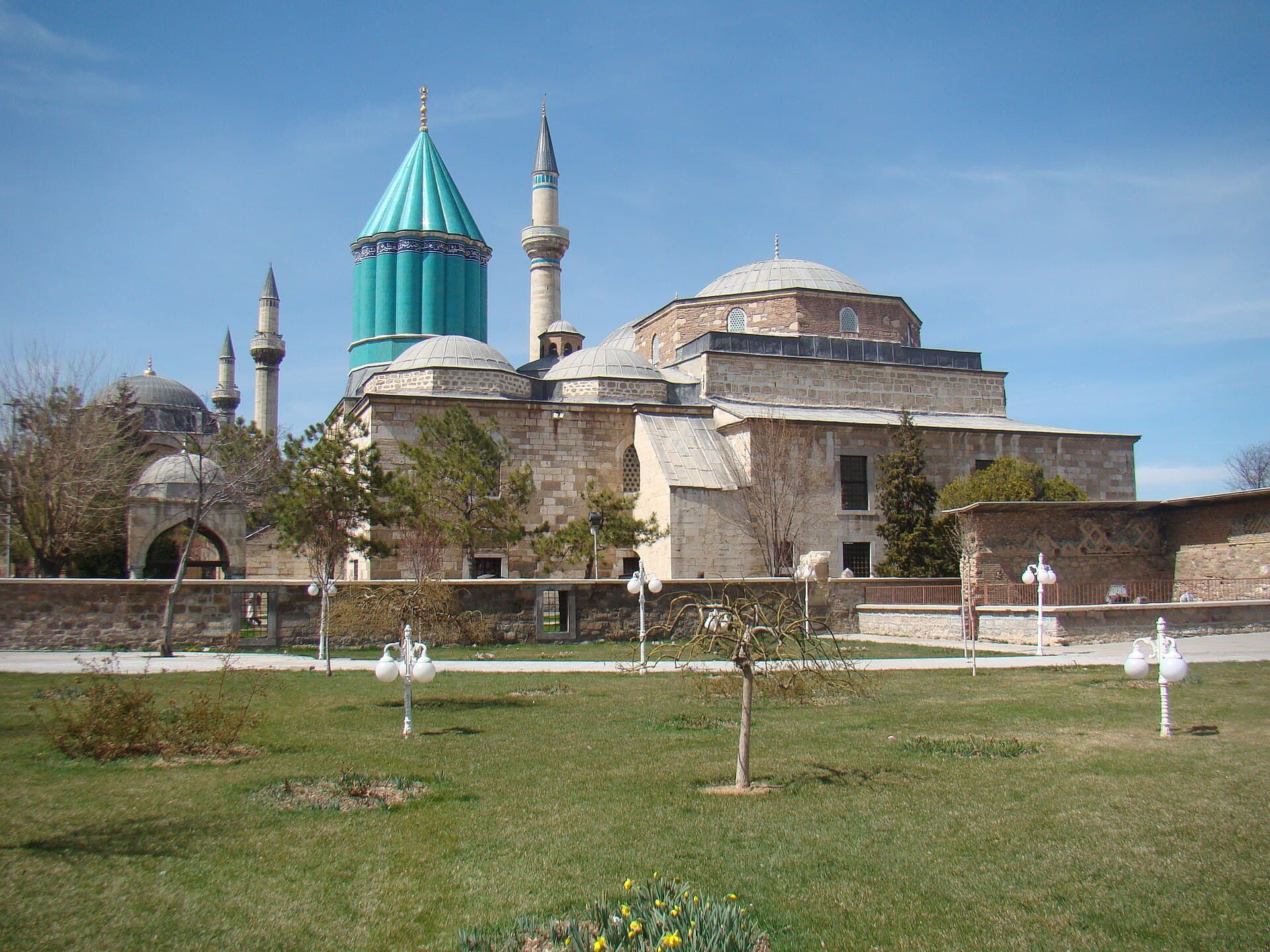 Mevlana MuseumTürkiye's most visited museum in 2019 was not in Istanbul. It was here in Konya:14 min walk4.8
Yes, but only if you get inside the mosque; the park alone is an ordinary garden and the palace remains are not worth the detour. Time it outside prayer, give it 45 minutes, then walk the twenty minutes to the Mevlana Museum. The two together fill a half day with no need for a car.
Sign in to write your review of this place.
No reviews yet — be the first.