
Rumi's tomb under the Green Dome
Embroidered sarcophagi topped with huge turbans, and visitors praying in silence in a room that works as a shrine, not a gallery.
User:دانقولا — CC0 · Murat Özsoy 1958 — CC BY-SA 4.0 · rob Stoeltje from loenen, netherlands — CC BY 2.0 · rob Stoeltje from loenen, netherlands — CC BY 2.0
Türkiye's most visited museum in 2019 was not in Istanbul. It was here in Konya: 3.4 million people walked through this gate for free, and most of them had not come to see a museum at all but to stand at a grave. Beneath the turquoise-tiled Green Dome, the emblem of the city, lies Jalal al-Din Rumi, who died in Konya on 17 December 1273; the Seljuk architect Badr al-Din Tabrizi finished his tomb the following year. What you see today is the Mevlevi lodge that grew around it over the centuries, until Atatürk's decree of 1926 turned it into a museum, opened to visitors the following year. The main hall is the scene you came for: a row of wooden sarcophagi under embroidered covers and oversized turbans, Rumi's at the head with the graves of his father and son beside it. The room works as a shrine in practice. Turkish, Iranian and South Asian visitors stand with open palms and nobody raises a voice. Next door is the Semahane, where the dervishes once whirled and where their reed flutes, drums and robes are now displayed, then a library of rare manuscripts: a Divan-i Kebir of 1366 and two Masnavis dated 1278 and 1371. In a glass case is a box said to hold a hair from the Prophet's beard, and the crowd thickens around it. The courtyard is the part most people skip, and it deserves half an hour: seventeen small cells that housed the dervishes, now fitted with wax figures explaining the order's rituals, and the Matbah-i Serif kitchen where a novice served 1,001 days before being accepted. The whole visit is flat with almost no stairs, so a pushchair goes through easily, though the crush in the tomb hall makes a baby harder work in summer. August in Konya is dry, hard heat; be at the gate when it opens at nine. Two things to know before you book. First, the sema ceremony is not held in the museum but at the Mevlana Cultural Centre a kilometre to the east, every Saturday evening and free, so build your stay around a Saturday night. Second, the Şeb-i Arus commemorations on 7-17 December are the peak of the year, and hotels and ceremony tickets sell out months ahead. The museum faces the Ottoman Selimiye Mosque across the square, so prayer is never far.
Embroidered sarcophagi topped with huge turbans, and visitors praying in silence in a room that works as a shrine, not a gallery.
A 1366 Divan-i Kebir, two Masnavis from the 13th and 14th centuries, and a small case that draws the biggest crowd.
Seventeen rooms around the courtyard showing how a novice served 1,001 days before the order accepted him.
Aziziye Mah., Müze Alanı Cad. No:1, Karatay, Konya
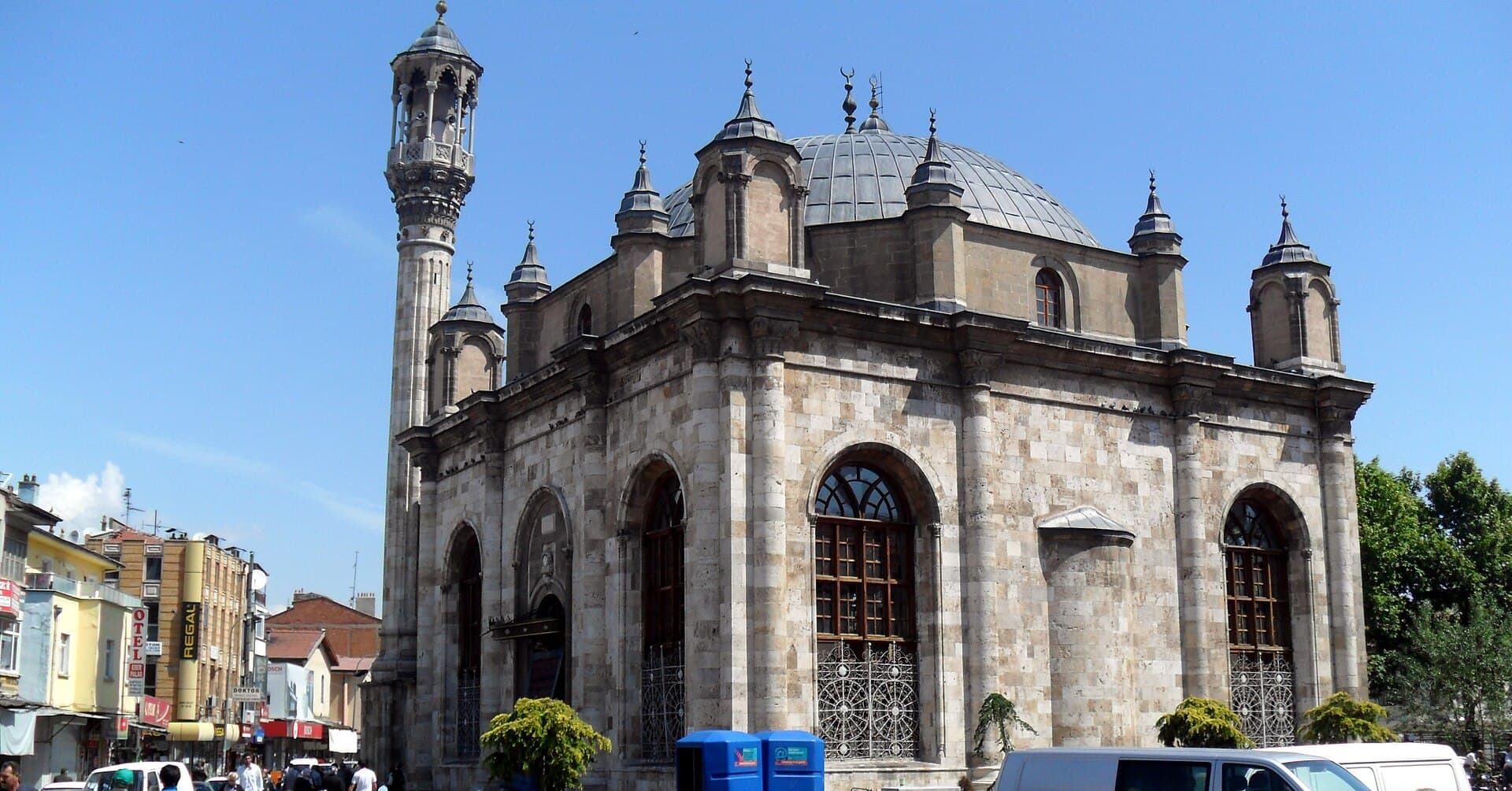 Aziziye MosqueTwo minarets that end in open balconies carried on slender columns, more palace 4 min walk4.8
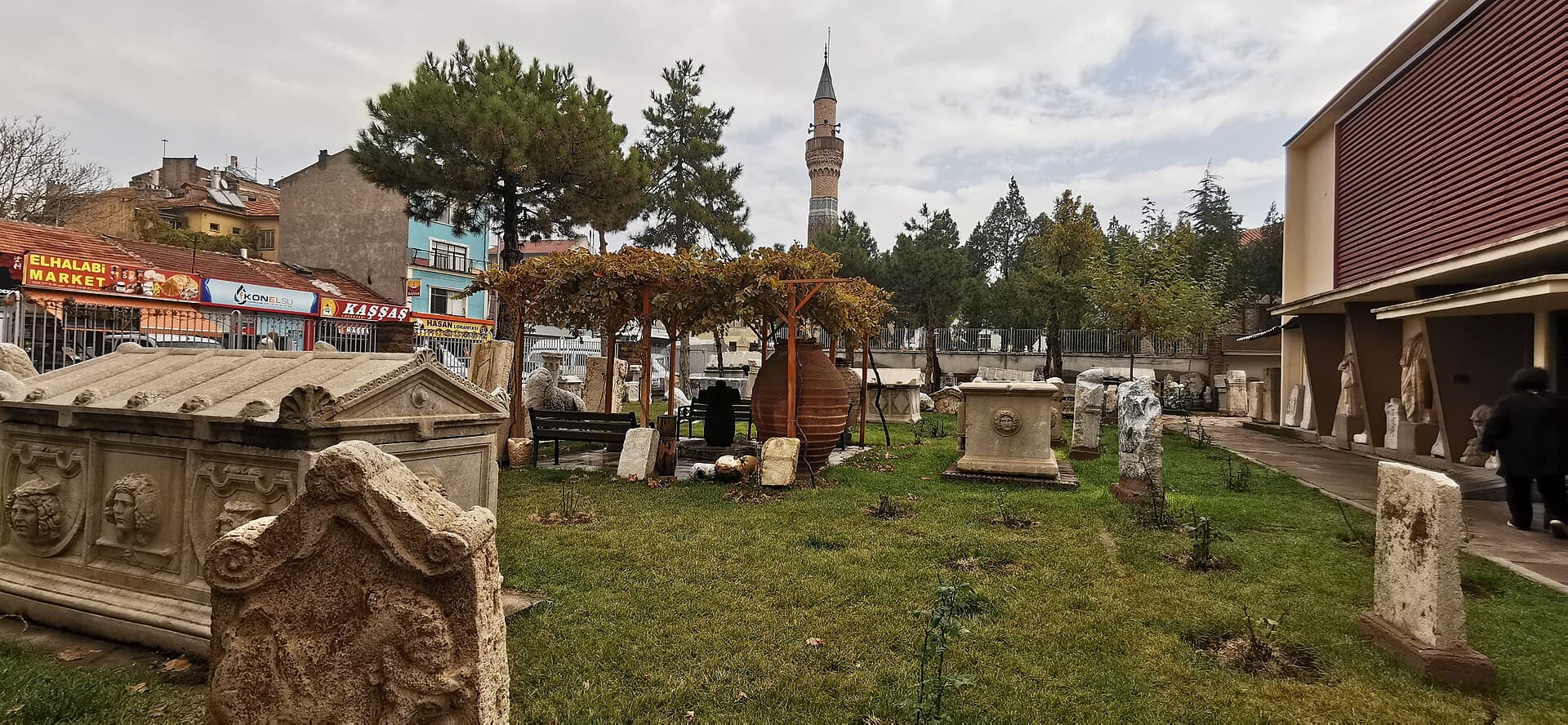 Konya Archaeological MuseumIn the summer of 1958 a farmer ploughing his field at Yunuslar, out on the Beyşe13 min walk4.4
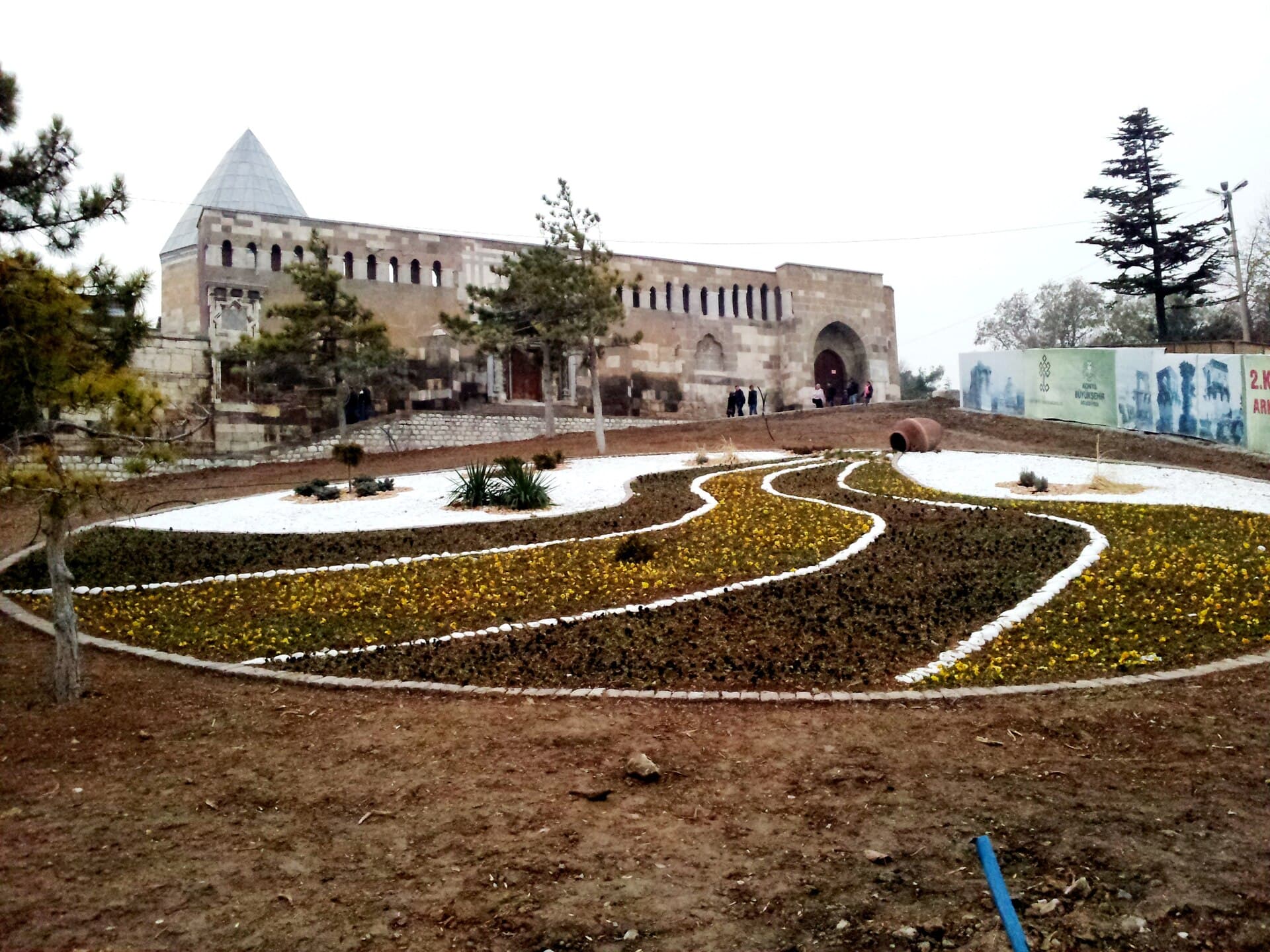 Alaaddin HillKonya's tram loops around a hill, and the hill is not really a hill at all: it i14 min walk4.3
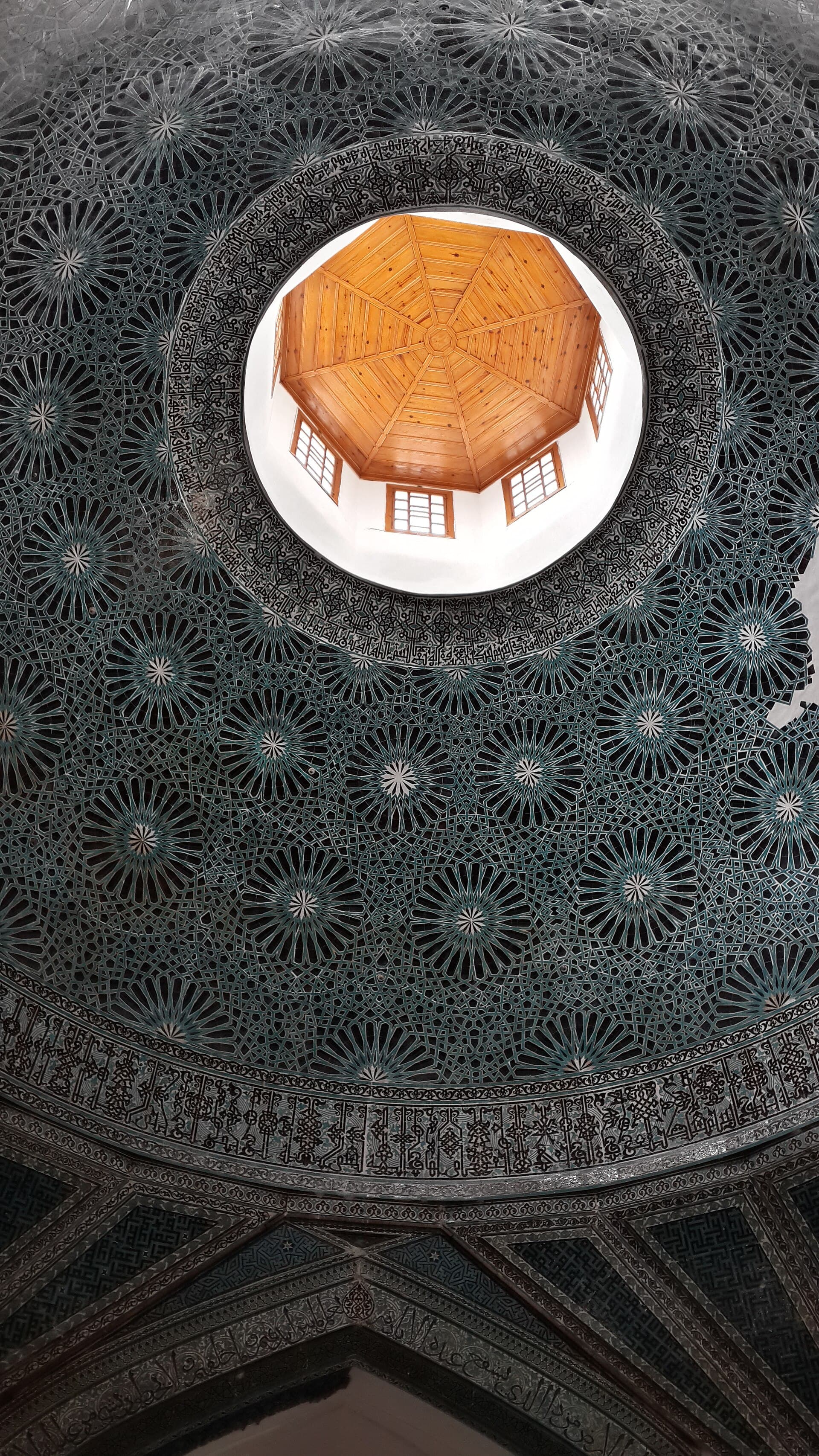 Karatay MadrasaLook up the moment you step into the main hall, because the dome is the whole po14 min walk4.5
No. The museum shows the instruments and robes only; the real sema ceremony is held every Saturday evening at the Mevlana Cultural Centre, a kilometre east of the museum, and it is free. If you pass through Konya on a midweek day trip you will miss it, and the shorter shows some restaurants put on are a much diluted version.
If Rumi means something to you, yes without hesitation; it is about three hours by car or bus, and there is no high-speed train between Cappadocia and Konya. If you are after scenery or shopping, the museum takes two hours at most and the city is quiet, so pair it with the Sultanhanı caravanserai on the way or Konya's Seljuk mosques to fill the day.
Sign in to write your review of this place.
No reviews yet — be the first.